ALL THINGS BOEING
Boeing Business Jets Launches “BBJ Select”
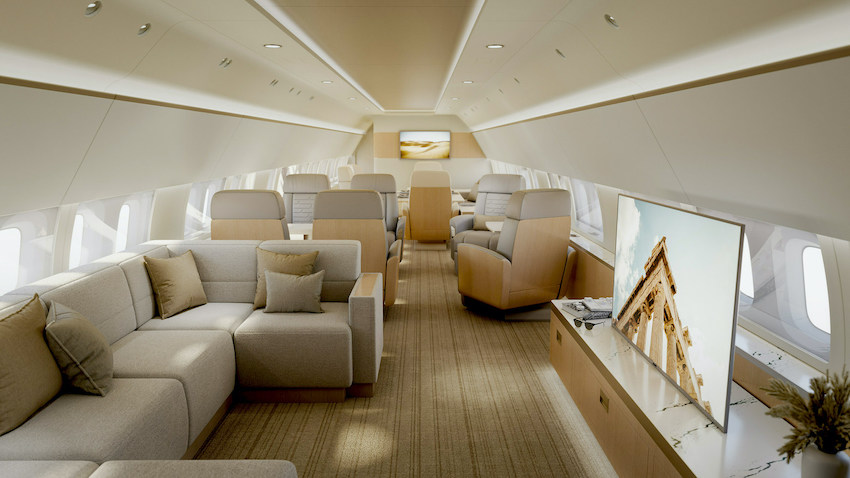
Boeing Business Jets (BBJ) has unveiled “BBJ Select”, a new offering which allows potential customers to configure aircraft through a modular concept, plus simplifies and accelerates the purchasing process.
“We have streamlined the engineering, the design, the build and installation processes,” BBJ president Joe Benson said ahead of the National Business Aviation Association’s exhibition in Las Vegas on October 16.
“ We accomplish this through custom modules that customers can select, throughout different zones in the aircraft. It also enables us to not only compress the overall completion timeline, but also to drive out one-time costs and pass these savings on to our customers. Thus we can offer this completed turnkey BBJ at a very attractive fixed price,” he adds.
The BBJ Select offering will be available on the 737 Max 7 aircraft, and first deliveries are expected in 2026.
BBJ is working with partners ALOFT Aero Architects and Greenpoint Technologies to make this new service available to potential customers. The two companies already have ample experience of completion work on Boeing jets.
The company is offering BBJ Select exclusively for the Max 7, and in addition to the traditional purchasing process of a completely bespoke aircraft which BBJ has been offering for 27 years. BBJ has delivered 250 VIP Boeing aircraft, of which more than 160 were 737 models.
Source: BBJ, Picture BBJ
Boeing Orders & Deliveries
Boeing booked 123 gross orders in October, bolstered by a deal with Southwest Airlines for 11 MAXs. It reported cancellations, which included one MAX for Aerolieas Argentinas and five MAXs for customers that Boeing declined to identify.
The deliveries for October included 18 737 MAXs which wanted to the following airlines: Air India, Alaska Airlines, American Airlines, FlyDubai, Southwest Airlines, Turkish Airlines,United Airlines and Ryanair.
Widebody deliveries included three 777 Freighters, six 767 Freighters and six Dreamliners.
Source: Boeing
ALL THINGS AIRBUS
Airbus Signs With Indian Firms to Build Airframe & Wing Components
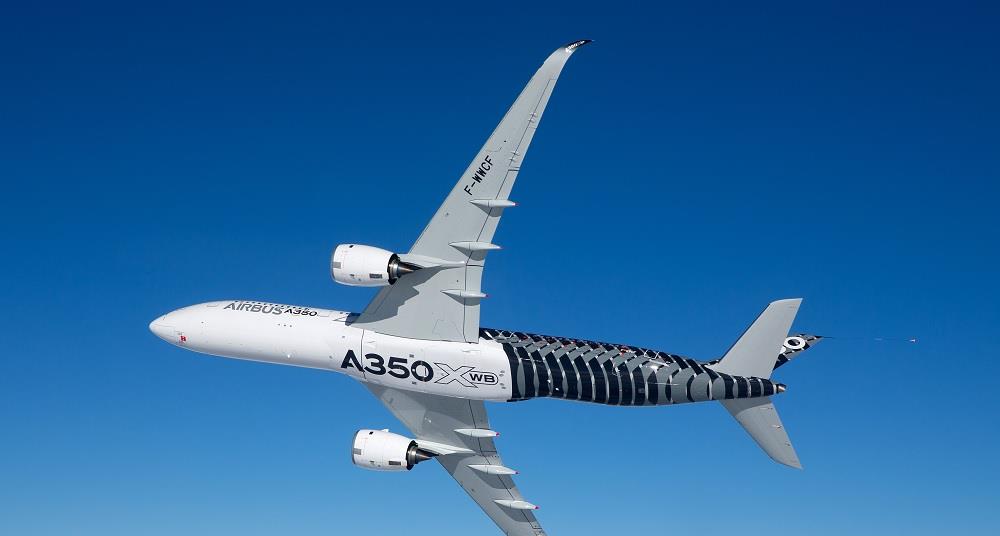
Airbus has signed a series of agreements with Indian companies to locally produce airframe and wing parts for the A320neo, A330neo, and A350. The supply agreements have been signed with two contract manufacturers, Aequs and Dynamatic as well as Mahindra Aerospace, a unit of India’s Mahindra & Mahindra automotive group, says Airbus.
The Indian operation of UK firm Gardner Aerospace also secured work from Airbus. Airbus says that signing up the new suppliers will help it ramp-up its aircraft program, while also supporting India’s aviation sector expertise in areas such as metal, machining, and extrusion profiles.
“Made in India is at the core of Airbus’ strategy in India. We are proud that we are putting in place all the critical building blocks for an integrated industrial ecosystem that will propel India into the front ranks of Aerospace manufacturing nations,” says Remi Maillard, president and managing director,Airbus India and South Asia.
The new contracts follow Airbus’s allocation of the A320neo family cargo and bulk cargo doors to another Indian company, Tata Advanced Systems, earlier this year.
Airbus adds that India currently produces components and services that are worth $750 million annually.
Source: Airbus
Airbus Orders & Deliveries in October
Airbus has revealed that 10 A350-900s were among nearly 120 aircraft ordered from the airframer in October. But the identity of the customer behind the agreement has not been disclosed.
The deal takes overall A350 orders to 1,056 aircraft of which 791 are the -900 variant.
United Airlines and Cathay Pacific accounted for the majority of the Airbus activity in October. United is taking 60 A321neos while Cathay has signed for 24 A321neos and eight A320neos.
The combined agreements for 119 jets took Airbus’s total for the first 10 months of this year to 1,334.
Airbus handed over 71 aircraft in October which lifted overall deliveries to 559.
Source: Airbus
REGIONAL/BUSINESS JETS
Scoot to Take First E2 in March 2024
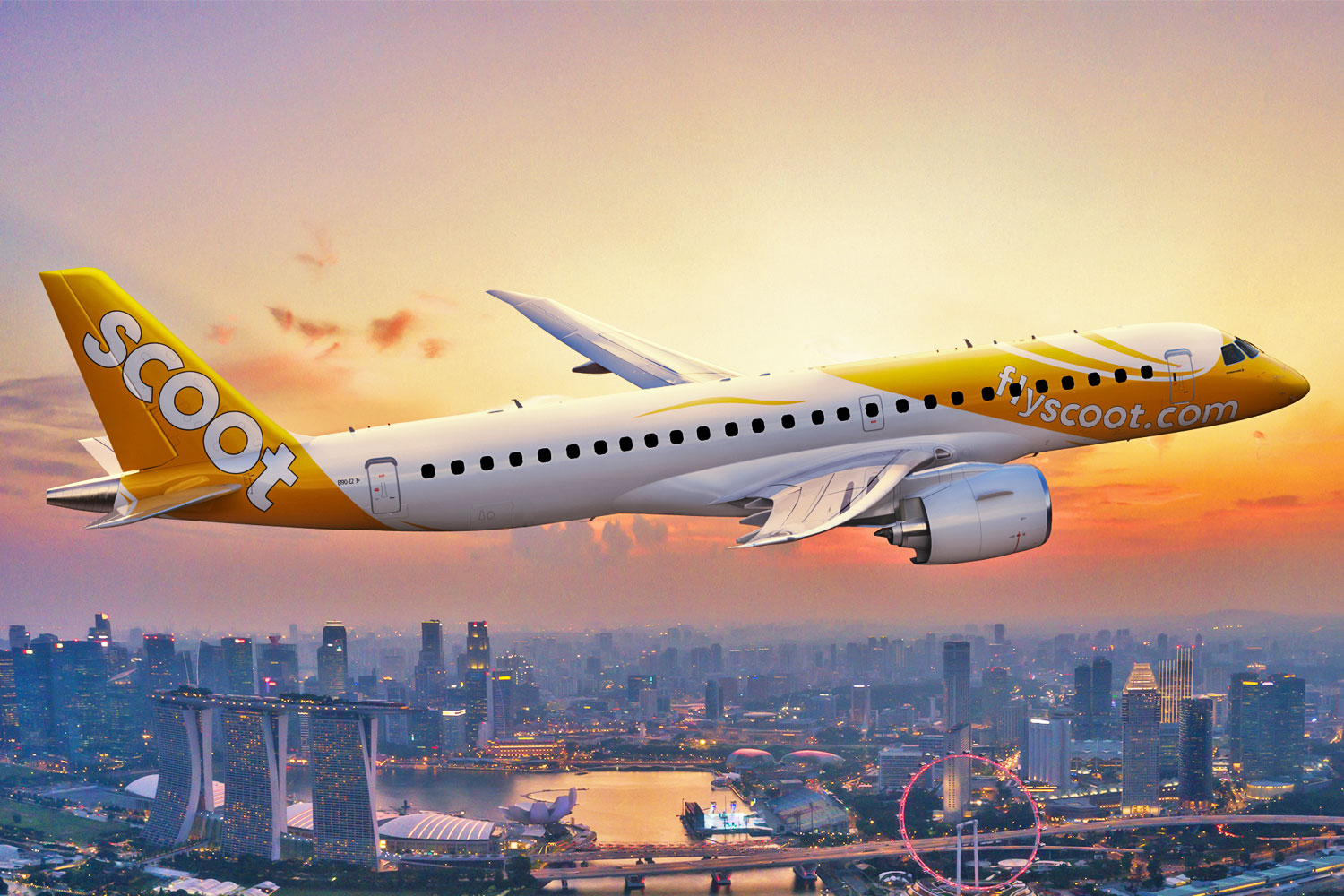
Scoot will take delivery of its first Embraer E190-E2 in March of next year as it focuses on building up its short-haul network.
Leslie Thng, the low-cost operator’s CEO, says Scoot will take delivery of another four E22 through 2024, and that the type will be deployed on “a mix of new and existing destinations”.
Thng, who was speaking at the Association of Asia Pacific Airlines’ Assembly of Presidents in Singapore, declines to comment where Scoot will be launching flights to, except to reiterate that these details would be disclosed “when we are ready “.
His comments are the latest updates from the airline on its incoming fleet of E2s. The Singapore Airlines Group unit announced in February it would be taking nine E190-E2s on lease from lessor Azorra. The Jets will seat 112 passengers in a single-class layout—the smallest aircraft in the SIA Group’s fleet.
Source: Scoot, Picture Embraer
E195-E2 Secures Steep-Approach for London City Airport
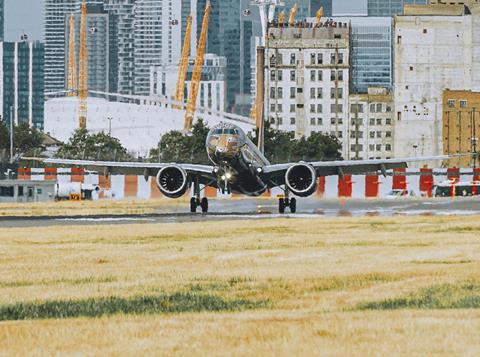
Embraer’s largest re-engined E-jet, the 195-E2, has secured certification to conduct the steep approach into London City airport. The twinjet obtained the approval from the European Union Aviation Safety Agency. It complements a similar EASA clearance for the smaller E-190-E2 achieved two year ago.
Embraer says its aircraft are”uniquely able to manage The Challenges” of operating from the downtown UK airport.
Vice-president for sales and Marketing, and head of region for Europe, Marie-Louise Philippe says the manufacturer’s aircraft dominate London City’s traffic. The E195-E2- powered by Pratt & Whitney PW1900G engines, carried its first landing at London City in July last year.
Source: Embraer, Picture Embraer
OTHER AVIATION NEWS
China Eastern Orders 25 GEnx Turbofans for 787s
GE Aerospace and its affiliate CFM International have landed new orders from Chinese carriers for both GEnx-1B and Leap-1B turbofans. US engine maker and CFM, which GE Aerospace co-owns with Safran Aircraft Engines, disclosed deals on November 5th.
China Eastern ordered 15 787s in 2016, started receiving them in 2018 and now has 10 of the jets, which are operated by China Eastern’s affiliate China Eastern Airlines Yunnan and Shanghai Airlines, according to Cirium data.
Boeing has yet to deliver the remaining five of the original 15 787s ordered by China Eastern, according to Cirium and Boeing data, though China Eastern’s 2022 financial report says it expects to add three 787-9s to its fleet in 2024.
CFM says Xiamen ordered a batch of Leap-1As, including those to power 40 Airbus narrowbodies (among them 25 A320neos and 15 A321neos) and some as spares.
Xiamen also signed a service agreement with CFM which the engine company will help maintain the Leaps and carrier’s CFM56 turbofans, which power its 737-800s.
Sources: GE Aerospace, Cirium data
Thales Will Supply In Flight System For Emirates’
French aerospace firm Thales has reconfirmed that it will supply the in-flight entertainment system for Emirates Boeing 777X fleet. Thales will provide the Dubai-based airline with its Avant Up equipment from 2025.
Thales says the Avant Up features Optic 4K ”smart display” including high-definition screens, as well as its ‘Pulse’ power-management system offering high-speed charging at each seat. Passengers’ personal electronic devices can be synchronized to the screen.
Thales adds that the system will have user inter faces enabling visually – impaired passengers to have an ”immersive experience”. “We will bring extraordinary new features and innovations to elevate the passenger experience,” insists executive vice-president of avionics Yannick Assouad.
Source: Thales
EgyptAir to Take 737 Max 8s Under Air Lease Agreement
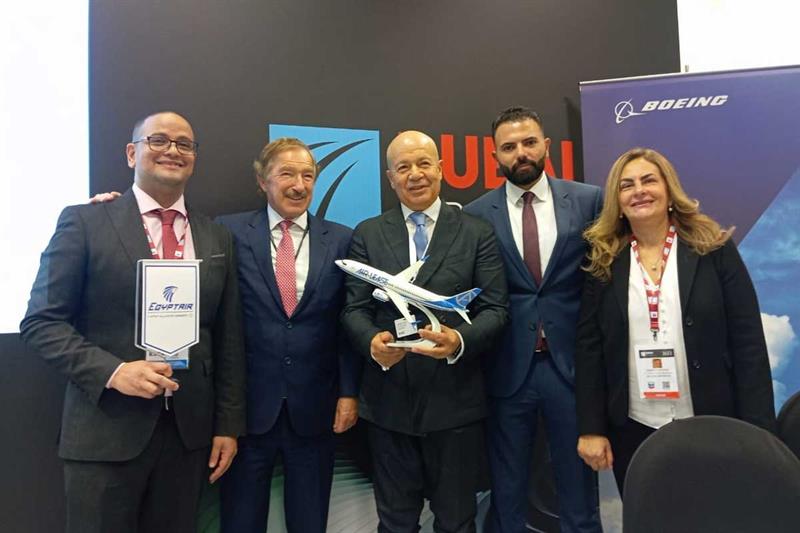
EgyptAir is to lease 18 new Boeing 737 Max 8s from US-based Air lease as part of the airline’s fleet expansion plans. It marks EgyptAir’s first Max jets. The Star Alliance carrier is already an operator of Boeing 737-800s and Airbus A320neos. Delivery of the Max aircraft will run from 2025 to 2026.
Speaking during a press conference at the Dubai air show, where the deal was announced, EgyptAir Holdings chairman, Yahia Zakaria, said the aircraft will largely be used to expand the fleet, rather than as replacements. “We have ambitious expansion plan for both the network and fleet size,” he says.
“This is the first part of the EgyptAir fleet. By 2028, we have ambitious plans to reach a fleet up to 125, both narrowbodies and widebodies”.
For the network we hope to reach up to 100 destinations by 2028. This the first phase of our plan.”
Source : EgyptAir
Emirates’ Clark: 777x Follow On Order A Balance of Confidence
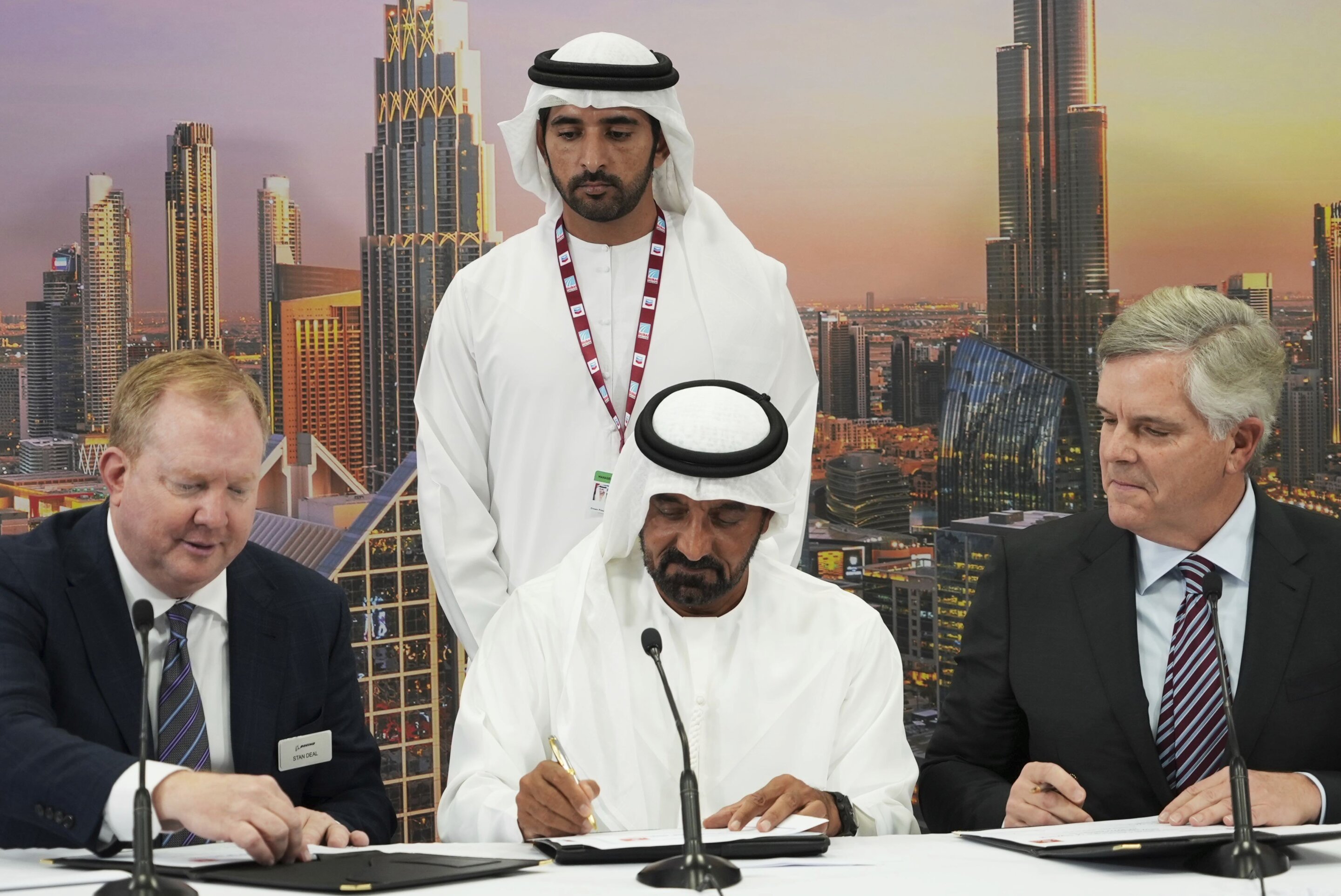
Emirates president Tim Clark is optimistic that the Boeing 777-9 service entry is on track, expecting the type inspection which begins formal certification tests around February next year.
Speaking during the Dubai air show on November 14, a day after Emirates committed to another 90 777Xs, Clark said he was more confident on the timeline for the twinjet with Emirates expecting to take its first in October 2025.
He says he thinks Boeing and the US FAA are “getting on top” of the regulatory requirements in relation to the aircraft’s capabilities. “So I am hoping it’ll be OK for us” he adds, but acknowledges that given the 777-9 is a new airframe, with a new engine in General Electric GE9X “we are not out of the woods at all with regards entry into service”.
“Irrespective of the difficulty of getting these aircraft out the door, we have to place orders now because the lead time for deliveries is so long,” he adds. “We have to face bumps in the road as to what manufacturers can do.”
The Order for 777Xs includes 55 777-9s and 35 777-8s the -8s are due for delivery from 2030.
“I ‘m reassured by head of GE that the GE9X will be good to go, and meet all contract specifications,” says Clark. “On the basis of that, there’s a large amount of trust, and we have placed those orders.”
Source: Emirates
LATEST NEWS
In this section this month, I will give a breakdown on all airline orders and commitments at the Dubai air show.
The show started after home carriers Emirates and Flydubai led a bumper first day of business at Dubai air show with deals for Boeing 777X and 787s, widebodies accounted for almost half the firm orders and commitments placed over the first three days of the event.
The majority, 159 units, of the widebody business was secured by Boeing.
In addition to 90 777-8 and -9s ordered by Emirates as well as five more 787s and 30 Dreamlines by Flydubai, Boeing obtained widebody business from Ethiopian, Royal Jordanian and Royal Air Maroc.
Ethiopian committed up to 26 787-9s, while Royal Jordanian and Royal Air Maroc committed to six and two more Dreamliners respectively.
EgyptAir has provided Airbus with its other widebody deal, signing for 10 A350-900s.
Airbus business at Dubai also includes 30 firm orders and 20 more purchase rights from Latvian carrier Air Baltic for A220 narrowbodies.
Boeing secured 138 Max commitments at the show, just over half of which are firm deals. That includes a follow-on order from SunExpress for 45 firm and 45 options for 737 Max 8s and Max 10s. Ethiopian with its first Max order since a fatal crash with the type four years ago and Kazakhstan’s SCAT Airlines for 7 737Max-8.
Sources: FlightGlobal, Emirates, FlyDubai.
AIR CARGO
Low Nose Loading Leaves747-8F as Capability’s Last Stand

Low airline appetite for nose-loading freighters means the 747-8f is currently on course to be the capability’s swan song in terms of purpose-built commercial aircraft. It features on around 250 in service airframes today, according to speakers at The International Air Cargo Association’s (TIACA’s) Executive Summit in Brussels.
During a panel discussion at the event on November 8, Boeing’s regional director of marketing Tom Hoang said the capability would be available to airlines for some time yet, given the service life left in 747 production freighters, but added: “We do not have plans to have a nose-loader on any new airframes at this point.”
Among airlines that offer freight services, the vast majority simply do not see capability as critical, Hoang explains, which makes inclusion uneconomical.
Indeed, speaking on the same panel, Qatar Airways’ vice-president of cargo network planning and strategic partnerships, Elodie Berthonneau, says: “If we look at the nose-loading type of cargo that we have, it represents only 1% to 2% of the cargo we carry justifies having a nose-loading capability for the next-generation aircraft…as an airline we do not really want it.
“The value of it does not really justify the costs from an airline point of view, we are not asking Boeing or Airbus to develop this kind of option.”
Lufthansa Cargo’s director of sales and handling Georg Theis concurs with Berthooneau’s assessment.
“ When we designed the 777-8F, that was one of the questions that that we asked the working group: how importent is the nose loader to you and what percentage of this is being used?” Hoang recalls. In reference to the assessments offered by Berthonneau and Theis, he states: “And that’s the type of message that we received.”
“The 747-8F, we delivered about 107 examples…the average age of that is about seven years, so you’re looking at 20 more years of life for the 747-8F,” Hoang continues.
Sources: FlightGlobal, Boeing, TIACA, Picture Qatar Airways
NOTEWORTHY NEWS
FAA Clears Boeing to Start 737 Max 10 Certification Flights
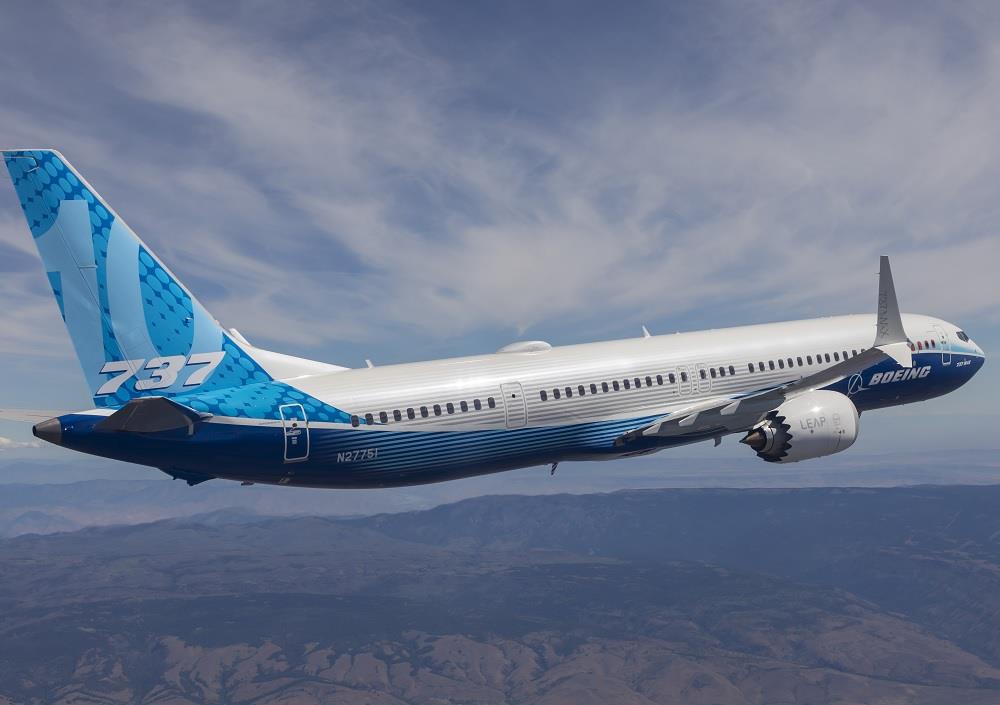
The Federal Aviation Administration has approved Boeing to begin certification flight – test program for its 737 Max 10, moving the company closer to completing the aircraft’s long-delayed certification effort.
This week, the FAA granted Boeing a “type inspection authorization” for the Max 10, Boeing executives said in a November 22nd memo to employees. The authorization clears ”the way for the airplane to begin certification flight testing” and allows FAA pilots to participate in these tests, says the memo.
“This is a significant milestone as we work to get the 737-10, the largest of the Max family, certified to enter passenger service with operators around the world.”
The FAA issues type inspection authorizations after determining that an in-development aircraft likely meets certification requirements. The documents authorize certification flight testing.
Boeing has yet to achieve certification for either the Max 10 ( the largest Max variant) or the Max 7 (the smallest). The programs suffered delays following two
737 Max 8 crashes and the resulting global grounding of the Max 8 and Max 9 between March 2019 and November 2020. Those events led to heightened certification oversight by the FAA.
Boeing has said it expects to deliver the first Max 10 next year. It anticipates achieving the Max 7s certification this year and to also begin delivering that type next year.
Boeing completed the Max 10’s first flight on June 18, 2021 and has since completed more than 400 flights and logged nearly 1,000h of flight time.
The 737 Max 10 will be capable of carrying up to 230 passengers and will have 3,100nm (5,741km) of range, according to Boeing.
The type has proved a recent strong seller for Boeing, which holds unfilled orders for 963 for the type data shows. Airlines to place sizable orders for the type include Alaska Airlines, Delta Air Lines, Ryanair, United Airlines and Vietjet, according to Cirium fleets data.
Three Boeing executives signed the November 22 letter: senior vice-president of development programs and customer support Mike Fleming, vice-president and general manager of the 737 program Ed Clark, and vice-president and general manager of test and evaluation Wayne Tygert.
Source: Boeing, Picture Boeing

Researched and Compiled by :
Ed Kaplanian Commercial Aviation Advisor
Contact – ekaplanian@yahoo.com
Editor: Lee Kaplanian
 KAPLANIAN REPORT