
ALL THINGS BOEING
More Details About MD-90 Into NASA’s X66-A Demonstrator
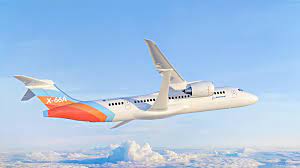
As follow-up to my February Report concerning the X66-A demonstrator, the X66-A will have fly-by-wire controls but Boeing will retain the MD-90’s mechanical – cable system that controls its rudder and elevator, said Boeing’s Sustainable Flight Demonstrator program manager.
Boeing has said a truss-braced airliner could fly Mach 0.8. It calls the wing “transonic” because at that speed some air flowing around the aircraft’s airfoils will meet or exceed M1.
“Our goal is to validate the architecture, learn about the new novel elements of the configurations so that we can better inform future product strategy,” Kadce says. X-66X can help Boeing demonstrate tools and methods related to computational fluid dynamics, finite-element analysis, and structural-joint-architecture analysis.
X-66A must be shorter because Boeing removed the aft-mounted engines and will install new power plants under its wings, changing the center of gravity. Those engines will be twin Pratt & Whitney geared turbofans (GTF), which Keduce calls “perfectly matched from a thrust-class perspective” to X-66A.
NASA Hopes the project will help Boeing determine if truss-brace wings are operationally and economically feasible. If so the agency hopes Boeing’s new narrowbody jet – the 737’s replacement – will have the wing. I will follow the development of this project in my upcoming blogs.
Sources: NASA, Boeing
Boeing Lost $2.2 Billion In 2023 Amid 737 Max Scrutiny
Boeing lost $2.2 billion in 2023 as the company continued seeking to stem vast losses from its commercial aircraft business, which faces ongoing quality troubles and fresh scrutiny from the Federal Aviation Administration.
The company’s 2023 loss improved from its $5.1 billion loss in 2022, reflecting unresolved troubles within its defense business.
“Our full focus is on taking comprehensive actions to strengthen quality at Boeing, including listening to input from our employees that do this work every day,” Boeing chief financial officer Dave Calhoun said on January 31st, the day the US manufacturer disclosed its 2023 financial results.
Boeing’s commercial aircraft business lost $1.6 billion in 2023, improved from a $2.3 loss in the prior year, with the unit’s 2023 revenue up 30% year on year to $33.9 billion. That revenue bump reflects an increase in aircraft deliveries; the company delivered 528 jets in 2023, up 10% year on year.
Losses came during a year Boeing continually dealt with fresh troubles affecting its 737 Program. In 2023, Boeing revealed an issue involving miss-drilled holes in 737 aft-pressure bulkheads and a problem involving loose bolts in rudder assemblies. It also disclosed a separate issue with fuselages produced by Spirit Aerospace.
The 737 faced heightened scrutiny following a January 5 in-flight blow-out of an Alaska Airlines’ 737 9’s door plug. Investigators and experts have pointed to manufacturing and quality troubles within Boeing as the cause of the incident, though the investigation remains ongoing.
In response, the FAA says it has significantly hiked its oversight of the 737 Program, including by prohibiting Boeing from expanding production on the jet.
Source: Boeing
Boeing Cap on Production
Boeing is producing the 737 Max at a rate of 38 monthly amid a cap on production expansion implemented in January by the Federal Aviation Administration. Boeing is also now producing 787s at a rate of five monthly. Boeing disclosed the rates on January 31 when its financial results for 2023. “The 737 program continues to deliver airplanes, and its production rate at 38 per month,” Boeing Says.
The production situation became more uncertain after the FAA in January said it was prohibiting Boeing from expanding the Max production due to concern about quality and safety stemming from January 5th in-flight blow-out of a door plug on Alaska Airlines 737 Max 9. At the same time Boeing confirmed it is now producing five 787s monthly up from four in mid 2023.
Source: Boeing
Boeing Orders & Deliveries for January
Air Europa and an unidentified customer cancelled orders for three Boeing jets in January, while the company’s deliveries slipped to only 27 aircraft during the month. The period was a difficult one for Boeing due to an in-flight 737 Max door-plug failure that renewed questions about the safety and quality of the company’s production system.
Boeing calls its January activity “modest”, though the numbers reflect a significant slowdown from prior months. Deliveries also declined, with Boeing handing over just 27 jets in January, down from 67 in December 2023. The 27 aircraft delivered included 25 737 MAX.
Notably two of those narrowbody jets went to China Southern Airlines and one to China’s Kunming Airlines, marking Boeing’s resumption of deliveries to Chinese carriers following a pause that lasted most of the last five years since regulators grounded 737 Max in March 2019.
Other customers to receive new 737 Max in January included Air India(3), Air Lease(2), Akasa(1),Ethiopian Airlines(1), Flydubai (1), Gol(1), Southwest Airlines(2), SunExpress(2), Ryanair(6) and United Airlines(3).
Boeing also delivered two widebody jets in January: one 787-9 taken by lessor AerCap and one 767-based KC-46 military refueling jet.
Source: Boeing
ALL THINGS AIRBUS
Airbus’s New Beluga Carrier to Serve US Destinations
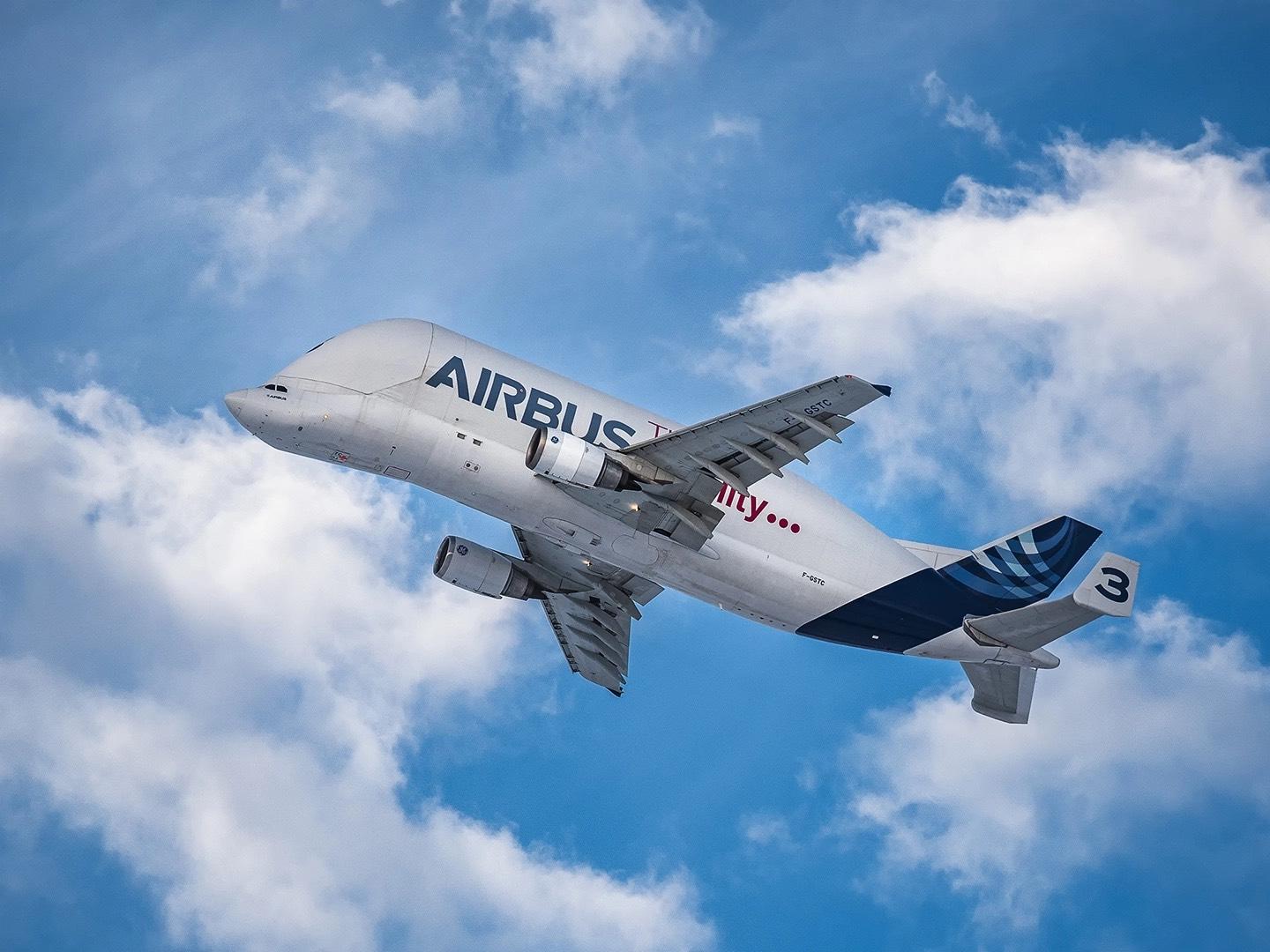
Airbus has been authorize to conduct transatlantic services with its newly established Airbus Beluga Transport outsize cargo operation. The airframer obtained a French air operator’s certificate on November 13 for the carrier, which will use the manufacturer’s A300-600ST Beluga fleet.
Its five Belugas are being withdrawn from internal logistics activity and replaced by the A330-700L BelugaXL. Airbus Beluga Transport has been set up to capitalize on the outsize freight capability of the older twinjets.
It sought authorization to to fly to US destinations in December – stating that it aimed to begin the services this month – and clearance has been granted by the US department of Transportation.
Source: Airbus, picture Airbus.
Airbus Orders and Deliveries for January 2024
Airbus’s first monthly orders for January featured widebody aircraft agreements with two carriers taking A350s. Delta Air Lines reached an agreement for 20 A350-1000s and Ethiopian Airlines firmed an order for another 11 A350-900s.
Airbus delivered 30 aircraft over the course of January for two A330neos, one for ITA Airways and one for Condor plus 26 A320neo family jets and a pair of A220s.
Source: Airbus
REGIONAL/BUSINESS JETS
Royal Jordanian Receives Two Embraer E195-E2 Aircraft
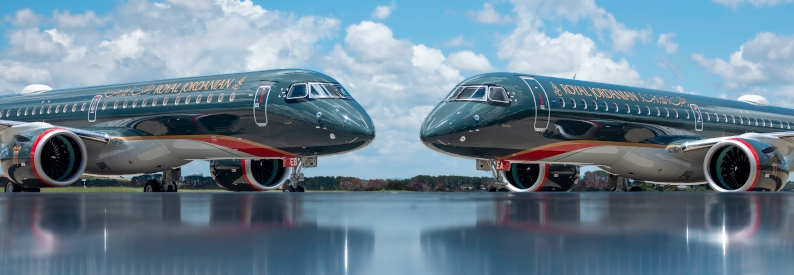
Azorra has delivered the first two Embraer E195-E2 to Royal Jordanian Airlines. The full agreement, announced in May 2023, is for eight aircraft in total – six aircraft from Azorra’s existing backlog with Embraer, plus two further E195-E2 firm orders from airline directly with Embraer.
John Evans, CEO and founder of Azorra, says: “Our team’s longstanding partnership with Royal Jordanian began more than a decade ago. From that Embraer 175, to these next generation E2 aircraft today, we’re proud to continue our support of Royal Jordanian, and the airline’s fleet modernization and expansion goals.”
“We’re confident Royal Jordanian will soon see the environmental & economic advantages of operating these new E2 aircraft, while offering superior levels of passenger comfort.” Samer Majali, Vice Chairman CEO of Royal Jordanian Airlines, says:”We’re looking forward to becoming the first E2 operator in the Middle East, supported by our trusted partners at Azorra.
Source: Azorra, Royal Jordanian, Picture Royal Jordanian
OTHER AVIATION NEWS
Most Alaska & United 737 Max 9s Back in the Air
Nearly all of Alaska’s and United Airlines’ Boeing 737 Max 9s have returned to service a month after the rapid de-pressurization of Alaska Airlines flight 1282 grounded most of the Boeing 737 Max 9s in the USA.
All but one of United’s 79 Max 9s have resumed scheduled passenger flying, compared with 57 of Alaska’s 65 next-generation narrowbody Boeing jets, the US Federal Aviation Administration said during a February 5th update on its oversight of Boeing’s beleaguered Max program.
Meanwhile, about 95% of the Max 9s in the USA have completed inspections and are eligible to return to service, said Jodi Baker, the FAA’s deputy associate administrator for aviation safety.
Oversight of Boeing’s production facility in Renton, Washington, has increased in response to a mid-flight door-plug blowout involving during a January 5 flight on an Alaska Max 9.
“These would be in association to the existing audits…and be more informal,”Baker says.
“ We wouldn’t necessarily have to provide notice. One advantage of this is we get a better sense of the safety culture because we can actually talk to employees and figure what’s motivating them and their concerns”.
The FAA is handling Boeing’s latest quality issue through its “continued operational safety Process” Baker says, adding that the civil aviation regulator will “ensure that those airplanes meet all safety standards before we can approve them for safety”.
Source: FAA
Qantas to Install Split Scimitar Winglets on 737-800s
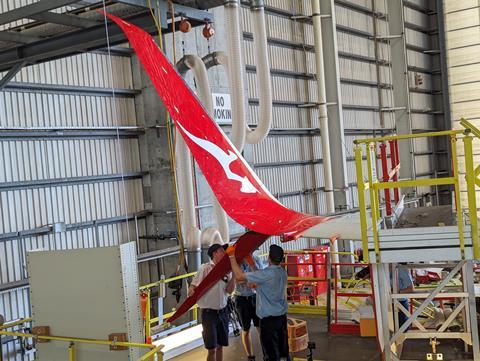
Qantas will install split Scimitar winglets on 23 of its Boeing 737-800s, as part of their efforts to improve fuel efficiency and lower emissions. The Australian operator said on February 6 says installation work is taking place at its MRO facility in Brisbane, and will continue through 2026.
The 23 737s with the new winglets will be deployed on a mix of international destinations such as Bali and Fiji, as well as domestic points. According to CIRIUM fleets data, the Oneworld carrier has 75 737s in-service.
Qantas states that the new winglets will improve the fuel efficiency of each aircraft by up to 2%,and will cut over 8,000t in carbon emissions once all 23 aircraft have been retrofitted.
Andrew Parker, the airline’s Sustainability chief, says the airline is still focused on improving the operational efficiency of our fleet, even as it takes delivery of newer fuel-efficient jets. He adds: “The new winglets are one of many changes, small and large, that customers will notice as we transform our operations to be more sustainable”.
Sources: Qantas, picture Qantas
Nolinor Aviation re-Introduces 737-200 For Operations

Canadian charter airline Nolinor Aviation has re-introduced a Boeing 737-200 optimized for gravel runways that it plans to use in austere far-northern operating environments.
The Montreal-Based passenger and freight carrier disclosed on February 13 that the jet, which recently underwent a $3 million mechanical overhaul, will operate primarily in Nunavut – Canada’s northernmost territory.
“This particular model holds a unique position in the aviation industry, being the only one with Boeing certification for gravel runway operations,” the carrier says.
Nolinor’s president Marco Prud’Homme says that “the 737-200 remains the optimal choice for serving the challenging northern regions”. “This move comes in response to the increasing demand for efficient, robust aircraft capable of operating on gravel runways, especially amid the recent surge in mining activities in Nunavat driven by the global push towards electrification,” the company says.
The refurbished 737-200 represents the first expansion of the Carrier’s northern division in three years. It currently has six of the type in service, according to Cirium fleets data, and also flies one 737-300 variant.
Nolinor’s narrowbody Boeing jets are between 30 and 50 years old. The company in 2018 embarked on a project to equip its 737-200s with modern glass-cockpit avionics.
“The 737 family is uniquely equipped to operate across Canada, enabling Nolinor to fly passengers and provide essential services to remote, northern regions,” says Charles Sullivan, president of Boeing Canada. “We’ll continue to support the 737-200 through the entire life of the fleet.”
Source: Molinor Aviation, picture Nolinor Aviation
Austrian Airlines Acquiring 11 Boeing 787-9s
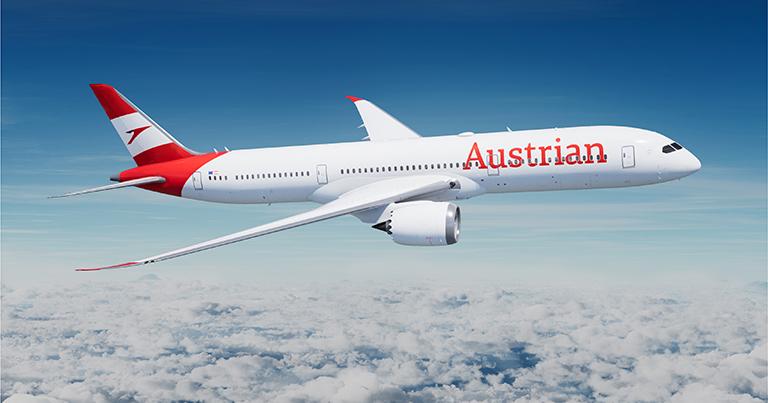
In April 2023, Austrian Airlines revealed plans to refresh its long haul fleet, replacing its existing wide body aircraft with Boeing 787-9s. Austrian’s long haul fleet currently consists of nine aircraft, including three Boeing 767-300ERs and six Boeing 777-200ERs
In order to modernize its fleet, Austrian will be taking delivery of 11 Boeing 787-9s. That means the airline is not only refreshing its long haul fleet, but also expanding it.
The first Boeing 787 Dreamliner will join Austrian’s fleet this year-end; the fleet refresh should be complete by 2028, at which point all previous generation long haul aircraft will be retired.
As of June 15, 2024, Austrian will start flying the 787 between Vienna and New York (JFK). As of July 1, 2024, Austrian will start flying the 787 between Vienna and Chicago. Austrian’s first two 787s will be former Bamboo Airways Jets.
Source: Austrian, Picture Austrian Airlines
Hawaiian’s Shareholders Accept Alaska’s Takeover Bid

Hawaiian Holdings’ shareholders have voted to accept the $1.9 billion acquisition offer from Alaska Airlines. The Honolulu-based company said on February 16 that preliminary results of the shareholder vote show “a substantial majority” favor the transaction, which the companies announced late last year.
“Stockholder approval of our transaction with Alaska is an important milestone toward combining our airlines,” says Hawaiian Airlines chief executive Peter Ingram. ”Together, we will bring stronger competition to the US airline industry, deliver more value to our guests and the communities that we serve, and provide greater job opportunities for our employees”.
The transaction is valued at $18 per share, and includes Alaska taking on $900 million of Hawaiian’s debt. Alaska Airlines had initially offered $20 per share before the two sides eventually agreed to the final prices; Hawaiian’s share price lost two-thirds of its value during the second half of 2023.
The companies have said they expect the acquisition will close in 12-18 months, with Alaska Airlines’ chief executive Ben Minicucci slated to take the top job of the combined company, pending regulatory approval. Executives at both companies maintain the deal is “pro-consumer and pro-competitive” and they are confident that the US aviation regulators will agree.
Source: Hawaiian Airlines
LATEST NEWS
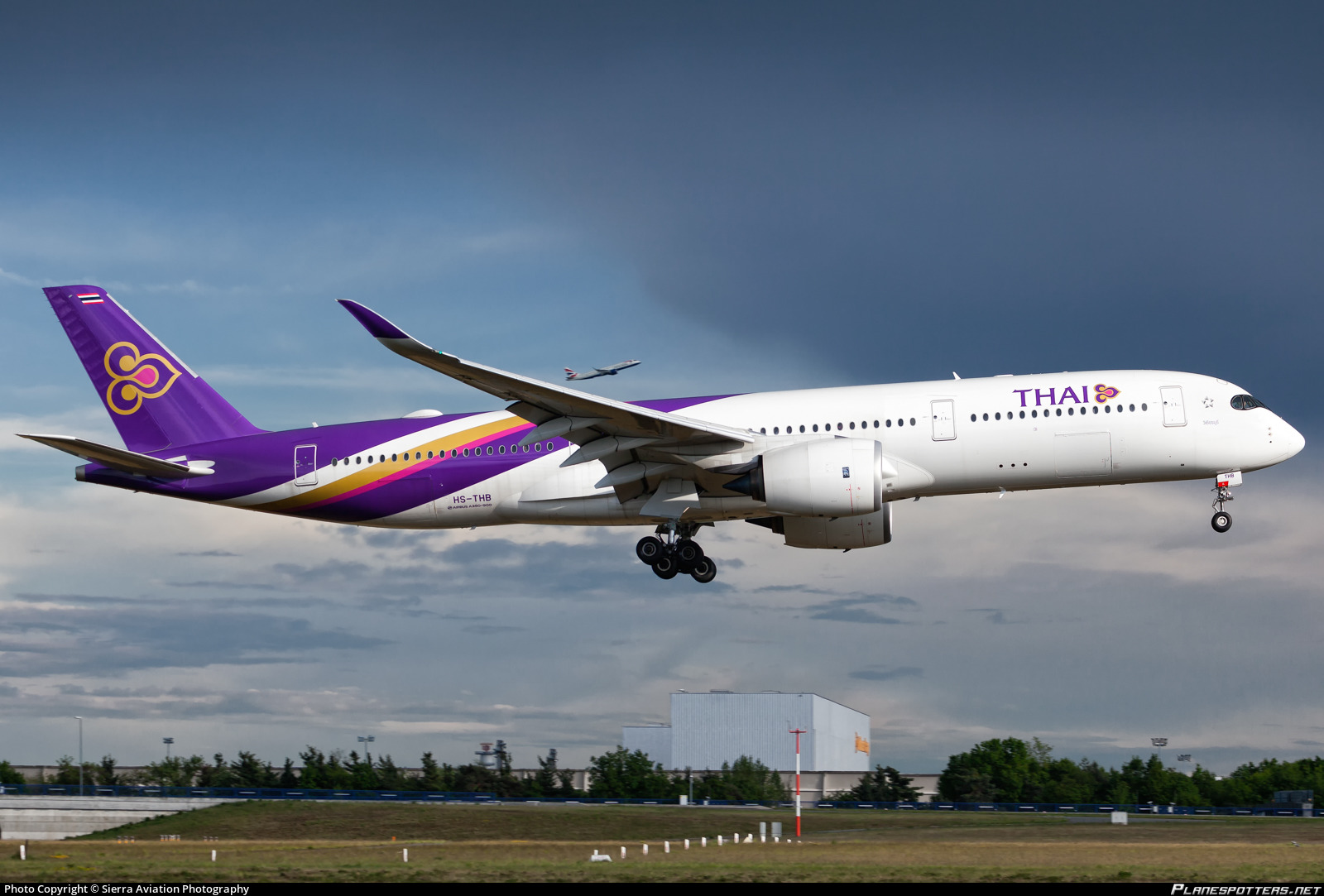
- Thai Always firmed up an order for 45 787-9s plus 35 options; the deal also offers the carrier a route to the new 777X.

- Avelo Airlines will add five leased Boeing 737NGs to its fleet sourced from Brazilian LCC Gol Linhas Aéreas, bolstering its current fleet of 16 737NGs.
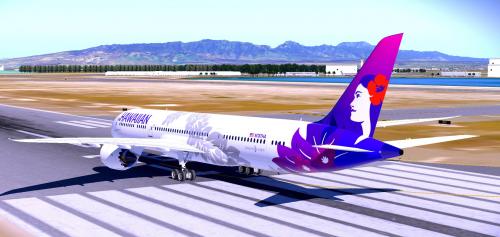
- Hawaiian Airlines has taken delivery of the first of 12 787-9 for which it holds firm orders.
- Allegiant Travel Company is expecting another lengthy delay in the delivery of its first Boeing 737 Max 8 aircraft, further difficulties for Boeing’s next generation narrowbody program.
- Thai Airways International has sealed leases with lessor AerCap for 17 aircraft, including Airbus A350s, A321neos and Boeing 787s in relation to its recently outlined fleet plan.
- Lessor China Aircraft Leasing Group(CALC) has picked CFM International Leap-1A engines to power a batch of 20 Airbus A320neo-family jets.
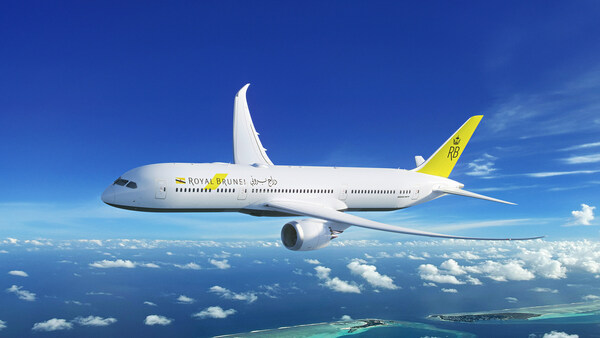
- Royal Brunei Airlines has ordered four new 787-9s from Boeing. The airline has been a Boeing customer since its founding in 1974.
Sources: Boeing, Thai Airways, Allegiant, Hawaiian
Air Cargo
ANA Delays Nippon Cargo Takeover Again

All Nippon Airways parent ANA holdings has postponed its takeover of Nippon Cargo Airlines for a second time, saying that anti-trust authorities need more time to review the deal.
In a stock exchange filing, the company says it now expects the transfer of ownership will take place on April 1, two-month delay from the original February 1 deadline.
ANA Holdings says it is ”taking into consideration the time to complete the review of the business combination that will result from the share exchange by relevant authorities in Japan and foreign countries”.
The firm had previously announced a delay in late September 2023 on similar grounds. ANA in July announced plans to acquire Nippon Cargo from Logistics giant NYK, in a deal that would make the cargo carrier a wholly-owned subsidiary of the Group.
Adds the airline group: “As a result of making Nippon Cargo a wholly-owned subsidiary…the balance sheet and income statement will be consolidated from the first quarter in this calendar year ending March, 2025.”
According to Cirium fleets data, Nippon Cargo has in-service fleet of eight Boeing 747-8Fs. It also owns seven-400s that are operated by Atlas Air and ASL Airlines Belgium.
Source: ANA, Nippon Cargo Airlines, Nippon Cargo Airlines
Starlux Orders Five Airbus A350 Freighters

Taiwan’s Starlux Airlines has ordered five Airbus A350 freighters. The order marks the carrier’s first dedicated cargo aircraft and continues its rapid expansion since launching services in 2020. Starlux has also taken options for five more freighters.
Starlux chief executive Glenn Chai says: “With this order, StarLux becomes the first Taiwanese airline to operate the next-generation A350F widebody freighter”.
Launched in July 2021, the A350F is expected to enter service in 2026 and has so far gained 50 orders from airlines including Cathay Pacific and Singapore Airlines.
Source: Starlux, Airbus, Picture Airbus

Researched and Compiled by :
Ed Kaplanian Commercial Aviation Advisor
Contact – ekaplanian@yahoo.com
Editor: Lee Kaplanian
 KAPLANIAN REPORT