The Kaplanian Report – June 2019

ON THE BOEING FRONT

  Boeing Remains Committed to $50 Billion in Annual Aircraft Services

Boeing remains committed to achieving $50 billion in annual aircraft services revenue by around 2027.  It is part of a broader aim by the company to control more of the commercial aviation ecosystem.

“We did set a big, audacious target,” Boeing chief executive Dennis Muilenburg, says during an investor conference hosted by AllianceBernstein on May 29.  “That target has not changed.” “Admittedly it’s a high-bar target.  We think it’s achievable target,” he adds.

Muilenburg set the $50 billion benchmark in late 2016 when the company merged all its aircraft services work into a new dedicated services unit called Boeing Global Services.  The division generated $17 billion in revenue in 2018, up 17% in one year—gains partly reflecting acquisitions like that of parts supplier KLX Inc.

The $50 billion mark remains a stretch, but Muilenburg thinks Boeing can sell more products and services related to aircraft maintenance, modifications, parts, training and software—“things that apply to the brains of our airplanes”.  He calls Boeing’s services expansion an effort to boost”lifecycle value”—meaning the revenue Boeing can earn over the course of an aircraft’s life.

“Investments to grow the services business will continue to be our primary fuel for growth,” he says.  “We do see some opportunity for targeted acquisitions.  But I see those as bolt-on complementary acquisitions rather than large scale acquisitions.

Source : Boeing


ON THE AIRBUS FRONT

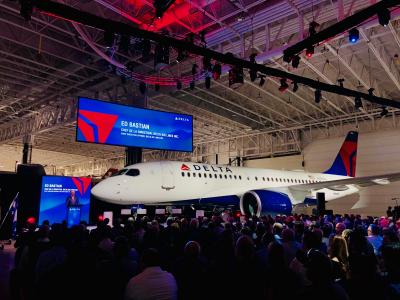
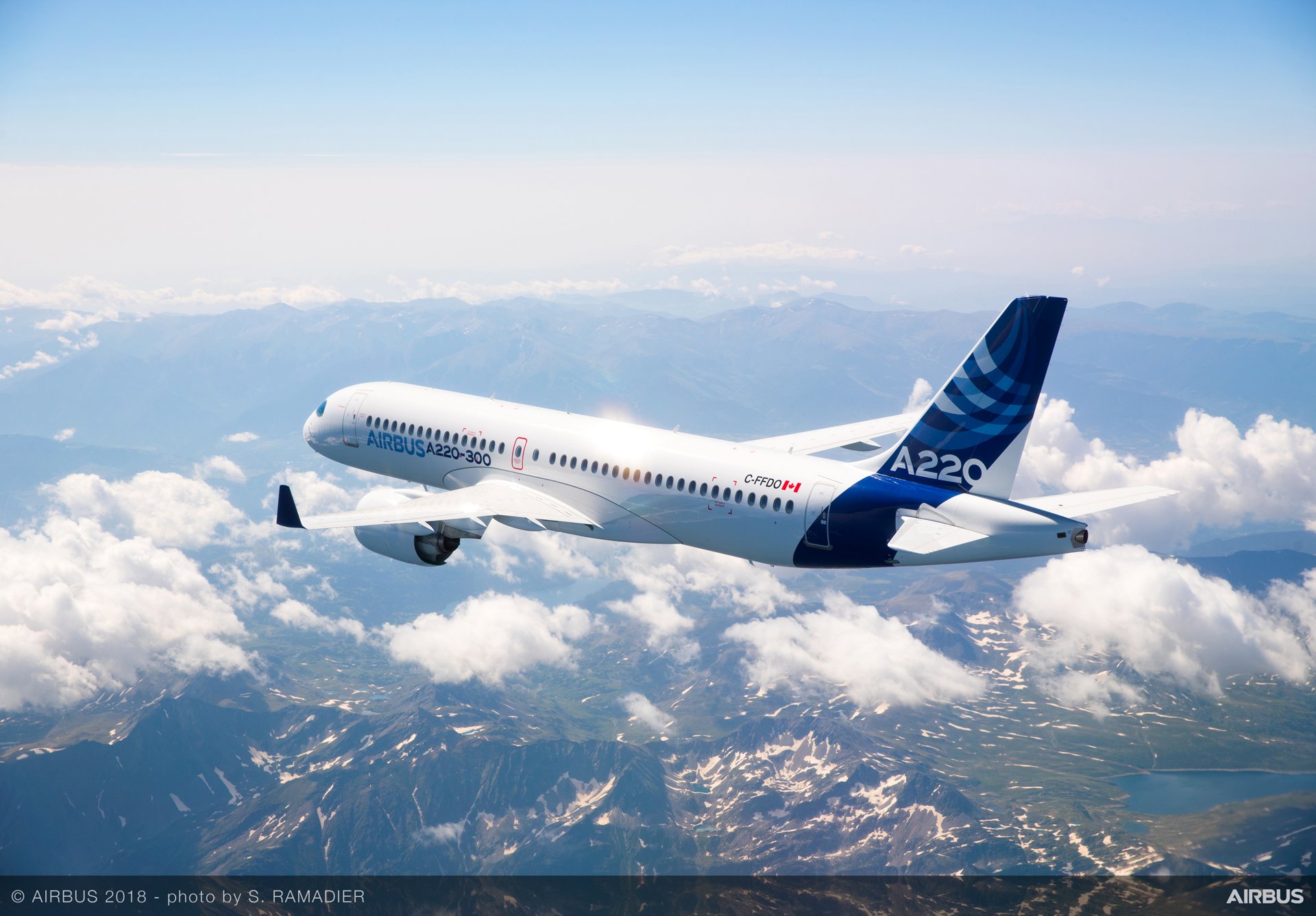
               Airbus Establishes Airbus Canada to Market the A220                           


The change of name of the C Series Aircraft limited Partnership(CSALP) announced in March 2019 to Airbus Canada limited took effect on June 1, 2019.

The new name reflects the majority interest of Airbus in partnership since July 1, 2018.  The partnership is adopting the Airbus logo as its single visual identity.

Over the course of the coming weeks, the new name will be applied to the limited partnership’s documentation, materials and branded items.  The Airbus and Bombardier logos will continue to be displayed side-by-side on the building exteriors in Mirabel, reflecting production activities on the site for both the Airbus A220 and Bombardier CRJ aircraft families.

Headquartered in Mirabel, the limited partnership carries responsibility for the development and manufacture of the Airbus A220 family.  Majority owned by Airbus, the entirety includes Bombardier and government controlled agency Investment Quebec and employs some 2,200 people.

Plans call for a second manufacturing facility, located in Mobile, Alabama, to start production in the third quarter of this year.

Source : Airbus           


REGIONAL/BUSINESS JETS

               Daher Has Secured European Certification for the TBM 940                                  

Daher has secured European certification of the TBM 940, nine weeks after launching the latest variant of its 29-year-old single-engined turboprop.  An update to European Union Aviation Agency type certification data shows the approval was achieved on May 10.

Priced at $ 4.13 million, the TBM 940 replaces the flagship 930 introduced in 2016 and incorporates a host of new features including an auto throttle, increased automation for the de-icing system and redesigned and updated interior.

French airframes Daher says the TBM 940’s auto throttle is the first to be installed on a single-engined turboprop weighing less than 12,500lb (5,675kg) and is designed to adjust the aircraft’s speeds based on the present flight profile.

The auto throttle also allows the six-seat aircraft to be operated at the edge of approved power regimes for its Pratt & Whitney Canada PT6A-66D.

The TBM 940 sits above the TBM910 as the baseline model since its launch in 1990.  12 variants of the high-speed aircraft have been produced and around 950 examples delivered globally.

Source : Flightglobal/Picture Daher 

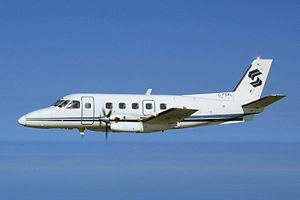
            Genghis Khan Airlines to Launch ARJ 21 Service in July

Chinese start-up Genghis Khan Airlines took delivery of its second Comac ARJ21-700 on June 4th, ahead of its planned launch date in early July.  Based in Inner Mongolia, the newly established carrier becomes the second operator of the type, after Chengdu Airlines, and the first to commit to operating solely of the Chinese-made regional jet.

On June 4th, Genghis Khan commenced verification test flights with its first ARJ21, flying between its base at Hohhot Baita International Airport, located in inner Mongolia’s far north. The carrier carried out two emergency evacuation simulations earlier in the day including a lithium battery fire and an engine failure during take off.  The carrier plans to compete a total of 25 verification test flights as part of its certification process over the next coming weeks.

Genghis Khan took delivery of its first ARJ21-700 on February 22.  A rebrand from the formerly known Tianjiao Airlines, the Chinese carrier shelved initial plans to operate fleet of Bombardier CRJ900s after inking an agreement covering 50 ARJ21s (25 firm orders and 25 options) in August 2018.

Genghis Khan expects to take delivery of two more ARJ21s this year, plans call for a fleet of 25 jets, powered by General Electric CF34-10A engines, to operate to 40 destinations within five years.

Despite mounting political pressure to raise the country’s profile as global aerospace contender, China’s first indigenous airliner as failed to gain traction in its home market.  To date, launch customer Chengdu Airlines remains the sole operator of the Comac regional jet, operating a fleet of 11 ARJ21s to 20 Chinese cities.

Source : AIM/Photo Comac                                                                                                                                                           

OTHER AVIATION NEWS

              Lebanon’s MEA Rises Above Structural Disadvantages 

Lebanon’s Middle East Airlines (MEA) expects to acquire up to 14 replacement aircraft and increase its fleet size to 20 aircraft by 2021.  It is working to overcome serious competitive disadvantages posed by its hub’s open skies policy, explained the airline’s head of commercial strategy and alliances, Walid Abillama.

“Our open skies policy is actually very unfair for us,” he told AIN during an interview at MEA’s headquarters at Beirut’s Rafic Hariri International Airport.

“Other carriers are free to add capacity.  If we ask to increase frequencies, they complain that they are not able to get slots.  When an airline comes to your base, you cannot take advantage of their network.  The Gulf carriers are the biggest in the world.  We are a minority at Beirut.  We have only 35 percent market share.”

Referring to traffic, originating from the UAE into Beirut, Abillama said Emirates operates three 777s a day, FlyDubai two flights a day and Etihad another two for total of seven.  ”We operate three flights a day to Dubai and one to Abu Dhabi,” he noted. “That’s seven for them and four for us.  Turkish Airlines operates four flights, Pegasus two and Atlas Jet one.  We have two flights away to Turkey.  Saudi Arabia is a similar situation.”

MEA operates 13 Airbus A320s and five A330s. It plans to replace up to nine A320s with A321, and four A330s with A330neos, which carry more seats.

The net effect could be a total fleet of 20 aircraft by 2021,” said Abillama.

Although MEA does not offer flight to North America, Abillama noted a thriving business in Lebanese passengers traveling to and from the U.S., MEA maintains

What Abillama called “special pro-rate agreements” with U.S. carriers United, American and Delta.  ”We give them tickets on MEA flights, and they sell our seats,” he said “We compete in North America without flying there.

Source : AIN/Picture MEA

                 Trent 1000 Fix Ranks as Top Priority for Rolls-Royce

Addressing premature blade deterioration of Trent 1000s ranks as Rolls-Royce’s “ single most important issue,” acknowledges the aero engine company. They profess “deep regret” for the distraction to customer operations and the resulting groundings that cost the UK manufacturer some about $540 million last year.

Dominic Horwood, the company’s civil-aerospace chief customer officer, called the “significant” disruption to customers “absolutely unacceptable to them and to us”.  He stressed the importance of providing support by returning engines to operators.

Rolls-Royce added it has become “more responsive in turning engines around” and hopes to see single-digit numbers of aircraft on the ground(AOG) by the end of 2019.

Horwood said the company “respects” Air New Zealand’s decision to choose General Electric GEnx power plants for a new batch of Boeing 787-10s over the incumbent Trent 100s that power its 787-9 fleet. “They are still an important customer to us,” he remarked.  “The way we support customers is how we will be remembered.”

The official went to pains to emphasize that the blade-deterioration resulted from design issue specific to the Trent 1000 at the “component level”and does not apply to other Tent-Family variants.

Horwood said the manufacturer, which claims good progress in introducing technical fixes, never stops learning.  The lessons reside very much in detail design of components and an understanding of what can cause deterioration in service.  ”Once we have done that, then it is easy to apply on new engines’’, he explained.  ”This is not about mistakes, but apply lessons we are applying that learning in the UltraFan future-technology program.”

Source : Rolls-Royce/Air New Zealand Picture

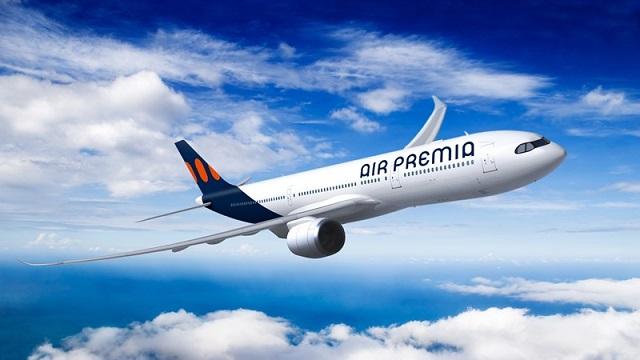
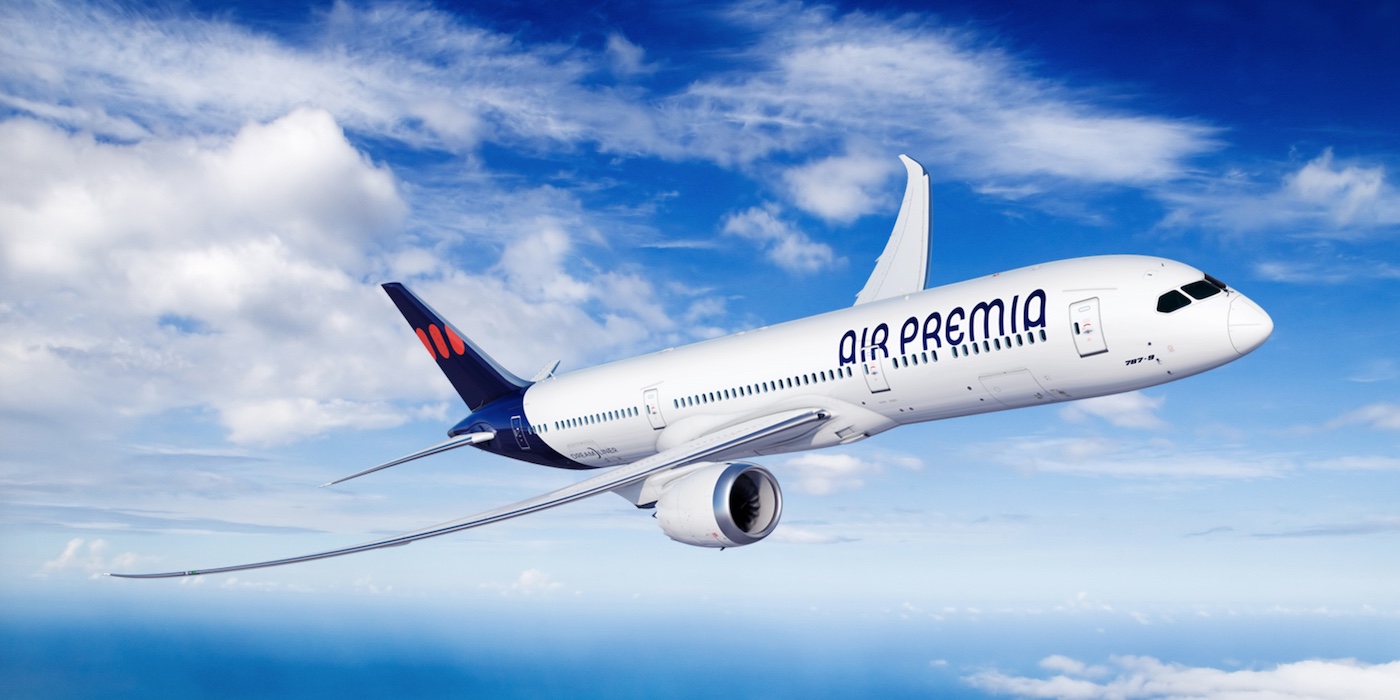
                              Air Premia is Coming to Los Angeles

Air Premia is planning to use its new Boeing 787-9 Dreamliner on the Seoul Tokyo-Los Angeles route starting in 2021 according to Forbes.  This will be the first long-haul route for the new carrier.

Funding for Air Premia went to venture capitalists and financial institutions, with no shareholder so far having more than 20%, according to a spokesperson.

Whereas start-up airlines often often have only a few investors, Air Premia in January stated it has seven public investors. Series B funding raised $147 million, and Air Premia aims at profitability within three years.

One shareholder is Hong Sung Bum, the founder of Hugel, a pharmaceutical company that manufactures Botox.  An Air Premia spokesperson said Hong wanted to diversify into new businesses.

Air Premia does not intend to operate to operate narrowbody aircraft, and nor will fly domestically-a first for a Korean airline.

Initially Air Premia will fly regionally within Asia.  Its first three 787-9s are leased from Air Lease and arrive in July, September and November 2020.

Source : World Airline News/Forbes/Air Picture Boeing


LATEST NEWS

  • Vistara indian carrier will lease two Airbus A320neos and four Boeing 737-800NGs from Singapore-based lessor BOC Aviation.
  • Korean Air received delivery of its 25th Boeing 777-300ER on May 14, the 200th Boeing aircraft from Boeing over 48 years.Korean Air first introduced the 777-300ER into service in 2009.
  • DHL Express has embarked on a major fleet strengthening plan.  The company placed an order for 14 Boeing 777 Freighters.  The delivery of the first of the planes is expected to be completed this year.
  • Airbus on the first day of the Paris Air Show, Airbus announced the launch of the A321XLR, with large orders from a large numbers of their customers (more details in my July blog.)
  • IAG CEO of one the world’s largest airline groups gave Boeing a significant and highly public boost at the Paris Air Show June 18, announcing a tentative deal for 200 MAX 737s.The deliberate significant of this LOI, for a mix of 737-8s and larger 737-10, cannot be overstated. Boeing just got a huge boost from IAG CEO Willie Walsh, a well-known and respected industry leader, businessman, and a 737 pilot.  “We’re partnering with the Boeing brand.  I have worked with Boeing for years and it’s a brand I trust,” he said.”We have every confidence in Boeing and expect that the aircraft will make successful return to service in the coming months, having received approval from regulators.”                      

AIR CARGO

               Qantas to Upgrade Atlas-leased Freighters to 747-8Fs

Atlas Air Worldwide Holdings, which has had a long-standing ACMi lease agreement with Qantas Freight for the operation of two 747-400 freighters, said in a statement that the leased aircraft will be updated to two 747-8Fs.

Both 747-400s operate in Atlas Air Livery rather than Qantas livery, having flown trans-Pacific routes connecting Australia, Asia and North America.  According to Atlas’ statement both -8Fs will operate the same routes beginning late next month.

According to Atlas, the 8Fs will begin operating for Qantas once existing agreement with another Atlas customer expires, while the -400Fs operating now for Qantas will go to the ACMI for another customer. 

Source : Air Cargo Facts/ Picture Atlas Air      


Maintenance, Repair and Overhaul News

           Boeing to Supply Airbus A320 Parts to British Airways

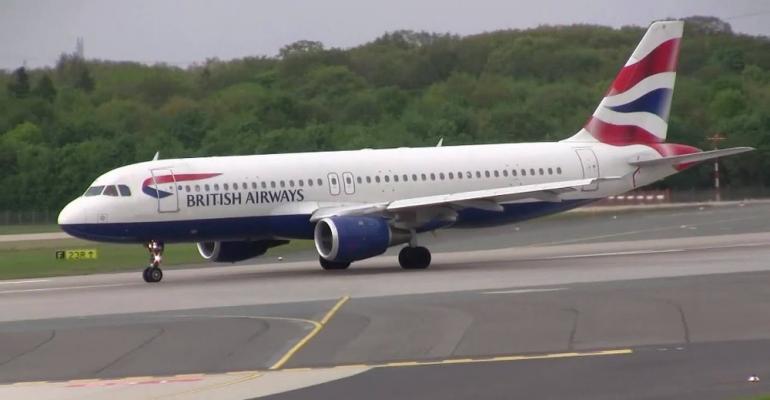
Boeing is to supply parts for aircraft made by rival Airbus to British Airways A320 fleet.  British Airways has 67 A320-200s and 10 A320-200neos in its fleet.

“We’re very excited about this,” BA’s chief financial officer Steve Gunning told reporters at the Paris Air Show.  ”To have all of BA’s A320 and A320neo family covered by this arrangement is a great way forward.”

He added: “We went through a very rigorous process.  We know Boeing will bring a wealth of experience and it enables us to really focus on our core operation.

Boeing Global Services chief executive Stan Deal said that the manufacturer was”happy to put our hat in the ring” to offer BA “more choice.”  In addition, the carrier has signed an agreement for three landing gear exchanges for its 777-300ERs.  Through the program, operators receive an overhauled and certified landing gear from an exchange pool maintained by Boeing.

The latter deal comes four months after IAG agreed to buy as many as 42 of the 777X wide body aircraft to replace BA’s aging fleet of 747s.  It has ordered 18 777-9s and took options for an additional 24.

Source: MRO-Network/British Airways/British Airways Photo    


Researched and Compiled by :

Ed Kaplanian    Commercial Aviation Advisor 

Contact – ekaplanian@msn.com

Editor:   Lee Kaplanian 


The Kaplanian Report – May 2019

ON THE BOEING FRONT

               Boeing Launches Used Serviceable Material Capability

On April 9, Boeing announced that it is expanding the total lifecycle support offering by managing the entire end-to-end process of its Used Serviceable Material (USM) business. USM provides customers with a convenient and cost-effective alternative to brand-new parts, offering high-quality rectified parts harvested from retired aircraft.

Boeing started prototyping the USM business last year by tearing down aircraft—starting with 777s and testing parts demand and pricing. The full launch is now occurring.

In an exclusive interview with Aviation Week, Stan Deal, chief executive officer of Boeing Global Services, said Boeing contracts multiple third parties to complete the teardown, depending on where it makes sense to do them.  The teardown are primarily done in the U.S. but says future teardown will be done where it makes economic sense.

“The great thing about Boeing doing this is that we can stand behind the quality pedigree of the parts,” and with its repair network, it ”can ensure high quality” for the used material, Says Deal.  This combination gives airlines a choice between Boeing-backed new or used parts to meet an airline’s economic priorities for an asset.

Deal says Boeing would consider tearing down aircraft that it did not manufacture for used parts supply and “we’re evaluating how far we go on engines.” So far, Boeing is not tearing down engines.

Source : Aviation Week/Boeing


ON THE AIRBUS FRONT

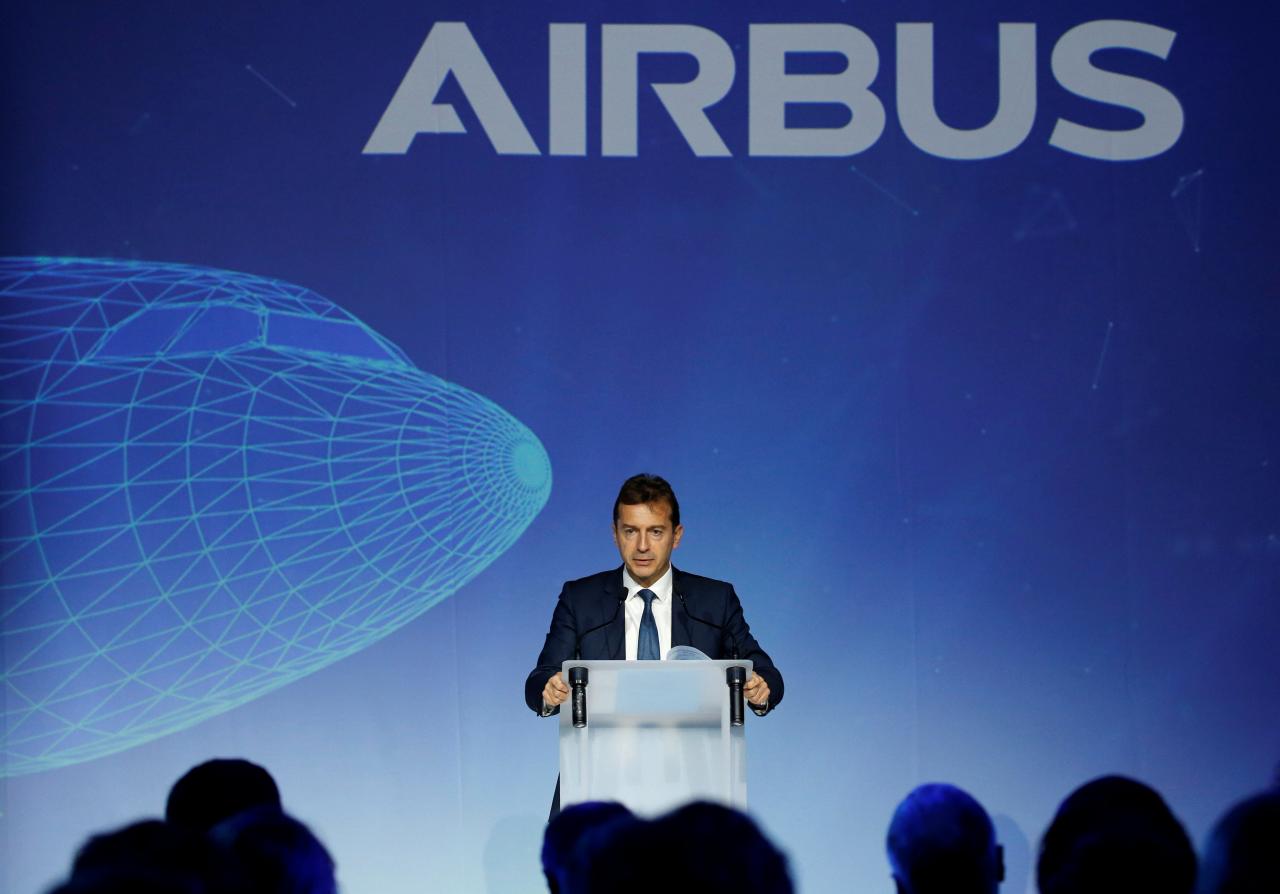
            Newly Appointed Airbus CEO Faury Names Leadership Team

One day after officially taking the helm of Airbus and taking over from Tom Enders as CEO of the European OEM, Guillaume Faury revealed his executive committee, which now includes 12 members—including two women, double the number served on the prior committee.

The elimination of the position of president of Airbus Commercial Aircraft, the group’s most important unit, stands as the most notable change, however.   Faury formally became CEO of Airbus at the company’s annual shareholder meeting, though the company had already announced his promotion to the top spot last year.

“We are in a period of exceptional change in our industry and we need to prepare Airbus for the opportunities and challenges ahead,” Faury commented.”With our pioneering spirit we can build on our past success to prepare the Airbus of tomorrow in order to better serve our customers, increase our competitiveness, and grow in a sustainable way.”

Newcomers to the executive committee include Jean-Brice Dumont, who moves up from executive vice president of engineering at Airbus Commercial Aircraft to the same position at the group level; Julie Kitcher, formerly head of investor relations and financial communication and now executive vice president communications and corporate affairs leading all external and internal communication activities.  KItcher also became Faury’s chief of staff will steer and coordinate the transformation agenda of Airbus and manage audit, performance management, responsibility and sustainability and environmental affairs.  Kitcher takes over from Rainer Ohler, who is leaving Airbus after 24 years at the company.

Source :  Airbus/Picture Airbus      


REGIONAL/BUSINESS JETS

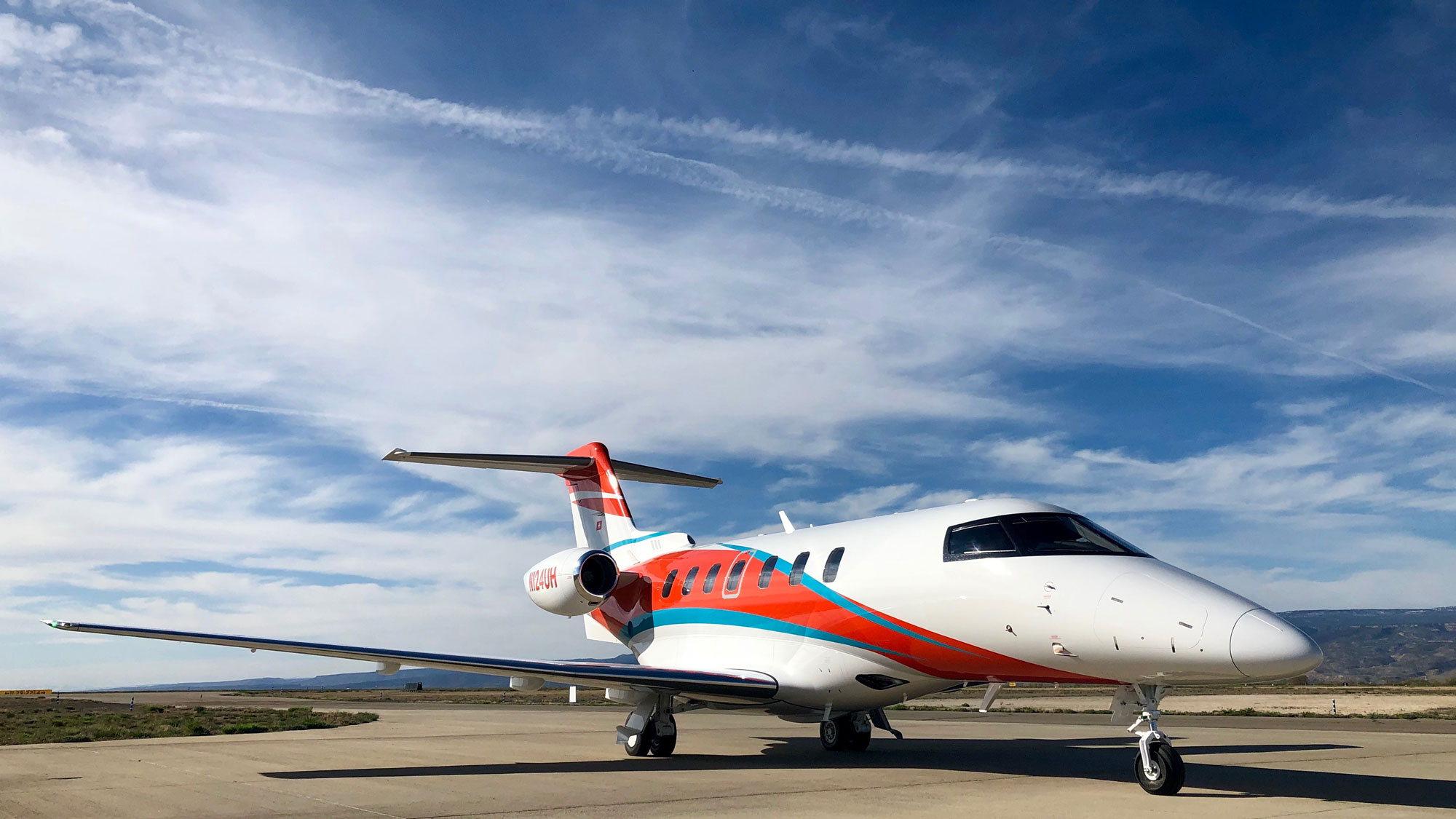
 Pilatus Delivered the First of Two PC-24s to UHaul International                           

The superlight business jet, registered N124UH was handed over on April 29, at the Swiss airframes’s North American subsidiary in Broomfield, Colorado. 

Joining U-Haul’s existing pair of PC-12 single-engined turboprops, the eight-seat jet will be used in a corporate transport role.

Joe Shoen, chairman of U-Haul parent company AMERCO says the firm has been “eagerly looking forward” to the PC-@4’s since Pilatus unveiled the Williams International FJ44-4A – powered twin in 2013.

“We were confident that it would be a real workhorse  along side our two PC-12s, would help us manage our growing operations throughout North America,” says Shoen.

Phoenix, Arizona-based U-Haul will take delivery of its second PC-24 in early 2020, Pilatus says.

The PC-24 entered service on April 1, 2018, with US fractional ownership company and fellow PC-12 operator PlaneSense. To date, in-service fleet of 25 aircraft has logged over 4,000 flight hours, says Pilatus. Output of 40 PC40s is planned for 2029.

Source : Flightglobal/Pilatus/Pilatus Aircraft Picture                                                                             

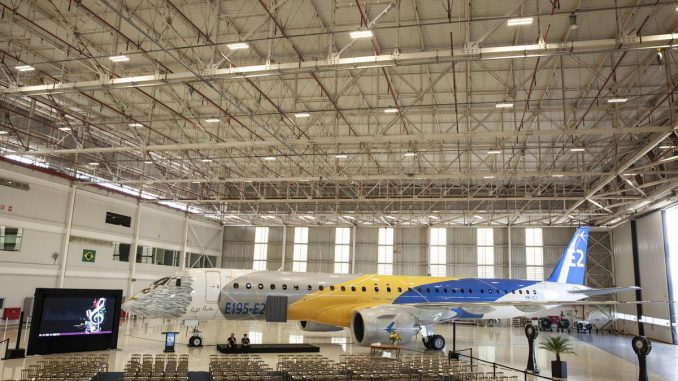
                       Embraer E195-E2 Receives Type Certification

Embraer has received the type certificate for its E195-E2 airliner from three regulatory authorities: ANAC, the Brazilian Civil Aviation Agency; the FAA and EASA. The E195-E2 is the largest of the three-strong family of commercial aircraft and has three additional seat rows that can be configured either with 120 seats in a two-class layout or up to 146 seats in a single class.

John Slattery, President & CEO, Embraer Commercial aviation said : “Our flight tests confirmed that the aircraft is better than its original specification.

Fuel consumption is 1.4% lower than expected—that’s  25.4% less fuel per seat compared to the current-generation E195.  Maintenance costs are 20% lower as well.  There’s no question that airlines are going to love the E195-E2’s economics and it is ideal aircraft for growing regional business and complementing existing low-cost and mainline fleets.”

The E195-E2 will enter service in the second half of this year with both Azul of Brazil and Winter Canarias of Spain. 

Source : Embraer/Picture Embaer    


OTHER AVIATION NEWS

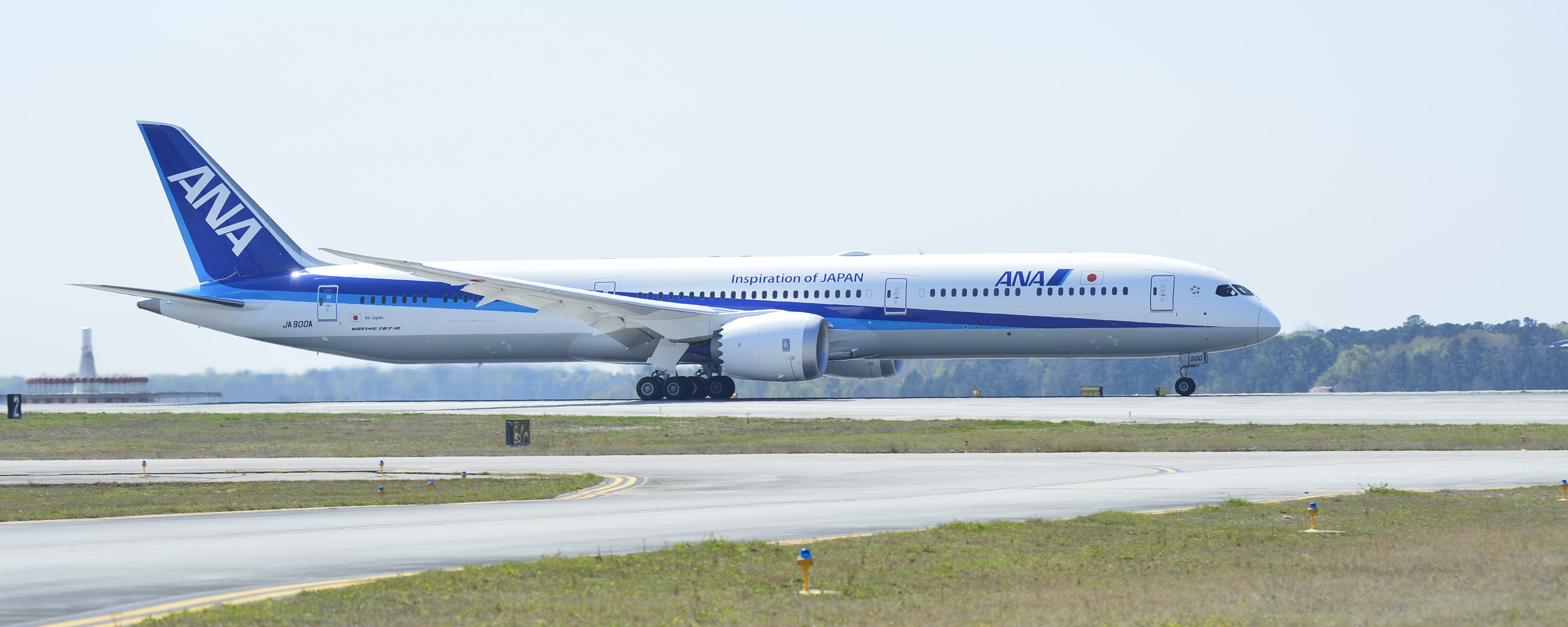
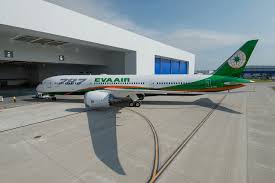
                                    First 787-10 Dreamliner for ANA

All Nippon Airways(ANA) has become the first Asian carrier to take delivery of all three Boeing 787 Dreamliner variants following handover of its initial 787-10.

The Japanese airline, the original launch customer for the 787 program, took delivery of the first three 787-10s at a ceremony held at Boeing’s North, Charleston, South Carolina, facility on April 4.

As a stretch of the 787-9, this version carries a total of 330 seats in a standard two-class configuration, adding around 40 more passengers.

According to Boeing figures, the -10 sets new benchmarks for fuel efficiency and operating economics, with a 25% better fuel per seat performance.

This latest delivery marks the 67th example to join ANA’s—36 787-8s, 30 787-9s and one 787-10, the largest Dreamliner  fleet in the world—with a further 16 aircraft on order. The carrier plans to operate the new aircraft on its popular Tokyo to Singapore route.

Source : ANA/ Picture Boeing                                                                                                                  

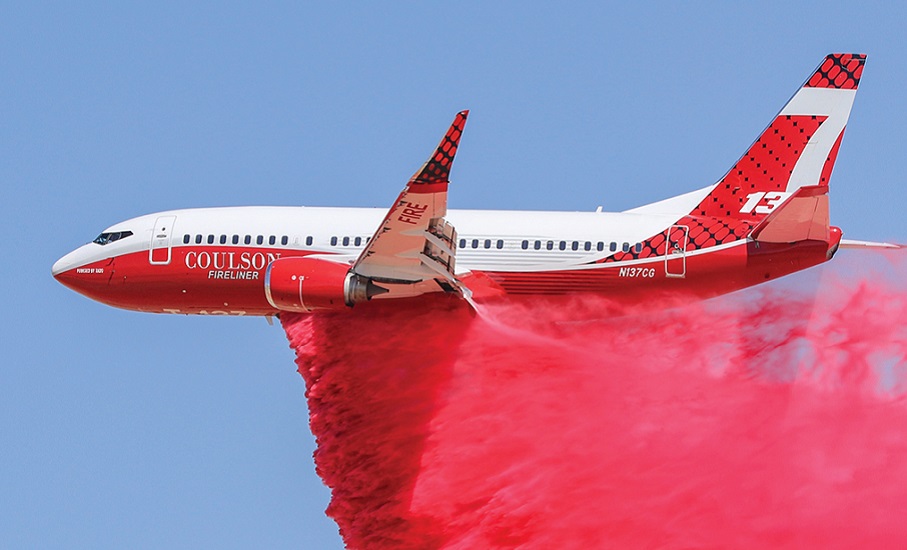
Coulson Aviation Signed a Landmark Deal to Sell a Boeing 737-300

The sale also includes two Cessna Citation V lead/intelligence aircraft, and a 10-year operating contract with Coulson’s Australian unit to provide all flight and maintenance personnel to support the aircraft.  Purchasing the aircraft will give the NSW Rural Fire Service its first year-round firebombing capability.

Based on a 737-300, the aircraft can deliver 15000I of fire retardant, and the transport up to 72 passengers.  It was certificated by the FAA in 2018 and made its first operational retardant drop in November.

“When we started the 737 Fireliner program, we set out to create a new generation of air tanker.” said Britton Coulson, Vice President of Aviation.

The goal was to utilize the latest smart technology in our tanking system and create a multi-use firefighting aircraft that would create the best value for our customers.”

NSW Rural Fire Service acting commissioner Rob Rogers says that it evaluated several options before deciding to acquire the 737.

Cirium’s Fleet Analizer shows that Coulson’s US unit, Coulson Aircrane, has three 737 Fireliners inits fleet, all aged around 24 years.The Three jets were originally operated by Southwest Airlines before being converted to firefighting aircraft.

Source : Flightglobal/ Picture Coulson Aviation                                                                                    

                Senate Vote Restores Full Ex-Im Financing Capacity

Boeing welcomed a measure of positive news on Wednesday. May 8.  After weeks of negative publicity over the second crash of a 737 Max, when the U.S. Senate confirmed three nominees of President Donald Trump as members of the board of directors of the Export-Import Bank of the United States(Ex-Im).

The bipartisan vote restores the export credit agency to its full capacity and what Boeing executive vice president of government operations Tim Keating called “an important tool” in the company’s set of available financing instruments.

“Congress took a key step today to help American companies to compete and win in the international market,” said Keating. ”Now the Ex-Im Bank is fully operational and can begin approving the billions in deals stuck in the pipeline that 240,000 American manufacturing workers are counting on.”

“This is a great day for U.S. exporters, their workers, and their suppliers across the country,” said Ex-Im chairman and acting president Jeffrey Gerrish.  ”Ex-Im has nearly $40 billion worth of export deals in the pipeline that can move forward in support of hundreds of thousands of American jobs.”

The new Ex-IM board members include former U.S. Treasury official Kimberly Reed, who will serve as president and board chairman; former U.s. Congressman Spencer Buchus III; and former Overseas Private Investment Corporation(OPIC) vice president of external affairs Judith DelZoppo prior.  Two other nominees await Senate approval.

Source : ainonline/aviation-news/air transport


LATEST NEWS

  • Rolls-Royce Tay 611-8 Engine Achieves 10 Million Flying Hours  which entered service in 1987, powering Gulfstream GIV, GIV-SP, G300 and G400.  It recently reached 10 million flying hours in nearly five million flights.
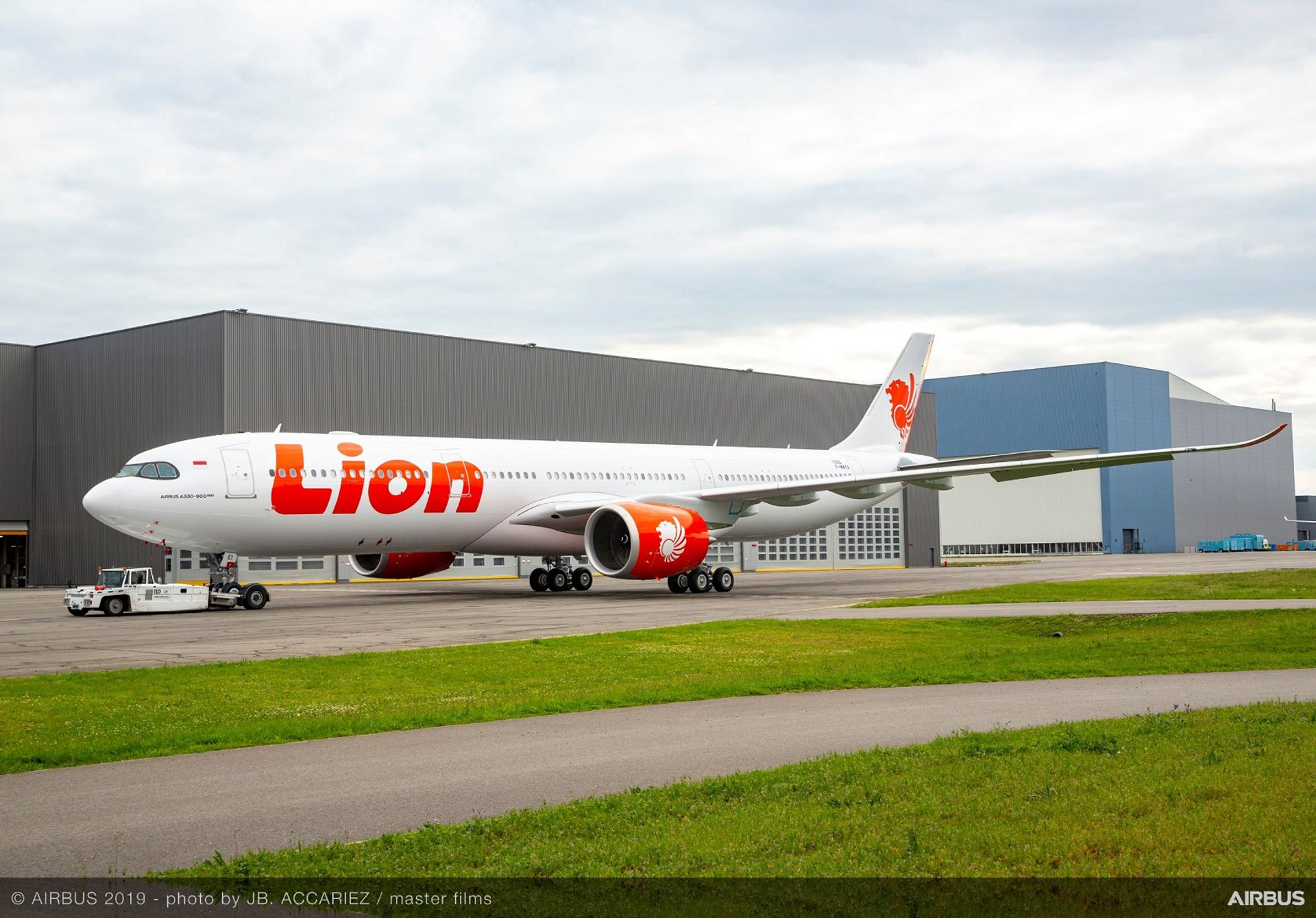
  • Airbus rolled out the first A330neo for Lion Air Group.                                                         
  • WestJet launched Boeing 787-9 operations(Calgary-London Gatwick).
  • ExpressJet took delivery of its first of 25 Embraer E175s for United Express operations.
  • GECAS delivered the first of three Boeing 737-900ERs to Nordwind subsidiary Ikar Airlines, which operates as Pegas Fly.
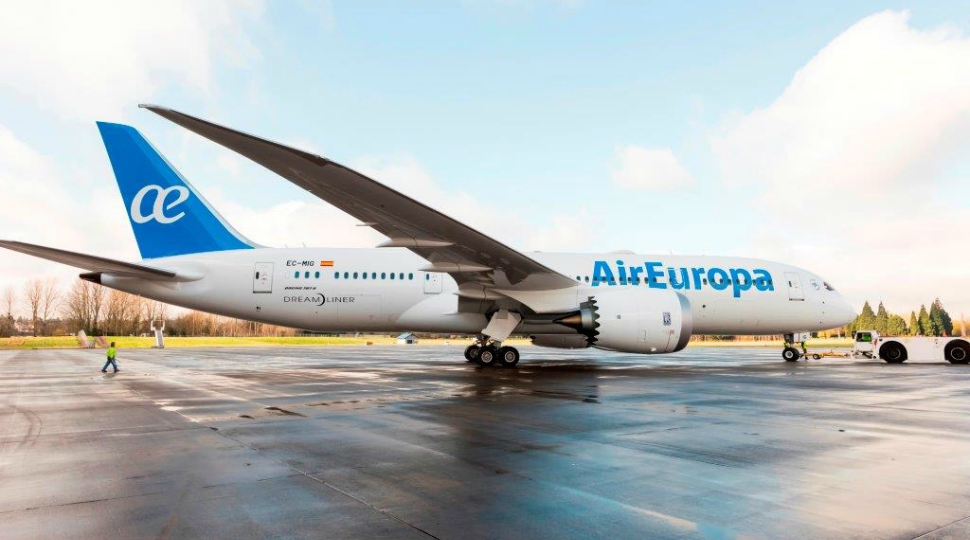
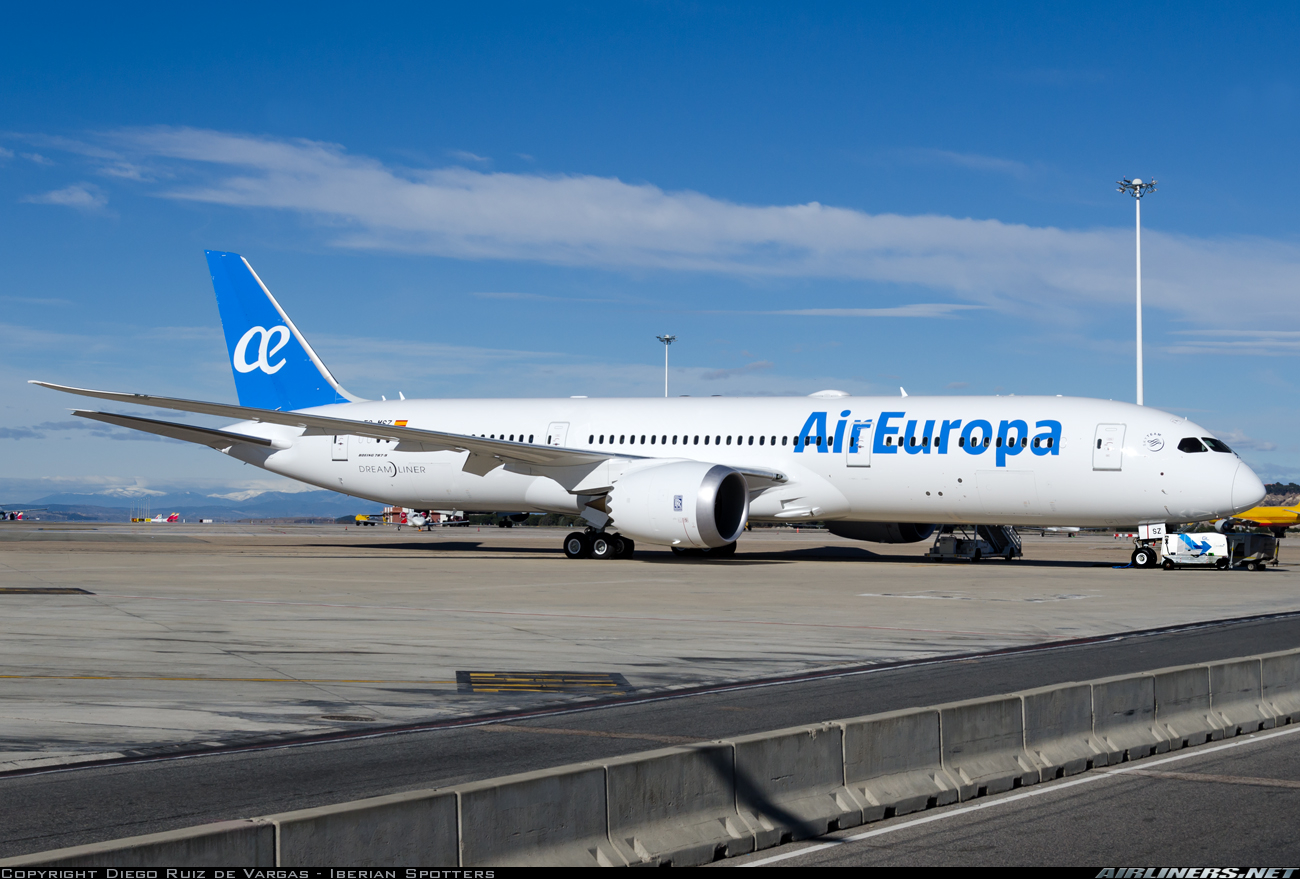
  • Air Europa took delivery of first of six new Boeing 787-9s on lease from BOC Aviation.   
  • Air Transat, a Canadian leisure and holiday travel airline, took delivery of its first of 15 Airbus A321LR aircraft.  Air Transat leaves the A321LR from AerCap.
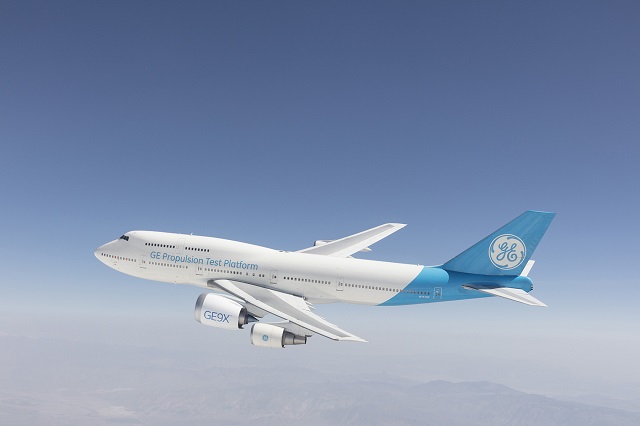
  • GE Aviation has completed testing of the GE9X on the company’s Boeing 747-400 flying test-bed ahead of the engine’s first flight this summer on the 777-9.


AIR CARGO

    SF Airlines Plans Transpacific Expansion  With New York Freighter         

Fast-growing express carrier SF Airlines has applied to the US Department of Transportation to launch a scheduled freighter service between its HangZhou hub and New York.

The Chinese carrier hopes to launch the three times per week service in September of this year, utilizing one of its two Boeing 747-400F freighters.

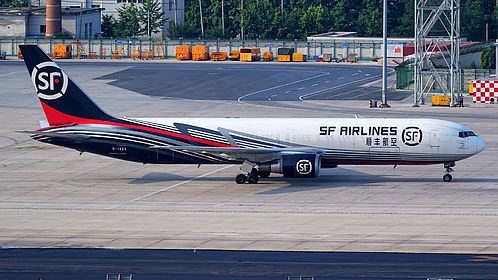
On May 13, SF Airlines has taken delivery of its eighth 767-300 freighter, ex TUI Airways, following the aircraft conversion at Boeing’s authorized conversion center at Taipei.  SF plans to use the aircraft for perishables transportation, including fresh fruits and seafood, during summer and autumn of 2019.

Source : Air Cargo Facts/Picture SF Airlines                                                                                            

Maintenance, Repair and Overhaul News

 500th Milestone Delivery

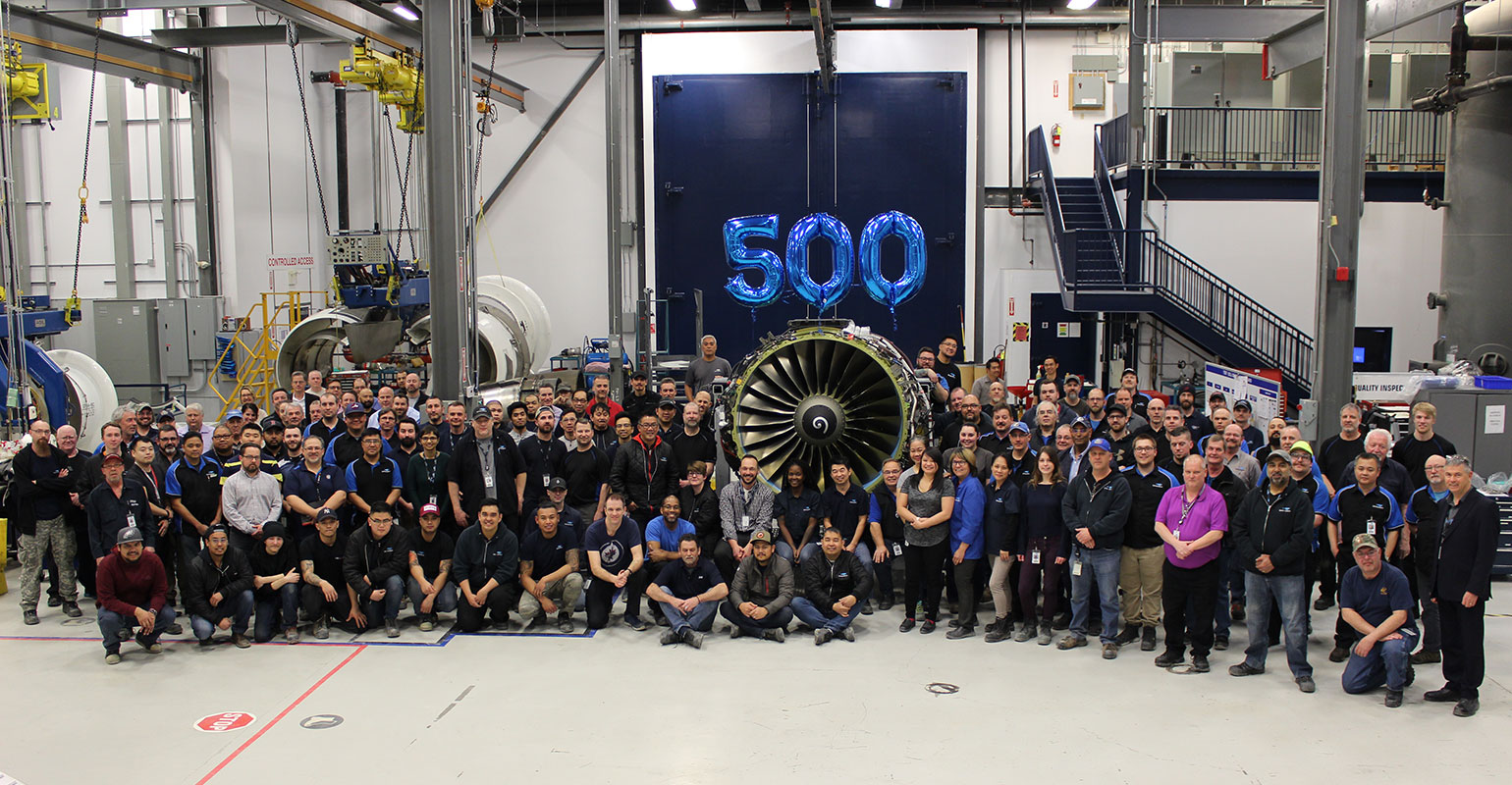
StandardAero has celebrated the redelivery of its 500th CFM international CFM56-7B turbofan from its Winnipeg, Manitoba, facility.

The engine, which powers a Boeing 737 Next Generation jet operated by a major North American airline, has been overhauled under a package of work through its partnership with GE Aviation.

The Company launched its CFM56-7B program in June 2009, when it was selected to support WestJet’s fleet of engines under an exclusive 13-year

‘ OnPoint’ solution contracted by the Canadian carrier with GE Aviation.

StandardAero completed its initial campaign of 57 CFM56-7B mid-life shop visits for WestJet in December 2012 and has since gone on to process 254 engines for the airline.

Due to StandardAero’s success on the WestJet contract, which also included unscheduled engine removals, GE has begun sending repair and investigation CFM56-7B work to Winnipeg from additional operators, including United Airlines.

Source: StandardAero/Photo StandardAero


Researched and Compiled by :

Ed Kaplanian    Commercial Aviation Advisor 

Contact – ekaplanian@msn.com

Editor:   Lee Kaplanian 

 

The Kaplanian Report – April 2019

ON THE BOEING FRONT

                        Boeing has Released Images of the First 777-X

        The 777-9 variant was quietly unveiled to employees on March 13.  Boeing had intended to rollout the aircraft during an employee and media event the same day, but scaled back the unveiling back the unveiling in light of the March 10 crash of Ethiopian Boeing 737 Max.

Still, the company put the 777x on display for employees, releasing pictures from the event showing the aircraft in the hanger, freshly painted in Boeing’s blue-and-white livery.

The 777-8 will have an 8,700nm (16,110km) range and capacity for 350-375 passengers, while the 777-9 will have 7,600nm range and ability to carry 400-425 passengers.

Source : Boeing


ON THE AIRBUS FRONT

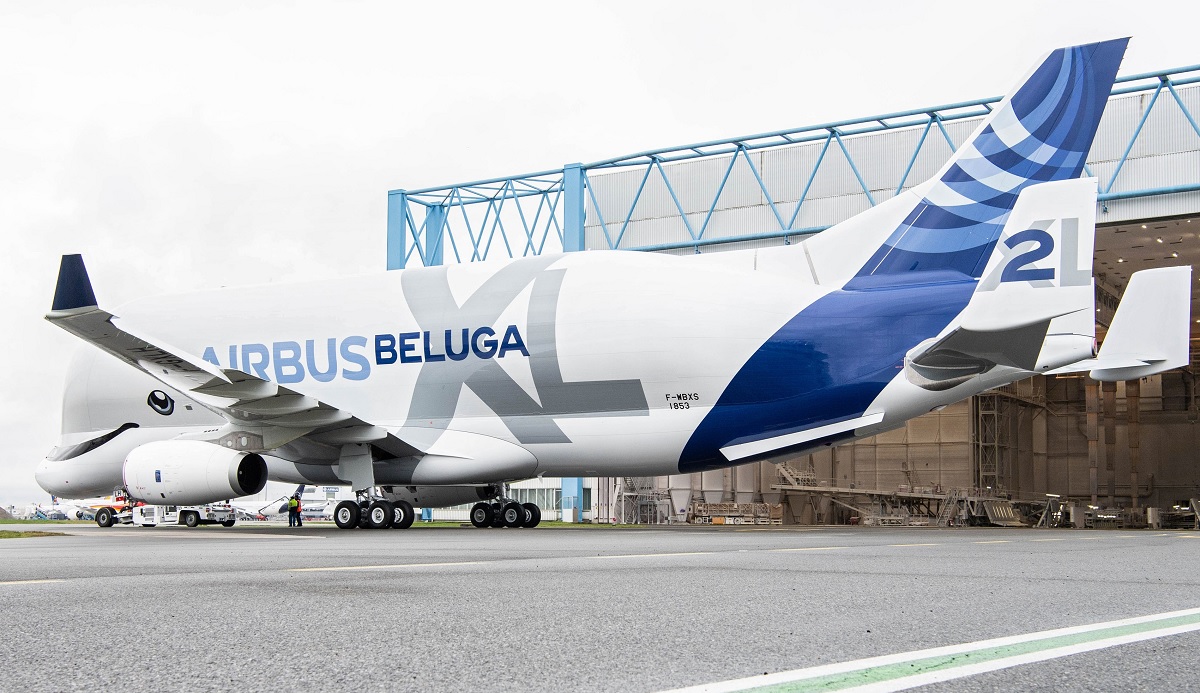
 Airbus Shows Off the Second High-Capacity BelugaXL Transport

The aircraft -MSN1853- carries the similar beluga whale paint scheme of the first airframe, MSN1824, which began its flight-test campaign in July  last year. 

Airbus had previously indicated that MSN1853 would be the first aircraft to enter service.

Airbus has already demonstrated that the aircraft is able to fly a set of A350 wings from Bremen to Toulouse, the primary task for which the twinjet has been developed.  

Formally known as the A330-700L, the BelugaXL is powered by Rolls-Royce Trent 700 engines and is a successor to the A300-600 ST Beluga transport.

This older aircraft was unable to handle more than one A350 wing and airbus developed the larger A330-based version in order to cope with A350 production ramp-up.

Source : Airbus/Flightglobal/picture Airbus        


REGIONAL/BUSINESS JETS

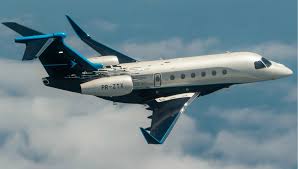
 Embraer’s Praetor 600 has Entered the final Phase of Flight-testing

Certification testing of the Super-midsize business jet was completed on March 11, says the Brazilian airframer, with three aircraft—two prototypes and a production-confirming example— logging 440hrs across 372 flights at Embraer’s Gaviao Peixoto test base.

A maturity campaign—designed to ease the jet’s entry into service— is now under way, and production-conforming aircraft has so far accumulated around 30 hrs of an expected 50 hrs of flying, says Embraer .

Powered by Honeywell HTF7500E turbofans, the Praetors are derivatives of the Legacy 450 and 500 with which they share the same fuselage and wings, supplied by the company’s metal and composites manufacturing facility in Evora, Portugal.  

Improving on the capabilities of the Legacy 500, the Praetor 600 gains new winglets and two extra belly fuel tanks, while engine thrust has been increased by 500lb(2.2kN), taking range to 3,900nm (7,200km).  That is 760nm more than the Legacy 500, and almost 300nm longer than its closest super-midsize competitor, the Gulfstream G280. 

Both models will share an assembly line with the Legacy duo in Sao Jose dos Campos, and at Embraer’s US business aviation manufacturing facility in Melbourne,Florida. 

Source : Embraer/Picture Embraer

 Genghis Khan Airlines Takes Delivery of its First Comic ARJ21-700 

The operator has orders for 25 ARJ21s, which are powered by General Electric CF34-10A engines.  The twinjet will be used to operate regional routes within Inner Mongolia from its base of Hohhot Baita International airport, says Comac. 

Genghis Khan received preliminary regulatory approval from the Civil Aviation of China just under a year ago.  It is wholly backed by state-owned Inner Mongolia Aviation Tourism Investment.

Initial plans were based around a fleet of bombardier CRJ900s, however the carrier subsequently ordered 25 ARJ21s, with options for another 25, in August of last year. It aims to have 25 aircraft in service within five years operating, a network of 40 destinations.

Source : China Aviation News/Picture COMAC                                                            

OTHER AVIATION NEWS

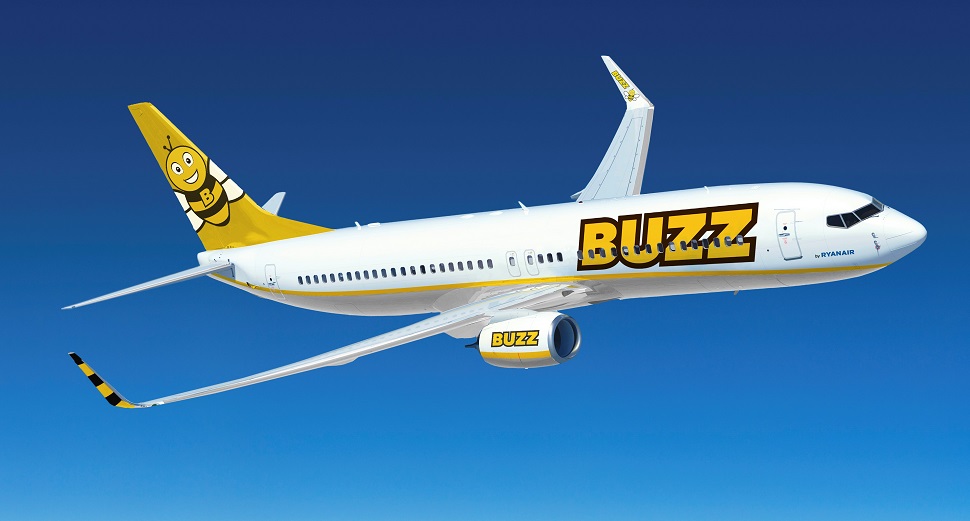
 Ryanair is to Resurrect the ‘Buzz’ Airline Brand Later this Year 

The airline says it will rebrand Ryanair Sun, which was set up last year, with new identity being introduced from autumn. The name will be used for its newly-established Polish operation Ryanair Sun.

Ryanair Sun flies under a Polish air operator’s certificate and uses a fleet of 17 Boeing 737-800s.

The Buzz brand was acquired by Ryanair when it took over KLM UK budget airline operating under this name in April 2003.

The Buzz brand name is to be revived with the Polish operation and Buzz will become one of the four carriers within Ryanair Holdings—along Ryanair itself, Laudamotion, and Ryanair UK. 

Ryanair Sun chief executive Michal Kaczmarzyk says the fleet will have a “new and unique branding” when Buzz is launched. 

Buzz will operate scheduled and charter flights and Ryanair aims to expand its fleet to 25 aircraft by summer this year.

Source : Ryanair/picture Ryanair

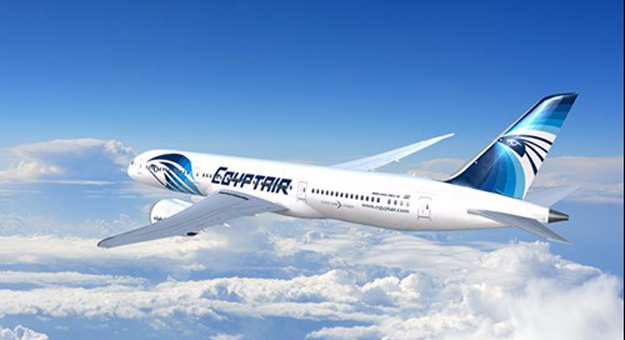
                    EgyptAir Takes Delivery of its First 787-9 Dreamliner

The Aircraft is one of six Rolls-Royce Trent 1000-powered Dreamliners that the Egyptian flag carrier is taking on lease from AerCap. The delivery took place on March 27, 2019. 

The aircraft will join EgyptAir’s existing widebody fleetwhich comprises of eight airbus A330s and eight Boeing 777s.

It waived on March 28 at Cairo International Airport and has been received at Caro by Capt. Ahmed Adel-Chairman and CEO of EgyptAir Holding. Adel said: “we are delighted to welcome the first B787-9 Dreamliner to our Fleet.” 

In 2017, The national air carrier added nine aircraft of B737-800 Next Generation to join the airline’s fleet. The same year, EgyptAir announced the that 33 aircraft will be joining the fleet by the end of 2020. (6) B787-9 Dreamliners,(12) A220-300, and (15) A320neo.  

Source : Arabian Aerospace/EgyptAir

                              Lufthansa Revealed 777X Milestone

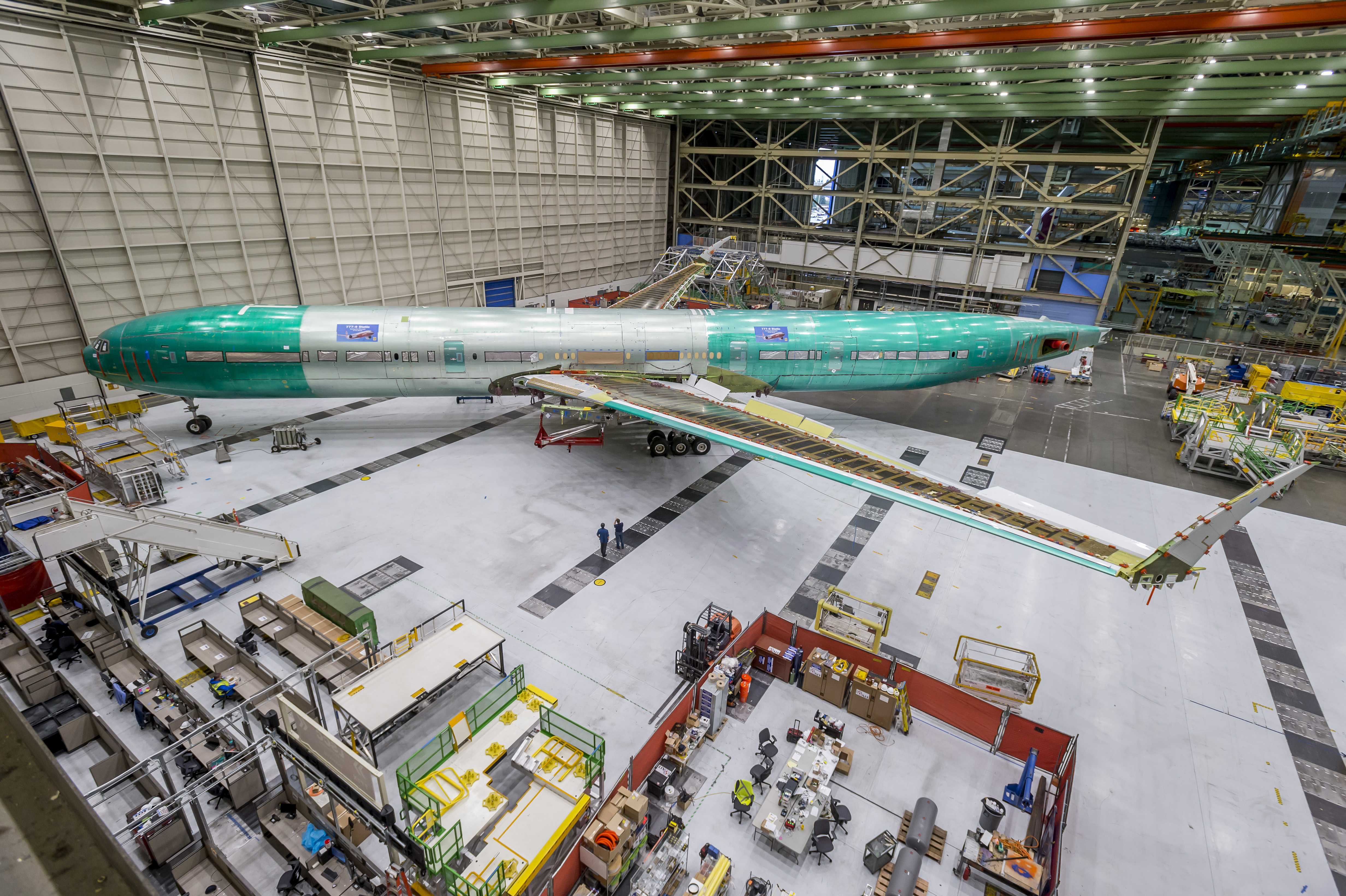
German National carrier Lufthansa has taken to social media to share an image of its first Boeing 777-9 in production at the manufacturer’s Everett site.  The aircraft’s nose, mid and aft fuselage sections have been attached, reaching what Boeing calls ‘ final body join’—-a major milestone in the construction process.

The wide body is due to redelivered to the airlines 777x launch customer in the summer of 2020.  The carrier, which has ordered 20 examples of the 252 feet long jet(77m), is expected to be the second operator of the type after Dubai-based Emirates.

Lufthansa confirmed last September it will launch a new business class cabin with its 777-9s. The aircraft is expected to replace the carrier’s last remaining 747-400s, complementing Airbus A350-900s, A380s and Boeing 747-8s on long-haul services.

Source : Lufthansa/Picture Boeing/Lufthansa

           Taiwanese Startup Starlux Airlines Firms A350 Commitment 

Taiwan’s Starlux Airlines has confirmed an order for 17 Airbus A350-family aircraft, as the startup carrier prepares to begin operations next year. 

The Airline had signed an MOU for the A350s at the Farnborough Air Show in July 2018. The deal includes five -900s, which will be delivered from late 2021, and 12-1000s to begin arriving in late 2022. 

Starlux said the A350s will be used for long-haul services from Taipei to Europe and North America as well as on some Asia -Pacific routes.

The A350s will not be available for the carrier’s launch, which is planned for early 2020.The airline has signed a separate deal to lease 10 A321neos, and these are expected to begin deliveries in October this year.

Source : ATW/Picture Airbus  

LATEST NEWS

  • Avianca is canceling orders for 17 Airbus A320neo family aircraft and deferring delivery of 35 more by at lease seven years, the Colombia-baed airline said on March 15.
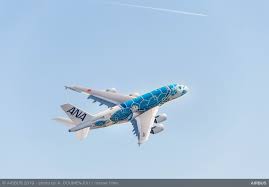
  • All Nippon Airways (ANA) received its first of three Airbus A380s on March 20, which the carrier plans to use to double capacity between Japan and Hawaii.
  • Air Vanuato has become an Airbus customer with the purchase of four A220s. The order, split equally between the -100 and larger-300 variants.
  • Air New Zealand is pushing back deliveries of four Airbus A320neo family jets as it dials back its planned capacity growth over the next three years.
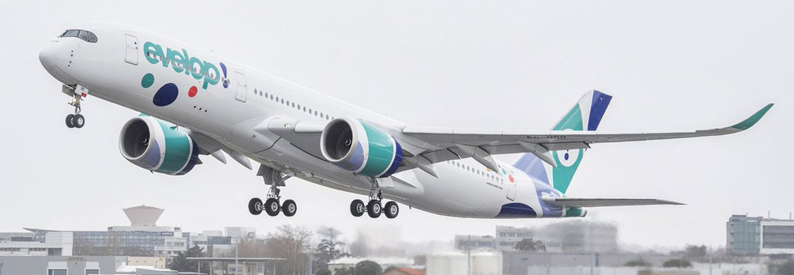
  • Evelop Airlines has taken delivery of its first A350.The A350-900, supplied by Air Lease, will be used to serve Caribbean destinations from Madrid.
  • Mauritania Airlines has become the first airline to Africa to take delivery of an Embraer 175.
  • Lufthansa completed an order for 20 787-9 Dreamliners. With the deal valued at up to $5.8 billion per list prices.

Sources : ATW, Lufthansa, Flightglobal, ,ANA,Air New Zealand

AIR CARGO

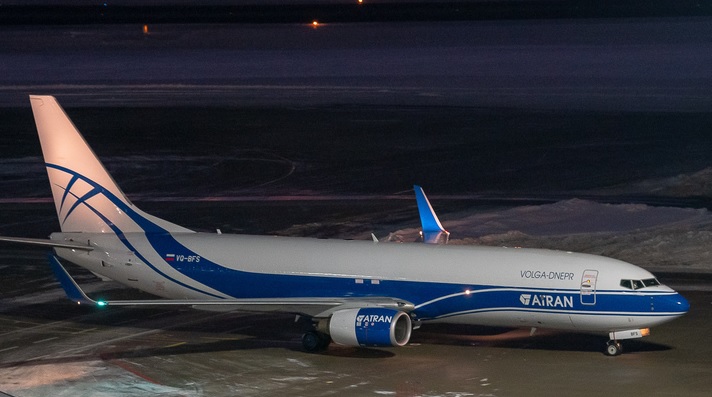
 Atran Airlines Takes Russia’s First 737-800 Converted Freighter

Russia’s Atran Airlines, an express subsidiary of Volga-Dnepr Group, took delivery of its first Boeing 737-800BCFs from GE Aviation Capital(GECAS) in October 2018.  The aircraft has already operated its first flight from Moscow Vnukovo to Norlisk (city in Krasnoyarsk Krai above the Arctic Circle) and Yakutsk in the Far East of Russia, carrying consumer goods, including perishables, general cargo and e-commerce shipments.

Atran Airlines general director Dmitry Obsharov said: “ As the upgraded version of the Boeing 737, the airplane has more technical and operational capabilities.

We are confident that with this new aircraft type we will be able to guarantee high-service quality for our customers, leveraging trade flows in the markets we serve, with special focus on china-Russia routes and emerging volumes of cross-border e-commerce and mail shipments.”

Boeing announced the 737-800BCF program in 2016.The aircraft carries up to 52,800 pounds(23.9 metric tons of cargo, flying routes of nearly 2,000nm(3,690 km).

Atran Airlines, which joined Volga-Dnepr in 2011, operates a fleet of five 737 freighters on short-and medium-haul routes; and is based in Moscow Vnukovo.

Source: ATW/Volga-Dnepr/Atran Airlines Boeing 737-800 BCF Picture

Maintenance, Repair and Overhaul News

737 Demand, Pricing is Firming Up

After the Boeing 737 MAX aircraft fleet was grounded by regulators across the world in earl March, some noticeable trends are occurring in the market concerning Boeing 737 classics and NG aircraft, according to Firoz Tarapore, CEO of Dubai based lessor DAE Capital.

With changes due, including a new software fix and an overhaul of pilot training put forward by Boeing earlier this week, he does not see this being the new norm.”This phenomenon is likely to abate after a permanent and satisfactory fix has been put in place for the MAX,” Tarapore says.

DAE Capital currently has 103 737s in total under ownership, in its portfolio of 110 clients in 60 countries worth around $14 billion.It took delivery of its first 737 MAX in July of last year on lease to Brazilian carrier Gol Linhas Aereas. However, despite the documented issues of the 737 MAX, Tarapore does not see the lessor changing its investment strategy for the aircraft long-term.

The business is also building its fleet of managed assets.In January 2019,DAE Capital announced that its managed portfolio of aircraft grew to 54.Following this, Tarapore says it has a target of $5 billion for the portfolio’s value over the next few years. However, he does not see DAE Capital expanding its reach beyond aircraft to engines.

Source : DAE Capital


Researched and Compiled by : 

Ed Kaplanian    Commercial Aviation Advisor  

Contact – ekaplanian@msn.com

Editor:   Lee Kaplanian  


Kaplanian Report March 2019

On the Boeing Front             

    Boeing Partners with Aerion to Accelerate Supersonic Travel                                                 

On February 5th Boeing announced a partnership with Aerion, a Reno, Nevada-based company pioneering next-generation supersonic aircraft.

As part of the agreement, Boeing made a significant investment in Aerion to accelerate technology development and aircraft design and unlock supersonic air travel for new markets. Terms of the deal were not disclosed.

Boeing will provide engineering, manufacturing and flight test resources, as well as strategic vertical content, to bring Aerion’s AS2 supersonic business jet to market.

The AS2 is designed to fly at speeds up to Mach 1.4 or approximately 1,000 miles per hour. With the ability to fly up to 70 percent faster than today’s business jets, the AS2 will save approximately three hours on a transatlantic flight meeting environmental performance requirements. The aircraft is slated for first flight in 2023.

“Boeing is leading a mobility transformation that will safely and efficiently connect the world faster than ever before,” said Steve Nordlund, vice president and general manager of Boeing NeXt. “This is a strategic and disciplined leading-edge investment in further maturing supersonic technology.  Through this partnership and experience, we have the right team to build the future of sustainable flight.”

Founded in 2003 to develop new, more efficient aerodynamic technologies for supersonic aircraft, Aerion introduced its AS2 12-passenger business jet design in 2014.  The company unveiled the AS2’s GE Affinity engine design in 2018.

Source : Boeing/Picture Aerion


ON THE AIRBUS FRONT

                                      Airbus Terminates A380 Program                                                     

While stressing it would continue to fully support the A380 customers that operate a total of about 230 of the four-engine jetliners, Airbus on February 14th confirmed enduring speculation it would end the program.  It was launched in 2000 as part of its goal to gain a share of the market Boeing had covered with 747.

Airbus CEO Tom Enders described the decision as “painful” but inevitable after Emirates Airline, by far the largest customer of the aircraft, reduced its outstanding A380 order by 39 aircraft.

Speaking Thursday during a fourth-quarter/full-year earnings presentation with analysts, Enders said the European OEM had “invested a lot of efforts lot of resources, and a lot of sweat” in the A380 program.”  But obviously we need to be realistic,” he explained. ”With the decision of Emirates to reduce their orders, our order backlog is not sufficient to sustain production beyond 2021 despite all our sales efforts with other airlines in recent years.” 

Airbus said it will produce just 17 A380s—14 for Emirates and three for All Nippon Airways—until it closes the type’s final assembly line. The last two, for  Emirates, will roll off the assembly line in 2021, when the Dubai airline will have taken delivery of 123 units. 

Source : Airbus,World Airlines,Photo Emirates       


REGIONAL/BUSINESS JETS

    Business Jet Deliveries To Middle East Are Expected To Total 200

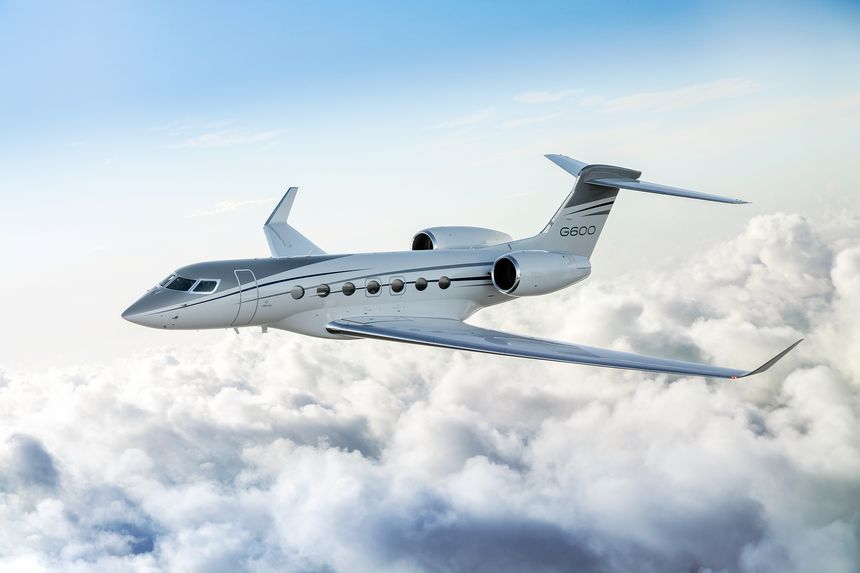
This according to data from the Aviation Week Network, with 12 deliveries in 2019 rising to 20 in 2028.  The top deliveries through the 10-year period from 2018 through 2028 are expected to be the Boeing 737 MAX, with 23 deliveries, followed by the Gulfstream G650, with Bombardier Global 7500 and the Gulfstream G600 tied for third place.  At the same time, the business jet fleet in the Middle East is expected to grow to nearly 435 aircraft in 2019 and to 580 by 2028, with a compound annual growth rate of 3.3%, according to AviationWeek data.

Source : BCA

                         Pilatus Delivers PC-24 To Swiss Government            


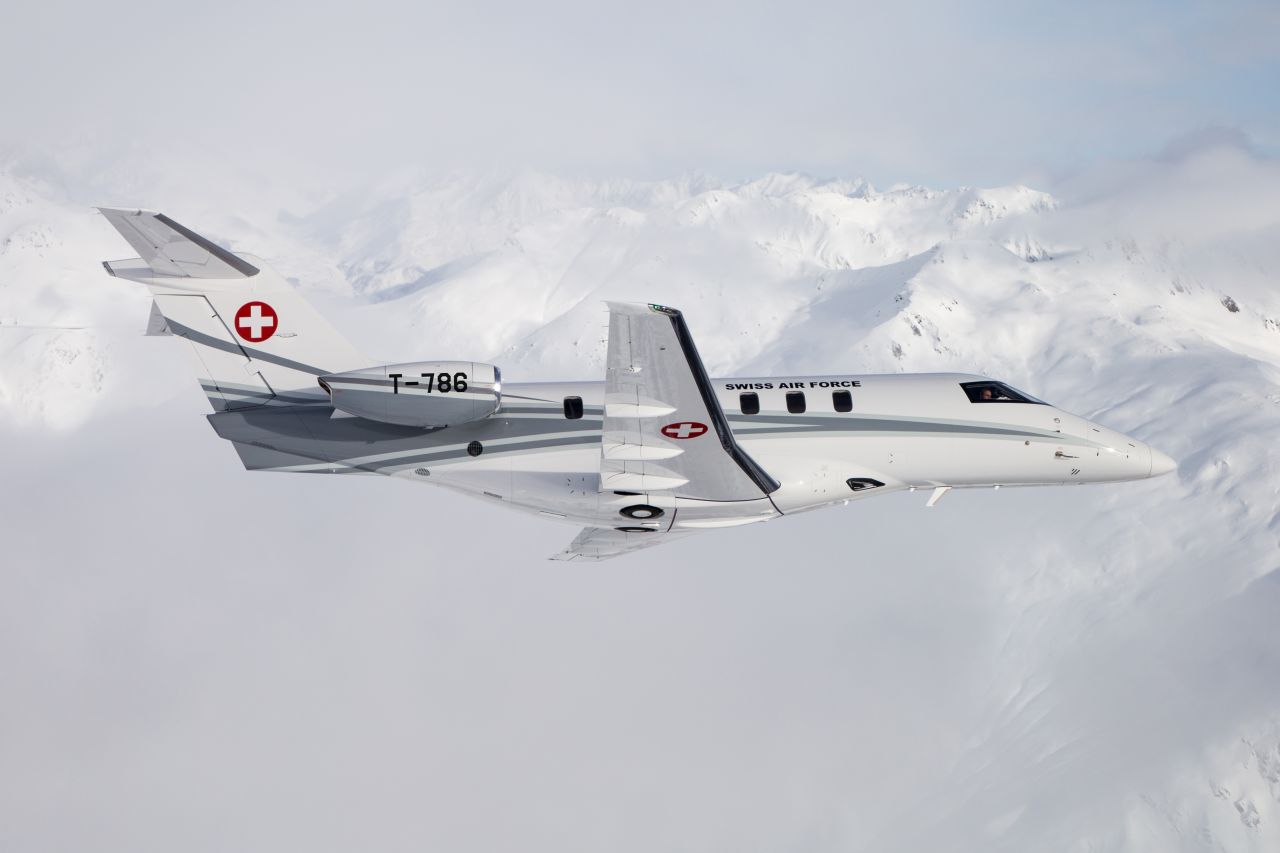
Pilatus has delivered a PC-24 to the Swiss government.  The aircraft was handed over during a dedicated ceremony in Berne on February 18th, and will replaced a similarly sized Cessna Citation XLS in service.

The eight-seat PC-24 will be used for government transportation “primarily around Europe, and operated by the Swiss Air Force”. 

Pilatus chairman Oscar Schwenk describes the latest addition as “the new Swiss Air Force One” and says he is “confident that other governments will adopt the PC-24 once they see the unrivaled opportunities and flexibility which it offers.”

The PC-24 is powered by the Williams International FJ44-4A with a range of 2,000nm(3,700km) and designed to take off from grass and gravel strips.

Source : Pilatus/Picture Pilatus                                                                                                                                             

OTHER AVIATION NEWS

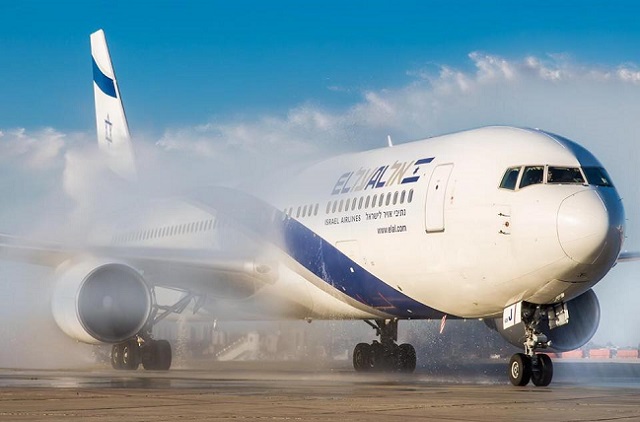
                                   El AL Brings Its 767 Era to a Close                                                          

Israeli flag-carrier El Al has formally withdrawn the 767 from its fleet, following a final service from Milan to Tel Aviv on February 3rd.

El Al says it has used different variants of the 767 for 36 years, following the introduction of -200s in 1983, and that the type has logged over 100,000 flights with the airline.

The carrier has been introducing Boeing 787s to replace the 767.  It has eight 787-9s in its fleet.

Chief executive Gonen Usishkin, who opted to accelerate the withdrawal of the 767s, says the aircraft has featured in some high-profile roles for the carrier, including transport of the country’s prime ministers.

The 767 enabled the carrier to become the first airline to operate a twin-engined aircraft on the transatlantic commercial service.

Source : Flightglobal/Picture El Al                                                                                                         

                     Boeing Seeing More Airplane Buyers Paying Cash                                Financing than Ever Before

“We’re seeing more customers with near-term demand and in the ability to either finance or pay cash than we’ve ever seen,” Boeing Chief Financial Officer Greg Smith told FOX Business.

The company will now produce 57 737s a month (up from 52) and will increase production of its 787 Dreamliner to 14 per month (up from 12). The U.S. airplane maker has nearly 5,900 aircraft currently on backlog, valued at $490 billion.  Over the course of next 20 years, Boeing forecasts 8,800 airplanes will need to be delivered to airlines.

“When you look at assets that are in North America today…almost half are being replaced with much more efficient aircraft than those they are operating today,” Smith said, regarding operating costs. ”So that’s creating a lot of demand.”

“There’s lot of replacement opportunity there near term and long term,” Smith said. “There’s also more growth there, and that just goes to the fundamentals of what’s happening within their society and their economy; with the growth in middle class and a real desire to travel…within the region but also outside of the region.”

Source : Boeing/FoxBusiness

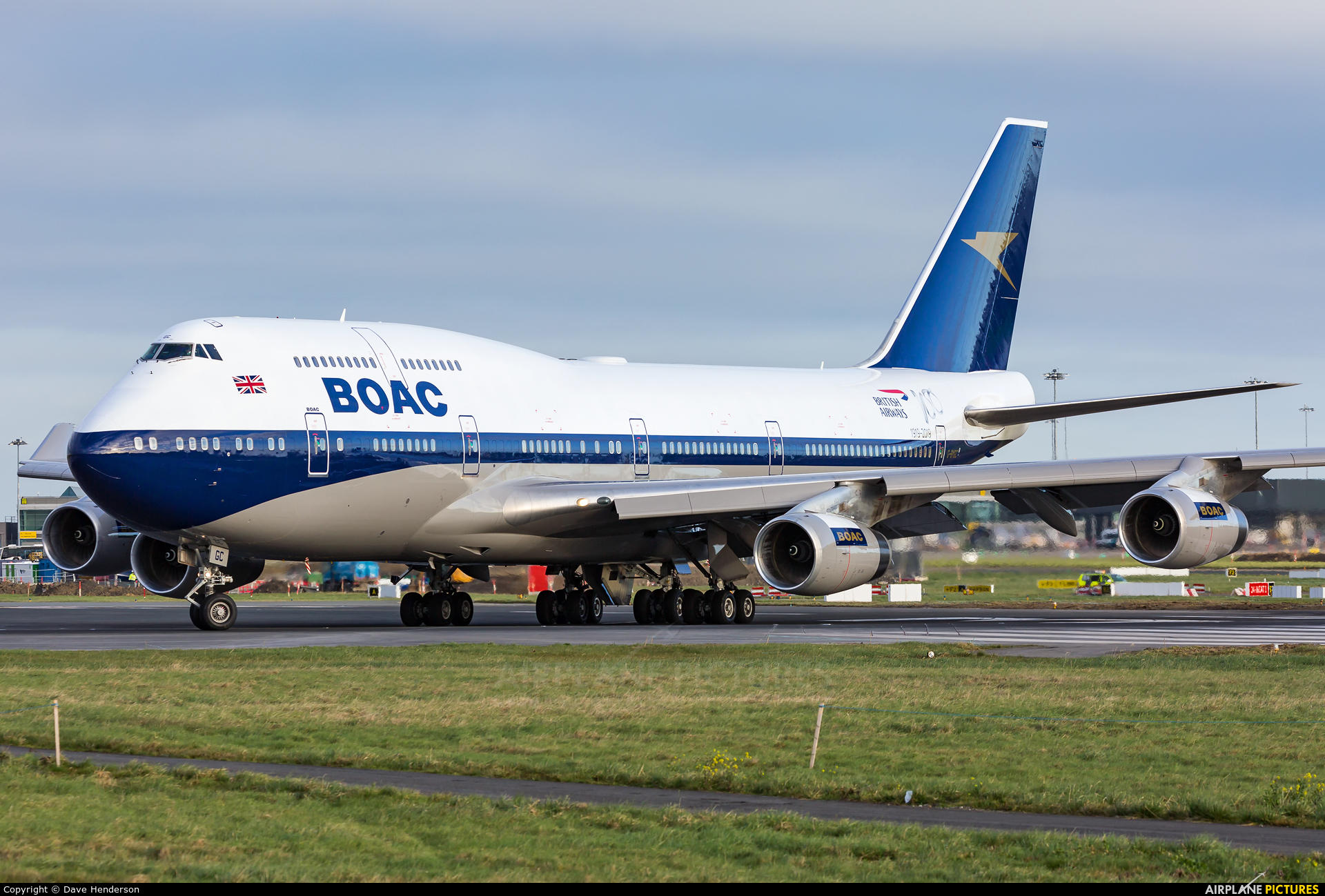
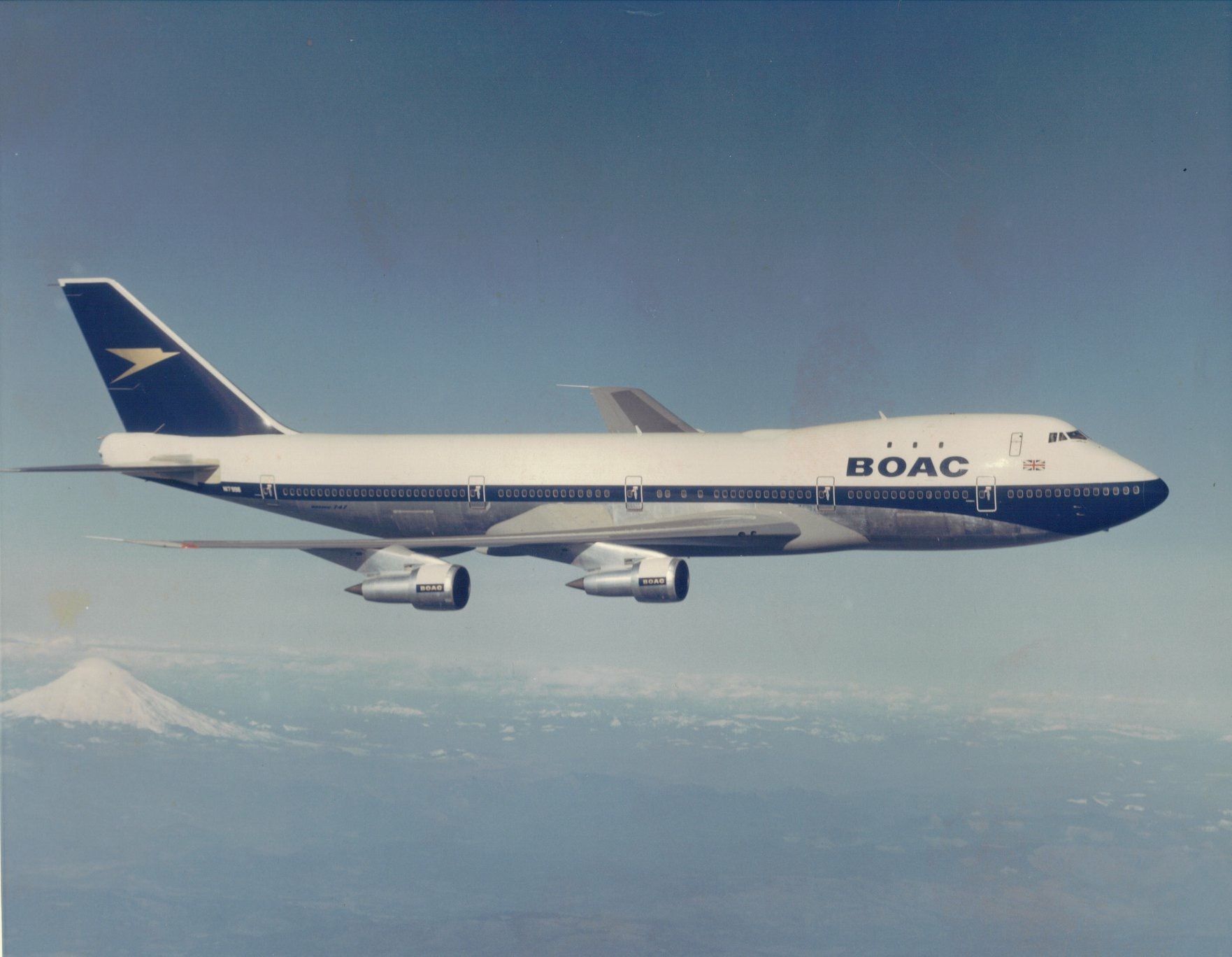
British Airways’ BOAC-Painted Boeing 747-400 Lands at London Heathrow

Monday, February 18, 2019—Large crowds gathered at Heathrow in the rain to watch the much-anticipated arrival of a British Airways Boeing 747-400; painted in the iconic design of its predecessor British Overseas Airways Corporation BOAC.

Alex Cruz, British Airways’ Chairman and CEO, said: “The enormous interest we’ve had in this project demonstrated the attachment many people have to British Airways’ history. It’s something we are incredibly proud of, so our centenary year it’s a pleasure to be celebrating our past while also looking to the future. We look forward to many more exciting moments like this as our other aircraft with heritage designs enter service.” 

From the paint bay at Dublin Airport, the BOAC Boeing 747-400 flew directly to Heathrow on the aptly named BA100 touching down in the morning.  Its next flight on Tuesday February 19, when it departed for New York JFK operating as flight BA117.   This flight is particularly significant as it was the first route the Boeing 747-100 flew in BOAC colors.

The BOAC livery will remain on the Boeing 747-400 until it retires in 2023, to allow as many customers as possible to have a chance to see it. By this time, British Airways will have retired the majority of its 747 fleet, replacing them with new state-of-the-art long-haul aircraft.

Source : British Airways/Picture British Airways    


LATEST NEWS

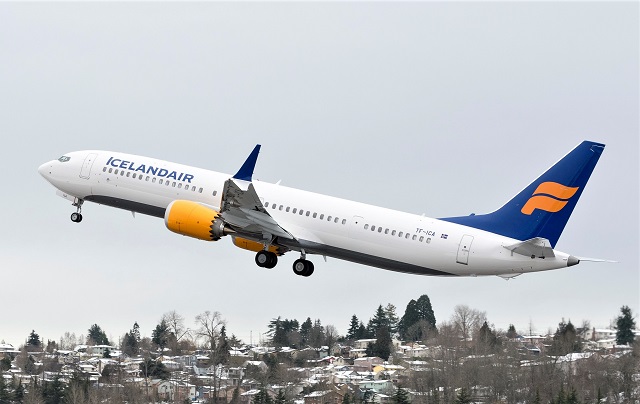
  • Icelandair has taken its first Boeing 737 Max 9, which has been delivered from BOC aviation.                                                                                                                                         
  • US Bangla Airline has agreed to lease a Boeing 737 Max 8 from AerCap, making it the first Bangladeshi carrier to have committed to the re-engined variant.
  • Bahamasair takes first 737-700 purchased from AerCap and formerly operated by Alaska Airlines and Lucky Air.
  • EgyptAir plans to begin new service to Washington Dulles International in June. EgyptAir has six 787-9s leased from AerCap on order with all aircraft due this year.             
  • British Airways is ordering up to 42 Boeing 777-9s to modernize the UK flag-carrier’s long-haul fleet. Eighteen are firm orders complimented by another 24 as options.             
  • Rolls-Royce has pulled out of the competition to develop an engine for Boeing’s proposed New Mid-market airplane. The UK engine manufacturer says it is ”unable to commit” to the required timetable and ensure that it has a “sufficiently mature” power plant for the aircraft.
  • Lufthansa On February 19, Lufthansa revealed that the body sections of its first 777-9 have been joined on the assembly line in Everett, Washington. The Lufthansa aircraft is the first of 20 777-9s the German flag carrier has on order, with deliveries due from the summer of next year.
  • Bamboo Airways & VietJet Air have firmed up commitments to order 110 Boeing aircraft 10 787-9s for Bamboo and 80 Max 10s and 20 737Max 8s for VietJet Air             

Source : BOC Aviation, AerCap, Flightglobal, British Airways, Boeing                                                

AIR CARGO

            Pemco Launches Full Conversion Program for 737-700                                 

Pemco Conversions has launched a passenger-to-full-freighter conversion program for the Boeing 737-700, the first of which would enter service with Bahraini non-scheduled cargo operator Texel Air.  The Tampa-based maintenance, modifications, and engineering company announced it the first week in February.

Texel’s parent company, Chisholm Enterprises, collaborated with Pemco to develop the conversion for use out of Bahrain International Airport.  Chisholm also served as the launch customer for Pemco’s 737-700 FlexCombi converted freighters supplemental type certificate for which remains pending.

“As we developed the 737-700 FexCombi conversion, our understanding of their requirements grew, allowing us to implement comprehensive solutions that enhance our vision of the 737-700 full freighter.  This made Chisholm the ideal launch customer for the conversion,” said Pemco director for conversion programs Mike Andrews.                                     

Pemco plans to receive a 737-700 for full freighter modification at its headquarters in Tampa during the second quarter of this year. The Company plans to amend its pending application with the FAA for the 737-700 FC STC to accommodate the full freighter conversion in an effort to streamline the approval process.  After gaining FAA approval, Pemco plans to certify both 737-700 conversion programs with the European Aviation Safety Agency and the Civil Aviation Administration of China.

When the aircraft is delivered to Texel Air, it will join two 737-300 converted freighters in Texels fleet.

Source : ainonline/Picture Texel Air                                                                                                        

Maintenance, Repair and Overhaul News

                          United Breaks Ground on a New                                             Technical Operations Center at LAX

United Airlines and Los Angeles World Airports(LAWA) broke ground on February 28 on a state-of-art Technical Operations center (TOC) at Los Angeles International Airport(LAX) that will enable the airline to provide exceptional service for all its aircraft fleets. The new facility will include two connected buildings-a ground service equipment and facilities maintenance building and a line maintenance hanger, including an engine support shop that will focus on the aircraft’s Dreamliner fleet.

The commencement of this $352 million TOC pushes the airline’s investment at its Los Angeles hub to nearly $1 billion in recent years.

The new TOC will consolidate two facilities that United currently operates at LAX that are located a half mile apart, improving efficiency with not only moving aircraft around the airport .With this new facility, transporting employees, parts, tools and other supplies-ultimately leading to more efficient operation for customers.

The TOC will be located near the airline’s terminal and stand at 407,408 square feet. The facility’s hanger will be able to accommodate up to six narrow-body and two wide body aircraft at a time, supporting United’s 150 flights that depart from LAX every day.

Source : United Airlines


Researched and Compiled by : 

Ed Kaplanian    Commercial Aviation Advisor 

Contact – ekaplanian@msn.com

Editor:   Lee Kaplanian 

The Kaplanian Report – February 2019

On the Boeing Front

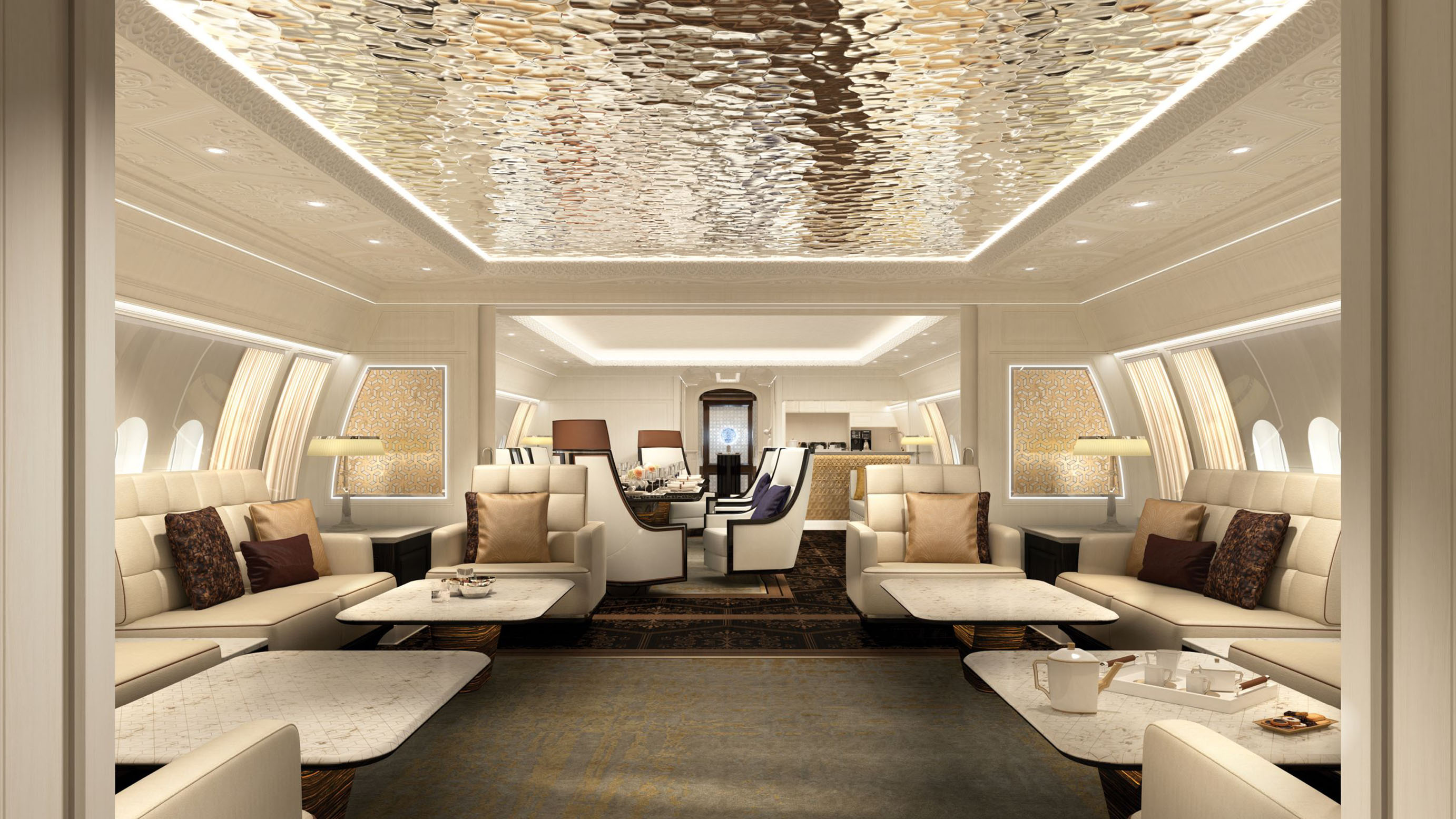
                                           Boeing Unveils 777X Cabin Design

Boeing has released images of its 777X’s cabin and disclosed design changes that will make the aircraft’s cabin more comfortable than the current-generation 777.

In addition, Boeing is giving 777X customers more flexibility in cabin layout by enabling them to choose from a greater variety of “cabin interior linings”, says the company. Linings include sidewalls, bins and ceilings, and encompass aircraft lighting.                                                              

“We have been able to… create a suite of options for airlines to actually customize aircraft without the typical customization headaches,” says Boeing regional director of cabin experience and revenue analysis Kent Craver. ”Those lining packages allow us to have multiple ceiling treatments, multiple bin options.”

Windows in the 777X will be 16% larger than those of the 777, and they will be slightly higher, giving passengers on the aircraft a better view of the outside.  The top of the passenger cabin windows are about 2.6 in higher than the 777’s windows, Craver says.

The 777’X cabin draws influence from the 787s and the “SKY” cabin found in the newer 737s, Boeing says.                                                                                                                                            

The 777X has enough storage to enable each passenger to stow a bag. Boeing redesigned the sidewalls so that the 777X cabin is 102 mm(4in) wider than the 777’s cabin.

The 777-8 will have an 8,700nm (16,110km) range and a capacity of 350-375 passengers, while the 777-9 will have 7,600 nm (14,075 km) range and the ability to carry 400-425) passengers, Boeing says.

Source : Boeing/Flightglobal)


ON THE AIRBUS FRONT

         Airbus Takes Wait and See Response to Boeing’s Proposed NMA

Airbus’s incoming chief executive feels no pressure to scramble in response to Boeing’s concept for a New Mid-market Airplane (NMA).

Rather, Guillaume Faury describes Boeing’s NMA — which remains little more than a proposal—as a potential response by the US manufacturer to a market already controlled by Airbus.

“They are in the situation where they are losing this part of the market because they no longer have the right products,” says Faury of Boeing. “They believe they have to do something about it, and this is on them to make the next move”.

Faury, who spoke in Mobile in January, currently heads the Airbus Commercial aircraft division but is in line to succeed Tom Enders as Airbus CEO in April.

Boeing has taken a very different public approach, with executives saying they see a significant demand for an aircraft with 200 to 270 seats and range of 5,000nm (9,300km).

“This airplane is a big opportunity for us,” Boeing Commercial Airplanes chief executive Kevin McAllister said last year.

Meanwhile, Airbus had made inroads by squeezing more range from its A321neo. The European company has developed a long-range A321LR and speculation abounds that even longer-range derivative, known as the “A321LRX”, might be in the works.

Fauey declines any comment about the XLR, but insists Airbus’s products already meet airlines’ needs.”We don’t have this gaps we don’t feel under pressure to react even before Boeing has moved. We will wait and see and observe,” he says.

Source : Airbus/Flightglobal             


REGIONAL/BUSINESS JETS

                  AMAC Secures Its First BBJ Max 9 Completion Contract

Swiss firm AMAC Aerospace has secured its first BBJ Max 9 completion contract and plans to take delivery of the re-engined narrow body at its Basel facility in September.

Bernd Schramm, AMAC chief operating officer, says the design team has already started work on a mock-up of the interior, which he describes as “very special and unique”.

The completed aircraft is scheduled for re-delivery to its unnamed customer in 2021.

AMAC is now working on three green completions projects in Basel—two narrow bodies and a Boeing BBJ 747-8I—and is preparing to accept its first BBJ Max 8 in the fourth quarter.

Boeing, meanwhile, holds 19 orders for the BBJ Max family: 12 Max 8s —the first

two units were delivered green in 2018—three Max 9s, and four Max 7s. Three orders remain on backlog for the original BBJ, based on the 737NG airframe. Boeing also holds an order for a BBJ 787-8 wide body. 

Source : Boeing Business Jet /AMAC


OTHER AVIATION NEWS

          JetBlue Sees Delays to A321neos, Pushes Out A220 Deliveries

JetBlue Airways expects delays to the delivery of up to seven Airbus A321neos this year-end and says it has postponed deliveries of its first A220-300s to allow more time for the airline to choose suppliers of the aircraft’s interiors.

The New York-based airline now expects to take six A321neos “minimum” in 2019, down from 13 deliveries previously, says chief financial officer Steve Priest in an earnings call on January 24. ”We’ve been officially notified by Airbus of widely-known delays in neo deliveries,” says Priest.

JetBlue continues to expect that its first A321neo will enter service in mid-year.

The airline has orders for 85 A321neos. In 2020, JetBlue will receive only one A220-300, instead of five it initially planned for. Priest says two of the four postponed deliveries will shift to 2021, the other two to 2025. An updated fleet plan shows the airline will take delivery of six A220-300s in 2021, up from four previously.

Priest says the order book changes have no impact on the airline’s capacity plans for 2019 and 2020, or cost guidance. The carrier expects first quarter capacity to grow 7.5% to 9.5%,and full-year capacity to rise 5-7%. 

Source : JetBlue/World Airlines

                   British Airways will unveil BOAC 747-400 RetroJet

British Airways will unveil a Boeing 747-400 “retrojet” this month adorned in the colors of its predecessor airline BOAC, as part of the airline’s centenary celebrations.

The UK carrier says that one of its 747-400s—registration G-BYGC— will arrive at Heathrow from the printshop on February 18 in the BOAC scheme, and that will remain in place until it retires in 2023.

Tantalisingly ,it says that the 747 will be the “first aircraft to receive this design from British Airways’ past with more details of further designs to be revealed in due course”.

“So many British Airways customers and Colleagues have fond memories of our previous liveries, regularly sharing their photos from across the globes it’s incredibly exciting to be re-introducing this classic BOAC design,” says Alex Cruz, British Airways (BA) chairman and chief executive.

Source : British Airways/Picture British Airways

            Trent 1000s Start Receiving Approved Redesigned Blades

Rolls-Royce has started installing a redesigned intermediate pressure compressor blade design on certain Trent 1000 engines, following approval from European and US regulators.

The new blades, for the Package C version of the Boeing 787 powerplant, have obtained European Aviation Safety Agency and US FAA certification.

Boeing and Rolls-Royce started issuing bulletins to customers in December 2018, Rolls-Royce adds. The Package C engines are fitted to some 170 Boeing 787s.

Rolls-Royce says the first engine to receive the new blades is “currently being serviced” at the company’s overhaul facility in Derby.

The blades have also been flown on an airborne testbed aircraft in Tucson.

“As testing proved the design, Rolls-Royce began making new sets of blades, ready for introduction, in anticipation of regulatory approval,” says the company.

It adds that the new blades are part of a program of activity intended to minimize disruption to 787 operators.

Source : Rolls-Royce


LATEST NEWS

  • Air Premia South Korean startup carrier has selected the Boeing 787-9 to form the basis of its fleet, with deliveries to start in 2020.                                                                     
  • Saudia is to introduce Boeing 787-10 this year, the largest variant of the twinjet family.   
  • Aeromexico will receive its first Boeing 737 Max 9 aircraft this year, allowing the carrier to add seats at constrained airports with its network.                                                               
  • Cayman Airways has received the first of four Boeing 737-8s. The four Max 8s will replace the airline’s existing 737-300s.
  • American Airlines has taken delivery of its first A321neo, making it the latest US carrier to add the re-engined narrow body to its fleet.                                                                          
  • United Airlines took delivery of their 1,600th brand new Boeing aircraft since deliveries first began with the 707 in 1959.  The 737 MAX is the carrier’s 12th of the new fuel-efficient jet.                                                                                                                                      
  • Qatar Airways converts 10 of its 50 Airbus A321neo on order to the longer- range Airbus A321LR.                                                                                                                                     
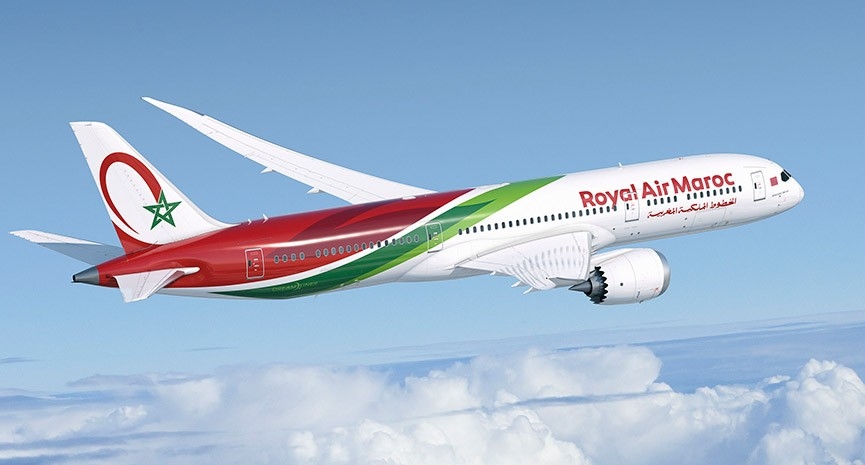
  • Royal Air Maroc has signaled that it is preparing for an extensive fleet expansion possibly involving upwards of 50 aircraft.                                                                                                                                                                                   


Sources : Royal Air Maroc, Flightglobal, Air Lease, Qatar Airways                                                       

AIR CARGO

                                     Delta Cargo, Virgin Atlantic Cargo to Move                                   Into a New Facility at LHR

Delta Cargo, Virgin Atlantic Cargo are to move into a new purpose-built dnata City East, London Heathrow’s most state-of-art cargo facility.

The move to the new facility is scheduled for the second half of this year and will ultimately increase the size of Delta’s cargo and Virgin operation at Heathrow to 335,000 square feet, and see customers benefit from greater automation and faster truck and cargo handling times.

The Carriers’ facility at the off-airport data City Set building will be located opposite the Heathrow Cargo Terminal and adjacent to the airport’s southern perimeter road, which will provide quick access to the airport’s operational areas.

The Purpose-built facility will deliver the highest levels of service, security and automation.

The New location will also include temperature-controlled services for biopharmaceuticals and life science products, as well as a space for perishables and an enlarged center for live animals.

Source : AirCargoAirports/Delta Cargo                                                                                                   

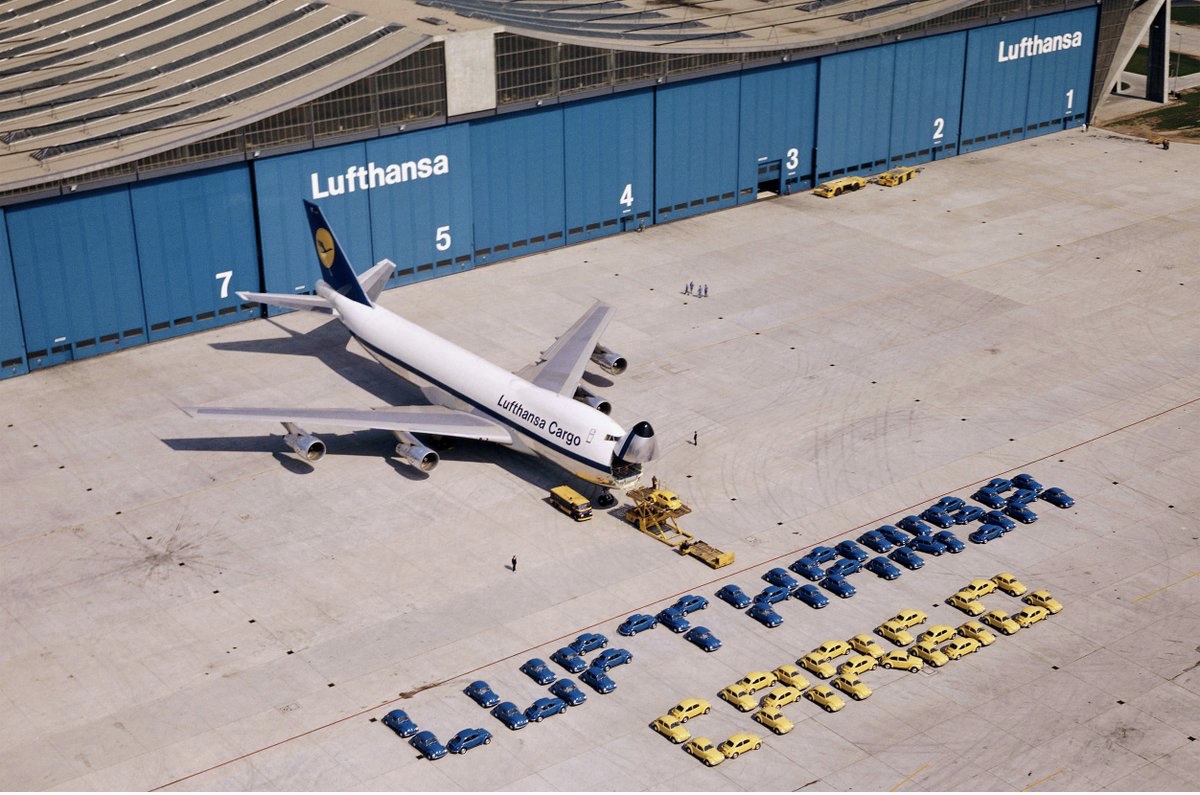
Lufthansa Salutes The Boeing 747

The 747 turned 50 on February 9th.  Lufthansa salutes the aircraft by releasing a picture of one of their freighters a Boeing 747-230F, taken in 1972.  Nickname:”Beetle Swallower”, as it had space for 72 VW Beetles.

Source:  Lufthansa


      Maintenance, Repair and Overhaul News

                                     Parts Providers Step Up 777 Teardowns

The Boeing 777 maintenance market will be worth north of $110 billion over the next 10 years;  with about a quarter of that spend earmarked for components, according to Aviation Week data.

Accordingly, several parts suppliers are stepping up efforts to source 777 material, buying aircraft from carriers that are upgrading their fleets.

The latest example is GA Telesis, which at the end of January announced the consignment of four 777s from Cathay Pacific for disassembly in the U.S. and the UK. The first disassembly has already begun and the aftermarket company has committed to take five 777s in 2020.

A significant chunk of the components salvaged could be bound for Asia, which is forecast to account for more than a quarter of 777 maintenance demand over the next 10 years—the largest any region.

However, the Middle East carriers will operate the largest number of 777s by 2027, when it will be home to roughly 800 of nearly 2,000 77s in service by that year, according to Aviation Week data.

Across all regions, meanwhile, engine maintenance will be the most important part of the 777 aftermarket, generating more than a third of overall demand.

Source : MRO network/Aviation Week data


Researched and Compiled by :

Ed Kaplanian    Commercial Aviation Advisor 

Contact – ekaplanian@msn.com

Editor:   Lee Kaplanian 


The Kaplanian Report – January 2019

On the Boeing Front

                        GE Begins Second Round of GE9X Flight Testing                                  

GE Aviation’s GE9X turbofan returned to the skies on December 10, kicking off a second round of airborne testing during which the engine maker will evaluate the power plant’s software and performance in hot-and-high conditions.

The latest round of testing will involve roughly 18 flight of GE’s flying Boeing 747-400 testbed, which will carry the massive GE9X turbofan under its wing, GE says.

The 105,000 lb thrust (467kN) GE9X will power Boeing’s 777-9s and 777-8s.

GE9X flight tests will stretch into the first quarter of this year, bringing GE closer to achieving its goal of receiving certification of the engine by the Federal Aviation Administration (FAA), according to the Ohio-based engine maker.

“During the second round of testing, GE will continue software development testing that began in the first round, perform hot-and-high starts and fill in remaining gaps from the first round of testing,” says GE.  “Tests that remain include blade out, hailstone, bird ingestion and block or insurance testing,” GE Says.

The GE9X-105B variant of the engine will power the 777-9, which Boeing expects will achieve first flight this year and enter service in 2020.

GE aviation acquired its 747-400 flying testbed from Japan Airlines, then modified and strengthened the aircraft’s wing and strut to accommodate test engines, it says.

Source : GE Aviation/Picture GE Aviation


ON THE AIRBUS FRONT

          Airbus Strategy Review Augurs Clean Break Under New CEO

Airbus has launched a strategic review to outline changes under the incoming chief executive, Guillaume Faury, as it faces industrial challenges and prepares to overdue modernization, industry sources said.

The “Airbus Next Chapter” review involves a team of planners working outside the normal strategy organization in pursuit of a break from years of industrial problems, management feuds and ongoing bribery scandal.

It is being led by investor relations chief Julie Kitcher, in what one insider described as a signal to financial markets that profits will be embedded in strategy’s as the one state sponsored European project marks its 50th anniversary.

Planemaking boss Faury, who becomes CEO when Tom Enders retires in April, ”wants to go fast and introduce a new state of mind: he wants to turn the page on the past”, a person familiar with the company said.

Founded in 1969, Airbus has risen to compete on par with Boeing and is one of Europe’s leading exporters. The review may address how Airbus can meet demand by sharply ramping up production of its jets like its A320. One previous taboo that may come for discussion is a fragmented production system securing jobs in The UK, France, Germany and Spain.

The A320 is the lifeblood of Europe’s largest aerospace group, described by operations chief Tom Williams, who retired in late 2018, as the “golden goose.”

Executives are warning Airbus must not find itself lacking in proven technology for the A320’s successor after 2030, as it had been in wide-bodies when Boeing launched the 787.

For now, Airbus is winning a bigger slice of the market on the A320 but some analysts say it has fallen behind Boeing in manufacturing techniques-a gap that could grow if Boeing launches a mid-market jet with a new factory system.

Source : Tim Hepher, Reuters


REGIONAL/BUSINESS JETS

      Boeing Business Jets Launches Longest-Range Jet with BBJ 777X

Boeing Business Jets is confident that its newly launched BBJ 777X will deliver significant sales in the Middle East, justifying the unveiling of the VVIP airliner at the Middle East Business Aviation Association(MEBAA).

“Our most exclusive customers want to travel with best space and comfort, and fly directly to their destination,” says Greg Laxton, head of Boeing Business Jets.  The BBJ 777x will be able to do this like no other airplane before it, redefining ultra-long-range VIP travel.”

He says the company has been touting the aircraft to customers ahead of its formal launch at MEBBA and has received positive feedback.

“The Middle East traditionally accounts for over 52% of our wide body BBJ sales and there is no reason why the breakdown won’t apply on the 777X, ”Laxton adds.

Like the commercial aircraft on which it is based, the BBJ 777X will be available in -8 and -9 variants and becomes the fourth current production wide body in the BBJ range, joining the 787-8/9,747-8 and 777-200 LR/300ER.

BBJ also announced a new order at MEBAA for a BBJ Max, bringing to 21 the total orders for the business jet version of the re-engined narrow body family: 14 Max 8s, three Max 9s and four Max 7s.

Source : Flightglobal/Boeing Business Jets


OTHER AVIATION NEWS

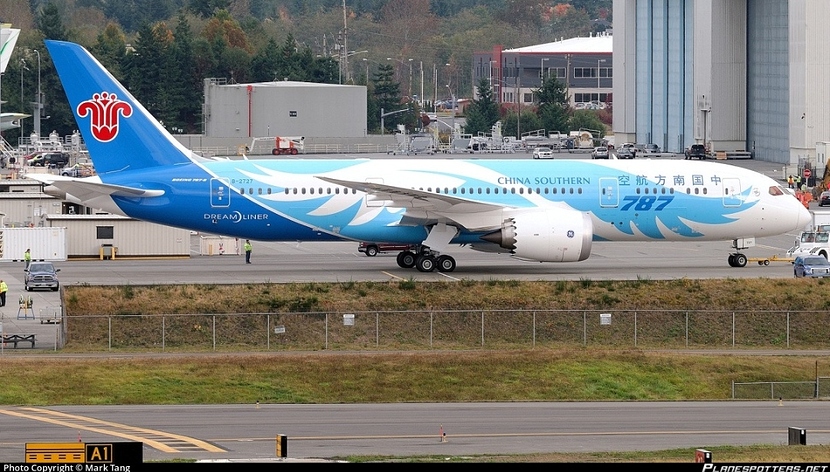
           Boeing Delivers the 787th 787-9 to AerCap and China Southern

On December 13, 2018, Boeing delivered the 787th 787 Dreamliner to come off the production line, marking a special milestone for the super-efficient airplane family and the fastest-selling twin-aisle jet in history.

Since its first delivery in September, 2011, the 787 family has flown nearly 300 million passengers on more than 1.5 million flights around the world, including more than 210 new nonstop routes made possible by the airplane’s superior fuel efficiency and range.

The airplane was delivered to AerCap, the world’s largest lessor and 787 customer. Sporting a special logo commemorating the production milestone, the airplane will be leased and operated by China Southern, which continues to expand its long-haul fleet of 787 Dreamliners, including 10 787-8s and eight 787-9s.

China Southern Airlines first ordered 10 787-8 Dreamliners in 2005 and further increased its capability on long-haul routes when they placed an order for 787-9s in 2016.

Source : World Airline News/Boeing/Boeing Picture

                    Boeing Delivers First China-Completed 737 Max

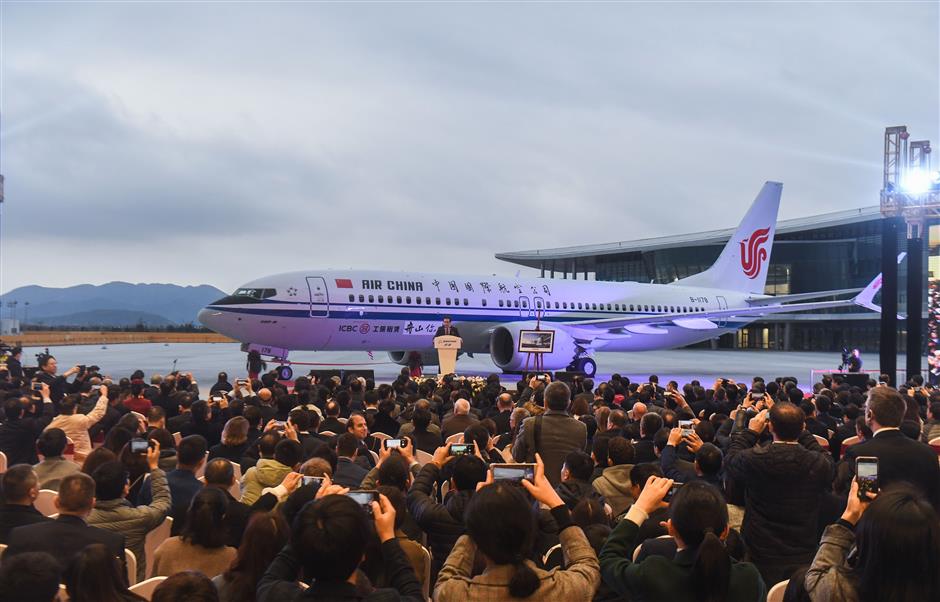
On December 15, 2018 Boeing marked a key milestone in its relationship with China’s aviation industry, delivering the first aircraft from its 737 completion and delivery center in Zhoushan.

The hand-over, undertaken in conjunction with joint-venture partner Commercial Aircraft Corporation of China (COMAC), involved a 737 Max 8 for Air China, registration B-1178. The aircraft was built on Boeing’s 737 assembly line in Renton, Washington, but completion was undertaken at the Chinese facility in Zhoushan.

The milestone comes 20 months after construction began at the 100-acre site, says Boeing, which is its first such facility outside the USA. It was built in partnership with the Zhejiang Provincial and Zhoushan Municipal Governments and will become fully operational in phases as capacity increases, adds Boeing.

“This moment signifies our growing partnership with China that stretches back over nearly half a century,” says Kevin McAllister, president and chief executive of Boeing Commercial Airplanes.

Source : Flightglobal/Boeing/Boeing Picture

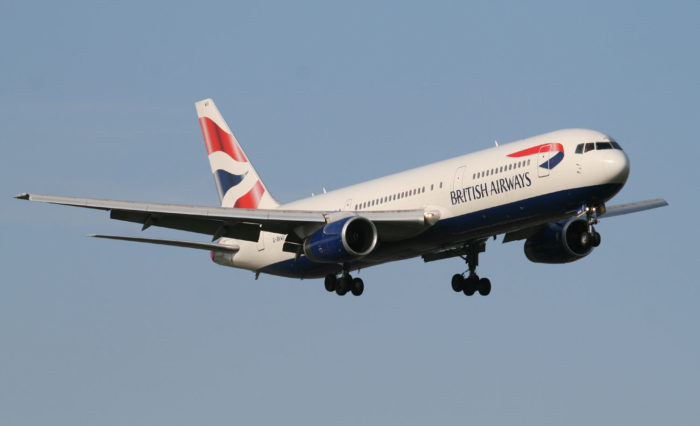
                         Boeing 767 Era Ends at British Airways                                                         

On November 25th, 2018 British Airways flew its final Boeing 767 passenger flight revenue flight as it retires the type after almost three decades of service.

BA was the last customer for the Rolls-Royce RB211-powered version of Boeing’s wide body twin. This proved a relatively unpopular option, with just 31 delivered-28 to British Airways(BA) and three to China’s Yunnan Airlines.

The 767 was selected by BA in 1987 over Airbus’s pitch-A300-600R. BA said at the time of selection that, before deciding on the Boeing 767, it had “conducted a most careful study of the closely comparable Airbus A300”,but the final decision was based upon the 767’s commonalities with the 757 ( common type rating),and the availability of the RB211.

The first 767-300ER arrived in February 1990, and the twinge proved very agile throughout its 28 years, operating across its short-haul network as well as further afield to destinations in North America, the Caribbean, and Africa and the Middle East.

The last commercial flight took place on aircraft registration G-BZHA between Larnaca, Cyprus and London Heathrow. It first flew in 1998 and flew an estimated 23 million miles. It has visited Larnaca 900 times in its life, but its most popular route is actually to Athens, where it completed 1275 round trips. According to British Airways, its estimated that this specific aircraft has carried around 4 million customers across nearly 23,000 flights.

Source : British Airways/Photo Boeing


LATEST NEWS

  • Air Kiribati Embraer signed a contract with the Government of Kiribati in partnership with their national airline, Air Kiribati, for two firm orders for the E190-E2 E-Jets and two purchase rights for the same model.                                                                                            
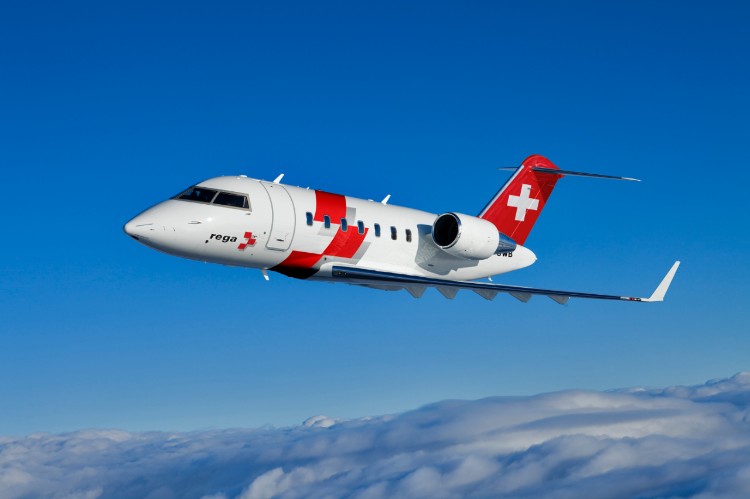
  • Bombardier has delivered the third and final Challenger 650 to Swiss rescue and medical services provider Rega. From a 2015 order for the large-cabin business jet.         
  • Azul firmed up an order for 21 Embraer E-195-E2s previously announced at the Farnborough air show in July 2018.                                                                                           
  • Flydeal Boeing and Flydeal announced on December the Middle East carrier is growing its fleet with 737 MAX aircraft, the airline committed to ordering 30 aircraft with options for 20 more.
  • Green Africa Airways Nigerian start-up carrier Green Africa Airways has committed to acquiring up to 100 Boeing 737 MAX 8 jets                                                                                                                                                                  
  • Easter Jet has become the first South Korean carrier to take delivery of a Boeing 737 Max 8. It is one of two that the leisure carrier is taking through VEB-Leasing, which will join its fleet of 19 737-800s.
  • Nordic Aviation Capital will lease seven new Embraer E190s to Air France regional subsidiary HOP!
  • Airbus delivered 89 aircraft (two A220s; 71 A320s; three A330s; 11 A350s; two A380s) in November 2018 vs 74 in November 2017.
  • Air Europa will begin phasing out its Embraer E195 aircraft in 2021 as part of a strategy to transition to an all-Boeing fleet in 2023.
  • Subaru Aerospace Company has moved up the value chain with its center wing-box work for the Boeing 777X, as it seeks to further improve efficiency and manage costs.
  • Middle East Airlines of Lebanon announced has announced plans to purchase four Airbus A330-900neos, with options on a further two.                                                                  

AIR CARGO

              Ethiopian Airlines Cargo Celebrates Liege Anniversary                                  

Ethiopian Airlines Cargo and Logistics Services has celebrated 10 years of cooperation with Belgian airfreight hub Liege. The anniversary was celebrated at the recent 2nd Africa Aviation summit, which was held in Nairobi, Kenya in late November 2018 at the Liege Airport.

The next summit, in 2020, is to be held in Addis Ababa, Ethiopia, and will be hosted by Ethiopian Airlines Cargo and Logistic Services and Liege Airport.

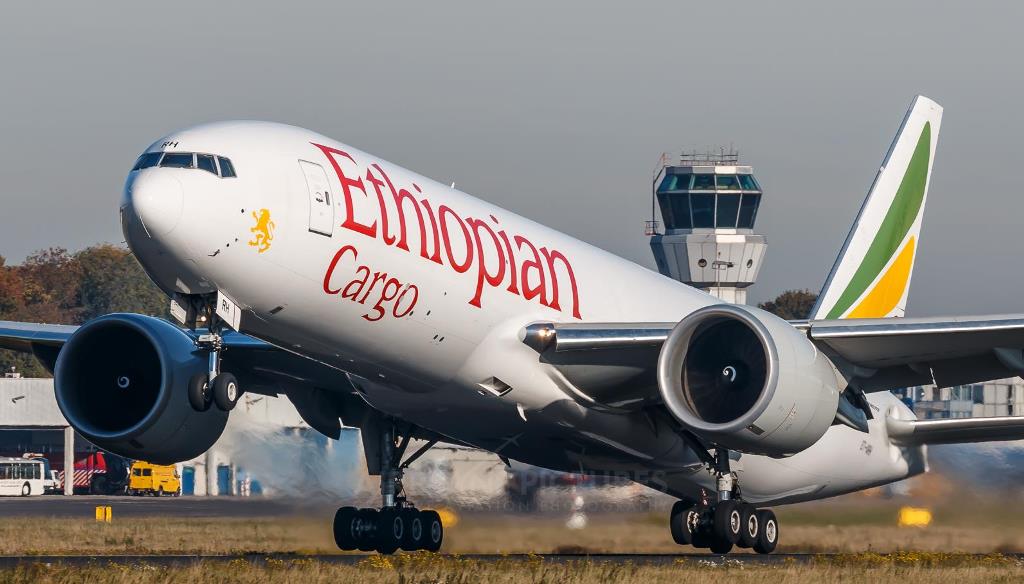
Fitsum Abady, general manager Ethiopian Airlines Cargo and Logistics Services, said in Nairobi that the carrier’s choice of Liege in 2008 as its European hub has proved to be a wise choice.  The freight carrier has grown rapidly over the last decade: its freighter fleet has evolved from two leased MD11s to an inventory of eight brand-new Boeing 777 freighters—with more to come.

Ethiopian Cargo played a role in the creation of Liege Airport Cargo North as a gateway for flowers and other perishables, and is seen as an important partner for the future by Belgian gateway.

Source : aircargonews/Ethiopian Photo                                                                                                 

                        White-glove Service for Red-Carpet Event                                                

The Standard limousine wasn’t good enough to chauffeur government officials and corporate executives for the Asia-Pacific Economic Cooperation forum in November of last year in Papua New Guinea.

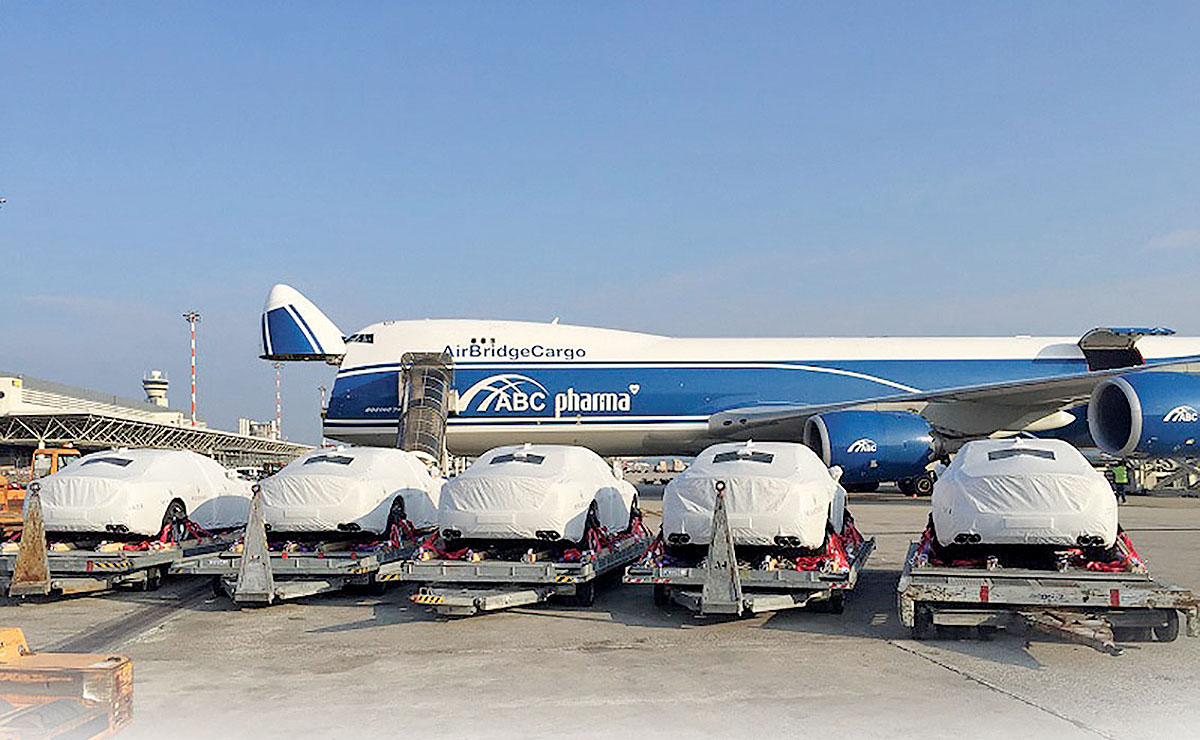
Kuwait-based Agility Logistics chartered two Boeing 747-8 freighters operated by Air Bridge Cargo, to fly 40 Maserati Quattroportes from Milan, Italy, about 8,500 miles to the event.

The Quattroportes were jacketed in protective covers as part of the white-glove treatment.

Source : Automotive News/Picture Air Bridge Cargo


Maintenance, Repair and Overhaul News

             Cold-Soak Software Fix Expanded to Leap-1B Engines                                               

European And US regulators have expanded a software-upgrade mandate to CFM International Leap-1B engines that ensures Boeing 737 Max-powered aircraft will not experience engine-fan-speed issues caused by extremely cold weather.

The European Aviation Safety Agency and the U.S. FAA mandates, issued

November 27 and December 11, 2018 respectively, mirror earlier requirements that covered Leap-1A engines that power A320neos. The latest directives require 737 Max-family operatives to upgrade full authority digital engine control (FADEC) and prognostic health monitoring (PHM) software within 60 days of their respective effective dates. The Boeing fleet upgrades were recommended in a CFM service bulletin issued October 24, 2018.

The Issue stems from engines cold-soaking after sitting at least six hours in temperatures well below freezing. Frontier Airlines reported six incidents when Airbus A320neo-family aircraft departing on their first flights of the day were forced to return to their gates when engines would not reach the required takeoff fan speed. In each case, water and ice was discovered in engine pressure-sensor lines affecting the sensor’s accuracy.

“While we have not received any reports of aborted takeoffs with the CFM Leap-1B model engine, the unsafe condition is likely to exist because of similarities in design and instances of ice and moisture found in the pressure sense subsystem lines,” FAA said.

Source : pro-network.com


Sources on Latest News: Airbus,World Airline News, Flightglobal ,Air Europa, Middle East Airlines & Bombardier.                

  • Sources of Header Pictures : Boeing Archives, Airbus & Embraer


Researched and Compiled by :

Ed Kaplanian    Commercial Aviation Advisor 

Contact – ekaplanian@msn.com

Editor:   Lee Kaplanian
 

Volume 5 Issue 12 December 2018 The Kaplanian Report

On The Boeing Front

 The GE9X for the 777X is Entering the Closing Stages Of its Certification                                                                                           

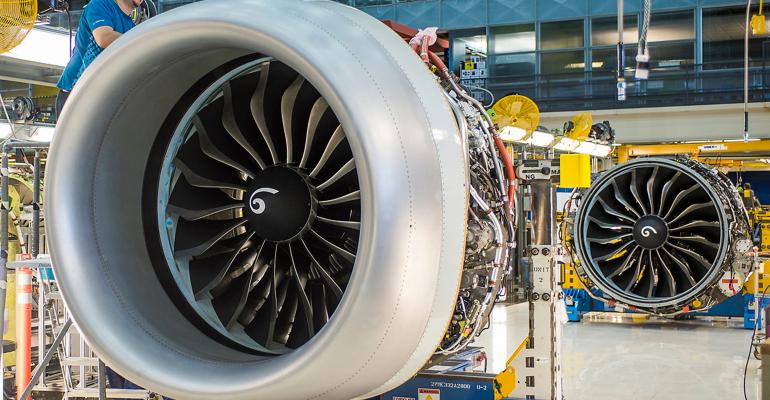
The GE9X is ready for flight test in its definitive production configuration, the 105,000-lb.-thrust engine for the 777X twin jet, is about to enter the closing stages of an intense and broad-range process that began with the core tests in late 2015.  The effort will clear it for the start of flight tests of the 777-9, the initial 777X-family variant in March 2019, followed shortly by certification of the engine itself.

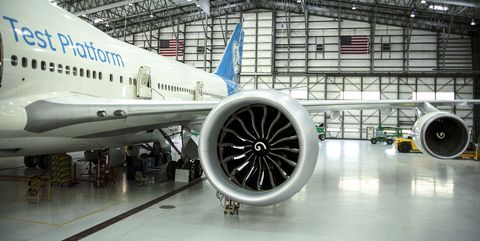
The flight-test engine is already attached to the 747-400 at GE’s Victorville, California, flight-test operations facility, one of eight GE9X development units in the baseline program.  A further batch of eight compliance engines, plus two spares, are also under assembly, with the first expected to arrive at Boeing’s Everett, Washington, plant for completion with buildup units and accessories prior to installation on the first 777-9. More on the process of the detailed testing will appear in my January report.

Source : AVweek/GE Aviation


ON THE AIRBUS FRONT

                               Airbus A330-800 Flies for the First Time

The first Airbus 330-800 took off on Tuesday, November 6, from Blagnac Airport in Toulouse for its maiden flight over southwestern France.  The aircraft, MSN 1888, will perform the dedicated flight-physics tests required for the smaller variant of the A330neo family, launched in 2014 as a more fuel-efficient replacement for the A330-200.

Plans call for the Rolls-Royce Trent 7000-powered A330-800’s certification development to last around 300 flight-test hours allowing for planned EASA approval next year.  Its sibling, the larger A330-900, recently completed its development testing and certification program, validating the A330neo family’s common engines, systems, cabin, and flight and ground operations.

An October 15 purchase agreement with Kuwait Airways for eight A330-800s gave Airbus a badly needed launch customer for the A330-800, whose previous initial customer, Hawaiian Airlines, canceled its commitment for six examples in favor of Boeing 787-9s in late February.

Firm orders for the A330neo topped 224 from 14 customers at the end of September, but all for the -900.  Delta Air lines signed as a launch customer of the A330neo and TAP Air Portugal as a launch operator.  Air Asia X remains the biggest customer.  (as of this writing dated November 9) Air Asia X has yet to firm up a tentative order for 34 A330neo placed in July, and is considering switching some of those jets to narrowbody A321neos, the CEO of its Malaysian arm.)                                                                                                                                          

A switch to narrow bodies would be a setback for Airbus’ A330neo program, which has been hit by a series of market losses to the rival Boeing Co 787. 

Source : ainonline/picture Airbus.   


REGIONAL/BUSINESS JETS

                   Embraer’s Bandeirante Marks Golden Jubilee of Flight                             

On October 26th, 2018, Embraer celebrated the 50th anniversary of the first flight of its Bandeirante turboprop twin—the company’s inaugural aircraft model.  The ceremony recreated the October 26,1968, first flight of the regional turboprop from Brazil’s Sao Jose dos Campos Airport.

In two decades after entering production in 1969, Embraer manufactured 498 Bandeirantes. About  150 of these aircraft are still operating at airlines, air taxis, government entities, and air forces in the Americas, Asia, Africa, Europe, and the Middle East.

“The Bandeirante represented much more than an aircraft; it marked a new cycle of transformation for Brazilian industry.  It represents a Brazil that is bold, capable of uniting competence, talent, and innovation,” said Embraer president and CEO Paulo Cesar de Souza e Silva.  ”This commemorative date offers us an opportunity to be grateful and celebrate the pioneers of Embraer and of the Brazilian aeronautical technology.  Embraer today is a company that competes on equal technological conditions with the world’s largest because 50 years ago a group of engineers, designers, and pilots dared to bring to life an aircraft that became a legend.

Source : AINonline

                                      Delta Received the First A220                                                            

On October 26th, Delta Airlines received the first Airbus A220-100; the ceremony was attended by executives from Airbus, Bombardier and Delta, as well as local leaders, at the joint Airbus-Bombardier assembly line at Montreal’s Miracle airport.

Guillaume Faury, president of Airbus’ commercial aircraft division, says the delivery could not have happened without an international “partnership that spans the Canadian, American and European aviation sectors”.

The aircraft will enter service from the airline’s New York LaGuardia hub on flights to Boston and Dallas/Fort Worth on January 31,2019.  It will roll out to five other markets, including Detroit, Houston and Salt Lake City, through August.

Air Canada will join Delta as a North American A220 operator in 2019, and JetBlue Airways in 2020.

Source : Flightglobal/Picture Delta Airlines    


OTHER AVIATION NEWS

              Singapore Airlines to Fly Nonstop To Seattle/Tacoma                                                

Seattle will become the fifth US city in Singapore Airlines’ route network and fourth to be served nonstop from Singapore when new flights are introduced next year.

The nonstop Singapore-Seattle/Tacoma flights are due to be launched on September 3, 2019. The airline will use the Airbus A350-900 on the route, fitted with 42 Business Class, 24 Premium Economy Class and 187 Economy Class seats.

The new Seattle flights will compliment Singapore Airlines’ existing services to the US cities of Houston, Los Angeles, New York (both JFK and Newark airports) and San Francisco.

Singapore Airlines will operate 53 flights to the US by December 2018, including 27 nonstop Singapore-US services.  With the introduction of the new Seattle flights next year, total US frequency will increase to 57 flights per week.

Source : World Airline News/Picture Singapore Airlines

        Boeing, Adient Joint Venture Advent Aerospace Starts Operations

In Mid October Boeing and Adient Aerospace announced their airplane seat joint venture is operational after securing regulatory approvals.  The companies also appointed Alan Wittman as Chief Executive Officer and named the team that will lead Adient Aerospace in addressing the aviation industry’s need for more capacity and quality in airplane seating.  Industry analysts forecast the commercial aircraft seating market to grow from approximately $4.5 billion in 2017 to $6 billion in 2018.

“ Adient Aerospace is now open for business, providing better customer and passenger experience with quality seats,” Wittman said.  ”Our focus is comfort, craftsmanship and operational excellence that will differentiate our products and services, all while offering more choice and better meeting commercial airplane industry’s needs.”

Adient Aerospace CEO Wittman was most recently the director of Business Operations for Boeing’s 787 Dreamliner program.

Source : Boeing

                Virgin Australia on Track for 2019 737 MAX Delivery

Virgin Australia is on track to receive its first Boeing 737 Max aircraft in November 2019, and is not considering further delays to the deliver date.

In early 2017, the airline postponed the MAX deliveries, which were originally scheduled to begin in September or October of this year.  The carrier now believes the revised 737 MAX timetable is appropriate and will not delay deliveries to boost its financial position, CEO John Borghetti said during a teleconference following Virgin’s annual general meeting.

The Airline is scheduled to receive 30 737-8s and 10 737-10s.  The aircraft will primarily be fleet replacement, although some will also be for growth, Borghetti said.

The “economics…don’t make sense” to delay retirement of the airline’s 737-800s any, further, Borghetti said. The carrier does not want to be in a position of operating 25-year old aircraft and then facing a “tidal wave of capital expenditure”. Higher fuel burn and increased maintenance boost the cost of operating older aircraft, he said.

Regarding subsidiary Tigerair,  Borghetti said the LCC’s transition from A320 to 737 will take three to four years.  Tigerair operates 12 A320s, and four 737s have been transferred from Virgin Australia in 2016.

Source : atwonline/ Picture of 737 Max In Virgin Livery Boeing


LATEST NEWS

  • Switzerland-Based Vertis Aviation, the long-range charter specialist, has added a second Boeing Business Jet to its growing portfolio of large-jets available for international charter.
  • United Airlines has taken delivery of its first Boeing 787-10, making it the third global operator of the largest 787 variant and the first in the Americas.                                             
  • S 7 Airlines has taken delivery of its first Boeing 737 MAX 8 on lease from Air Lease Corp., becoming the first Russian airline to fly the type.
  • AerCap took delivery of its first Boeing 737 MAX 8 and leased it to China Southern Airlines.
  • Shanghai Airlines took delivery of its first GEnx powered 787-9, its 100th aircraft.
  • American Airlines signed a firm order with Embraer for 15 E175 jets in a 76 seat configuration.
  • China Eastern Airlines took delivery of its first 787-9 Dreamliner.  Previously the airline finalized an order for 15 787-9 Dreamliners.
  • Japan Airlines is planning to launch flights between Tokyo Narita International Airport to Seattle beginning March 31, 2019, its sixth North American west coast route.                
  • Air New Zealand has taken delivery of its first A321neo, one of 20 of the re-engined A320neo family destined for the carrier.


AIR CARGO

             Turkish Cargo Adds Ho Chi Minh to Its Freighter Network                             

On November 5th, Turkish Cargo announced it is adding freighter routes from Europe to Ho Chi Minh airport to its flight network. The new routes will be flown by the airline’s 777 freighters.  Turkish has acquired three of the freighters in December 2017, and has two more on order from Boeing.

Turkish Cargo first established its presence in Vietnam’s capital in 2015, via twice-weekly flights between Istanbul and Hanoi using A330-200Fs.  The Airline now seeks to expand its flight routes to Vietnam, because of shifting cargo trends between Asia and Europe.

Vietnam is gaining attention from manufacturing companies seeking to move operations from mainland China; it is over fears of negative impacts from the trade war between the United States and China.

This trend, coupled withHo Chi Minh’s status as Vietnam’s largest city and pre-existing trade links with Europe, further increases the city’s high export and cargo traffic potential.

Source : Air Cargo World/Picture Turkish Cargo


 Maintenance, Repair and Overhaul News 

                                  Boeing Considering a 777-300ER Freighter                                                                        

As one of its organic growth projects, Boeing is in the process of building a business case for a 777-300ER passenger to freighter conversion.

Boeing has invested in 215 organic projects to grow its services business, one of those is exploring a 777-300ER passenger to freighter conversion.  ”We’ve been talking to customers about a market acceptance and pricing, and we’re in the midst of working the business case,” says Stan Deal, President and CEO of Boeing Global Services.

The robust global freight demand, and the subsequent need for cargo aircraft is “largely driven from an commerce explosion in the U.S.,Europe and China,” says Deal.

He says that around 2022, the 777-300ER “will be in a timeframe when it will be ripe for a conversion or a second life.”

Of the 215 organic projects, Deal says the 777-300ER Converted Freighter “is a big one.”   The array of projects also spans upgrades to existing capabilities as well, such as the release of Jeppesen Flitdeck 4.0, which provides pilots, maps, charts and documents necessary for paperless flying.

Source: mro-network/ Picture Swiss                                                                                                                

Continued Progress Under Boeing’s Predictive Maintenance Umbrella                

Predictive maintenance is no single tool, but a set of tools and procedures aimed at a goal according to Boeing.  ”For us, it represents an umbrella of activities to help operators turn unscheduled maintenance into scheduled activities,” summarizes Dawn Nozdryn-Plotnicki,

director of advanced analytics at Boeing.  The analytics chief says “the approach is already well along, yet with new advances in bigger data, more powerful analytical methodologies and newer airplane designs, we continue to have more to do.”

Boeing’s predictive umbrella covers a range of actions: maintenance strategy; maintenance

planning, day-of-operations monitoring, execution, reliability analysis, maintenance and post-operations monitoring for feedback and improvement.  Predictive maintenance alerts can influence both modification of aircraft design and scheduled maintenance, Nozdryn-Plotnicki notes.

There are many ways predictive maintenance can be achieved at individual airlines.  For example, Boeing offers airlines self-service analytics, consulting services to address specific needs, digital solutions that include both analytics and expertise and turn-key maintenance, engineering, and supply chain program, Global Fleet Care.

The OEM has invested in further gains in designing the 737MAX and developing the 777X.

Another major investment is developing more algorithms and technology platforms to exploit

ever bigger and better aircraft data.  Boeing’s predictive services are already widely used. For example, Airplane Health Management (AHM) conducts over two million calculations each hour for over 100 airlines flying 4,700 aircraft.  And AHM is just one of the OEM’s predictive services.

Source : pro-network  


Researched and Compiled

  Ed Kaplanian    Commercial Aviation Advisor  

Contact – ekaplanian@msn.com

Editor:   Lee Kaplanian 


Volume 5 Issue 11 The Kaplanian Report

On the Boeing Front

    Max 10 Maintains Family Ties Following Landing Gear Tweak Design


Boeing will introduce a levered main landing gear on the 737 Max10 to overcome the potential threat to commonality with the rest of the narrow body family posed by its longer fuselage. To Preserve commonality in the Max family, Boeing has long been studying different options for the largest member of the Max family, the fuselage of which, at 143 ft (43.8m),is 1.6 m longer than the Max 9.

Boeing picked the levered design which will enable the gear to extend 9.5 in (24.1cm) during takeoff rotation, says Gary Hamatani Max chief project engineer.  “We have put in this new lever that extends down to 9.5 in, to provide us the rotation.”

The design is similar to that of the 777-300, in addition to the lever, the 737-10’s main gear has a steel “innovating shrinking mechanism”, dubbed a “shrink link”, which pulls the inner cylinder as the gear retracts, enabling it to fit in the same wheel well, Hamatani says.                   

“From a pilot’s perspective, there is absolutely nothing different the Max10 landing gear and the existing Max family,” Hamatani adds.

The Max 10 will carry 188 passengers in two-class layout and have a range of 3,300 nautical miles (6110km). The 737Max10 was launched at the Paris air show in 2017.

Source : Boeing /Flightglobal /Boeing Photo


ON THE AIRBUS FRONT

                             Airbus A330-900 Gains EASA Certification

The Airbus A330-900 has received type certification from the European Aviation Safety Agency (EASA), clearing it for first delivery to launch customer TAP Air Portugal. TAp’s first aircraft served as a demonstrator for route proving, during which it visited 12 countries. Including the two A330-900 flight-test aircraft, the certification campaign logged some 1,400 hours in the air since first flight on October 19, 2017.

Carrying an Airspace by Airbus cabin and powered by Rolls-Royce Trent 7000 engines, the A330neo family consists of the A330-900 and the smaller A330-800.

Airbus launched the A330-900 and -800 simultaneously in July 2014.The company stresses the negligible extra cost of developing the smaller -800 due to the fact that the variants share 99 percent commonality. Fuel efficiency benefits come from a switch from the A330’s Rolls-Royce Trent 700 to the new Trent 7000, the addition of sharklet wingtip devices and the use of composite nacelles.

According to Airbus a result of those changes, both the A330-900neo and the smaller, A330-800neo (based on the A330-200),deliver a claimed improvement of some 25 percent over older generation aircraft of a similar size.

While the fuselages remain unchanged, Airbus specifications show 10 more passenger seats, giving the -900neo a three- class capacity of 287 and the -800 a capacity of 257.

Firm orders for the A330-900 now stand at 224, while the A330-800 lost its sole remaining customer in May, when Hawaiian Airlines canceled its order for six airplanes. Tap Air Portugal has ordered 10 of the-900 and plans to operate a similar number on lease. AirAsiaX by far ranks as the largest customer, having placed an order for 66 A330-900s.(On October 16 Kuwait Airways became the newest customer of the A330-800 with an order for eight aircraft.)

Source : Airbus/Ainonline/Ed’s research


             REGIONAL/BUSINESS JETS                     

  Helvetic Airways Firms Up Its Order For 12 Embraer E190-E2 Jets

Helvetic Airways has signed a firm order of 12 E190-E2 jets. This agreement was announced as a letter of intent (LOI) at the recent Farnborough Air Show in July.

The firm order has a value of $730 million, based on current list prices and was   included in Embraer’s 2018 third quarter. backlog.

The contract also includes purchase rights for a further 12 E190-E2, with conversion rights to the E195-E2, bringing the total potential order up to 24 E-jets E2s.

With all the purchase rights being exercised, the deal has a list price of 1.5 billion. The first E190-E2 aircraft will begin replacing Helvetic’s five Fokker 100s and seven E190s, starting in late 2019 and completing in autumn 2021.

The Purchase options for a further 12 aircraft (E190-E2 or E195-E2) will enable Helvetic Airways to grow according to market opportunities.

Source : World Airline News

Zunum Picks Safran for Developmental Hybrid-Electric Commuter 


Boeing-backed US hybrid-electric aircraft start-up Zunum Aero has selected Safran Helicopter Engines to supply a turboshaft engine to generate electric power propulsion of its in-development 12-seat commuter aircraft.

Safran says it will supply a new variant of its 1,700-2,000shp (1,270-1,500kW) Ardiden engine family—designated 3Z— which will be capable of delivering 500KW in combination with an electric generator.

The 12-seater—internally dubbed ZA10— will also be equipped with battery packs to “supplement” electric power during “key stages of flight and over long ranges”.

The company has received financial support from Boeing’s HorizonX division, JetBlue Technology Ventures and the State of Washington Clean Energy Fund.

Source : Flightglobal /Safran/Safran Picture       


OTHER AVIATION NEWS

         ATSG Signed an Agreement to Acquire Omni Air International

US air cargo company Air Transport Services Group (ATSG) has signed an agreement to acquire Tulsa-based charter operator Omni Air International for $855 million in cash.

The move, which remains subject to regulatory approval, will significantly expand ATSG’s global reach and see the company acquire its first Boeing 777s, says Wilmington, Ohio-based ATSG on October 2nd.

ATSG anticipates closing the deal in the 4th quarter. It will fund the purchase with money borrowed through an existing line of credit, the company says in a media release.

In Business since 1993, Omni flies charters and operates wide bodies under aircraft, crew, maintenance and insurance(ACMI) agreements. Its customers include the US government. Omni’s fleet includes 13 passenger-configured wide bodies—seven 767-300ERs, three 767-200 ERs and three 777-200ERs.

Acquiring Omni will expand ATSG’s(ACMI) work, diversify its revenue with new customers and enable it to expand globally thanks to the capability of Omni’s 777s, which have more range than anything in ATSG’s fleet the company said.

If the deal closes, Omni will continue operating from Tulsa as an ATSG subsidiary and will be headed by Current CEO Jeff Crippen.

ATSG’s fleet includes some 73 aircraft, including 767-200Fs, 767-300ERFs,757-200Fs and 737-400Fs. Acquiring Omni’s fleet will bring ATSG’s fleet to 90 aircraft.

Source : ATSG

The Jet Travel Era Began in Earnest—60 Years Ago

              This year marks the 60th anniversary of a seminal moment in commercial aviation: the start of transatlantic jet services. While jet travel was nothing particularly new by 1958, the launch of services between the US and Europe in October that year by British Airways (formerly BOAC) and US airline icon Pan Am is a true legacy of what the airline industry represent today. Prior to 1958, the industry’s foray into jet services had been sporadic.

BOAC ushered in the jet travel in 1952 when it began services with the de Havilland Comet 1, powered by four of the company’s Ghost turbojets. The inaugural flight was a multi-hop service from London down through Africa to Johannesburg.

Sadly, the pioneering operations of the Comet 1 came to an abrupt halt within two years when the jet was grounded after a series of tragic accidents subsequently traced to metal fatigue proliferated by design error.

By the time this happened, Boeing was already well advanced with the development of its own jet transport that would become the 707, while de Havilland was working on larger and longer-range Comet variants powered by Rolls-Royce Avon turbojets.

During 1957 and 1958, as de Havilland raced to develop its improved Comet 4, incorporating changes resulting from the inquiry into the 1954 accidents, Boeing was surging ahead with its much more advanced model 707.The Boeing jet, was powered by Pratt& Whitney JT3C turbojets, flew on December 20,1957 with first production Comet 4 taking to the air four months later on April 27,1958.

Both types received their certificate of airworthiness in September that year and the race was on to be the first to inaugurate transatlantic flight, with BOAC championing the British Comet 4 and Pan Am flying the Boeing 707.

There was no turning back after those transatlantic jet inaugurals 60 years ago. While development of the Comet fizzled  out after the Comet 4 series, the development of the 707 and its rival the Douglas DC-8 rapidly provided airlines with longer-range jet transports.

Source : Ed’s Research/Flightglobal/Flightglobal Pictures           


LATEST NEWS

  • Air Tahiti Nui has received the first of four Boeing 787-9s it has on order, which will replace its aging Airbus A340-300s
  • BOC Aviation will lease three Airbus A320ceos for Saudia’s LLC subsidiary FlyDeal. All three aircraft will be delivered in 2018.
  • AirBaltic received its 12th Airbus A220-300; two more are expected by the end of 2018.
  • AviaAM Financial Leasing China delivered a Boeing 737-800 to China’s Okay Airways.
  • Airbus has named current Commercial Aircraft CEO Guillaume Faury to replace Tom Enders as chief executive of the entire entity.
  • United Airlines has ordered nine more Boeing 787-9s, bringing its backlog for the type to 13 aircraft.
  • Oman Air took delivery of the fourth of 30 new Boeing 737-MAX 8’s it has on order. By the end of 2018, Oman Air will have taken delivery of five new MAX aircraft and three 787-9s.
  • Scoot has taken delivery of its first Airbus A320neo out of the 39 jets it has on firm order with Airbus
  • Copa Airlines has unveiled its first 737 Max 9, featuring the first lie-flat seats in business class and new economy extra section                                                                         
  • EVA Air took delivery of its first Boeing 787-9 leased from Air Lease. EVA will begin deploying the type on International routes this month.


Source: Ed’s Research


AIR CARGO

    Atran Airlines to Lease two GECAS Boeing 737-800 Freighters                          

Atran Airlines, the scheduled express cargo carrier within the Volga-Dnepr Group, has signed a deal with GE Capital Aviation Services (GECAS) for lease of two passenger-to-freighter (P2F) conversions.

The aircraft are scheduled to be phased in during the remainder of 2018 and the first half of 2019. The will provide additional capacity to supplement Atran’s all-cargo fleet of three B737-400 SFs.

Aircraft lessor GECAS noted that the B737-800 freighters are “perfectly suited to short and mid-range routes,” which form the basis of Atran’s scheduled network between Russia and Europe. The carrier also specializes in handling growing international e-commerce shipments. Paul Nolan, fleet development director at Cargo Logic Management (a UK-based Volga-Dnepr Group company specializing in management consulting services for international airlines) commented: “these newly converted 737-800 freighters will assist Atran Airlines in achieving its strategic objectives and serving customers in e-commerce and express services on Russia-China routes.”

Atran Airlines was established in 1942 and is among the oldest Russia-based airfreight carriers. It joined the Volga-Dnepr Group in 2011.

Source: Air Cargo News/GECAS


Maintenance, Repair and Overhaul News

 Southwest to Invest in New MRO Facility at Baltimore/Washington

Southwest Airlines will co-fund a new $130 million regional maintenance facility at Baltimore/Washington International airport, to better meet its needs at the second busiest airport in its network.

Construction of the (130,000 square feet) line maintenance facility will begin early next year, with completion in 2021. Southwest will invest 480 million, with the Maryland Aviation Administration contributing the remaining $50 million.

The three-bay hanger will be the first of its kind for Southwest in the northeast, complementing six maintenance hangers in Atlanta, Chicago, Dallas, Houston, Orlando and Phoenix. The facility will include additional exterior parking spots for eight aircraft well as office space.

Construction of the hanger is expected to create 450 jobs,  but will not significantly grow maintenance employees numbers at the airline. Southwest currently employs more than 120 technical operations staff at the airport, which is its largest line operation and has the most number of Southwest aircraft remaining overnight.

The new facility will provide shelter to these employees in inclement weather, and also provide more space for storage of parts according to Southwest chief executive Gary Kelly and another signal of the airline’s “serious commitment” to Baltimore/Washington.

News of the planned maintenance facility comes as the airline celebrates its 25th year of service at Baltimore/Washington. It employs more than 4,800 staff at the airport.

Source: Flightglobal/Southwest


                                      MRO Latest News

  • Lufthansa Technik  has a China Aviation Supplies Co. contract to provide Airbus A350 component support for Air China.
  • AJW Group was selected by Air Mediterranean to provide Boeing 737-400 component support.
  • Turkish Aerospace Industries signed a collaboration agreement with Airbus for research and development of secondary aircraft structures, such as movable parts, for Airbus commercial aircraft.
  • Turkish Technic was selected by India’s SpiceJet to provide Boeing 737 MAX component support.
  • Liebherr wins follow-up component supply deal for current 777s and the 777X.
  • Diehl Aviation cabin interior specialist has won a contract from Boeing to supply     emergency lighting equipment for the 787 program.

Source : Ed’s Research


Researched and Compiled by :

                                                      Ed Kaplanian    Commercial Aviation Advisor 

                                                      Contact – ekaplanian@msn.com

                                                      Editor:   Lee Kaplanian 
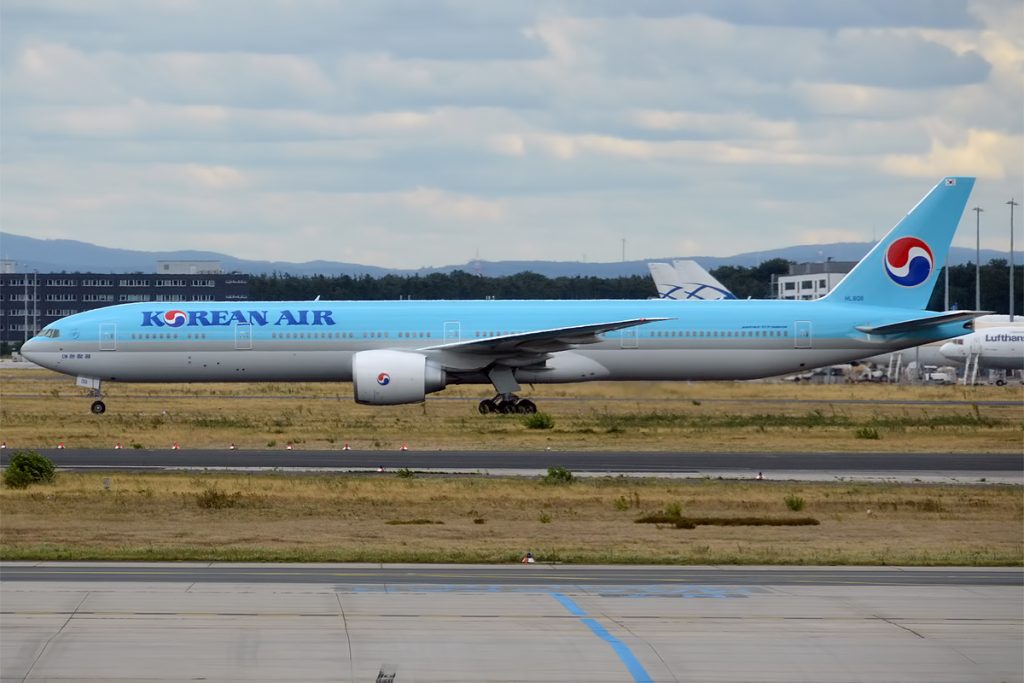
Volume 5 Issue 10 October 2018

ON THE BOEING FRONT

             Boeing Making Steady Progress with 777X (Part 2)

In Everett, Boeing has begun construction of the second autoclave, scheduled to move into CWC (composite wing Center) later this year.

Now housing a single autoclave, the CWC will eventually need to reach three full rate. For spar production, Boeing has erected two fabrication cells, allowing it to build a front and rear spar simultaneously. While the CWC also makes composite panels, skins, and stringers—86 of which go into each wing—the wing’s aluminum ribs are made in other Boeing facilities.

In the meantime, at Boeing’s Seattle-area test facility, the company has completed more than 20 labs and has entered the lab-testing phase. One of the labs, called the integrated test vehicle(ITV), covers 12,000 sq ft and took about three years to complete.  It tests all of the hydraulics and actuators, as well as folding wing operation, flaps, landing gear and various other items. Also in the test building sits what Boeing calls (Airplane), which took 33 months to complete. It began testing avionics and systems integration in March. Covering 11,000 square feet, it includes all avionics boxes,55 bays of equipment and 3,700 instrumented cables.

Featuring 105,000-pound-thrust GE9x turbofans and structural improvements to the fuselage that will allow for a 6,000-foot cabin altitude, the airplane remain positioned to meet Boeing’s 2020 entry-into-service target, according to Boeing.

For the fuselage, after much deliberation, Boeing chose to retain the aluminum design, while still incorporating not only a lower cabin altitude but also higher humidity levels and larger windows. Boeing’s familiarity with the legacy 777 allowed it to create an environment comparable to that passengers enjoy in the all-composite 787. In the opinion of this writer it is going to be another awesome Boeing product.

Source : Boeing/Boeing Picture


ON THE AIRBUS FRONT

                                   Airbus Rolls Out First ACJ320neo

The first Airbus Corporate Jets ACJ320neo rolled off the production line in Hamburg, Germany, the company announced on August 16. Registered as D-AVVL, the airplane has been fitted with CFM International Leap-1A engines and painted in Airbus Corporate Jets’ house colors.

Following delivery to UK-based Acropolis Aviation in the fourth quarter, the aircraft will enter outfitting at AMAC in Basel, Switzerland, where an Alberto Pinto-designed cabin will be installed. It will be repainted in the customer’s colors.

Airbus ACJ320neo family aircraft feature new-generation engines and Sharklets, reducing fuel burn by about 15 percent and increasing range.

According to Airbus, the ACJ320neo can fly 25 passengers 6,000nm, 11,100 km, enabling routes such as London to Beijing or Cape Town and Moscow to Los Angeles, while the ACJ319neo can fly eight passengers 6,700nm/12,500 km.

ACJ320 family variants differ from their airliner counterparts by including a lower cabin altitude, build-in airstrips, and cargo hold that is reinforced to carry additional center fuel tanks. There are currently nine firm orders for the ACJ320neo family—three ACJ319neo and six ACJ320neo—according to Airbus.

Source : Airbus/Airbus Picture          


REGIONAL/BUSINESS JETS

                              Boeing Sells BBJ Max 7 to Seasons Trading

Boeing Business Jets has sold a BBJ Max 7 to Singapore company Seasons Trading.

Although Seacons Trading chief executive Duty Purwagandhi says the re-engined narrow body was selected “because it offers more room and more range” than the company’s current line-up, it is unclear if it will replace the current BBJ or Gulfstream G550 it operates.

“The BBJ Max 7 has features and capability that allow us to meet our very long-distance and demanding international flights with the best passenger comfort in its class,” adds Purwagandhi.

Green deliveries of the 7,000nm(12,950km)-range, CFM international Leap 1B-powered BBJ Max 7 are scheduled to begin in 2022, with Asian operator Orient Global Aviation the launch customer for the type.

Boeing says it has secured 20 orders for the BBJ Max family. The line-up includes the -8 and -9 variants—the re-engined variants of the BBJ2 and BBJ3, which are earmarked for green delivery in 2018 and 2020.

Boeing set up its dedicated division for business jets in 1996 and since then has taken 259 orders and delivered 233 aircraft.

Source : Boeing Business Jets


             Bombardier: Mission Accomplished for Global 7500 FTV1

As it nears certification for its new 7,700-nm flagship business jet, Bombardier Business Aircraft has retired the first 7500 flight-test vehicle—FTV1, dubbed “The Performer” — from flight-test duties, the Canadian aircraft manufacturer announced this week.  ”On November 4, 2016, the inaugural flight test vehicle took to the skies for the first time,” it said. On September 7, 2018 it has officially completed all of its flight testing and is going into retirement. Mission accomplished.

However, Bombardier said the aircraft itself is far from being retired. Instead, FTV1 has recently been painted at the company’s Global Completion Center, serving as a dress rehearsal for the paint shop, which was recently expanded to accommodate the larger model. The airplane will also be used as a demonstrator and appear at local company events ahead of the first production Global 7500’s expected service entry in the fourth quarter. In addition, Bombardier’s customer experience team is using FTV1 to validate all instruction manuals and procedural guidelines.

Meanwhile, the company said the rest of its Global 7500 flight-test fleet—FTV2 through FTV5—is wrapping up the final testing. To date test aircraft have accumulated more than 2,700 flight hours altogether.

Source : ainonline/Picture Bombardier


OTHER AVIATION NEWS

                       Narrowbodies Will Grow Their Share: Udvar-Hazy

Single-aisle aircraft will increase their dominance of global airline fleet as it grows over the next decade,AirLease executive chairman Steven Udvar-Hazy expects.

Speaking at an Aviation Club luncheon in London on September 13th, Udvar-Hazy said narrow bodies had upped their share from 70% to 75% of in-service commercial aircraft within a few years.” That trend will continue,” he predicts.

He singles out Airbus’s longest-range narrow body, the A321LR, as a crucial aircraft in the medium market, suggesting that “we will see a lot more of them on transatlantic routes” because the variant offers “ close to the Boeing 757 capabilities, but uses 30 to 35% less fuel”.

However, he says “the multimillion dollar question” is how Boeing responds with its New Mid-Market Airplane concept. Udvar-Hazy expects the airframe to make a final decision on The “797” by next summer.

He remains skeptical about the prospects of the Airbus A380.”It is ideal for about 50 to 60 city pairs, but its versatility is limited because of seasonal markets and airport infrastructure that makes it complex aircraft to support,”he says.Pointing to the fact that Emirates dominates the installed fleet and orderbook for the double-deck wide body, he adds “How do you estimate residuals when so much of the fleet sin the hands of one airline?”

Source : Flightglobal

         Ethiopian Defers A220 Decision Following Airbus Acquisition

Ethiopian Airlines has suspended its planned order for at least 20 examples of the former Bombardier C Series following Airbus’s acquisition and renaming of the program now known as the A220.The airline engaged in an evaluation of the former Bombardier program for more than two years. However, now that the European airframes controls the program’s marketing, Ethiopian has decided to wait and gain a better understanding of Airbus’s plans.

But just as Ethiopian concluded its evaluation, Airbus acquired the majority of the program and renamed the aircraft the A220. “The new owner has a new marketing strategy,” said CEO GebreMariam.“Thus we decided to give it time and see how the process is going to evolve.”

Now the airline is studying whether or not the Boeing 737Max aircraft order could eventually fit into the regional route network on which it intended the C Series to operate.

“We are closely studying the market if it can continue to grow to the level of the Boeing 737 Max, which is a 160-seater,” said GebreMariam, referring to the Max 8.”with the fast growth that we see in the African continent this market may grow to that level and we may not need to add additional complexity with a new model aircraft and the additional need for training of pilots and technicians.”

Source : ainonline/picture Ethiopian

           Virgin Australia Signs On As Latest Boeing Max 10 Customer

Boeing’s firm order total for the largest of its 737 Max line rose to 417 on Wednesday August 29, as Virgin Australia said it would convert delivery positions reserved for 10 of 40 Max 8s on order to Max 10 positions. Australia’s second largest airline expects to take delivery of its first Max 10 in 2022, some three years after it takes the continent’s first Max 8 in November 2019.

Brisbane-based Virgin Australia Group operates more than 130 aircraft, including more than 80 Boeing 737NGs.The addition of the Max jets forms part of a fleet modernization program expected to further boost prospects for a recovering domestic network.

The Max 10 incorporates a pair of fuselage plugs to extend the max 9’s length by 66 inches. Other changes include a levered main landing gear, minor changes to accommodate the 777-style landing gear and four-inch-wider mid-exit door to allow for extra 12 passengers, bringing maximum capacity to 230 passengers.

Source : Ed’s Research/Boeing/Virgin Australia Picture


 LATEST BRIEFINGS

  • Ural Airlines of Russia is to diverge from its all-Airbus fleet having reached an agreement to lease 14 Boeing 737 Max jets.                                                                                 
  • American Airlines CR Smith Museum reopened to the public on Labor Day following the successful completion of a redesign of its permanent exhibitions.
  • Gulf Air has received its first Airbus A320neo, the airline will eventually operate  12 examples.
  • First Airbus A380 has been dismantled and will be sold as spare parts as new lessee or buyer could not be found after a 10-year lease to Singapore Airlines.
  • Luxair Luxembourg’s national carrier plans to acquire two Boeing 737-700s in 2019 to expand its route structure.
  • Atlas Air has concluded a deal to acquire a Boeing 747-400 freighter from Lease Corporation International, increasing its fleet almost 40 examples.
  • Corendon Airlines will introduce three more Boeing 737 Max from the beginning of next year.
  • Ukraine International Airline continues its expansion program by acquiring seven new aircraft this year including a former Asiana Airlines Boeing 777-200ER.
  • Biman Bangladesh Airlines put its first Boeing 787-8 into service on September 1.                                                                                                                                                                   
  • Air Peace announces an order for 10 737 Max aircraft from Boeing to expand its regional network.                                                                                                                             
  • Brazil’s GOL unveiled its new Boeing 737 Max 8 at an event in Sao Paulo after taking delivery from Boeing.                                                                                                                       


AIR CARGO

                                The BMW Vision iNEXT World Flight

The BMW’s autonomous iNEXT electric crossover is no ordinary vehicle. And to launch it, BMW is taking to the skies. In a round-the-world sprint spanning Sept.9-11, BMW flew the iNEXT in a Boeing 777 Freighter to press events in Munich, New York, San Francisco and Beijing, before returning to Frankfurt.

Four destinations on three continents in five days. The BMW Group teamed up with the Lufthansa Cargo  to present the BMW iNEXT World Flight as part of an event unparalleled in its execution.

Lufthansa Cargo and the BMW Group team have worked together closely to turn this extraordinary vehicle and technology presentation from idea into reality.

Preparation for the presentation event involved laying more than 7.5 km of wiring, while 78,000 LEDs in 165 Video LED modules and ten 13,000 ANSI lumen projectors will lit up a show inside the Boeing aircraft and that appealed to all the senses.

More than 120 specialists in exhibition stand constructions as well as experts from Lufthansa Cargo and the BMW Group have played their part in making the project happen.

Around 30 tons of material were used to construct a suitable platform on which to showcase the BMW Vision iNEXT.

Timings were tight, given the need to turn the entire set-up inside the 777F from presentation mode to flight mode and back quickly and securely.

The first guests were expected to arrive eight hours after the plane lands. And just four hours after the final presentation has been wrapped up at one venue, the 777 took off again for the next destination on its itinerary.

Source : Lufthansa Cargo/Pictures Lufthansa/BMW Automotive News


Maintenance, Repair and Overhaul News

  MRO’s Technological Shift

Aircraft maintenance is rooted in touch labor and is likely to remain so for many years. New tools and materials sometimes make life easier for engineers, but human input still is invariably required.

Threatening to shake things up, however, are new technologies such as robotics and artificial intelligence.

For example, Lufthansa Technik has developed an automated inspection and repair boot for combusted cracks, while several airlines have trialed drones for automated aircraft exterior inspections.

With the inspection drones an engineer is still needed to review the results, but fault recognition technology may soon remove the need for human eyes.

Most composite repairs are still done by hand, but automated processes will be an integral part of the aftermarket going forward—in part because of the imposition of stricter standards to inspection and repair procedures, which add to repair time if done by hand.

Many of these technologies do not threaten to replace human workers. Instead, they offer productivity gains, quicker turnarounds and more accurate inspections.

Looking ahead, a more interesting question is whether hardware or software improvements will offer the biggest gains for maintenance.

Source : pro-network/Picture Lufthansa Technik


LATEST MRO NEWS

  • Ameco launched Airbus A350-900 line maintenance services for air China.
  • IAI is considering resuming its Boeing 747-400 passenger-to-freighter conversion program.
  • KLM UK Engineering has an Alliance Airlines contract for Fokker 70/100 heavy maintenance.
  • MTU Maintenance has a 3-year Jazeera Airways contract for CFM56-5B maintenance/repair.


       Researched and Compiled by :

       Ed Kaplanian    Commercial Aviation Advisor

       Contact – ekaplanian@msn.com

        Editor:   Lee Kaplanian 
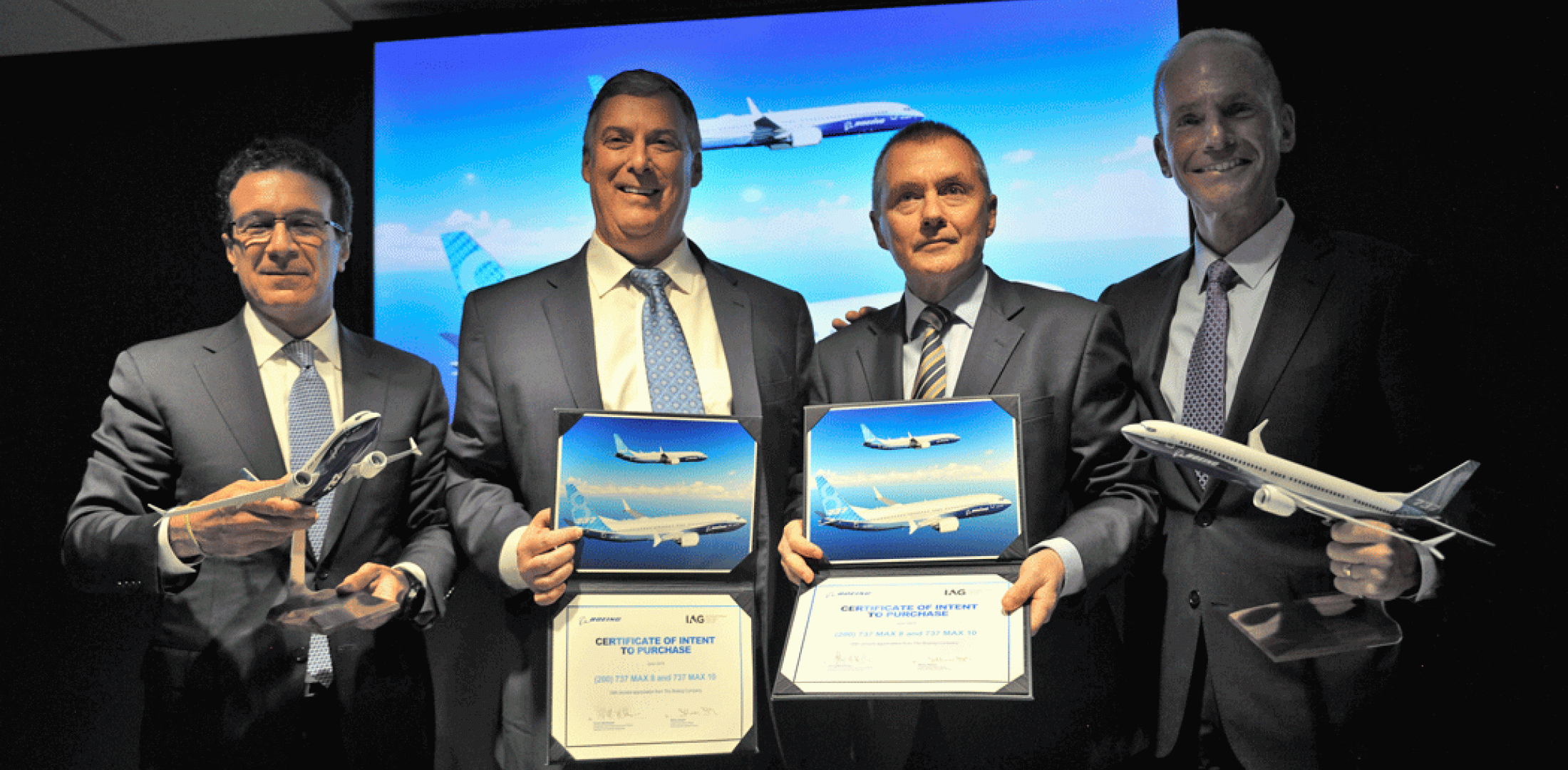
Volume 5 Issue 9 Sept 2018

On the Boeing Front

                    Boeing Making Steady Progress With 777X (Part 1)

Engineers have attached the first fuselage barrels for the first Boeing 777-9s—the static test airframe and the first flight test example—and moved them into systems installation, Boeing reported in late June, and the first pair of wings have emerged from the horizontal build line at the company’s wide body plant in Everett, Washington. 

Scheduled to complete the static test airframe by the end of the year, Boeing has moved the wings for the larger of the two 777X variants into letdown and systems installation, while at the 1.3-million-sq-ft composite wing center(CWC), the company has begun fabricating wings for the fifth airplane. So far, Boeing has sent four sets of wings out of the CWC and into spar assembly.

Boeing has now completed 98 percent of its engineering releases, leaving “very few left to do”, according to a company spokeswoman, who reported the remainder involves mainly systems. In the factory, Boeing has completed the static test rig in Everett, and now is loading it with all its test equipment, while the fatigue test rig has reached the halfway point of construction.

Meanwhile, the airplane’s folding wingtips have arrived from their production site in St. Louis for the static airplane and the first-test article. One of the airplane’s most visually distinguishing characteristics, the 12-foot-long folding wingtip will allow regulators to classify both airplanes as Code E, meaning they will fit the same size parking space the 777-300ER now uses.

The Airbus A380, conversely, operates as a Code F airplane, significantly limiting the number of airports it can use.

See more about this subject in my October report.

Source : ainonline/Boeing/Boeing pictures


ON THE AIRBUS FRONT

           Airbus BelugaXL Completes First Flight in Toulouse 

Airbus’s first BelugaXL has completed its first flight, paving the way for a 10-month long test certification campaign and a planned entry into service next year.

The BelugaXL, powered by Rolls-Royce Trent 700 engines, took off from Blagnac in Toulouse, southwest France, where Airbus is based ,on July 19 and landed four hours and 11 min. later, Airbus said.

The aircraft, with its livery designed to look like a smiling beluga whale, the result of a vote by Airbus’s 20,000 employees, is the first of five BelugaXL’s that will enter service in 2019, gradually replacing the existing five BelugaST transporters Airbus uses to carry complete sections of its aircraft from production sites across Europe to final assembly. 

Airbus launched the BelugaXL, in November 2014 to address transport and ramp-up capacity requirements beyond 2019.The new oversize air transporters are based on the A330-200 freighter, with a large re-use of existing components and equipment. It has a payload lifting capacity of four tons greater than the current Beluga A300-600ST.  

Source : Airbus/Airbus Picture         


REGIONAL/BUSINESS JETS

Transport Canada Certifies 90-Seat Cabin for Bombardier’s Q400 Aircraft

Bombardier Commercial Aircraft announced on August 1 that its 90-passenger Q400 aircraft certification has received its certification from Transport Canada, becoming the first in-production commercial turboprop in the world to reach that capacity.  

Todd Young, head of the Q Series Aircraft Program, said “This milestone certification showcases the unique versatility of the Q400 turboprop and continued commitment to the evolution of the program”. 

The 90-seat configuration represents another step in Bombardier’s continuous improvement of its Q400 aircraft. Other improvements under development    

includes a 2,000 lb- increase in payload capacity and an escalation of the A-Check and C-Check intervals from 600/6000 to 800/8000 flight hours.  

Launch customer for this aircraft is SpiceJet of India.

Source : Bombardier Commercial Aircraft


       Rockwell Collins Signs Contracts with AVIC For MA700 

Rockwell Collins has signed master contracts with China’s AVIC Aircraft to supply its Pro Line Fusion avionics suite and air data systems for the MA700 twin-engine turboprop. AVIC Aircraft also has designated the Rockwell Collins HGS 3500 Head-up guidance System as an option.

AVIC Aircraft plans to fly the first MA700, powered by Pratt & Whitney Canada PW150C engines in November 2019 and to obtain certification from the Civil Aviation Administration of China (CAAC) in late 2021.

Pro Line Fusion on the MA700 features four, 14-in. widescreen primary and multifunction flight displays and Multifunction weather radar with predictive windshear capability.

Avionics work will take place at Rockwell Collins facilities in the U.S. and Hyderabad, India as well as at the company’s Rockwell Collins CETC Avionics Co. joint venture in Chengdu, China.

Source : ATW/Picture Rockwell Collins


OTHER AVIATION NEWS

  Canadian North, First Air Will Merge to Serve Canadian Arctic  

Calgary-based Canadian North and Ottawa-based First Air airlines have announced plans to merge—the latest step in the carriers’ efforts to combine air services to best meet the needs of the communities in the Canadian arctic.

The two carriers plan to operate under the Canadian North name with an administrative headquarters in Ottawa. The deal, which requires regulatory approvals is expected to close this year.

The two carriers provide key passenger and cargo connections between communities in Canada’s northern region as well as links to the country’s major metropolitan areas down south.

The two carriers said combining forces ”is the only viable way” to meet air service demands in the Canadian north. A 2017 investigation by Canada’s Competition Bureau concluded that a merger’s benefits would outweigh its drawbacks. 

First Air operates a fleet of 20 aircraft, including 13 ATR 42s, five Boeing 737-400s and two 737-200s, Canadian North has 16 aircraft, including 10 737-300s, three 737-200s, and three de Havilland Twin Otters. 

Source : ATW/Picture Canadian North


   Cathay Pacific Announces New Seattle to Hong Kong Direct Service  

Cathay Pacific, one of Asia’s best-known airlines, announced plans to debut nonstop service between Hong Kong and Seattle-Tacoma International Airport in April 2019.

The four-times weekly service will see Seattle-Tacoma become the airline’s eighth passenger gateway in the United States, and its 10th in North America.

Cathay Pacific currently serves Boston, Chicago, Los Angeles, New York(JFK), Newark, San Francisco, Toronto and Vancouver. A new Cathay Pacific service to Washington, DC will commence on the 16th of this month.

Cathay Pacific Chief Executive Officer Rupert Hogg said the Seattle route, which will be operated by the airline’s Airbus A350-900 aircraft, underscores the airlines expansion strategy to connect new destinations not otherwise served from Hong Kong.

CX857 will depart Seattle on Monday, Wednesday, Friday and Sunday mornings at 1:05 a.m., arriving in Hong Kong the following day at 5:25 a.m. This early morning arrival allows passengers to connect with every Cathay Pacific flight across Asia—including, Bangkok, Kuala Lumpur, Jakarta and over 20 gateways in mainland China—without a lengthy layover in Hong Kong. The return flight, CX858, will depart Hong Kong at 11:55 p.m. (local time) on Tuesday, Thursday, Saturday, and Sunday arriving Seattle at 9:00 p.m.(same day).

Source : World Airline News/Cathay Pacific Picture


 Iran Air Receives Five ATR 72-600s Before Return of US Sanctions  

European turboprop manufacturer ATR delivered five ATR 72-600 aircraft to Iranian flag carrier Iran Air just before US sanctions came back into force. The carrier has now received 13 out of an order of 20 aircraft, the Toulouse-based manufacturer said.

The aircraft took off from Toulouse on Aug.4, arriving in Tehran’s Mehrabad International Airport after refueling stop for a welcome ceremony that took place Aug.5. 

This is an important decision for ATR,” the manufacturer’s CEO Christian Scherer said. “The next step will consist of working on getting an appropriate authorization from the US administration to ensure a reasonable level of maintenance.”  

The company now faces “challenges” over the remaining aircraft Iran Air ordered for which ATR received a first US license in 2017, before the revocation, Scherer said.

Source : ATW/Picture ATR    


LATEST NEWS

  • El Al took delivery of its latest 787-9 featuring a retro livery of the Israeli flag -carrier. El Al adopted the livery on 707s, the carriers first jets, from 1961. 

  • Turkish Airlines has taken delivery in mid-July of the first higher capacity A321neo ACF(Airbus Cabin Flex) that can accommodate up to 240 seats in a single-class layout, in combination with a space-saving aft galley. 
  • Boeing plans to establish 100,000 sqft autonomous aircraft research and development facility at MIT in Cambridge, MA; facility will house engineering teams from Aurora Flight Sciences.
  • Cebu Air has agreed to lease five A320neos from Avolon for delivery starting in 2019.
  • Pobeda Russian airlines wholly owned subsidiary of Aeroflot, has agreed with Boeing for the order of 15 737 MAX8 aircraft, with delivery from autumn of 2019.
  • British Airways announced on July 19th a commitment for three 777-300ER.The airline will take the 777s on an operating lease with a leasing company.
  • Jeju Air becomes first low-cost carrier in Korea to own and operate 737-800. The delivery marks the first of three new 737-800 NGs the airline has on order with Boeing. 

  • Air China has become the first mainland Chinese carrier to take delivery of an Airbus A350, after the airframe secured Chinese validation of the type’s certificate in mid-jury.
  • CDB Aviation Lease Finance will convert its order for eight Boeing 787-9s into one for 22 additional 737 Max 8s.
  • China Airlines has revealed a special carbon fiber livery for its 14th and final A350-900. 


AIR CARGO

                Expanding Freight Firms Deliver Big Deals to Boeing

A raft of cargo deals were announced during the Farnborough Air show for a mix of new and converted aircraft. The biggest deal came at the start of the of the show, when DHL Express announced an order for 14 Boeing 777-200LRFs worth $4.7 billion.

The German express shipper expects the first four of the aircraft to be delivered in 2019, and has also taken purchase rights and options on a total of seven more.

Volga-Dnepr placed a firm order for five 747-8F Freighters and a commitment of 29 777-200LRFs. The Russian cargo airline is also in discussion with Boeing about further orders of new and converted 767 freighters and converted 737-800 BCFs.

Qatar Airways finalized an order for five 777-200LRFs, confirming a deal announced as a commitment in April.

Lessor GECAS is to take up to 35 more 737-800 BCFs, building on its current commitment for 15. The deal comprises firm orders for 20 conversions and options on 15 more.

Source : Flightglobal/Boeing 

                   Ethiopian Airlines, DHL Form Logistics Joint Venture

Ethiopian Airlines and DHL have agreed to form a joint-venture company to create what they call the leading cargo logistics provider in Africa. Named DHL-Ethiopian Logistics services, the company will base its operations in Ethiopia and do business throughout A, thereby improving Ethiopia’s logistics infrastructure and connections.

Under the terms of the contract, Ethiopian Airlines takes majority stake in the joint venture and has agreed to provide regulatory and operational support, while DHL establishes air, ocean, and road freight connections between Ethiopia’s main trade hubs and the rest of the world.

The joint venture builds on an extended partnership between Ethiopian and DHL Global Forwarding, which since 2010 has supported the maintenance, repair, and overhaul(MRO) operations of Ethiopian Airlines’ commercial segment, providing logistics services for aircraft parts, engines, and mechanical modules to textiles, utensils, food. and beverages via air and ocean freight between Europe and Asia.

Source: Ain International 


 Maintenance, Repair and Overhaul News

                    SR Technics to Expand in Malta 

Having signed a memorandum of understanding (MOU) in May 2017 to expand its aircraft maintenance facility in Malta, SR Technics furthered its plans on Monday August 6 by penning a contract with national economic development agency Malta Enterprise and Malta Industrial Parks which oversees the management of government-owned properties.

The new 322,000 square foot facility located at Malta International Airport will accommodate wide body and narrow body aircraft and will hold greater workshop space which will enable increased capacity for heavy maintenance work, C-checks and cabin modifications or retrofits to up to six narrow body aircraft at a time. The investment will stand at a reported $40.5 million.

Construction is expected to begin this year with four bays scheduled to be completed by November 2019.Initial focus will be on Airbus A320 family and Boeing 737NG aircraft.

Source : SR Technics/Picture SR Technics


                      LATEST MRO NEWS

  • AJW Group secured a 5-year power-by-the-hour Airbus A320 contract with Cambodia Airways, which is scheduled to begin operations later this year.
  • Turkish Technic was selected by Russia Nordwind Airlines to replace the landing gear on a Boeing 777.
  • Monarch has an Air Transat contract for Airbus A310/A330 line maintenance at Glasgow.
  • EFW(Elbe Flugzeugwerke) delivered its first converted Airbus A330-200P2F to EgyptAir.  EFW says EgyptAir ordered Three A330-200 PSFs.

  • S7 Technics opened a new line maintenance station at Moscow’s Sheremetyevo airport.


Researched and Compiled by : 

Ed Kaplanian    Commercial Aviation Advisor  
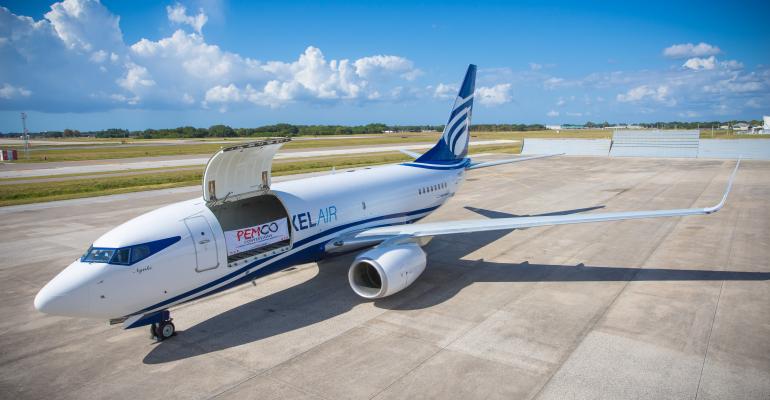
Contact – ekaplanian@msn.com

Editor:   Lee Kaplanian