Volume 4 Issue 3 March 2017

ON THE BOEING FRONT

Boeing Launches New Nacelle & Flight-Control  Surface Exchange Program                             

On February 8th, Boeing announced the launch of a new Nacelle and Flight-control Surface Exchange Program. It provides airlines an integrated and economical solution, while building on Boeing’s successful history of exchange programs.

Under the program, customers can exchange nacelle and flight-control surface parts that need repair or overhaul from a certified pool that Boeing maintains throughout its global network. This eliminates the need for customers to contract, schedule, manage and own or lease these parts.

Parts distributed through the program represent all Boeing models and are updated to the latest configurations, incorporating all applicable service bulletins and airworthiness directives.

Another benefit of an exchange is that customers only need to take an airplane out of service once, reducing maintenance needs. When a similar part is leased, the plane must be taken out of service for both removal and installation.

Boeing is a leader in providing 24/7 support and service to the global aviation industry. Boeing’s parts portfolio is the most complete in the industry, with total stock of over 400,000 part numbers and over 10,000 parts shipped daily.

Source : Boeing Commercial Services


ON THE AIRBUS FRONT

A330neo First Flight Date is Still Not Set

Rolls-Royce is progressing with the assembly of the initial flight-test Trent 7000 engines for the Airbus A330neo, although a maiden flight date has yet to become clear.
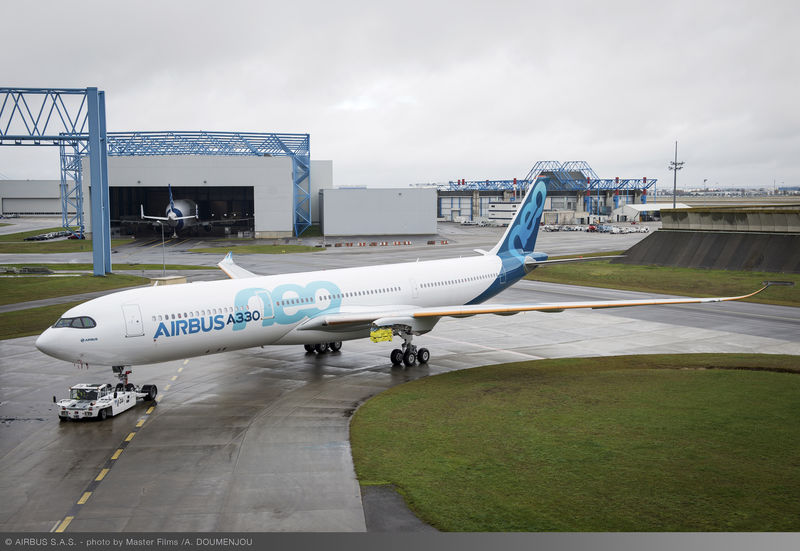
The engine manufacturer, in its full-year financial presentation, gave the entry-into-service date for the aircraft as the first half of 2018.  TAP Portugal, the initial operator, has previously indicated that it expects to receive the first A330neo in the first quarter of that year.

Rolls-Royce has not clarified whether the difference in phrasing is indicative of a further slip to the schedule, but its use of “first half” for the entry-into-service timeframe is similar to that voiced by Airbus commercial aircraft chief Fabrice Bregier in January.

Bregier had mentioned that TAP planned services in “Spring 2018” and that the A330neo development effort was “compatible” with this.

Rolls Royce has already conducted ground tests of the power plant and says assembly of the first flight-test engines is continuing.

Chief Warren East stated, during a briefing on the company’s full-year results, that the Trent 1000-TEN for the Boeing 787 was on schedule for service entry in the second half of this year, as was the Trent XWB-97 engine on the Airbus A350-1000. As to the new A330neo with the Trent 7000 engine, that it is about six months behind.

The engine will not be installed on a testbed aircraft but fitted straight to an A330neo certification airframe.

Source : Airbus/Rolls-Royce/Picture Airbus           


REGIONAL/BUSINESS JETS

G500 & G600 Flight Test Campaigns Progress As G650/ER             Gets Chinese Approval                                                 

The flight-test campaigns for Gulfstream’s clean-sheet G500 and G600 are progressing well, with both models on course to meet their certification and entry-into-service targets.

The five aircraft in the G500 program have flown more than 2,000h across 500 flights, Gulfstream says. Customer deliveries of the large-cabin, long-range aircraft are scheduled to begin shortly after airworthiness certification, which is slated for the fourth quarter.

The larger and longer-range G600 is pegged for service entry about 12 months later. Since making its maiden sortie in December 2016, the first, and so far only, flight-test aircraft has accumulated more than 100h.  It will be joined in the next weeks by two additional prototypes.

Announced in 2014, the G500 and G600 designed with Gulfstream’s widest-ever cabin, Pratt & Whitney Canada PW800 engines, fly-by-wire controls and an industry-first application of active control sidesticks in commercial aircraft.

Meanwhile, Gulfstream has secured certification for its flagship G650 and G650ER from the Civil Administration of China (CAAC), allowing the US framer to start delivering B-registered versions of the ultra-long range business jets.

Source : Flightglobal/Gulfstream/Gulfstream Photo


OTHER AVIATION NEWS

JetBlue Introduces Special Embraer E190 Livery
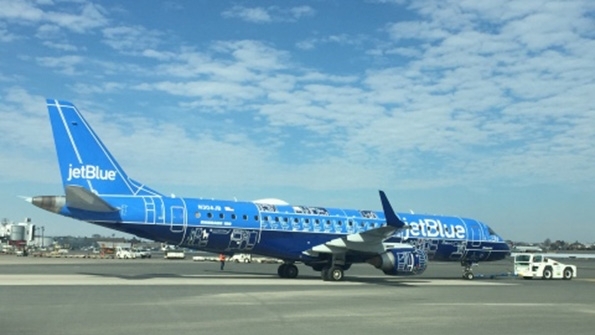
JetBlue Airways has rolled out a special Embraer E190 livery and new tail fin design that will appear on multiple aircraft this year. The New York-based airline said is introducing the new paint schemes as it celebrates its 17th anniversary last month.

According to a JetBlue statement, the carrier “has a long tradition of adding unique, special liveries to its Airbus A320 fleet and that tradition is expanding to the E190 fleet.” The paint scheme showcases the so-called “bones” of the 100-seat aircraft.

“Drawing upon the styles of various aviation, nautical and space exploration vehicle cutaway diagrams, the Jet Blue design team created a mechanical x-ray of sorts infused with some JetBlue fun,” the carrier said in a statement.

Source : JetBlue/JetBlue Embraer E190


CFM International Bookings up 25% in 2016

CFM International booked orders for 2,677 engines in 2016, a 25.4% increase over 2,135 engines ordered in 2015.

Total value for CFM’s 2016 orders neared $36 billion at list prices, a 33.3% rise over 2015.

In 2016, CFM reported orders for 1,801 LEAP engines, including commitments and spares, up 28.7% from 1,399 orders of the engine type in 2015.Orders for CFM56 engines from Commercial, military and spare parts customers totaled 876, up 19% from 2015.

The Ohio-based manufacturer said it produced 1,665 CFM56 engines and 77 LEAP engines in 2016, with the Leap-1A making its entry into commercial service on an A320neo with Turkey’s Pegasus Airlines in August 2016.

CFM’s LEAP-1A is an engine option for Airbus A320neo family aircraft: the LEAP-1B is the sole engine behind Boeing’s 737 MAX aircraft: and the LEAP-1C is the sole Western engine for the COMAC C919.

To date, CFM is reporting more than 12,200 LEAP engine orders and commitments (excluding options), valued at over $170 billion at list prices.

Source : CFM International/Flightglobal


Air Lease Corp. 2016 Net Profit Up 48% to $375 million

Los Angeles-based commercial aircraft lessor Air Lease Corp.(ALC) posted a 2016 net profit of $374.9 million, up 48% from $253.4 million net income in 2015.  ALC’s total revenues for the year were $1.4 billion, up over $1.2 billion in 2015.

The company’s expenses totaled $838.8 million, up 1.1%; operating income was $580.2 million, up 47.7% over $393 million in 2015.

In 2016, ALC signed lease agreements for 122 aircraft with 39 customers, ending the year with a net book value of $12 billion in aircraft with a weighted average age of 3.8 years and weighted average lease term remaining of 6.9 years.

As of December 31, 2016, ALC’s fleet totaled 237 owned aircraft(three less than 2015), and 30 managed aircraft (up one from 2015).  During the year, ALC took delivery of 43 aircraft from its order book and sold 46 aircraft from its operating lease portfolio.

By the end of the year, ALC had sold all 19 of its remaining ATR 42/72-600 aircraft, plus 15 Embraer E190s and five E175s, to Danish regional lessor Nordic Aviation Capital(NAC) for $1.2 billion. The remaining five E175s will be sold to NAC during the first quarter of this year.

Source : ATW     

LATEST NEWS

  • Korean Air has taken delivery of its first Boeing 787-9, making it the first airline in the country to operate the type.

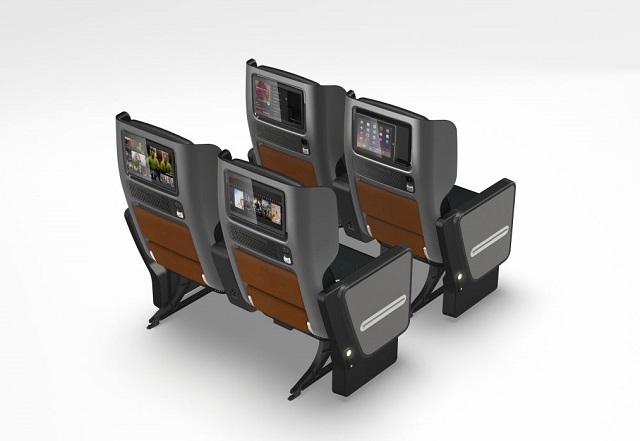
  • Qantas has unveiled the new premium economy seat that will fitted on its Boeing 787-9s, which it says offers more recline and width over its current product.
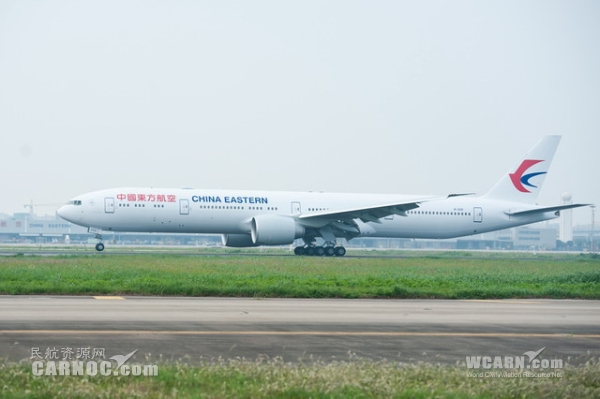
  • China Eastern Airlines will add four Boeing 777-300ERs and seven Airbus A330-300s to its fleet this year.
  • China Southern has agreed to lease five Boeing 787-9s from Air Lease Corp.(ALC), the Los Angeles -based Lessor said.
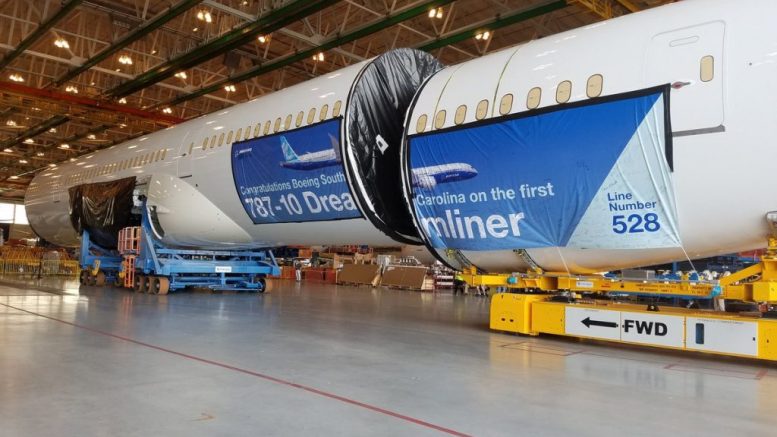
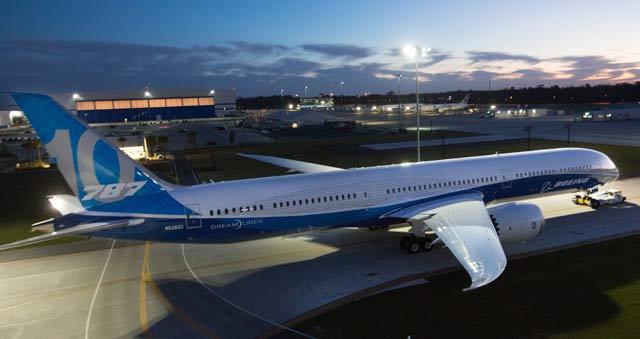
  • Boeing Rolls Out First 787-10 February 23rd was a momentus day for Boeing. It has rolled out its first 787-10 from the paint hanger at Boeing South Carolina. The Dreamliner has booked 1,207 from 67 customers around the world taking only 13 years to do it. Over 140.2 million have flown the aircraft and opened 120 routes.
  • Juneyao Airlines has finalized its order for five 787-9 Dreamliners valued at about $1.32 billion at current list prices.The order also includes options for five more 787-9s.

  • CFM International named Gael Meheust president and CEO, from Feb.1. The Ohio-based commercial engine manufacturer is co-owned by GE and Safran Aircraft Engines.
  • Singapore Airlines has announced its commitment to purchase 20 777-9s and 19 787-10 Dreamliners.
  • Airbus A380 two of Airbus’s A380 test aircraft are to be transferred to museums  along with two other testbeds including the first A320.


AIR CARGO

   Asia-Pacific Air Cargo Markets Start 2017 on Strong Footing

Preliminary January traffic figures from the Association of Asia Pacific Airlines (AAPA) showed strong traffic volumes in both international air passengers and air cargo markets. International air cargo demand, measured in freight ton kilometers (FTK), grew by 4.7 percent.  Offered freight capacity expanded by 3.8 percent, resulting in a 0.5 percentage-point rise in the international load factor to 59.4 percent for the month.

That said, January cargo traffic is an unreliable indicator of larger trends, the combined January/February results will be better indicative of underlying demand.

Andrew Herdman, AAPA’s director general said, ”The year started on an encouraging note for Asian carriers, with both international air passenger and cargo markets growing strongly, boosted by the timing of the lunar New Year holidays.”

Herdman also noted that the outlook for the rest of the year looks “broadly positive, against a backdrop of renewed optimism”.

Source : Air Cargo World


Lockheed Rolls out First LM-100J Super Hercules Commercial Freighter

On February 9, 2017, Lockheed Martin officially the world to the latest member of the C-130J Super Hercules family: the LM-100J commercial freighter.

Employees who designed and built the aircraft celebrated this new Super Hercules with a traditional “rollout” ceremony held at the Lockheed Martin Aeronautics facility located in Marietta, Ga. Team members walked the LM-100J out of the building that is the home to the Super Hercules production line. The  next stop for this milestone Super Hercules is the flightline, where it will prepare for its first flight this spring.

Lockheed Martin announced its intent to manufacture and market the LM-100J in February 2014. Lockheed Martin has filed for an FAA civil type certificate update and this first LM-100J will participate in flight test activity to support this process.

The LM-100J is the updated version of the L-100 Hercules, which was built by Lockheed Martin from 1964-1992.  More than 100 L-100s were delivered to both commercial and government operators, supporting cargo delivery requirements in almost every operating environment in the world. At the Farnborough Airshow in 2014, ASL Aviation Group signed a letter of Intent with Lockheed Martin to order up to 10 LM100J Super Hercules commercial freighters.

Source : Lockheed Martin/Lockheed Martin Photo


       MAINTENANCE, REPAIR, OVERHAUL

A European First For Icelandair

Icelandair has become the first airline in Europe to install and operate Aviation Partners Boeing’s Scimitar Blended Winglets (SBWs) on Boeing 757-200s.

Icelandair is retrofitting the SBWs to its 757-200s as an enhancement to the 757-200 blended winglets which are already installed on its aircraft.

The Carrier expects the new winglets to increase savings in block fuel, to reduce engine maintenance, to improve take-off performance and reduce engine emissions, as well as to provide other benefits, according to Aviation Partners Boeing (APB), which is the Seattle based joint venture of Aviation Partners Inc. and The Boeing Company.

Icelandair is now working on its fourth Scimitar Blended Winglet modification and plans to have a total of 17 aircraft in service with the new mods retrofitted before the 2017 summer season.

Source : MRO Network/Icelandair Photo

Safran Nacelles Establishes MRO Center of Excellence

Safran subsidiary, Safran Nacelles, has established an MRO Center of Excellence at its Pont-Audemer facility in the Normandy region of France. It will strengthen its expertise in and capabilities for maintenance, repair and overhaul (MRO) of complete nacelle systems and nacelle components.
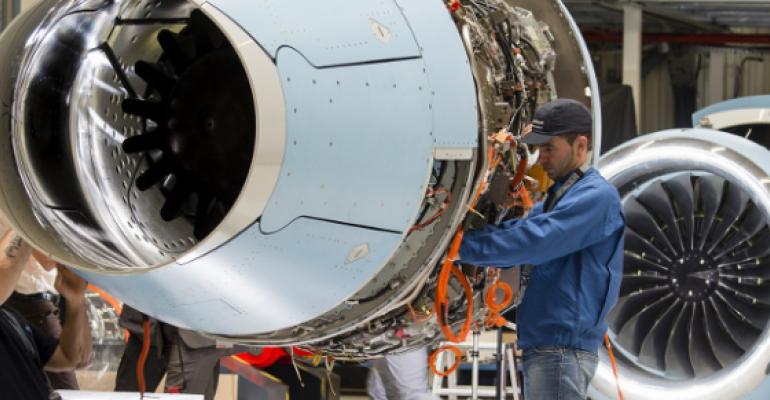
The New Center of Excellence will be responsible for managing Safran Nacelles’ global network of MRO facilities. It will serve as the company’s operational reference for repair procedures and MRO industrialization for all of Safran Nacelles’ facilities.

The MRO Center of Excellence’s expertise will cover complete engine nacelle systems, including complex structural repairs, line replaceable units, engine sub-assemblies, outlet guide vanes and on-site support, according to Safran Nacelles.

Behind UTC Aerospace Systems, Safran Nacelles is the world’s second largest supplier of aircraft engine nacelles, boasting more than 17,000 nacelle systems in service, which accumulate more than 100,000 flight-hours each day.

Source : Avweek.com


MRO Short News

  • STS Repair and Modification was formed by STS Aviation Group and Cannon aviation to provide aircraft structural repair and modification services.
  • Lufthansa Technik and MTU Aero Engines finalized a previously announced deal to set up a joint venture for PW1000G(GTF) maintenance, repair and overhaul starting in 2020, at a yet-to-be announced location.
  • Magnetic MRO acquired an AirBaltic contract to provide Bombardier Q400/CS300 wheel and brake maintenance.


Researched and Compiled by : Ed Kaplanian

Commercial Aviation Advisor

Contact – ekaplanian@msn.com

Volume 4 Issue 2 February 2017 The Kaplanian Report

ON THE BOEING FRONT

Boeing Selects CTT for 777X Humidification Systems

CTT Systems has been selected by Boeing to provide the humidification systems for flight deck,  crew rests and cabin zone A/B for the Boeing 777X aircraft.  CTT will be tier-1 supplier to Boeing and the CTT products will be offered as supplier furnished equipment in the 777X catalog.

CTT Systems AB, headquartered in Nykoping, Sweden and listed on the Small Cap of OMX Nordic Exchange Stockholm AB, is the leading provider of aerospace products for active humidity control: inside the aircraft cabin-for increasing humidity-and in aircraft structures- for preventing condensation.

Selecting CTT enables Boeing to bring humidification capabilities and performance from the 787 to the 777X and migrate to premium passenger cabins (zone A and B). In total, the Boeing 777X aircraft can be equipped with five humidifiers.

The 777X will be the largest and most efficient twin-engine in the world, with 12 percent lower fuel consumption and 10 percent lower operating costs than the competition.

CTT’s humidifier maintains relative humidity in the human comfort zone, 20 percent Relative Humidity. A higher humidity on long-haul flights reduces dry air related problems (e.g. fatigue, jet-lag, red eyes, dry skin, spread of virus diseases) and improves wellbeing and sleep. The humidifier is baed on evaporative cooling technology and uses a method that effectively precludes the transfer of bacteria.

Source : Arabian Aerospace/Boeing


ON THE AIRBUS FRONT

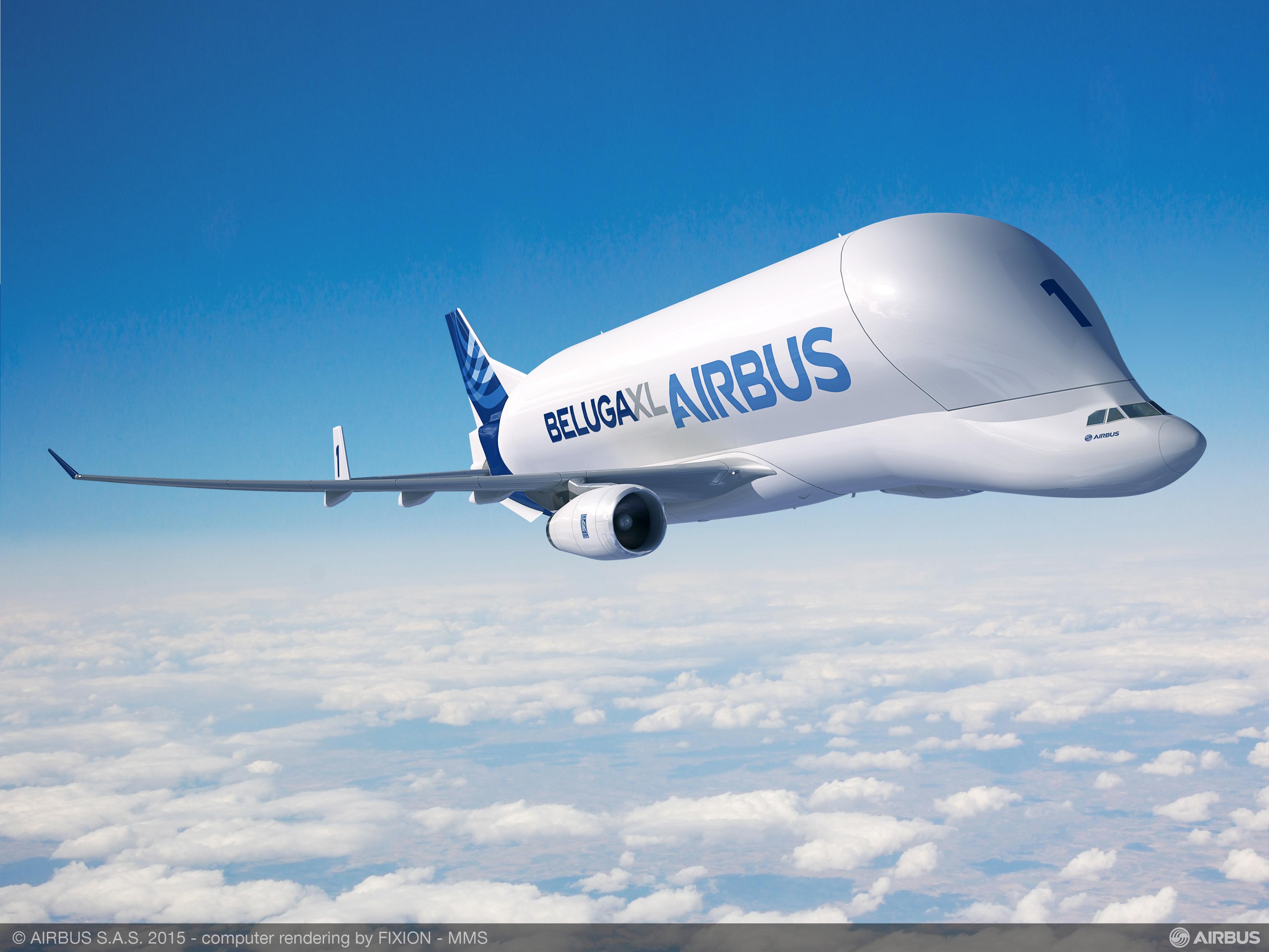
Airbus Prepares Beluga XL Core for Integration

Airbus has assembled the basic core airframe of the initial BelugaXL high-capacity transport designed to replace the A300-600ST logistics fleet.

The airframes, based on an A330-200 freighter with reinforcements, was assembled in December of 2016; but has yet to be mated with its nose or tail sections.

These sections will be added this year, the manufacturer states, as an 18 month integration process commences.  Beluga XL program head Bertrand George says the final integration will be “a series of small steps”.

“The Number of holes to be drilled and fasteners to be installed is far bigger than on any other Airbus aircraft”.  He says. “Sticking to schedule at each step is the key to being ready for first flight in 2018.”

Over the initial 12 months of the assembly, the airframe will be completed and fitted with mechanical and electrical components.  The final six months will involve transferring the aircraft to a new station for Rolls-Royce Trent 700 engine installation  and Ground testing.

Airbus is renewing the logistics fleet with five Beluga XLs to meet demand for A350 assembly. The Beluga XL will enter service in 2019.

Source : Flightglobal/Airbus


REGIONAL/BUSINESS JETS

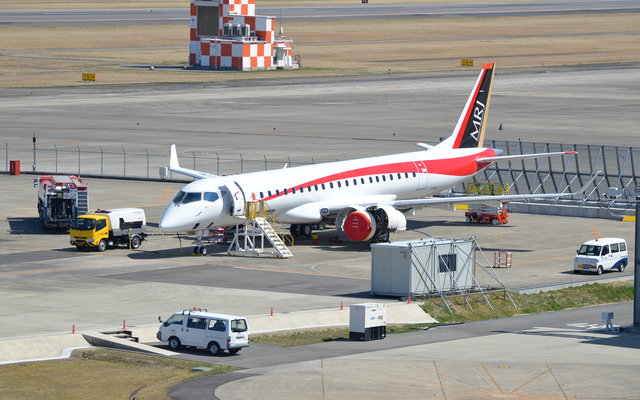
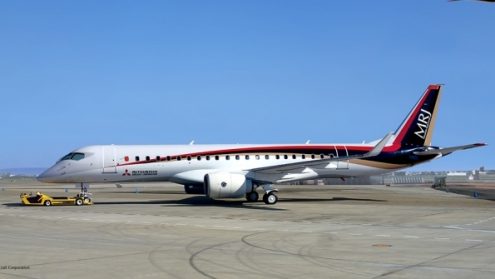
 MRJ Delay Confirmed; System Revision Cited 

Mitsubishi Heavy Industries, the parent of Mitsubishi Aircraft Corp., has made official a further two year delay in the Mitsubishi Regional Jet (MRJ) program.

Mitsubishi said on January 23, that the first delivery of the MRJ90 to Japan’s All Nippon Airways (ANA) would be pushed back to mid-2020 from mid-2018; meaning first delivery will be nearly seven years later than what was planned in the program’s original timetable.

Four MRJ90 flight test aircraft are currently flying, with a fifth slated to join flight testing this year.

The Latest delay is necessary because of “revisions to certain systems and electrical configurations on the aircraft to meet the latest  requirements for certification,” “the design changes will not effect aircraft performance, fuel consumption of functionality of systems” Mitsubishi said.

MRJ certification is now targeted for the second half of 2019.The company aims to achieve world class commercial aircraft development through integrated work between global and Japanese experts.

Source : Mitsubishi Aircraft Corp./Photo Mitsubishi Aircraft Corp.


OTHER AVIATION NEWS

 GE9X Spools Up for Second Test Phase

Testing of the largest turbofan aircraft engine in history will enter a new phase later this year. Until now, GE Aviation has used the first engine to test (FETT) to validate design and performance assumptions.

With the second engine to test now in final assembly, GE is poised to begin a one -year cycle of trials required to earn airworthiness certification by the US Federal Aviation Administration.

Although based on the architecture of the GE90, the GE9X sets new boundaries for the industry in terms of size-notably its 134in (340cm) fan diameter-pressure ratio (a claimed 61.1 margin at top of climb) and application of new materials, including the spread of ceramic matrix composites (CMC) to turbine nozzle guide vanes and combust or liners.

It also improves on the strength of the carbon fiber construction of the fan blades, allowing GE to assign only 16 blades for each engine, despite a 6in wider diameter compared with the 22 fan blades found on the GE90.

Each new feature in the GE9X must be validated as being as safe or better than the proven engine technology already in service, while still meeting performance promises such as a 10% reduction in fuel burn against the GE90.

And it must be proved ready on a tight schedule: Boeing plans to begin deliveries of the first GE9X powered 777-9 by early 2020, which implies a system-level, Part 25 airworthiness certification in late 2019 and an engine-level, Part 33 certification in 2018.

Source : Flightglobal/GE Aviation


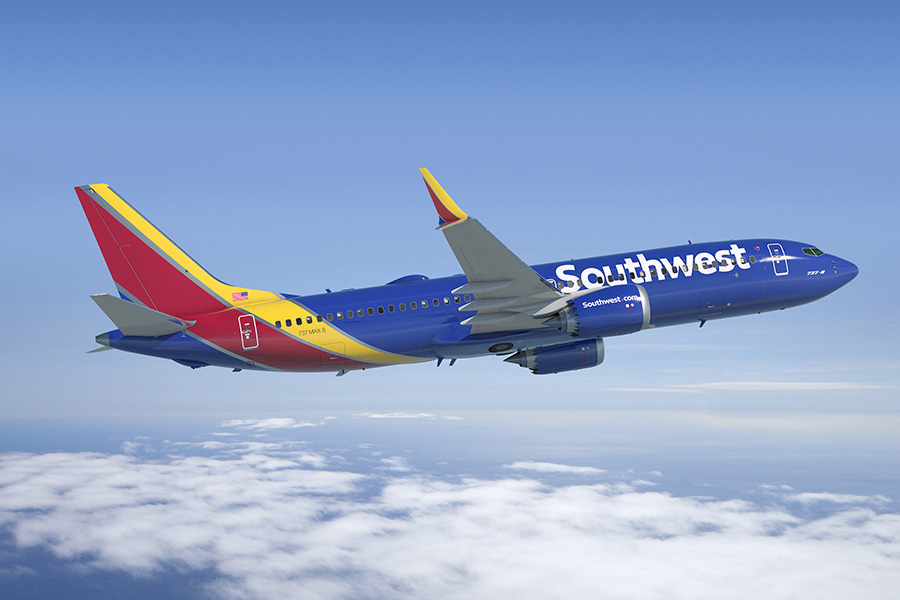
Southwest Jockeys with Norwegian for 737 Max Launch Title

Southwest Airlines chief executive Gary Kelly says the carrier will be the launch  customer of the Boeing 737 Max “regardless of when we take the first delivery”, even as Norwegian prepares to be the first operator.

Kelly cites the Dallas-based carrier’s extensive involvement with Boeing on the development and testing of the latest generation of the venerable narrow body, as the rationale behind his comment during a quarterly earnings call today.

Southwest is the launch customer of the Max, placing the first order in December 2011. Norwegian placed its 737 Max order a month later in January 2012.

Southwest reaffirms that it will not debut the 737 Max 8 on scheduled flights until the end of the third quarter, when all its 737-300 and -500 aircraft, or classics, are retired.  ”We don’t really need the 737 Max for flying until October 1,” says Kelly.

“Norwegian will now be the first airline to take delivery of the 737 Max, and will be the first airline in the world to operate this brand-new aircraft type,” spokesman for Norwegian says.

The jockeying between Norwegian and Southwest sets up a race between the two carriers to see who will take the first 737 Max, with the odds likely on the latter due to its placing the first order and heavy involvement in the program.

Lion Air, Norwegian and Southwest are all scheduled to take their first Max 8s in May, the Flight Fleet Analyzer shows.  In addition,China Eastern Airlines, FlyDubai and WestJet are scheduled to take their first of the type before the end of September.

Source : Flightglobal     

LATEST NEWS

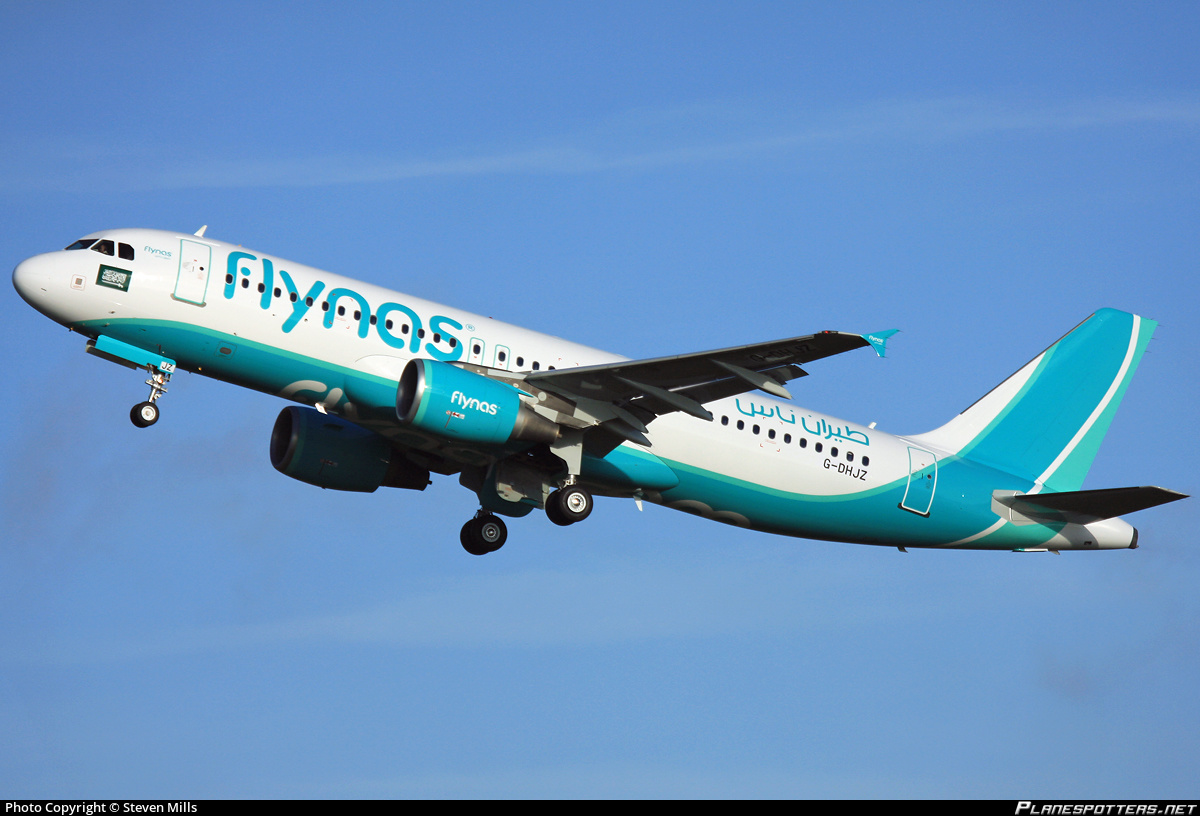
  • Flynas, Saudi Arabia’s leading low-cost carrier, has signed an agreement with Airbus for 60 A320neo Family aircraft

  • Juneyao Airlines has announced an order for 10 Boeing 787-9s, comprising five firm orders and five options.  The aircraft will facilitate the Shanghai-based carrier’s rapid international expansion.
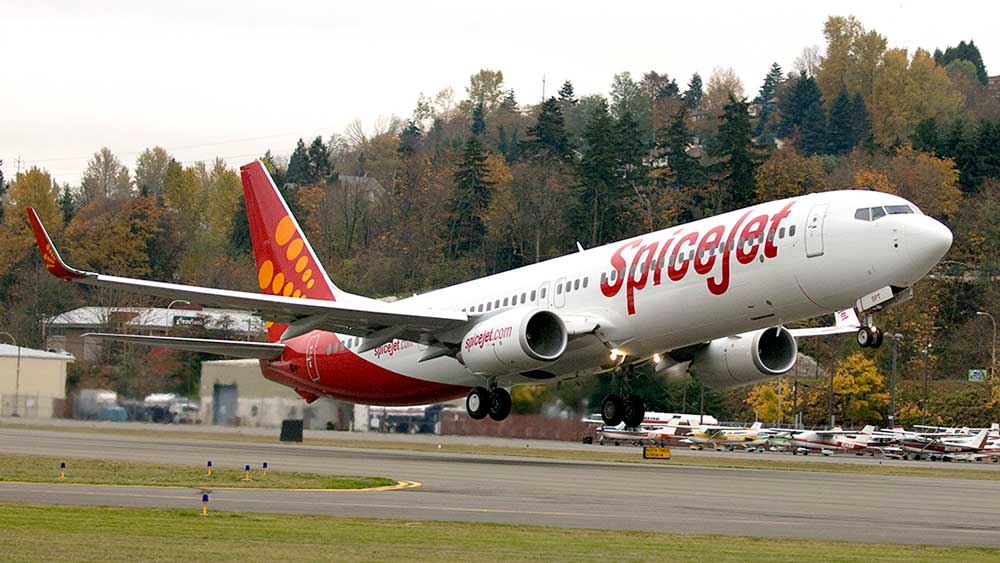
  • SpiceJet sealed a deal worth $10 billion with Boeing for 100 737 Max aircraft.

  • Air Baltic, the Latvian carrier has received its second Bombardier CS300 aircraft after becoming the launch customer for the larger CSeries variant.
  • Trade Air, the Croatian Charter, carrier received its first Airbus A320, a former SATA international example.
  • Delta Airlines has taken delivery of its first US-built Airbus A321.  The jet N314DN (c/n 7281),was delivered from Mobile, Alabama, plant to Minneapolis, St Paul last December.
  • Arik Air of Nigeria has scrapped a longstanding order for two Boeing 747-8Is, replacing it with a pair of Boeing 787-9s.
  • China Aircraft Leasing Group (CALC) signed a long term lease with Thai AirAsia for one Airbus A320, which is expected to be delivered this year.
  • Avolon, the Irish lessor, delivered one Boeing 737-800 to Malaysia-based Malindo Air. This is the forth Avolon aircraft on lease to Malindo.
  • Ukraine International Airlines has taken delivery of the first of six Boeing 737-800s, which are scheduled to join the fleet this year.


AIR CARGO

Crustaceans Crush 2016, Leading to 4.1 % Cargo Rise at Halifax 

Thanks to a booming year for lobster, Halifax Stanfield International Airport (YHZ) saw substantial cargo growth in 2016, processing more than 33,000 tons of cargo, up 4.1 percent over 2015.  An estimated US$187 million in seafood exports were shipped last year, an increase of approximately $40 million from 2015.  As demand for lobster and other high-value seafood grows in markets such as Asia, Halifax Stanfield International Airport expects continued growth in seafood exports.

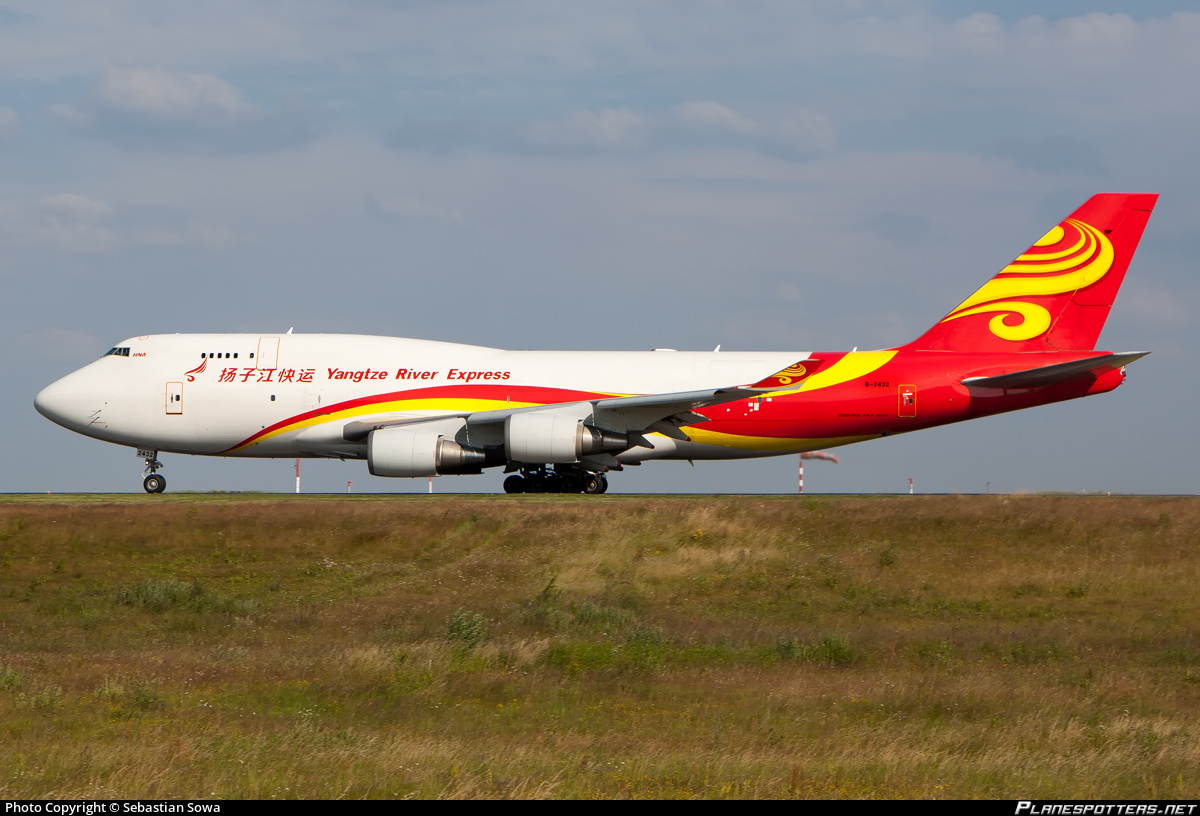
Yangtze River Express Airlines was the latest cargo carrier to add services to Halifax Airport and take advantage of the lobster export season earlier this month.

The Chinese carrier operated five 747-400 F cargo flights between Canada and China since the first of the 2016 calendar year.

Passenger numbers were up as well, and bellyhold cargo is an important part of the story. Compared to the previous year, the 2016 passenger numbers were up 5.6 percent, said Joyce Carter, Halifax International president and CEO.  ”We are set to hit 4 million passengers in 2017.”

The airport is Atlantic Canada’s busiest full-service airport, with cargo connectivity to markets across Canada, the United States, the Caribbean Basin, Europe and Asia.  The airport processes cargo worth more than $447 million each year.

Source : Air Cargo World


  MRO NEWS

 GECAS Asset Management Services Aquires 737NG Inventory

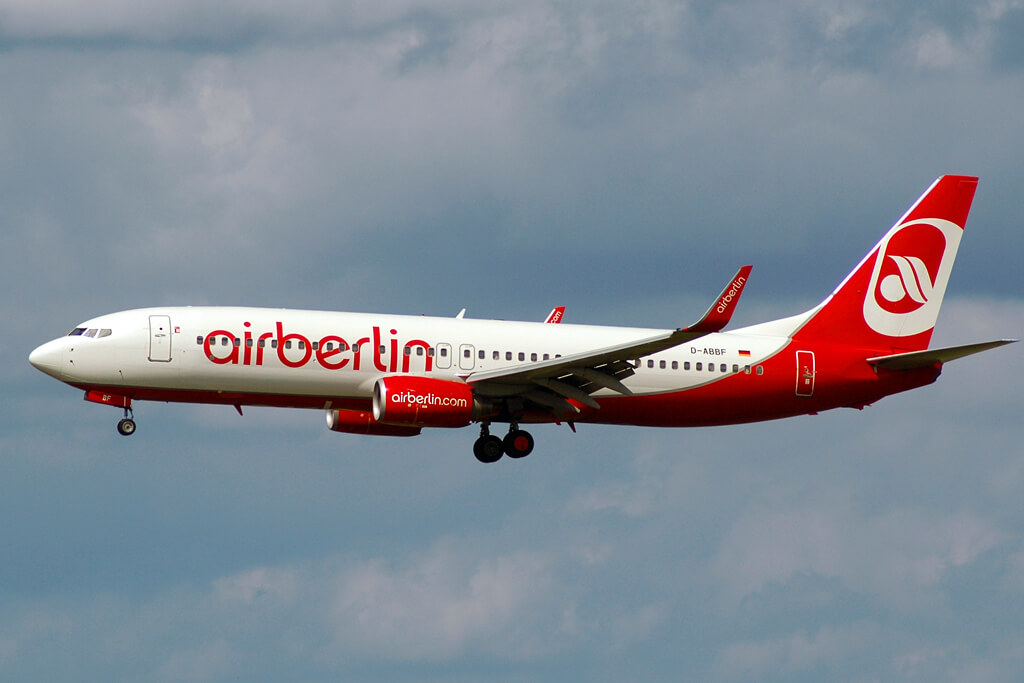
GECAS Asset Management Services has entered an agreement with Air Berlin to acquire the airline’s entire inventory of 737NG spares including both rotables and expendables.

“Most components will be available for immediate shipment to our customers,” says Stefan Hayes, global commercial leader for GECAS Asset Management Services.

“We will soon have everything,nose to tail,that an operator of this popular aircraft type needs.This purchase represents an exciting opportunity for GECAS AMS to continue our relationship with Air Berlin while bolstering our 737NG stock and increasing our service capability.”

The material will be located at Asset Management Service’s warehouse locations in the U.S.,UK and Singapore.

Source : MRO network.com


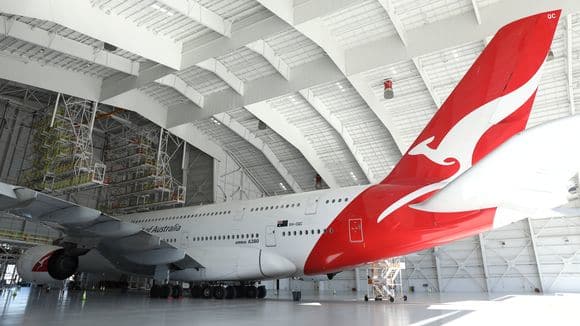
Qantas Unveils $30 Million Maintenance Hanger for Its A380s   

636213810462889315-qantas-a380-in-new-lax-hangar                               

Qantas Airways unveiled a new $30 million hanger at Los Angeles International Airport, big enough to hold and perform maintenance on its A380s.

The hanger, the only facility in the U.S. designed specifically to hold the behemoth plane, was touted as signaling the airline’s commitment to Los Angeles as well to travelers making long-haul flights between the US and Australia.

“This is a win-win opportunity,” said Los Angeles Mayor Eric Garcetti, who attended a ribbon-cutting ceremony for the facility on Friday, January 27th.

The Hanger is 480 feet by 370 feet and 12 stories tall, big enough to hold four passenger jets.The facility replaces a smaller 1950s-era hanger.

Qantas flies 40 flights per week between Los Angeles and Sydney, Melbourne and Brisbane, Australia, primarily using A380s and Boeing 747 jets.

Qantas Group Chief Executive Alan Joyce, said the new hanger will make maintenance 20% more efficient because it allows more planes to fit the facility at the same time.  When Qantas wanted to work on an A380 in the old, smaller hanger, most of the plane would not fit inside, he said.

Joyce said that Qantas also plans to rent out the facility to other carriers at LAX.

Source : Los Angeles Times/ Photo Qantas


Researched and Compiled by : Ed Kaplanian

Commercial Aviation Advisor

Contact – ekaplanian@msn.com
Volume 4 Issue 1 January 2017 Kaplanian Report

ON THE BOEING FRONT

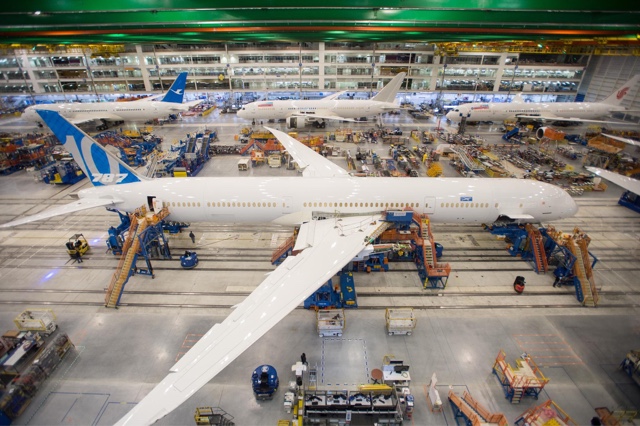
The Boeing 787-10 ZC001 in Final Body Join 

Boeing in early December began to assemble the first 787-10, the second stretch variant of the family, at its facility in Charleston, South Carolina.  The 787-10 has the potential to take a significant slice of the replacement market for the Airbus A330-300s and the 777-200s.  With 323 seats, and at the same time, give the twin jet program a strong push toward profitability.

So far, the 787-10 is coming together smoothly and ahead of schedule. Spurred on predominantly by Singapore Airlines in early 2013, Boeing has won orders and commitments for 154 aircraft from nine airlines and leasing companies.

The 787-10 is 18 feet longer than the 787-9; 10ft of that is made up of the midbody, which is extended to 114ft overall. As they are for all 787s, the midbody and aft-fuselage sections for the 787-10 are assembled in South Carolina.

Design work for the 787-10 stayed in Seattle, where the challenge was maximizing commonality with the 787-9. Designers targeted a goal of 90% commonality between the 787-9 and the -10, a big leap over the 50% achieved between the 787-8 and the 787-9.

The first aircraft is expected to make its maiden flight early this year. Following initial checkout, it will be ferried to Seattle along with the other test 787-10s for completion of the certification campaign. The first and third 787-10s will be powered by Rolls-Royce’s new Trent 1000 TEN engine, while the second will be powered by the competing GEnx1B. Flight tests of the TEN began on a 787 early in December, the initial 787-10 is scheduled to enter service with Singapore Airlines in mid-2018.

Source : Aviation week/Boeing/Boeing Picture


ON THE AIRBUS FRONT

Airbus to Slow A380 Production in 2017 in Accord with Emirates

Airbus will put off a dozen deliveries of the A380 plane in the next two years following agreement with Emirates, its largest customer for the model, as demands continues to fade for the A380.

Handovers of six A380s a piece that were originally planned for 2017 and 2018 will be shifted to a year later following an agreement with Emirates and engine supplier Rolls-Royce Holdings Plc. The Toulouse, France-based plane maker said on Tuesday, December 27th, in an e-mailed statement.

Airbus still plans to deliver 12 A380s per year as of 2018, and will seek to accelerate cost savings to minimize the effects on the break- even target for 2017.

Airbus has already been reducing production of the A380, which costs $433 million at list prices, as demand for large airliners has dried up.  In the meantime, Emirates and Rolls-Royce reached a settlement earlier in December over the airline’s A380 engine performance and maintenance concerns.

Dubai-based Emirates is by far the biggest buyer and operator of the A380, with orders for more than 140 of the plane. The carrier recently switched to Rolls-Royce engines for its latest batch of A380s, after relying on General Electric Co,’s Engine Alliance venture for the four power-plants that propel the airliner.

Source : Bloomberg/Airbus


REGIONAL/BUSINESS JETS

  Bombardier Global 7000 Takes to the Skies 

Bombardier Business Aircraft has successfully flown its new flagship business jet, the Global 7000.  Flight test vehicle 1(FTV1), C-GLBO (c/n70001), took off from the manufacturer’s Toronto Downsview facility on November 4, 2016.

It flew for 2 hrs 27 mins. During the maiden flight, the crew tested the basic system functionality of the jet and assessed its handling and flying qualities.

The pilots conducted a gradual climb to 20,000 ft and the aircraft reached a planned test speed of 240 kts.

All flight controls were exercised during the sortie and Bombardier reports that all systems and aircraft performed as expected. The flight signifies the start of the jet’s flight test program, ahead of scheduled entry into service in the second half of 2018.

Bombardier says the jet will offer a 7,400 nm(13,705km) range at Mach .85 carrying eight passengers.

Source : Bombardier/Photo Bombardier

Boeing Business Jets, GKN Aerospace Introduce Skyview Panoramic Window

Boeing Business Jets announced in early December that it will work with GKN Aerospace’s Fokker business to develop, produce, and offer support for the Skyview Panoramic Window. It is the largest window available on any passenger jet offered today.

The window will be available as a feature on BBJ, BBJ2, and all three members of the BBJ MAX family, including the new BBJ MAX 7 with scheduled entry-into service in 2018.

The Skyview Panoramic Window, measuring approximately 4.5 feet by 1.5 foot(1.4×0.5 m), is created by effectively joining three existing 737 windows together.  Situated aft of the wing with multiple potential locations based on the airplane type, it offers customers an unparalleled perspective of the world.

Source : Boeing Business Jets

OTHER AVIATION NEWS

Argentina’s Aerolineas to Buy 11 New Boeing 737 MAX Aircraft

State-run airline Aerolineas Argentinas said on December 19, 2016, that it will buy 11 new Boeing 737 MAX aircraft and nine 737-800 NG planes in a deal based on revising a sales contract signed by the previous government.

President Mauricio Macri took office a year ago to reduce government spending. The previous administration had signed a contract with Boeing for 20 737-800 NGs, but no payments or deliveries were made under the deal.

“Aerolineas will be the first operator in Latin America to have a 737 MAX, which is a new plane globally,” the airline’s finance chief Pablo Miedziak told Reuters after signing the new contract with Boeing’s vice president for sales in Latin America Van Rex Gallard.

Miedziak said the airline is increasing its capacity by replacing planes with a capacity of  128 seats for new ones that can seat 170 passengers.

Source : Reuters


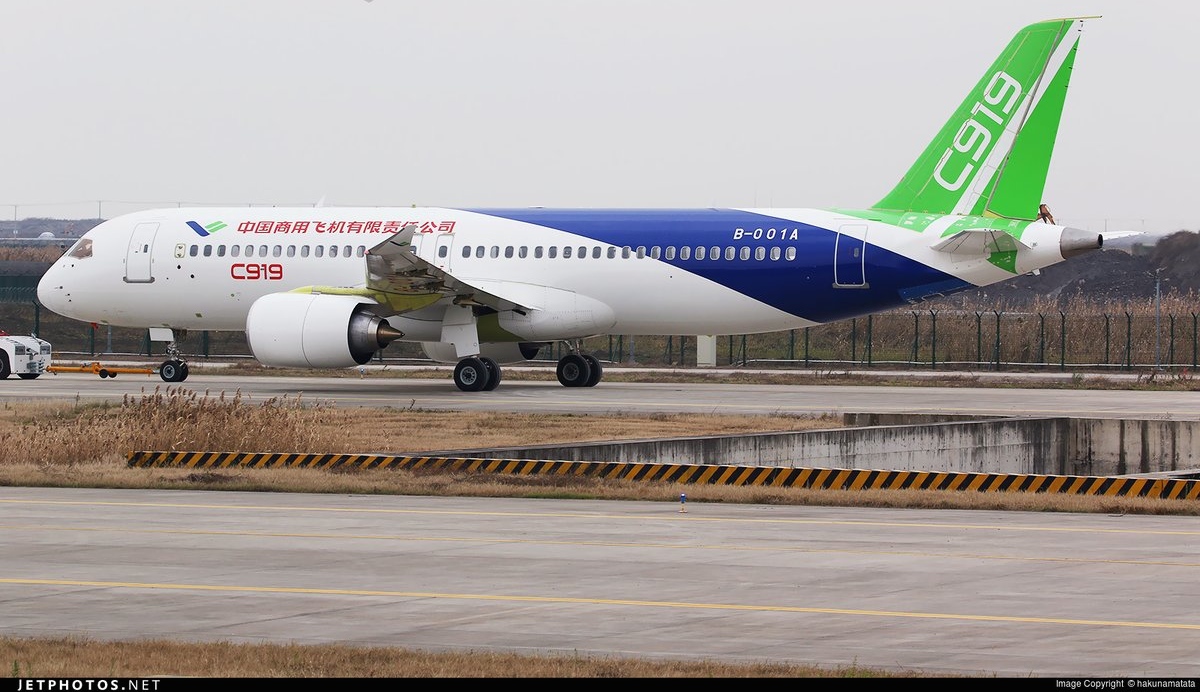
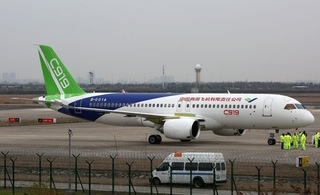
COMAC C919 Starts Ground Taxi Tests

The COMAC C919 narrow body passenger jet moved under its own power for the first time on December 28, 2016, initiating the last series of tests before the C919’s maiden flight.

The low-speed taxi trials are being carried out from the company’s facility in Shanghai  Pudong International Airport. The China-made C919 is scheduled to make its first flight in the first half of 2017.

CFM International, the largest jet engine manufacturer worldwide is the exclusive engine supplier for the C919, the first C919 engines (CFM Leap 1C) last July but run for the initial time until November 9, 2016.

Shanghai-based China Eastern Airlines will become the first customer to take delivery of the C919.  So far COMAC has received 570 orders for the C919 from 23 customers, including Air China and China Southern Airlines.

Source : China Aviation Daily


LATEST NEWS

  • Yangtze River Airlines HNA subsidiary looks toward international expansion in this year. The Shanghai-based carrier plans to take delivery of two Boeing 787 aircraft for that specific use.
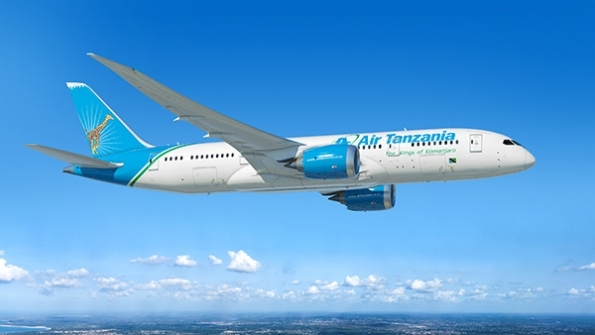
  • Air Tanzania has been revealed as the previously unidentified customer for a single 787-8 valued at $224.6 million at list prices.
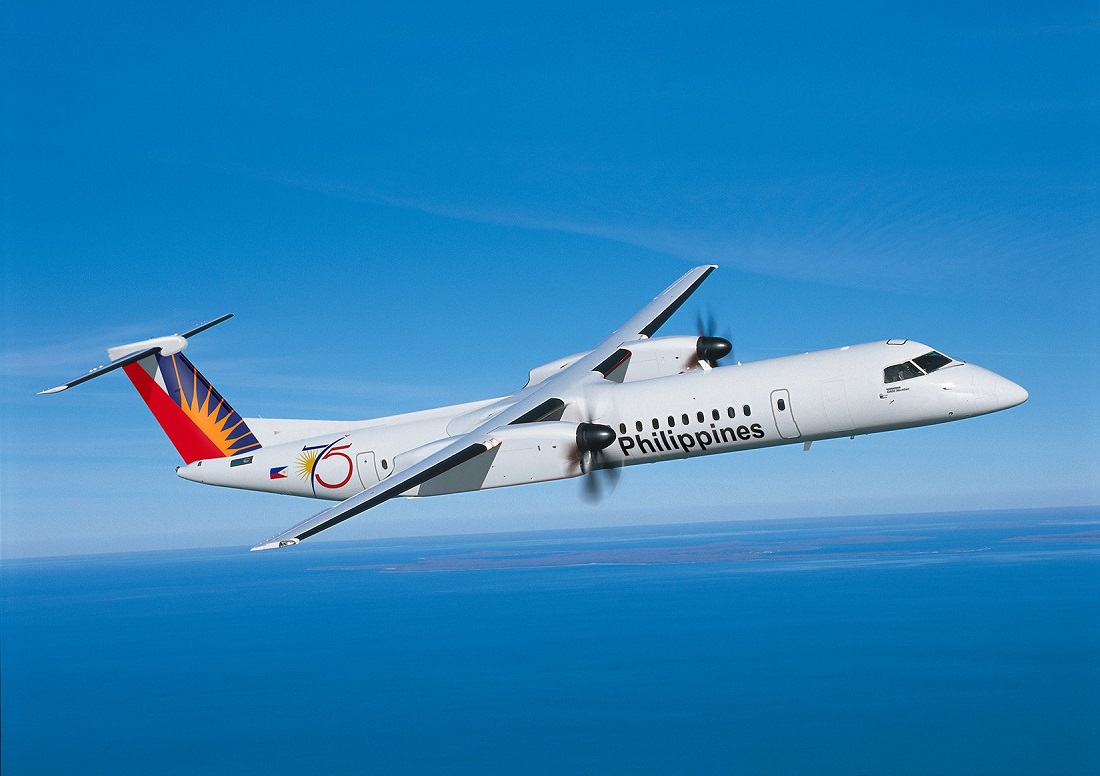
  • Philippine Airlines has confirmed an order for five Bombardier Q400 turboprops, with purchase rights for an additional seven aircraft.
  • Qatar Airways is in talks with Airbus to convert its order for up to 80 A320neos to the larger A321neos.
  • Delta Airlines has cancelled its order for 18 787-8 aircraft, a commitment that it assumed from Northwest Airlines when the two merged in 2008.
  • Azur Air Russian charter carrier has taken delivery of its first 189-seat 737-800, which will be operated on routes to Spain and the United Arab Emirates this month.
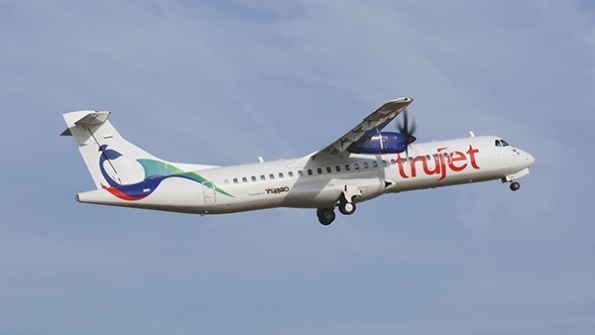
  • Trujet South Indian regional carrier has taken delivery of its first ATR 72-600 turboprop, which is leased from Dubai Aerospace Enterprise. 
  • ANA has taken delivery of its first Airbus A320neo, ANA has six more A320neos on order, and 26 A321neos.
  • Gulfstream has kicked-off the certification campaign for its new G600 business jet, following first flight of the large-cabin, long-range twin on December 17, 2016.
  • Island Air the Honolulu-based airline will acquire three new Bombardier Q400 turboprops. The aircraft will have 78 seats and enter service early this year. 


AIR CARGO

Boeing Selects Evergreen Aviation Technologies for 767-300                                             Passenger-to Freighter Conversion

Boeing announced on December 13, 2016, that Evergreen Aviation Technologies Corp (EGAT) will perform passenger-to-freighter conversions for the 767-300 Boeing Converted Freighter(BCF) program.  Boeing received 27 firm orders from customers worldwide for the 767-300 BCF. 

The 767-300 BCF conversion entails the modification of a passenger airplane to the cargo configuration. Converted 767-300BCFs have about the same cargo capability as the 767-300 production freighter with approximately 52 metric tons, with structural payload at a range approximately 3,000 nautical miles (5,930 km) and 412,000 lbs (187,270 kg) maximum takeoff weight.  There are 24 pallet positions on the main deck.

Evergreen Aviation Technologies has successfully carried our complex airframe conversions that built up the fleet of Boeing Dreamlifters- converted 747 airplanes used to support the 787 program-since 2005, as well as a 747-400 Propulsion Test Platform for GE Aviation in 2014.

Source : Boeing/Boeing Photo


  Maintenance & Repair Organization News

ATSG Subsidiary Swoops on MRO and Conversion Firm Pemco

Aircraft conversion firm Pemco has been bought by Airborne Maintenance and Engineering Services, a subsidiary of Air Transport Services Group (ATSG).

ATSG, which runs an air cargo operation for Amazon through its ABX subsidiary, said the acquisition will allow for a number of strategic benefits by combining operational strengths, expanded capabilities and cost savings related to shared services between the companies.

Services will be offered from multiple locations, including Wilmington and Tampa for heavy maintenance and modifications, and Tampa, Central America and Asia for passenger-to-freighter conversions.

Additional service offerings of aircraft-on-ground field teams, line and turnaround maintenance, component repair and overhaul, engineering repair and design, plus extensive manufacturing and kitting capabilities will be extended from various locations.

ATSG President and chief executive Joe Here said : “Based on PEMCO’s existing domestic and international scale, this acquisition will expand access to maintenance service for customers of ATSG’s expanding fleet of Boeing 767 cargo aircraft.

Source : MRO News


Lufthansa Technik Extends Warehouse Capacities in the USA

Lufthansa Technik AG has now opened a new warehouse in the USA, close to the Fort Lauderdale airport in Florida. This represents a significant expansion of the site, ensuring stable supply for customers in this growing region into the future.

The Fort Lauderdale site serves a connecting point for North, Central and South America.  It was therefore chosen as the primary storage facility for the American market and central gateway for the extensive customer supply network in the region.

The state-of-the-art facility, in operation around the clock all year, and the seamlessly integrated transport network allow the company to even better fulfill the high quality expectations of its customers. Customers benefit from the personal contact and from the fact that their contact person is in the same time zone.

The New warehouse has the capacity for around 9,000 components. It also houses more than 10,000 items of consumables and expendables. Various models of aircraft can be supported from the facility.

The warehouse is operated by Lufthansa Technik Component Services(LTCS), making use of the logistic processes and  IT systems of Lufthansa Technik Logistik Services.

Source : Lufthansa Technik


Researched and Compiled by : Ed Kaplanian

Commercial Aviation Advisor  

Contact – ekaplanian@msn.com

Volume 3 Issue 12 December 2016

ON THE BOEING FRONT

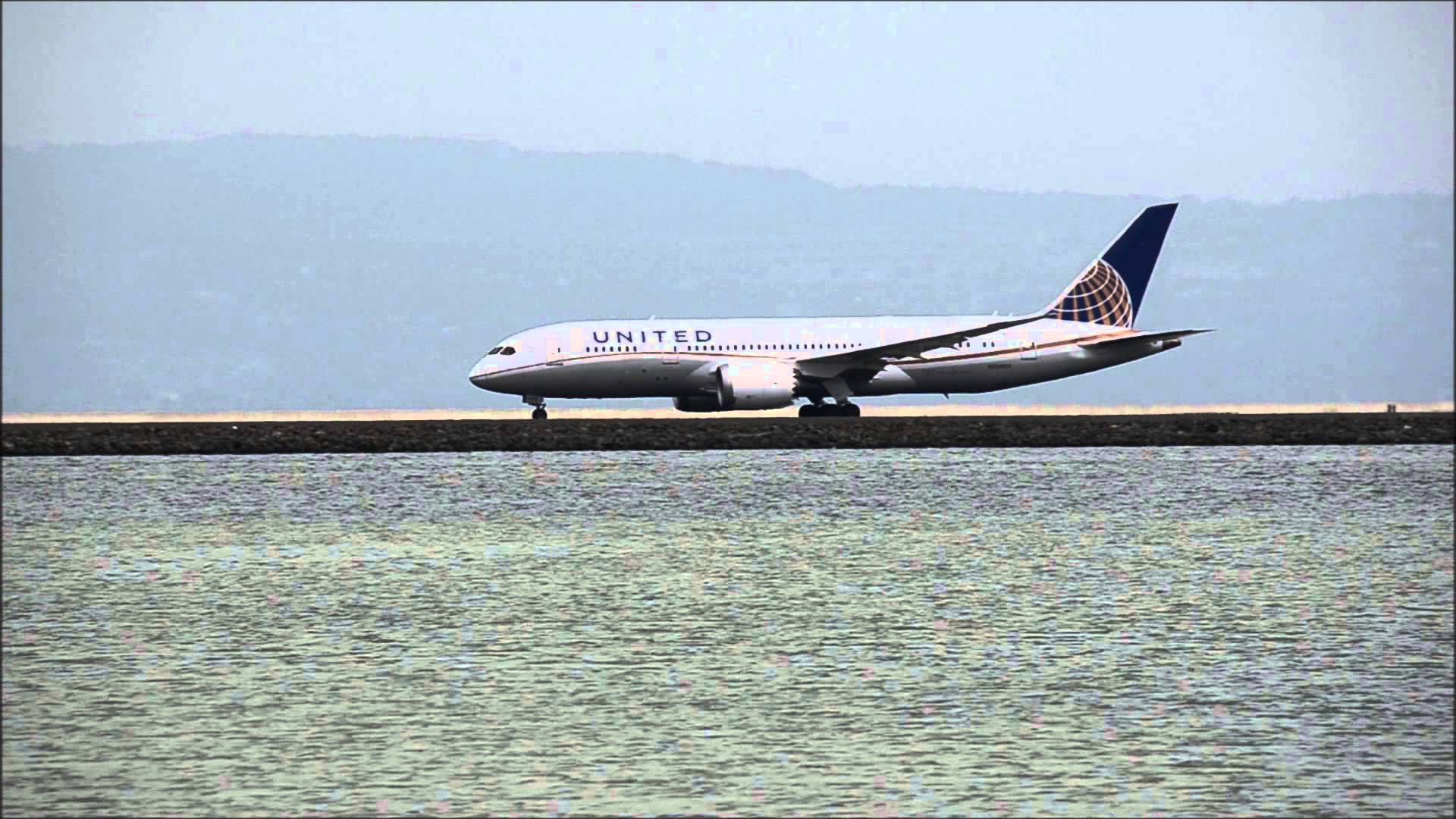
My United 787-8 Adventure Continued

One of the biggest innovations in the 787 is its cabin, which I immediately noticed as soon as I entered the aircraft.

The most notable is more light and space in the cabin, the Boeing designed windows 18.5 in tall by 11 in wide approximately 40% larger than any widebody I have flown on, throughout my career. I have put a lot of miles on 747-400s and 777-300ERs.

The other thing I noticed is the disappearance of window shades. They were replaced by an electric dimming switch that lets you change the tint of the window from fully transparent to completely dimmed.  They control the light level coming through, on the 787-8 I have flown, they worked like a charm.

As I stated in my November report, the flight was smooth and not only that, it was comfortable. The Boeing designed nose-mounted sensors did the job for detecting turbulence and sent messages to the aircraft’s control surfaces.  As we were getting closer to our destination, I detected a few, which felt like little bumps that almost rock you to sleep.

In summation, the next trip I want to take by air, I want to make sure it is on a 787 Dreamliner.

Ed Kaplanian


Boeing Opens First St. Louis Commercial Airplanes Facility

boeing-rendering

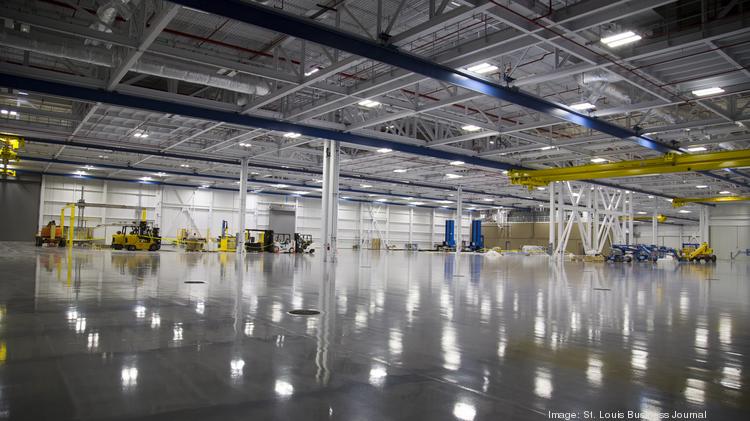
Boeing formally opened a new composite center on its St. Louis campus that will house the largest commercial aviation work ever placed at the site.

The 424,000 square feet facility will initially build composite parts for the company’s newest commercial jetliner, the 777X. Boeing has committed more than $300 million in company funds to construct and outfit the center.

“Boeing has had a presence in St. Louis for nearly 80 years. We’ve built more than 12,000 fighter jets here,” said Bob Ciesla, vice president and program manager for the 777X St. Louis work. ”With the opening of this new composite center, our well trained, high-quality workforce is able to demonstrate its versatility and expertise, positioning our region for additional commercial and defense work in the future.”

Production of 777X wing edge and empennage parts will begin at the new composite center in early 2017.  The first 777X delivery is expected in 2020.

As a result of this 777X work in St. Louis, a  total of approximately 700 jobs are expected to be generated in production, engineering, and multiple support areas by the early 2020s timeframe.

Source : Boeing/Boeing Picture


ON THE AIRBUS FRONT

A350-1000 Takes Off on Maiden Flight

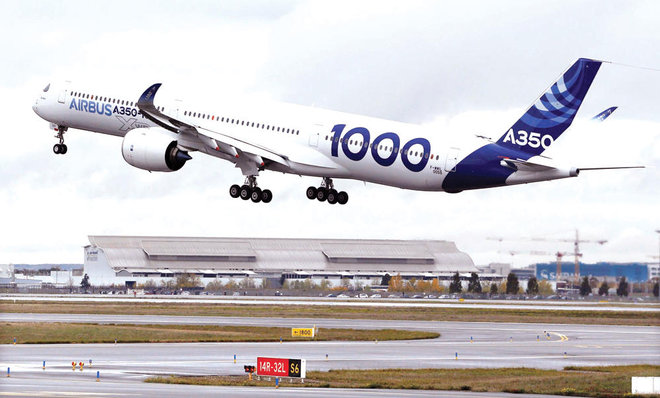
Airbus has commenced the flight-test campaign for the A350-1000 with the variant becoming airborne for the first time at Toulouse.  The aircraft, powered by Rolls-Royce Trent XWB-97 engines, lifted off at 10.42 local time.

It marks a crucial step in the airframe’s attempt to enter the big twin sector, in the 350-400 seat category, following its previous  development of the smaller A300 and A310, the A330 and the A350-900.

The A350-1000 will typically seat 366 passengers and Airbus is marketing the aircraft as having a range of 7,950nm.

The wing is modified from that on the -900, with an extended trailing edge, and Rolls-Royce enhanced the power plants to deliver 97,000lb thrust rather than the previous 93,000lb.

Airbus is nearing 200 orders for the A350-1000, two-thirds of them picked up since the 2011 design overhaul.

Source : Flightglobal/Picture Airbus


REGIONAL/BUSINESS JETS

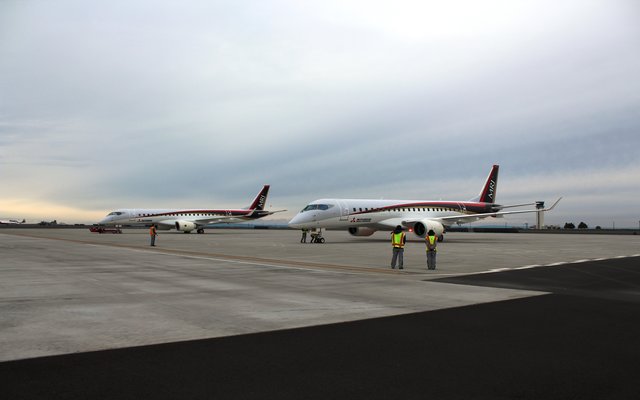
Second MRJ Arrives in Moses Lake, Washington

A second flight test aircraft from the MRJ regional jet program has arrived at the airframe’s US test facility in Moses Lake after a 14,000km(8699nm) journey.

FTA-4 took off from Nagoya Airfield at 09:35 local time on November 15, arriving at Grant County International airport in Washington at 06:46 local time on November 19, says Mitsubishi Aircraft. In between, the aircraft made stops at Guam International airport, Majuro International airport in Marshall Islands, Honolulu International airport and San Jose International airport.

The southbound journey took approximately 18h 43min.  This is longer than the 13h 08min that FTA-1 took with a northbound route.

Mitsubishi is targeting to have four flight-test aircraft at Moses Lake by the end of 2016.  The program schedule calls for the MRJ to enter into service in mid-2018.

Source : Flightglobal/Mitsubishi Pictures


OTHER AVIATION NEWS

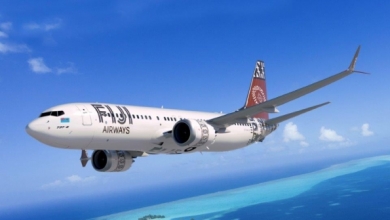
 Fiji Airways Commits to Five Boeing 737 MAX 8s

fijimax

Fiji Airways has committed to ordering five Boeing 737 MAX 8 aircraft to replace its narrow body fleet of four 737-800s and one 737-700.

The first two MAX 8s will be delivered in 2018; the remaining in 2019.  All will be powered by CFM International LEAP-1B’s, the sole-source engine for the MAX. The order is valued at $550 million at list prices.

The airline said it will operate the aircraft on short-and medium-haul flights, operated by its 737NGs between Fiji and Australia, New Zealand, Hawaii, Kiribati, Samoa, the Solomon Islands, Tonga and Vanuatu, as well as new routes.

The aircraft will be financed through a 12-year sale and leaseback arrangement with Boeing, GE Capital Aviation Services(GECAS) and CFM.

Fiji Airways, which is majority-owned by the Fiji government, said it will configure the 737 MAX 8 with 170 seats in a two-class configuration.

Source : Boeing/Boeing Picture


  Pratt Needs a Year to Catch up on A320neo Engine Deliveries

Pratt & Whitney (P&W) does not anticipate catching up with its PW1100G engine delivery commitments until the end of 2017, says its vice president of marketing Paul Finklestein.

“The biggest challenge we have today is delivering enough engines,” he said at the Flightglobal Finance Forum West Coast in San Francisco on November 10. ”It will take through next year to get where we need to be.”

The backlog of PW1100G deliveries has resulted in delays to Airbus A320neo-family aircraft equipped with the geared turbofan engine.  Airbus has said it will miss its delivery targets for the type this year, and both airlines and lessors have warned of delivery delays into 2017.

P&W chief executive Greg Hayes has said that there are roughly 30 to 40 parts that are causing the PW1100G production delays, of which five are critical. These include the lightweight hybrid aluminum-titanium fan blades used in the engine.

Source : Flightglobal  


LATEST NEWS

  • Boeing celebrated a historic moment as its first 787-10 Dreamliner moved into the final assembly plant in South Carolina on Wednesday November 31st.  A production milestone for the newest and the largest member of the Dreamliner family.

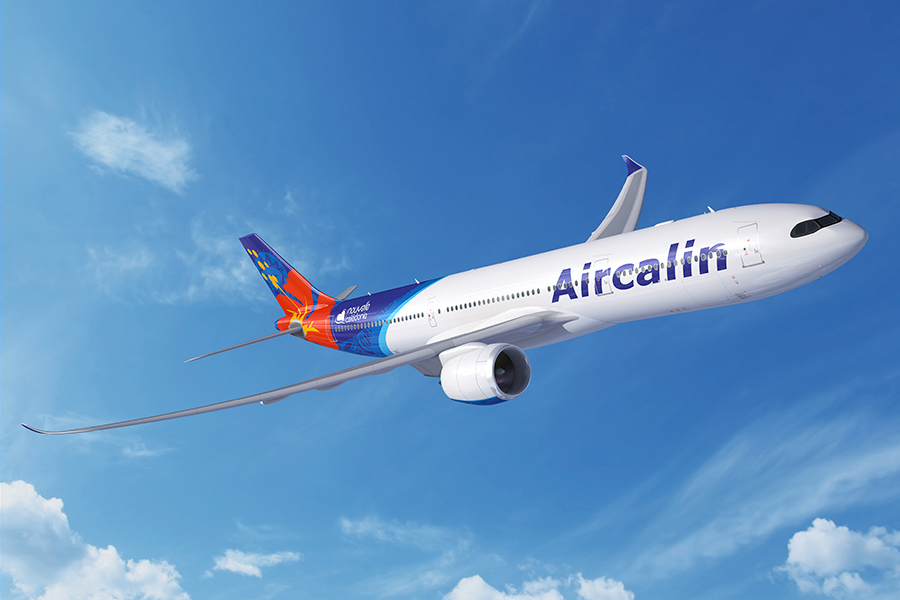
  • Aircalin, a full-service airline based on the French Pacific island of New Caledonia, has signed an MOU with Airbus to acquire two A320neos and two A330-900s.

  • Lufthansa’s first Airbus A350-900 took off on its first flight in Toulouse on November 29.  Lufthansa will receive the first of ten A350-900 on the 19th of this month.
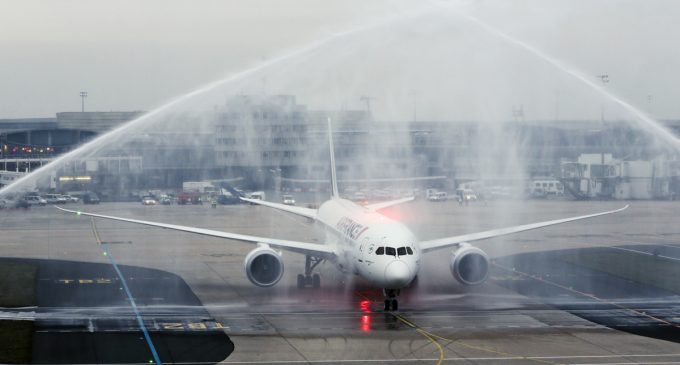
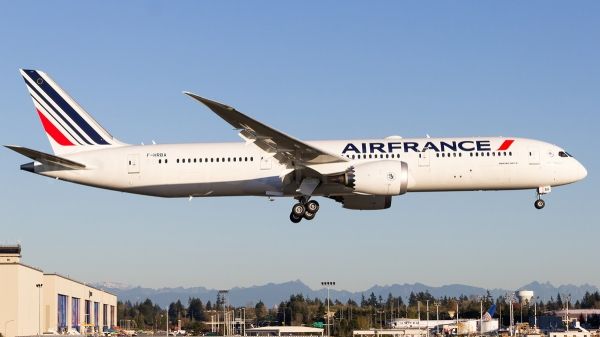
  • Air France took delivery of their first 787-9 on December 1st, marking the 500th delivery of the type.

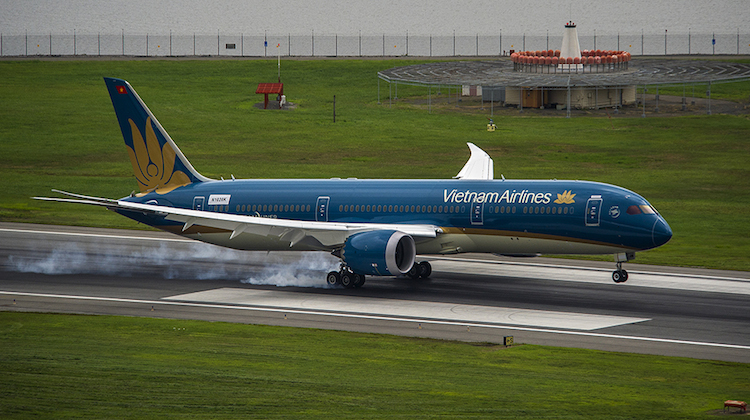
  • Air Vietnam took delivery of their 10th 787-9 on November 25th, from Boeing’s South Carolina plant.

  • Nok Air welcomed a new Boeing 737-800 to it fleet in the middle of November. The aircraft will be part of Nok Taiwan and has a capacity of 189 seats.
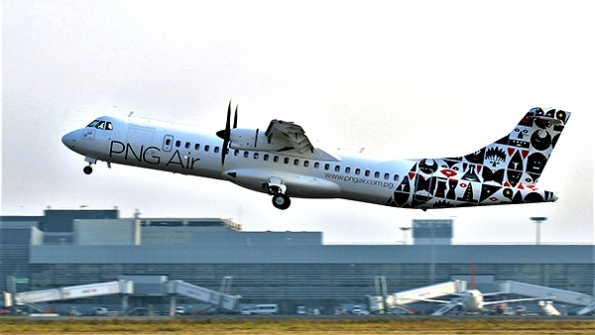
  • PNG Air Papua New Guinea carrier has converted five options for ATR 72-600 regional turboprops into firm orders. 
  • Air Tanzania has placed firm orders for two Bombardier CS300s and one Q400 turboprop, which will be leased to the airline.
  • Emirates, in line with its vision to offer a superior passenger experience and improve environmental performance, moves to an all Airbus A380 and Boeing 777 fleet.
  • Air Caledonia took delivery of its first of four ATR 72-600 at a ceremony at ATR facilities in Toulouse, France.


AIR CARGO

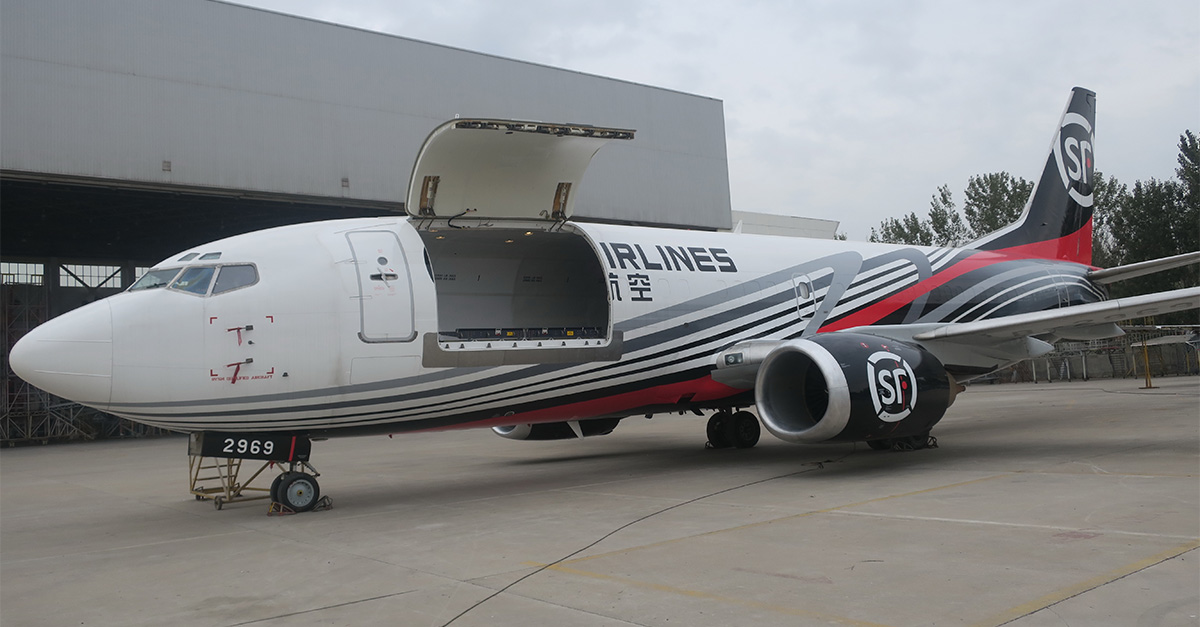
SF Airlines Takes Delivery of Latest B737 Conversion from Pemco

Pemco World Air Services has redelivered another 737-300 passenger-to-freighter converted aircraft to fast growing China-based express operator SF Airlines.

The latest redelivery marks the seventeenth B737-300/400 Pemco-converted aircraft to SF Airlines, which is owned by delivery firm SF Express.

“We are proud to see the continued growth of SF Airlines,” said PEMCO director of conversion programs, Mike Andrews. ”And honored our converted aircraft contribute to the company’s successful cargo business.

SF Airlines’ new B737-300 Pemco-converted aircraft features nine pallet positions, up to 43,100 pounds of payload, 4,600 cu ft of total volume, and max range exceeding 2,000 miles.

Source : aircargonews


                                                 MILITARY NEWS

                                                             Japan Receives First F-35

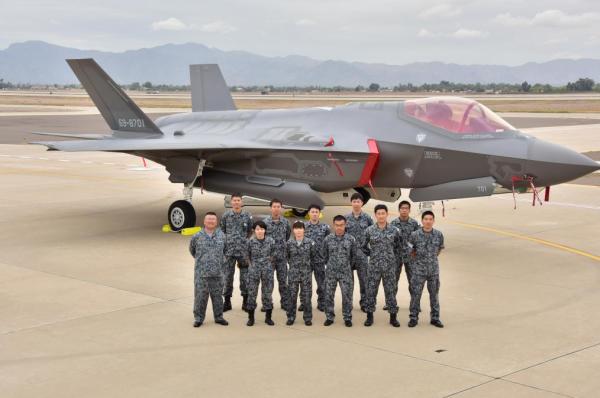
Japan has received its first Lockheed Martin F-35A, marking the first delivery of a Joint Strike Fighter acquired via the foreign military sale route.

The aircraft was officially rolled out in September and was handed over to the Japan Air Self- Defense Force on November 28.  Japan will use it for training at Luke AFB in Arizona.

The US Air Force’s 944th Fighter Wing at Luke is responsible for training FMS customer, including Israel and South Korea.  This is in addition to Japan, as well as pilots from partner nations Australia, Canada, Denmark, Italy, the Netherlands, Norway and Turkey.

The first four of a total 42 F-35s destined for Japan are being assembled in Fort Worth, Texas. The remaining 38 units will be built at Mitsubishi Heavy Industries’ facility in Nagoya, Japan.

Source: Flightglobal


Researched and Compiled by : Ed Kaplanian

Commercial Aviation Advisor

Contact – ed@kaplanianreport.com


merry-christmas-clipart-gh2gybls

AND

Volume 3 Issue 11 Kaplanian Report


ON THE BOEING FRONT

Boeing Plans Performance Upgrade for 737 Max After 2021

Boeing has quietly developed plans to roll-out a performance improvement package for the 737 Max family, five years after the first member of the type enters service.

The undisclosed package will improve maximum range values between 1.69-2.7%, depending on the variant of the 737 Max.

Boeing plans to deliver the first 737 Max 8 to Southwest Airlines in the first half of next year with 3,515nm range. An “improvement performance level” available after 2021 will improve range by 2.7% to 3,610nm.

The 737 Max 9 will enter service a year later with 3.510nm range, but will improve by 2.56% after 2021 to 3,605nm.

Finally, the 737 Max 7 enters service in 2019 with 3,850nm range, including an extra 500nm boost by a 1.83m(6ft) extension of the fuselage unveiled last July.

Its range will improve by 1.69% on the 737 Max 7 after 2021.

More recently, the performance improvement package was cited as part of Boeing’s roll-out of the Boeing Business Jet version of the 737 Max 7 at the NBAA convention in Orlando on October 30th.

Boeing officials decline to elaborate on the details of the performance improvements.

Source : Flightglobal

My United 787-8 Adventure 

In spite  of all the challenges and bad press Boeing faced in building the 787 Dreamliner, the aircraft has surpassed its gestation period and proved its worth to the airlines who fly it.

Visiting family in Jerusalem the week of October 8th, I made sure to fly United’s new route from San Francisco to Tel Aviv on their 787-8 Dreamliner.

The aircraft was powered by GEnx engines and the flight duration to Tel Aviv took 13 hours at a cruising speed of 0.84 mach; the altitude on our route varied between 37,000 ft to 40,000 ft.  Boeing’s decision to have the cabin pressure equivalent to that of an altitude of 6000 feet worked as advertised.

When I disembarked in Tel Aviv the following evening, I did not feel the jet lag.

During take off and landing, the aircraft was surprisingly quiet and smooth, due to the technology  Boeing incorporated in the aircraft.   Technology allows it to sense turbulence and adjusts control surfaces for the smoother ride.

Those of you who are aircraft enthusiasts, I highly recommend flying this aircraft whenever you have the chance.  I have to tip my hat to all the people at Boeing involved in building this aircraft.

(1st in a series)

Ed Kaplanian


ON THE AIRBUS FRONT

Airbus Aims to Fly the  A350-1000 This Month

Airbus is aiming to conduct the first flight of the new A350-1000 as early as this month.

The airframer has not disclosed a date for the maiden flight of the stretched aircraft, they are maintaining only that the twin jet is scheduled to fly in the fourth quarter.

But a source with knowledge of progress on the program says the manufacturer’s test flight team is “shooting for November”.

Airbus has recently installed the Rolls-Royce Trent XWB-97 engines on the first -1000 in the three-aircraft test fleet.

It is carrying out cabin-fit on the second aircraft and finalizing the production of the third.  Airbus has secured orders for 195 A350-1000s, with the first due to enter service in the second half of 2017.

Source : Flightglobal/Airbus   


REGIONAL/BUSINESS JETS

   Jet Aviation Basel Takes Delivery of 777-300ER for VIP Fit-Out

Jet Aviation’s Basel completions center has taken delivery of the first of two Boeing Business Jet 777-300ERs for interior fit-out. t was commissioned by Boeing on behalf of a government client in Asia.

The wide body twin jet, which arrived at the Swiss site in October, is the first BBJ 777 VVIP completion for Jet Aviation.

“We know Jet Aviation’s commitment to quality matches our own,” says David Longridge, president of Boeing Business Jets. ”They have a demonstrated capability to fit exceptional wide body interiors that combine beautiful design and craftsmanship with cutting-edge engineering and technology.”

Neil Boyle, senior vice-president and general manager of Jet Aviation’s Basel facility, says: “We have a long history of working together with Boeing Business Jets and are delighted to partner with them on our first BBJ 777-300ER interior completions.”

Source : Flightglobal/Boeing Business Jets


OTHER AVIATION NEWS

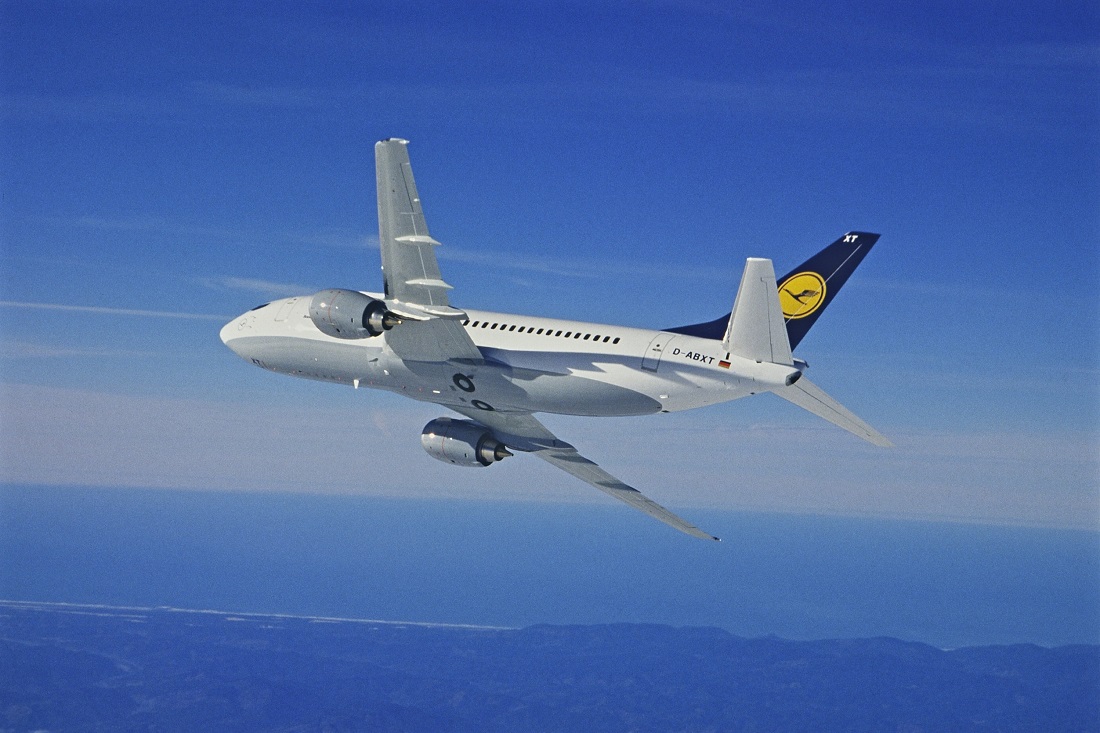
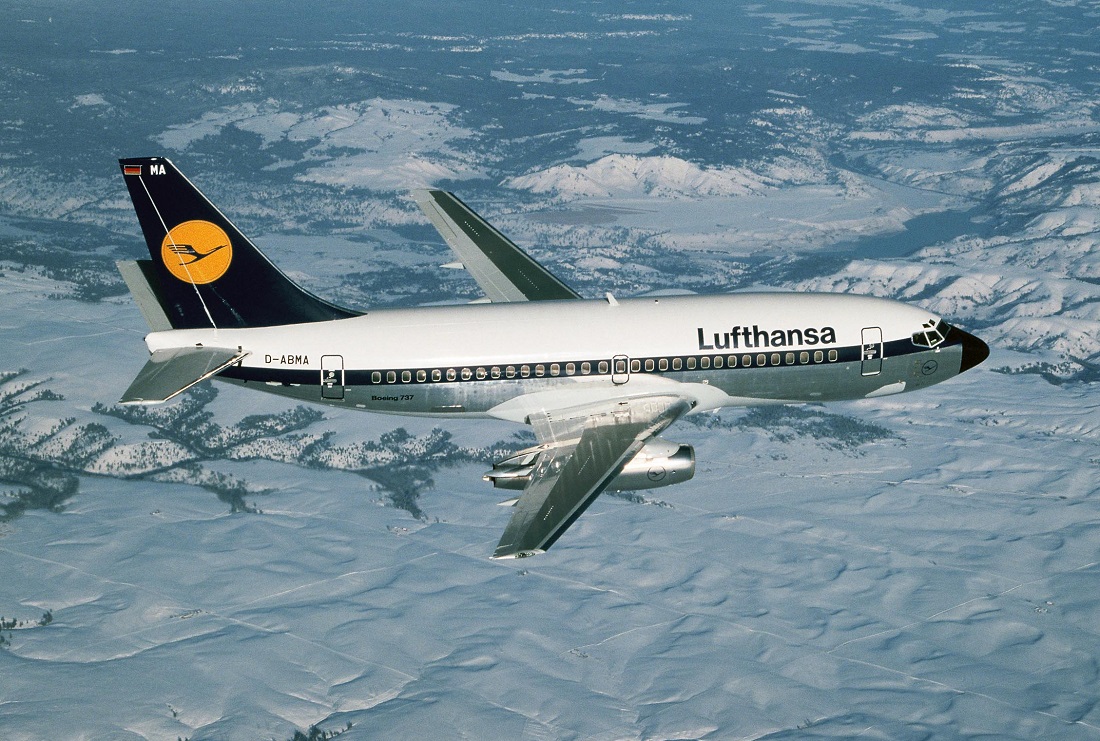
 Lufthansa Bids 737 Farewell After Near Half-Century

Lufthansa ended scheduled passenger operations of the Boeing 737 on 29 October, some 48 years after it gave the short-haul twin jet its world debut.

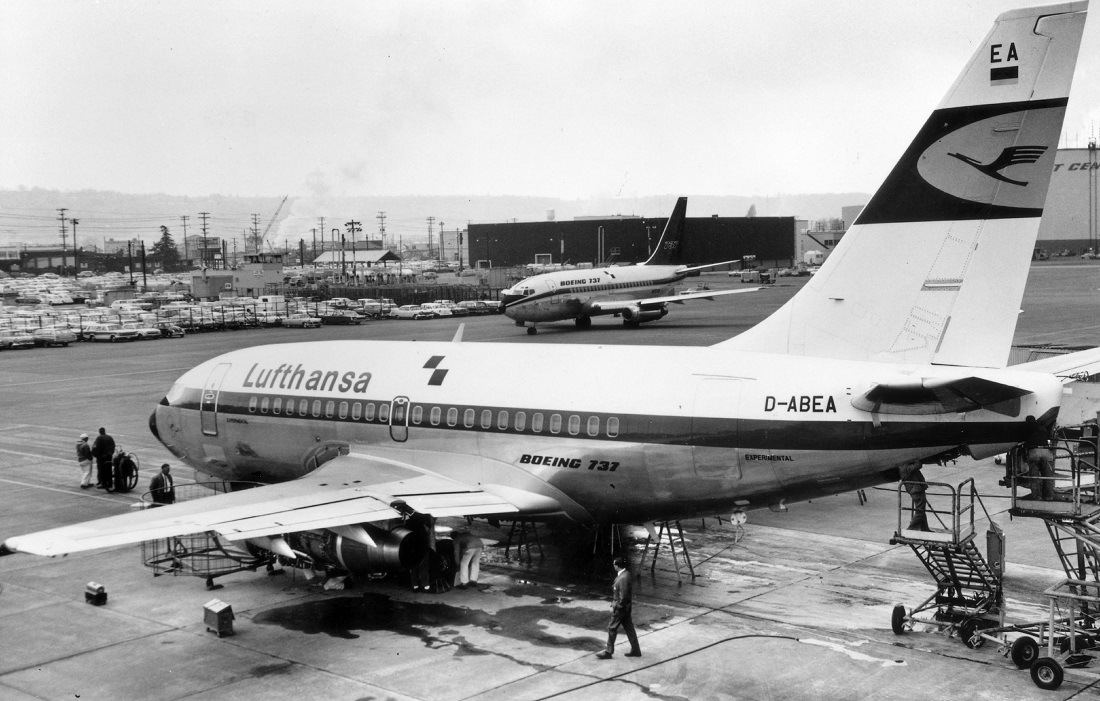
The German carrier, which launched the 737 in its original -100 form in February 1965, with  an order for 21 aircraft. It was Lufthansa that persuaded Boeing to build the 737 because it matched the fuselage diameter of the 707 and the 727.  It launched the twin jet in February 1968.yourfile

The airline’s final 737 services were flown as the 2016 summer schedule drew to a close. Lufthansa’s very last 737 revenue sector, flown by 737-300 D-ABEF Classic, touched down at 19:53 on October 29th at Frankfurt, with 131 passengers on board. After a flight from Nuremberg. Lufthansa chief executive Carsten Spohr was on hand to greet the final arrival.

A final Lufthansa 737 farewell flight was flown on October 31st to Frankfurt from Hamburg.

 Foto: Boeing Lufthansa 01.1985 D113-13-305 737-200, D-ABMA Idar-Oberstein

When Boeing decided to put the Pratt & Whitney JT8D-powered 737 into production on February 19, 1965, following an order from Lufthansa, it was the first time that a US manufacturer had launched a new airliner on the strength of an export order.  However, United Airlines quickly followed Lufthansa, but ordered the slightly larger 737-200 variant.  This Version entered service with the US airline in April 1968.

The Original 737-100 variant launched by Lufthansa proved relatively unpopular, with just 30 being built.  After receiving its first -100 in December 1967, Lufthansa became a major operator of the later 737 variants, operating the -200 as well as the CFM International CFM56-powered-300, -400 and -500 Classic versions.

Lufthansa’s fleet peaked in 1992-93 when it operated 110 737s.

Source : Lufthansa/Boeing Pictures/Ed’s Research


   P&W Adding Capacity to Accelerate Engine Deliveries

Pratt & Whitney executives say they will open two new factories over the next six months to get delayed geared turbofan engine deliveries back on track. But they also appeared to lower the bottom range for planned deliveries in 2017.

Production capacity and early manufacturing mistakes have plagued shipments of titanium-aluminium fan blades for the PW1100G, for the Airbus A320neo and PW1500G engines for the Bombardier CSeries aircraft family.

As a result, P&W now expects to deliver 150 engines in 2016 or 12.5% fewer than planned. Meanwhile, a lack of engines has forced Bombardier to slash CSeries deliveries by more than half to seven aircraft in 2016.

In September, P&W identified the manufacturing of the hybrid-metalic fan blades as the most critical of five parts causing delivery delays for geared turbofan engines. The unique blades are produced now at a P&W factory in Lansing, Michigan, says Greg Hayes, chief executive of P&W parent United Technologies. In January, P&W’s japan based supplier IHI plans to open a third fan blade factory for the geared turbofan engine, besides the one which produces the same blades in Singapore.

“You’re going to see step-changes in fan blade deliveries through the first half next year,” Hayes says.

Source : Pratt and Whitney


Kuwait Airways Unveils New Livery

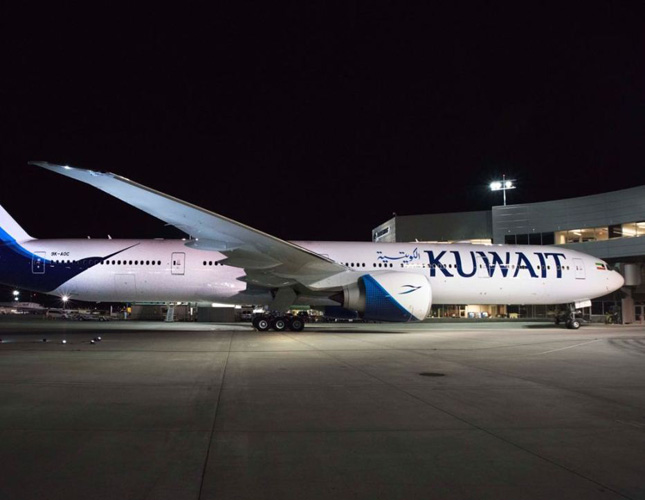
Kuwait Airways unveiled its new livery on the first of ten new Boeing 777-300ERs that will enter commercial service with the airline over the next 12 months.  At an official launch event held at Boeing Commercial Airplanes,’ a “once in a generation” revision, follows Kuwait Airways’ recent announcement of its new five-year business plan made earlier in September of this year.

The new livery and delivery of the Boeing 777-300ERs mark the airline’s first major steps towards achieving the goals it set out in its “Transformation Strategy”.

Source:  China Aviation Daily/Boeing photo


LATEST NEWS

  • Air France first 787 Dreamliner takes to the skies in Everett, on November 9th. This will be Boeing’s 500th Dreamliner.  It is a 787-9.

  • BOC Aviation Limited has taken delivery of a Boeing 777-300ER, the first of five new aircraft to be leased to Air China under a purchase-and-lease back arrangement.
  • Philippine Airlines (PAL) has signed a letter of intent (LOI) to acquire up to 12 Bombardier Q400 regional turboprops.
  • United Airlines first United Boeing 777-300ER rolls out of the paint hanger in Everett.The new 777-300ER will feature the new Polaris cabin.
  • Sibir Airlines of Russia, working under the S7 Airlines brand,has approved the lease of 17 Embraer E170LRs.
  • Avolon, Ireland-based lessor has delivered one Boeing 737-800 aircraft to Malaysia-based Malindo Air.
  • Emirates Airlines will equip its upcoming fleet of 150 Boeing 777X aircraft with Thales’ AVANT inflight entertainment (IFE) system.  Deliveries of the 777X aircraft are scheduled to begin in 2020.

  • Uzbekistan Airways will order three additional Boeing 787s, the Carrier said on November 5th.  The new order is for 787-9s.
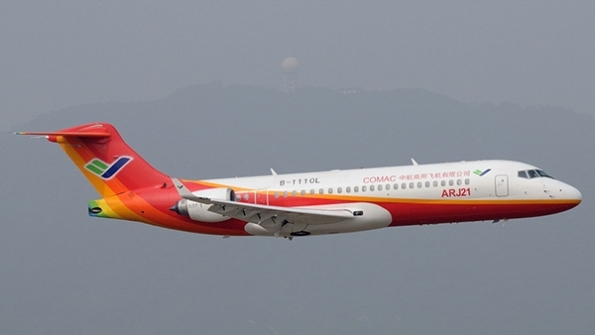
  • China Aerospace Leasing ordered up to 40 COMAC ARJ21-700s, 20 firm and 20 options at the Zhuhai Air Show

  • Air Lease Corp. placed 12 new Airbus A321neo aircraft on long term lease to Vietnam Airlines.


AIR CARGO

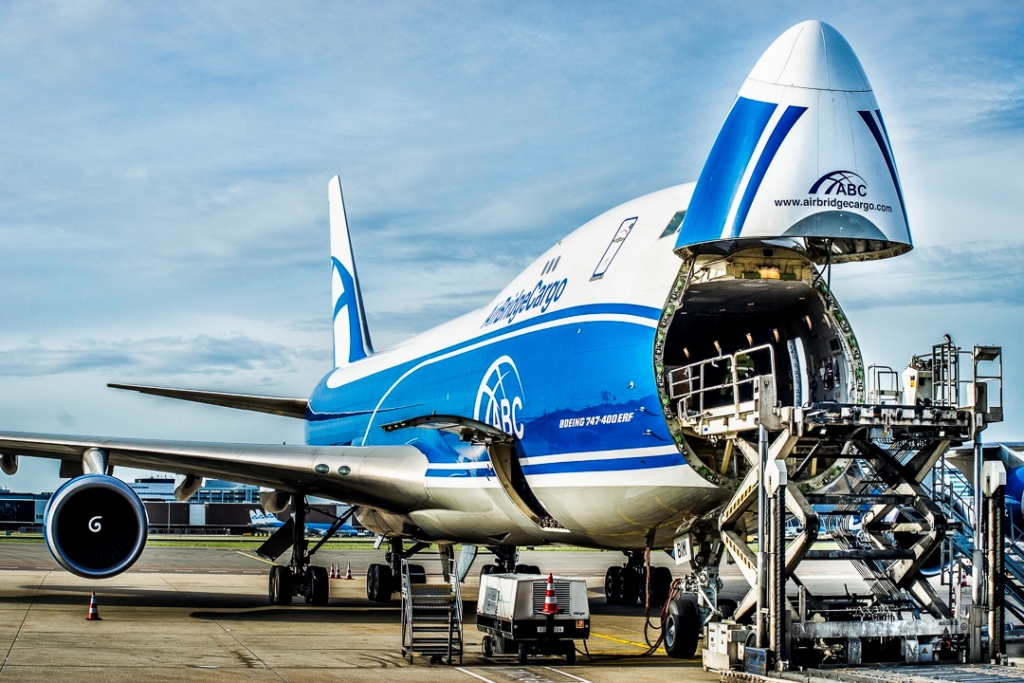
AirBridgeCargo Airlines Launch Freighter Services to Oslo Targeting Salmon Demand


ABCCargo Airlines is the second airline to launch a freighter services from Oslo to capitalize on the seafood market.

The scheduled all-cargo airline will offer two services a week between the Norwegian city and Moscow Sheremetyevo, utilizing a Boeing 747 freighter, which can carry more than 100 tons per week.  The service will also cater for the country’s oil and gas industry.

“Global demand for Norwegian seafood, especially salmon, continues to make a significant and growing contribution to the country’s economy,” the airline said.  Norway now exports 220,000 tons of seafood a year, 600 tons a day, using air cargo services to Asia and North America.

“The fast connections and on-time performance ABC offers via its Moscow Sheremetyevo hub, as well as the temperature-control capabilities of ABCCargo

“Boeing 747-8F fleet means we can offer exporters the network and service options they need to continue to grow their business all over the world.” said Georges Biwer, vice president Europe, Middle East and Africa at AirBridgeCargo.

Source : aircargonews


 MILITARY NEWS

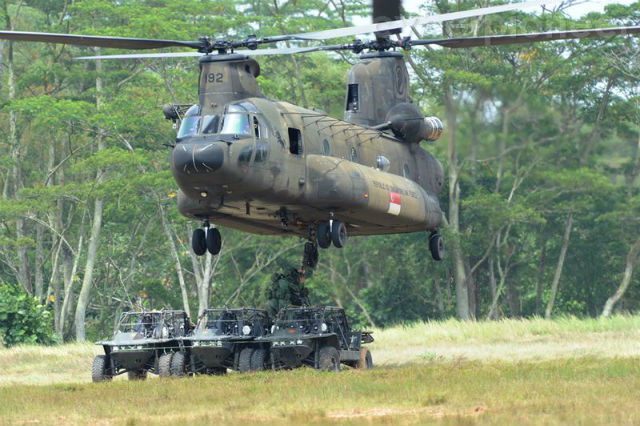
            Singapore Selects H225M and Chinook Helicopters

Singapore is to acquire an undisclosed number of Airbus Helicopters H225M and Boeing CH-47F rotorcraft as part of a fleet modernization program.

The two types will respectively replace the Republic of Singapore Air Force (RSAF’s) existing AS332 Super Puma and CH-47SD helicopters.  These have been in service since 1983 and 1994, says the nation’s defense ministry and are “facing obsolescence”.

“The H225M and the CH-47F possess better lift and reach capabilities, They will enable the RSAF to meet the Singapore Armed Forces’ lift requirements more efficiently with fewer helicopters and less manpower,” it says.

Flight Fleets Analyzer lists the service as operating a total of 32 AS332M/ULs, along with 16 Ch-47SDs.

Source : Defense News


Researched and Compiled by : Ed Kaplanian

Commercial Aviation Advisor

Contact – ed@kaplanianreport.com

Volume 3 Issue 8 August 2016


ON THE BOEING

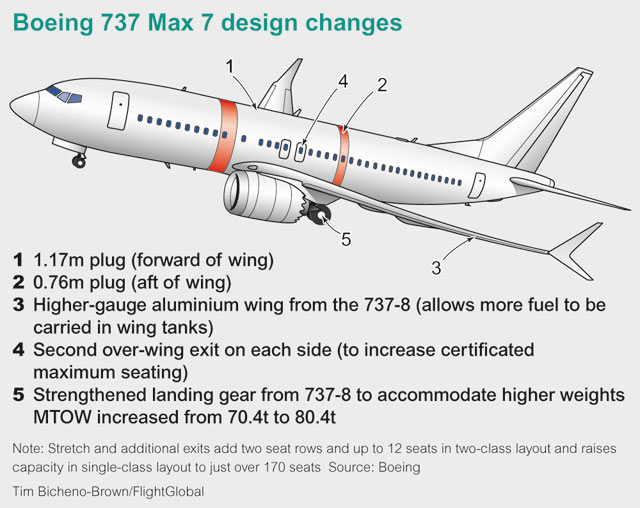
        Boeing Details Range-Boosting 737-7 Redesign

     Boeing decided to stretch the 737-7 by two seat rows and added major elements of the 737-8.  It is the first major tweak to the 737 Max line-up in more than five years after launching the program.

     In a sign of the shifting dynamics in the single-aisle market, the 737-7 has attracted just 60 aircraft orders from three customers. It gives the formerly 126 seat variant less than 2% of the overall backlog for the three member 737 Max family.  The original of the aircraft, the 737-300 Classic, outsold two larger sister variants by a wide margin.
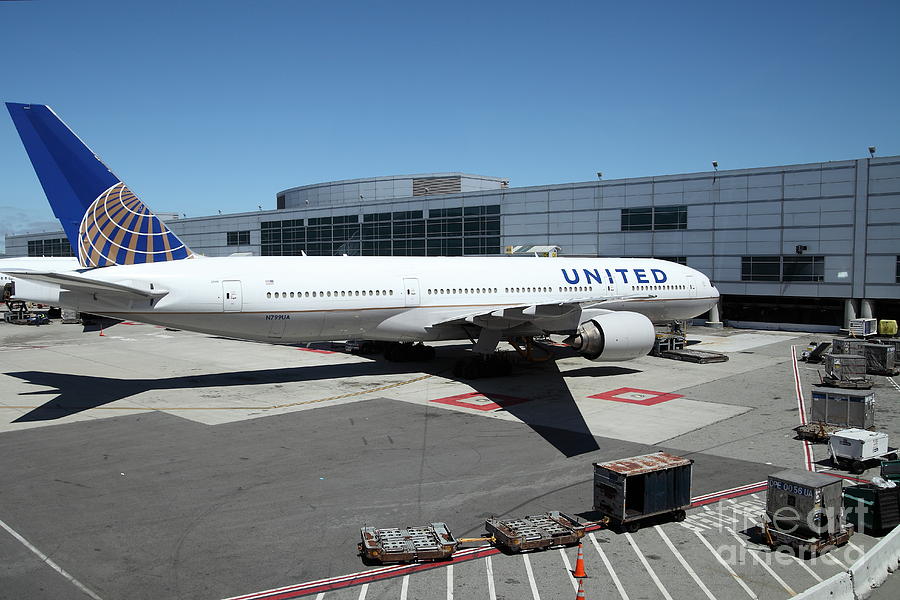
     In an overall market segment from 120-240 seats with more thanks 8,000 aircraft on backlog; a total order book of 465 aircraft on firm order does not appear encouraging. The 465 aircraft on firm order includes the A319neo.  In the end, Boeing decided to stretch the 737-7 by two seat rows and added major elements of the 737-8.
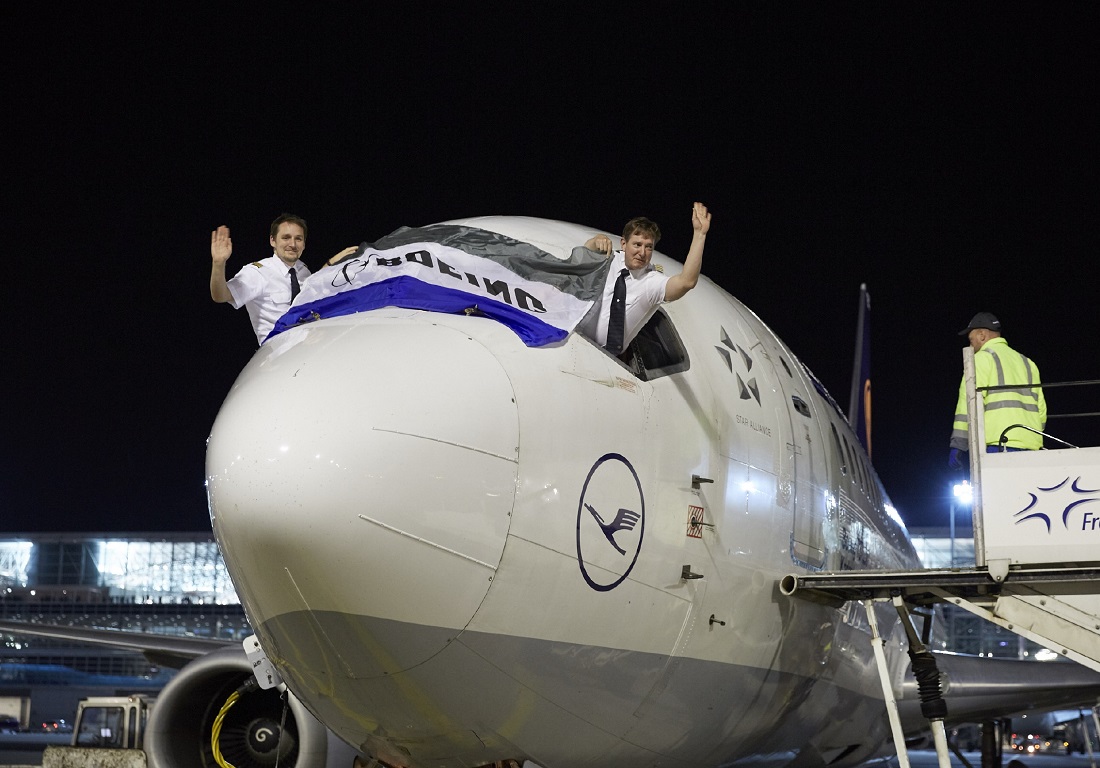
      Boeing does not expect the addition of up to 12 more seats in a typical two class seating configuration to significantly drive new demand into the low end of the single-aisle sector. The move appears to be driven to satisfy new requirements imposed by the two 737-7’s two largest customers, namely Southwest and WestJet.

     “We have now assessed the market.  The customers have said that the bigger airplane is something we would like with that range,” says Keith Leverkuhn, vice-president and general manager for the 737.

     The 737-7 and 737-8 share the same wingspan, but the latter has a thicker wing that can carry more fuel.  The modified 737-7 wing will have more fuel capacity to compensate for the greater weight of the lengthened fuselage and add 500 nm more range”, says Leverhuhn. The fuselage itself is lengthened by 1.17 m (46 in) forward of the wing and 76 cm aft of the wing, he says.  The maximum take-off weight rises from 70,300kg (155,000 lb) requiring the use of the strengthened landing gear of the 737-8.

Source : Flightglobal/ Line Drawing Boeing


ON THE AIRBUS FRONT

                 Airbus : Delivery of P&W A320 Engine Imminent

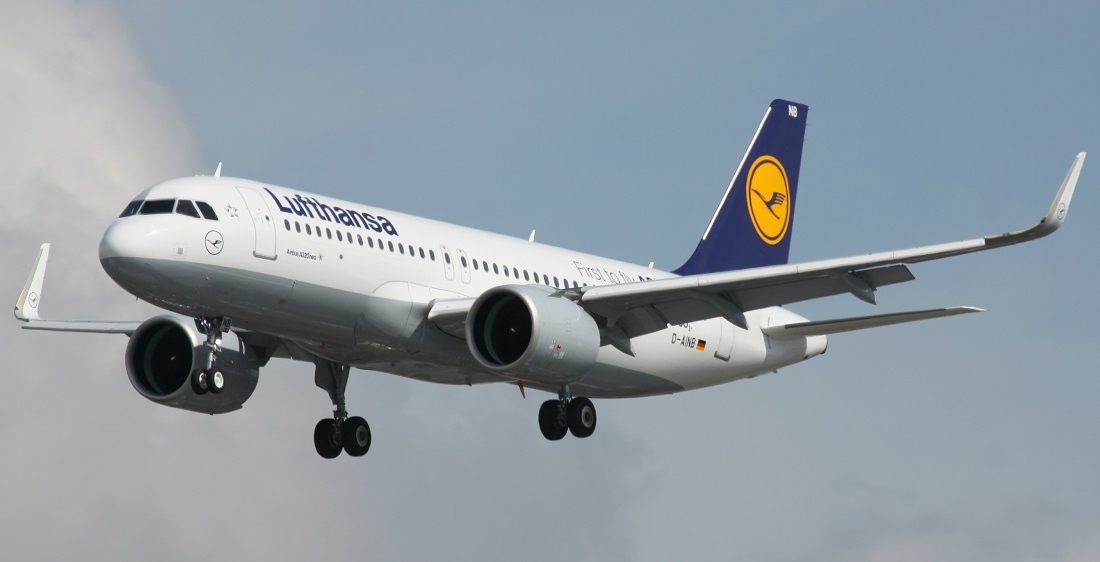
     Airbus stated that the delivery of the revamped Pratt and Whitney PW 1100G is imminent by the time this report is out for distribution Lufthansa is supposed to have received the first A320neo with the revamped engine.

     Deliveries have been held up by efforts to correct engine start-up times, as well as other minor technical issues, leaving Airbus with some 25 undelivered A320neos at its production sites.  Airbus Group chief Tom Enders, speaking as the airframe disclosed its first-half results, said the first upgraded ”golden engine” would be delivered to the German flag-carrier Lufthansa.

     P&W parent United Technologies’ chief Greg Hayes, speaking during a briefing on July 26th, said the technical problems were “in the rear-view mirror”  and that the manufacturer was “exactly” aligned with the production plan submitted to Airbus earlier this year.

       He says the geared turbofan power plant, which also powers the Bombardier CSeries, Mitsubishi Aircraft MRJ and other types, has accumulated 5,000 hrs in service with four operators, with a 99.8% dispatch reliability.

    Hayes says the engine is “meeting commitments” on fuel-burn, noise and emission levels. The manufacturer expects to build 140 geared-turbofans engines in the second half of 2016, having produced 60 in the first half of 2016, with 36 delivered to various aircraft platforms to meet a target of 200 for the year.

Airbus has also just started delivering A320neos with the rival CFM International Leap-1A power plant,with the first going to Turkish carrier Pegasus Airlines.

Source : Flightglobal/Airbus/Pratt and Whitney


REGIONAL/BUSINESS JETS

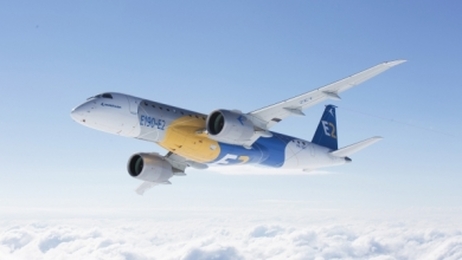
     E-190-E2 Is Ahead of Schedule But Not Rushing Delivery

     Embraer has no plans to rush the timeline for delivering the first E190-E2 regional jet, even though the flight test program remains ahead of schedule.  The first flying prototype made a debut appearance at the Farnborough air show only after six weeks after achieving first flight.

     The second E190-E2 entered the flight test campaign on July 8th, and the overall program so far has consumed less of the buffer the company built into the schedule,says Luis Carlos Affonso, senior vice-president of operations and chief operating officer for Embraer’s Commercial Aviation unit.

     Embraer will not accelerate the delivery schedule of the first E190-E2, even if the program stays ahead of schedule, Affonso says.  The company will focus on increasing the maturity of the new technologies packed into the E190-E2, including the Embraer developed fly-by-wire control system and Pratt & Whitney PW1900G geared turbofan engines.

    Though summarized often as re-engining project,the E2 version of the E-Jet is a bold project.  In addition to the engines, Embraer is installing a new, high-aspect ratio wing, re-inventing the flight control system and tweaking the cross section.

“ It’s not a re-engining. It’s a new plane,” Affonso says.

Source : Flightglobal/Embaer/Embaer Picture


OTHER AVIATION NEWS

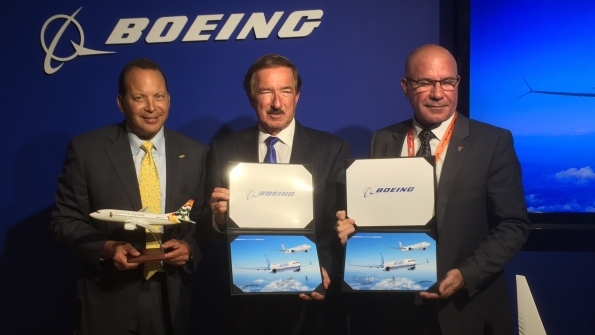
             Cayman Airways a New Customer for the 737 Max

    The Caribbean carrier, a longtime Boeing customer, will replace four 737-300s that are approaching 25 year of age.  The new aircraft, which will come from lessor Air Lease Corp (ALC), will begin arriving in December 2018 through 2020.

       After retiring the -300s, “the logical progression would have been to go to 737 NGs,” Cayman Airways’ president and CEO Fabian Whorms said, but the lease structure put together by ALC swayed them to go with the newer design. The leases will be run for a minimum of nine years.

      Going from a -300 to a MAX8 will save the airline  20% in fuel costs alone. ”In fact, it will be more than that,” Whorms said.  The MAX’s will also be able to carry 40 more passengers than the existing aircraft and their faster cruising speed will save 15-20 minutes on the four hour flight to New York.

Source : ATW/Picture Boeing

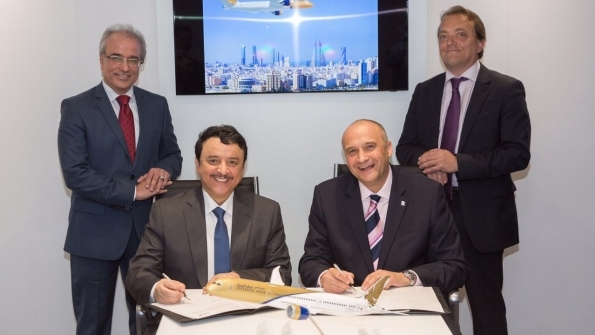
                       Gulf Air Chooses Trent 1000 to Power its 787-9s

Bahrain-based Gulf Air selected the Rolls-Royce Trent 1000 engine to power its Boeing 787-9s in a deal valued at $900 million.

Gulf Air announced in January that it is ordering 16 787-9s. The contract with  Rolls covers Trent 1000 engines to power 10 787-9s, plus options for additional Trent 1000s to power six more 787-9s. The agreement also includes long-term service support by Rolls-Royce.

( An interesting sidebar, Gulf Air’s long range fleet  was comprised of 22-24 767-300s which the airline used from 1988-2007.  Boeing’s 787-9 meant to be a replacement to the 767-300 with a wider fuselage 168 diameter for the 767-300

with seven across seating vs the 787-9 with a wider diameter fuselage of 226 inches with 8-9 across seating) Ed K

Source : ATW/Gulf Air Picture

   American Defers A350 Deliveries by More Than Two Years

     American Airlines has deferred the deliveries of all the 22 Airbus A350-900s on order. It is working to reduce its capital expenditures and manage capacity through 2018.  The Fort Worth-based carrier will take its first A350 in late 2018 instead of the spring of 2017, American said in a quarterly financial report.  Deliveries will continue through 2022, two years later than originally scheduled with an average deferral of 26 months.

     American will take two A350s in 2018, five in both 2019 and 2020, the remaining ten in 2021 and 2022, the filing shows.  It previously planned to take four in 2017, ten in 2018, six in 2019 and two in 2020.

     The deferral will reduce capital expenditures in 2017 and 2018 and provide capacity flexibility, the airline says.     Aircraft capital commitments are $4.06 billion in 2017 and $2.2 billion in 2018, the filing shows.  This is down from $4.58 billion and $2.89 billion, respectively, that American reported in April.

Source : Bloomberg/American           


LATEST NEWS

  • Herous-Devtek Canadian supplier has completed its first set of 777-300 ER main landing gear for delivery to Boeing, ahead of its contract to make the 777X main landing gear.
  • Azerbaijan Airlines is considering buying 10 Boeing 737 MAX aircraft, the carrier has announced.
  • Tara Air the Nepalese regional carrier has signed a purchase agreement with Viking for three Twin Otter Series 400S.
  • Kalstar Aviation, an Indonesian regional operator, signed a firm order for five E190-E2s. The value of the order has an estimated value of 582 million dollars.
  • Arkia Airlines signed a letter of intent (LOI) for up to ten E195-E2 jets, consisting of six firm orders and four purchase rights.
  • Porter Airlines, a Canadian regional airline, has signed a firm purchase agreement for three Bombardier Q 400s, valued at $93 million at list prices.
  • Xiamen Airlines officially launched its first ever trans-Pacific flights to North America on July 25, using 787-8 aircraft.
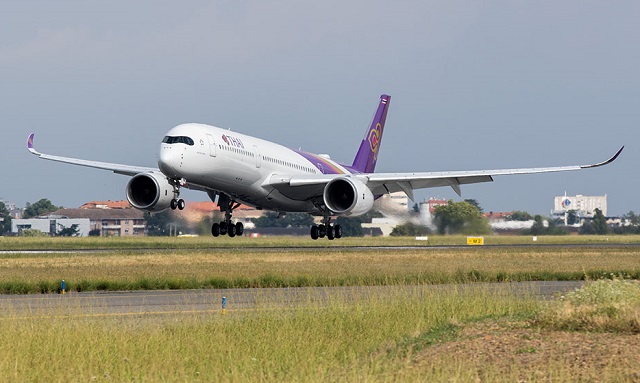
  • Thai Airways International first A350-900 has entered flight testing.  Thai Airways, which confirms the Rolls-Royce Trent XWB-powered jet has carried out its first flight.  Thai has four of the type on order.

  • Fly Leasing has bought five Boeing aircraft.  Three 787-8s were purchased in a sale and lease back transaction with a leading flag carrier.
  • Avolon, the Irish lessor, delivered one Boeing 787-9 to China’s Hainan Airlines. This is the Fourth Avalon aircraft on lease to Hainan Airlines.
  • Qatar Airways doubled its deal for Boeing 777-9Xs on Wednesday July 13th, firming a previous commitment for 50 aircraft and adding new purchases for an additional 50 of the wide bodies.  

  • Allegiant Air  Las Vegas based airline has ordered 12 Airbus A320s from the airframe, in its first purchase of new aircraft.


AIR CARGO

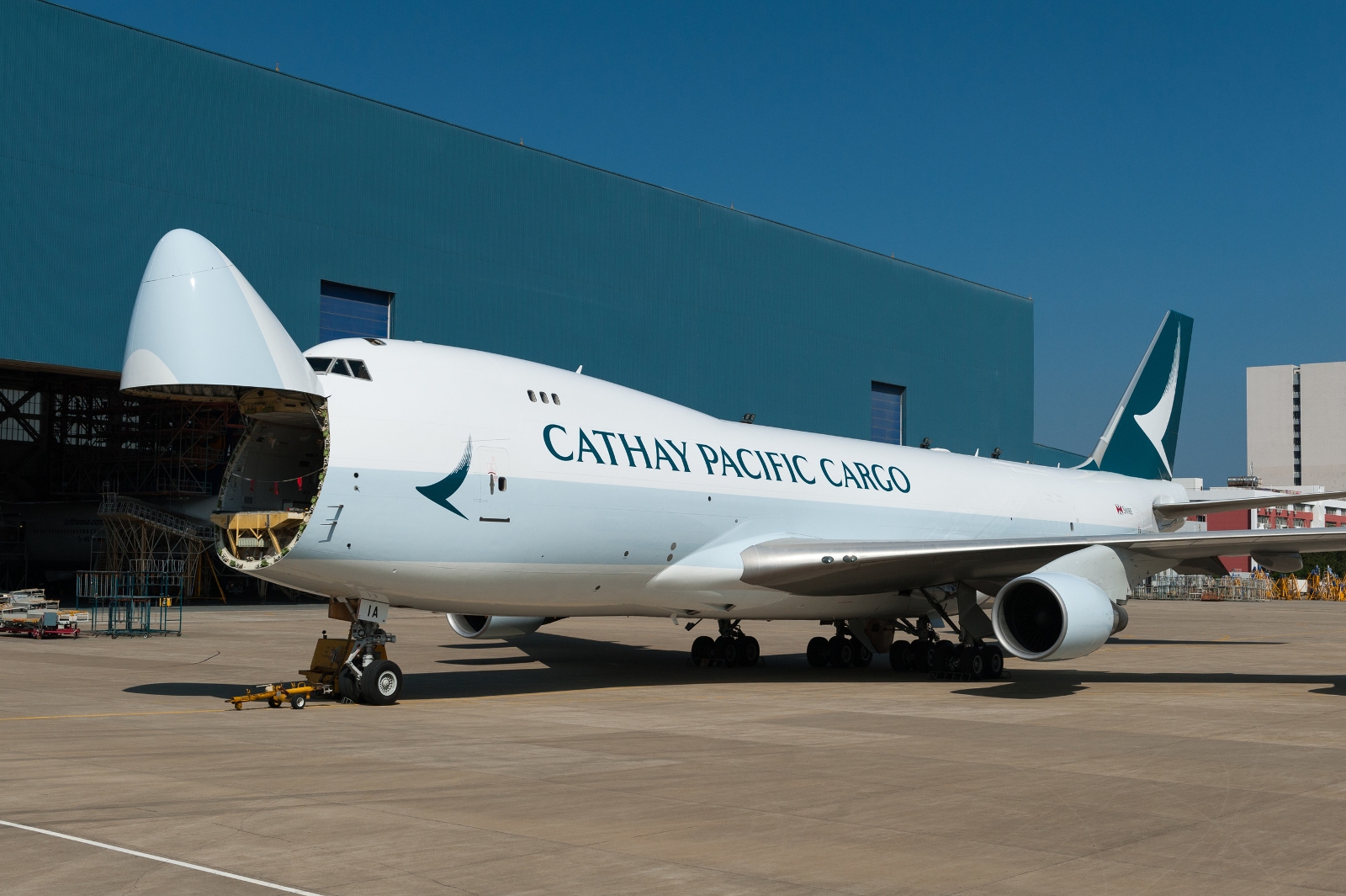
           Cathay Pacific Expands Cargo Presence to Portland, Oregon  

     Cathay Pacific Airways announced an expansion of its freighter service in the Americas with the addition of a twice-weekly scheduled service to Portland International Airport (PDX). It will launch on November 3, 2016, subject to government approval.  Portland will be Cathay Pacific’s 18th cargo station in the Americas.

   The new Portland service will operate on a Hong Kong-Anchorage-Los Angeles-Portland-Anchorage-Hong Kong routing every Thursday and Saturday. They will use Cathay Pacific’s newest and biggest freighter, the Boeing 747-8F.

     The Boeing 747-8F aircraft offers more cargo space to carry the anticipated high volumes of semi-finished foot ware and apparel, electronics and perishables from Portland and its catchment area into Asia. Portland is also one of the fastest-growing hubs for e-commerce related shipments in the Pacific Northwest region.

     Cathay Pacific was the first Asia Pacific airline to take delivery of the Boeing 747-8F in 2011 and currently has 13 of this type in its cargo fleet. The Boeing 747-8F employs innovative technologies to bring about significant improvements to the airline’s ultra-long-haul freighter services, particularly on North America routes,while reducing the environmental impact of its operations.

   “We could not be more pleased with the commitment byCathay Pacific to launch Portland-Hong Kong service this fall,” said Keith Leavitt, Port Chief Commercial Officer.

Source : China Aviation Daily/Picture Cathay Pacific


MILITARY NEWS

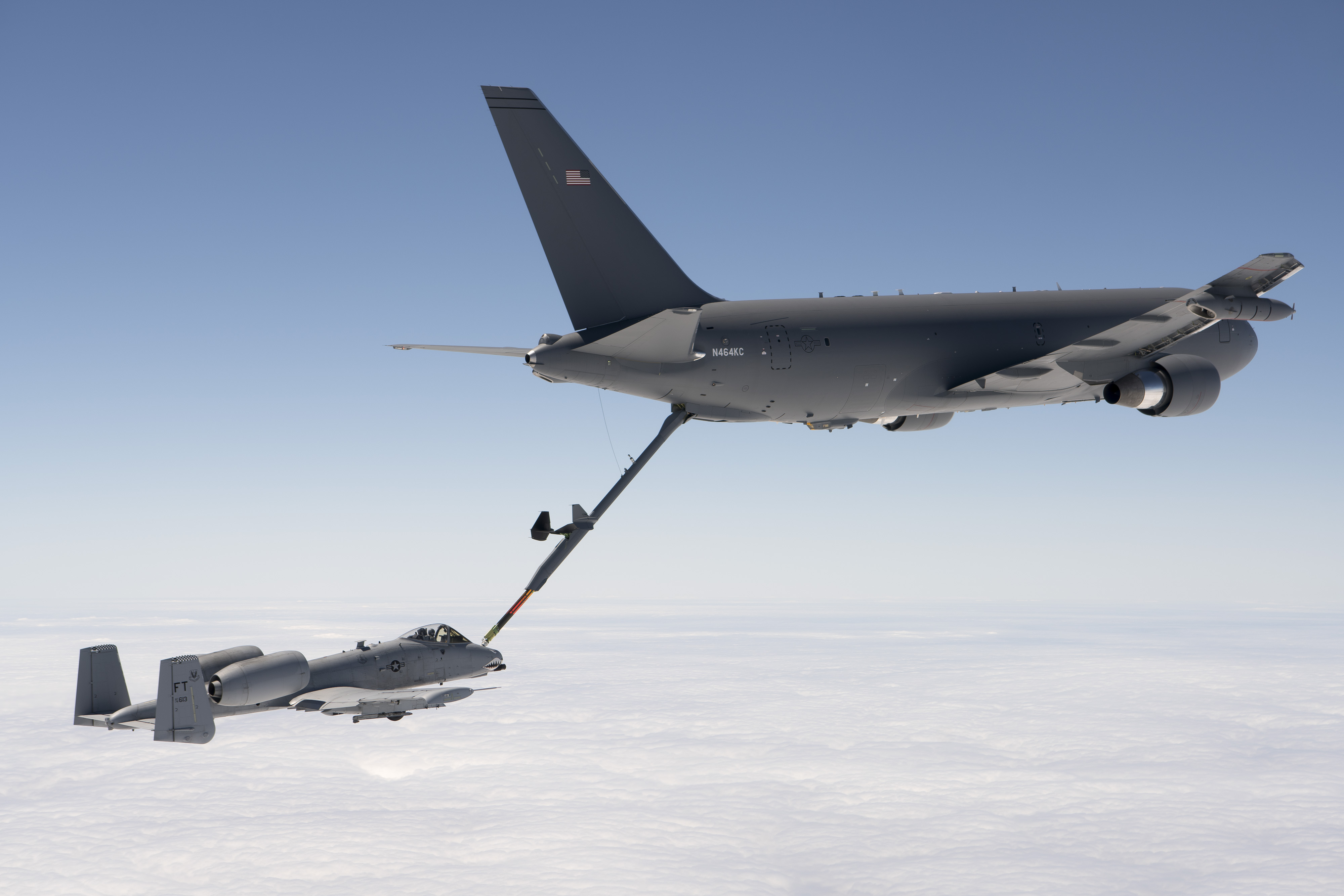
                         KC-46 Completes Required Flight Tests

     The KC-46 Pegasus program completed all flight tests required for the Milestone C production decision on July 15, offloading 1,500 pounds of fuel to an A-10 Thunderbolt II.

   The successful A-10 mission was the last of six in-flight refueling demonstrations required before the tanker program can request approval from Frank Kendall, the under secretary of defense for acquisition, technology and logistics, to award production Lots 1 and 2, totaling 19 KC-46A aircraft.

      “It is great to see the KC-46 boom back in action and the program moving forward to a production decision”, said Col. John Newberry, the KC-46 system program manager.

   The other five required air refueling demonstrations were the C-17  Globemaster III and F-16 Fighting Falcon using the air refueling boom.  The Navy’s F-18 Hornet and AV-8B Harrier II were also using the centerline and wing drogue systems, and the KC-46 a receiver aircraft.

      This test would not have been possible without contributions from the 412th Test Wing, 23rd Fighter Wing, 355th FW, 124th FW, the 896th Test Support Squadron and  40th Flight Test squadron which all provided aircraft manpower and equipment.  The milestone C decision to begin low-rate initial production is expected this month.

Source : Aero News Network/ Images provided with USAF news release


Researched and Compiled by : Ed Kaplanian

Commercial Aviation Advisor

Contact – ed@kaplanianreport.com
Volume 3 Issue 7 July 2016

ON THE BOEING FRONT

Boeing Selects iPad-Like Touch Screens For 777X Flight Deck

Future Boeing 777X airline pilots will be able to interact with their flight information displays in the same way that they use their smart phones and tablets.

Boeing has decided to integrate a multi-touch interface on the flight deck of the re-engineer wide body due to enter service in 2020, replacing a touch-pad based cursor control device (CCDs) mounted on the aisle-stand of the original 777, says Bob Feldmann, vice president and general manager of the 777X program.

The decision was made so recently that Boeing is not yet able to announce the supplier, as the contract had not been signed as of mid June, Feldmann says.

The new technology will be integrated as Boeing transitions from a standard layout of six displays in the 777 cockpit to the 787’s five display format in the 777X.  ”We think we are the first Commercial airplane to really make something that is like all our customers are used to doing in their daily lives,” Feldmann says.

In discussions with our 777X customers, Boeing received a clear preference for making the transition to multi-touch screens, Feldmann says.

The next milestone for the 777-9 development program is a critical design review scheduled earlier next year.  Production of the first test aircraft is expected to begin next June, with first flight following in 2018.

Cockpit touch screens are one of several key technologies Boeing is developing for the 777X.  The most visible innovation on the 777X is perhaps Boeing’s plan to integrate folding wingtips, a feature normally found on fighters based on space constrained aircraft carriers.

Source : Flightglobal/Boeing


ON THE AIRBUS FRONT

Airbus Starting A330neo Final Assembly in October

Airbus is working through some high profile issues with the introduction of the A350 and the A320neo to market, but surely wishes those programs were low-profile as the A330neo.  The reengineer A330 program, is progressing more quietly and without major problems that have kept Airbus in the news.

The A330-900, the first reengineer version of the family, is due to enter service by the end of 2017, followed by the smaller -800 a year later.  Airbus hopes the program’s lower costs – combined with the fuel burn reduction the new engines are expected to provide and the new cabin designed to align it with the larger A350’s interior – will be sufficient to counter the Boeing 787.

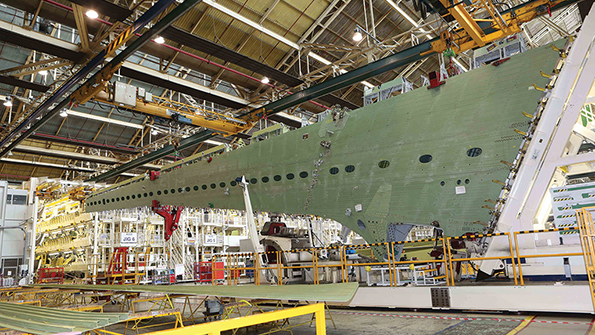
Airbus is well on the way to producing the A330neo subassemblies. The first wing is essentially completed in the Broughton, England facility with only the sharklets missing, and the second is close behind.  Along with engines and the new cabin, the wing has seen the most modifications of the major components. At 64 m(210 ft), the A330neo wingspan has grown by 4 m (13.1 ft) over the the A330ceo’s and has been structurally reinforced to accommodate the Neo’s heavier engines. The wing-to-body-juncture also has been redesigned.

In parallel, the first A330neo nose section is completed at the Saint-Nazaire plant in France.  Airbus has a total of 186 orders for the two versions of the A330neo,10 for the A330-800 and the rest for the larger -900.  Hawaiian Airlines has ordered 6 -800s and 4 for TransAsia Airways

Source : China Aviation Daily/Airbus Photo


REGIONAL/BUSINESS JETS

 Mitsubishi Starts Final Assembly of First Delivery Jet

Mitsubishi Heavy Industries is set to begin final assembly of the first customer aircraft for the MRJ regional jet program, with various sections of the fuselage having been delivered to the MRJ final assembly hanger.In a newsletter, Mitsubishi Aircraft says it will work through the final assembly process, with an eye on delivery to launch customer All Nippon Airways in mid 2018. The Japanese airframe also gave an update of the MRJ flight tests, which are ongoing using two test aircraft.  It says valid results have been obtained from FTA-2, which started flying on May 31st, including the confirmation of emergency response measures – such as flying with one  engine, activation of emergency power units and stall tests.

Various tests are also being carried out as the program prepares for ferry flight to Moses  Lake, Washington State, this summer.

These include the expansion of its flight envelop to it’s design specifications of a maximum speed of Mach 0.78 and a maximum altitude of 39,000 ft, conducting instrument flights,plus checking on terrain awareness, warning system and collision avoidance system.

Its Moses Lake Flight Test Center meanwhile has been conducting flights using a small aircraft, rehearsing for the test missions ahead.

Mitsubishi adds that preparations are underway for FTA-3 and FTA-4 to take their first flights this summer.

Source : Flightglobal/Photo/Mitsubishi Aircraft


OTHER AVIATION NEWS

 First CSeries Aircraft is Delivered to SWISS

Bombardier delivered the first CSeries aircraft to Lufthansa subsidiary Swiss International Air Lines(SWISS), at ceremonies in Montreal on June 29th.

The delivery marks an important milestone in an aircraft program beset with technical problems, delays and difficulty securing customers.  Swiss originally ordered 20 CS100 and 10 CS300s, plus 30 options, but then converted five 100s to the 300 variant.

The handover should begin a process in which SWISS will receive nine aircraft by year end, taking one aircraft per month this month, August and September.  After that, deliveries will increase to two aircraft per month.  The first aircraft will enter service this month.

On June 23, Bombardier signed a definitive agreement with the Quebec government for $1billion investment in the CSeries program.  The assets, liabilities and obligations of the program have been transferred to the CSeries Aircraft Limited Partnership(CSALP) of which 50.5% is owned by Bombardier and 49.5% by the provincial government through Investment  Quebec.

The money will be used for cash-flow purposes, representing half of the $2 billion Bombardier says is required to take the CSeries program to cash-flow positive production in 2020.

The $2 billion includes funds to cover losses on discounted sales to marquee customers, including Air Canada and Delta Air Lines deals which Bombardier will record a $500 billion this quarter to cover “onerous contract provisions.”

The Canadian federal government, meanwhile, confirmed it is continuing negotiations with Bombardier about investing in the CSeries partnership.

Source : ATW/Bombardier Photo

 Pratt & Whitney to Invest $65m in Georgia GTF Maintenance Site              

Pratt & Whitney will invest $65 million in maintenance site near Columbus, Georgia, where the company maintains and overhauls PW 1000G geared turbofans (GTFs).  The investment, which comes as the company embarks on massive GTF production ramp up, will help P&W ensure it has infrastructure in place to meet increasing maintenance demand, P&W said in a media release.

Also, later this year the company expects construction will begin on an additional engine test facility at the site in Columbus, which is about 90 miles(145km) south of Atlanta, P&W says.

The company has orders for more than 7,100 GTFs, executives have said.  P&W will manufacture about 200 of the engines this year, but the company forecasts production will hit 400 in 2017, 600 in 2018 and 1,200 annually by 2020, executives have said.

The Columbus maintenance site is also where P&w is modifying a number of in-service PW 1100Gs to address a slow-engine-start issue, P&W aftermarket president Matthew Bromberg has told Flightglobal.

Source : Flightglobal/P&W

Air Lease Corp. Names New CEO;  Udvar-Hazy to Be Executive Chairman

Air Lease Corp.(ALC) has appointed John Plueger as president and CEO, effective July 1, as current CEO Steven Udvar-Hazy assumes the role of Executive chairman of the board, a full-time officer role.

Steve Udvar-Hazy started ALC in February 2010, the company owns and manages 268 young and in-demand jet aircraft on lease to 88 airline customers around the world.  It has an order book of 386 new jet aircraft to be delivered from Airbus and Boeing through 2023.

Plueger joined ALC as president, COO and board member in March 2010, shortly after the company was formed.  Plueger has more than 30 years of aviation experience, 24 of which were with International Lease Finance Corp.

Udar-Hazy said, ”John and I have worked together for over 30 years and I am extremely proud of what we have accomplished in six short years at ALC.  I look forward to continuing to partner with John in my new role”.

Source : ATW


LATEST NEWS

  • Emirates  took delivery of its 80th A380 to join the Emirates the A380 fleet and the airline has another 62 on order including 21 to be delivered this year.
  • Gulfstream  G500 business jet program has reached another milestone with the completion of the ultimate load testing on June 16.
  • Irkut Corporation Russian aircraft manufacturer rolled out its MC-21-300 on June 8 at its factory in Irkutsk.
  • Chengdu Airline made its first commercial flight with China’s home grown ARJ21 on June 28 with 70 passengers on board.  Chengdu is the launch customer for the ARJ21.
  • Alaska Airlines took delivery of a 737-900 painted in a special livery to celebrated Boeing’s 100th Birthday.

  • Bombardier Commercial Aircraft has announced that an unidentified customer has signed a firm purchase order for 10 CRJ900 aircraft.  The agreement is valued at $472 million at list prices.
  • HNA Group (Hainan Airline mother company) will become the biggest customer of both Airbus and Boeing aircraft within the next 10 years.  Hainan Airlines welcomed its first Boeing 787-9 Dreamliner on June 10.
  • Ethiopian Airlines took delivery of the first of 14 Airbus A350 XWBs on June 28, making it Africa’s first operator of the type.

  • Embraer E190-E2 has achieved first flight in Sao Jose dos Campos, Brazil, earlier than expected.
  • Xiamen Airlines will be the sixth airlines to fly from Seattle to China using the Boeing 787-8 Dreamliner.  The three-times weekly service will connect to Xiamen, a city 360 miles to the northeast of Shenzhen.
  • Nile Air, Egyptian based carrier, began operations from Cairo to  Al Ain international airport in Abu Dhabi located on the Omani border.

AIR CARGO

 FedEx’s 270 Boeing Planes

Package delivery company, FedEx Corp, owned 582 airplanes at the end of May 2015 and leased another 65 for a total fleet of 647 planes.  Of the planes owned,241 were manufactured by the Boeing Company or by McDonnell Douglas prior to its merger with Boeing in1997.  Another 29 Boeing planes were leased, bringing FedEx’s total Boeing fleet to 270 planes.

The most popular Boeing aircraft in the FedEx fleet is now the 757-200, a dual-engine narrow body that Boeing configured as a cargo plane.  The plane can carry 63,000 pounds of cargo with maximum range of 3,625 miles.  The average age of these planes in FedEx fleet is nearly 25 years.  Boeing sold more than 1,000 of the planes and delivered the last new 757 in 2004.(it went to Shanghai Airlines in China)

Boeing had also supplied FedEx with 21 767-300 cargo freighters at the end of May 2015 (the end of the most recent fiscal year for which the company has produced an annual report).  FedEx ordered 50 more of the wide body planes last July with an option on 50 more.  At list price of $199.3 million per plane, the order was valued at nearly $20 billion.

Why buy an old design? it is simple to replace even older ones and reduce the variety of planes in FedEx’s fleet.  FedEx’s 767s average less than three years old.  The 767 is also more fuel efficient and shares many parts with the 757s in the fleet; plus it is a great aircraft.

Because Boeing is building the Air Force tanker, The KC-46A, on the 767 airframe, FedEx is assured of spare parts for at lease another 40 years, the expected life of the tanker.

Finally, FedEx reported 27 Boeing 777 freighters in its fleet at the end of November 2015, and in January the company said it had committed to another 16 at a list price of $318.7 per plane,for an order totaling more than $5 billion.

Source : 24/7 Wall St/ Boeing Photo/Ed’s Research.


  MILITARY NEWS

China’s New Y-20 Is the Largest Military Aircraft Currently in Production 

The Y-20 is China’s version of the C-17 Globemaster.  The first Xian Y-20 military transport aircraft was delivered to the People’s Liberation Army Air Force (PLAAF) on June 15. Developed by Xian Aircraft Corporation, the Y-20 has an empty weight of 110 short tons, making it the largest military aircraft currently in production – larger than Russia’s Ilyushin Il-76.  Boeing’s C-17 Globemaster III is bigger than the Y-20, the C-17’s empty weight is about 60,000 pounds more than the Y-20.  Its payload capacity is 25,000 pounds more, but production stopped in 2015, making the Y-20 the biggest that currently rolling out of factories.

The Y-20 has the official codename “Kunpeng” after a mythical Chinese bird, though it is nicknamed “Chubby Girl” for its appearance.  The Y-20 is remarkably similar to the C-17.  Currently the Y-20 uses four Russian made Soloviev D-30 turbofan engines; however, plans are to replace the engines with Chinese-made Shenyang WS-20 turbofans by 2020 to give the plane short takeoff capabilities and a greater range.

Source : Popular Mechanics/AIN Online


Researched and Compiled by : Ed Kaplanian

Commercial Aviation Advisor

Contact – ed@kaplanianreport.com
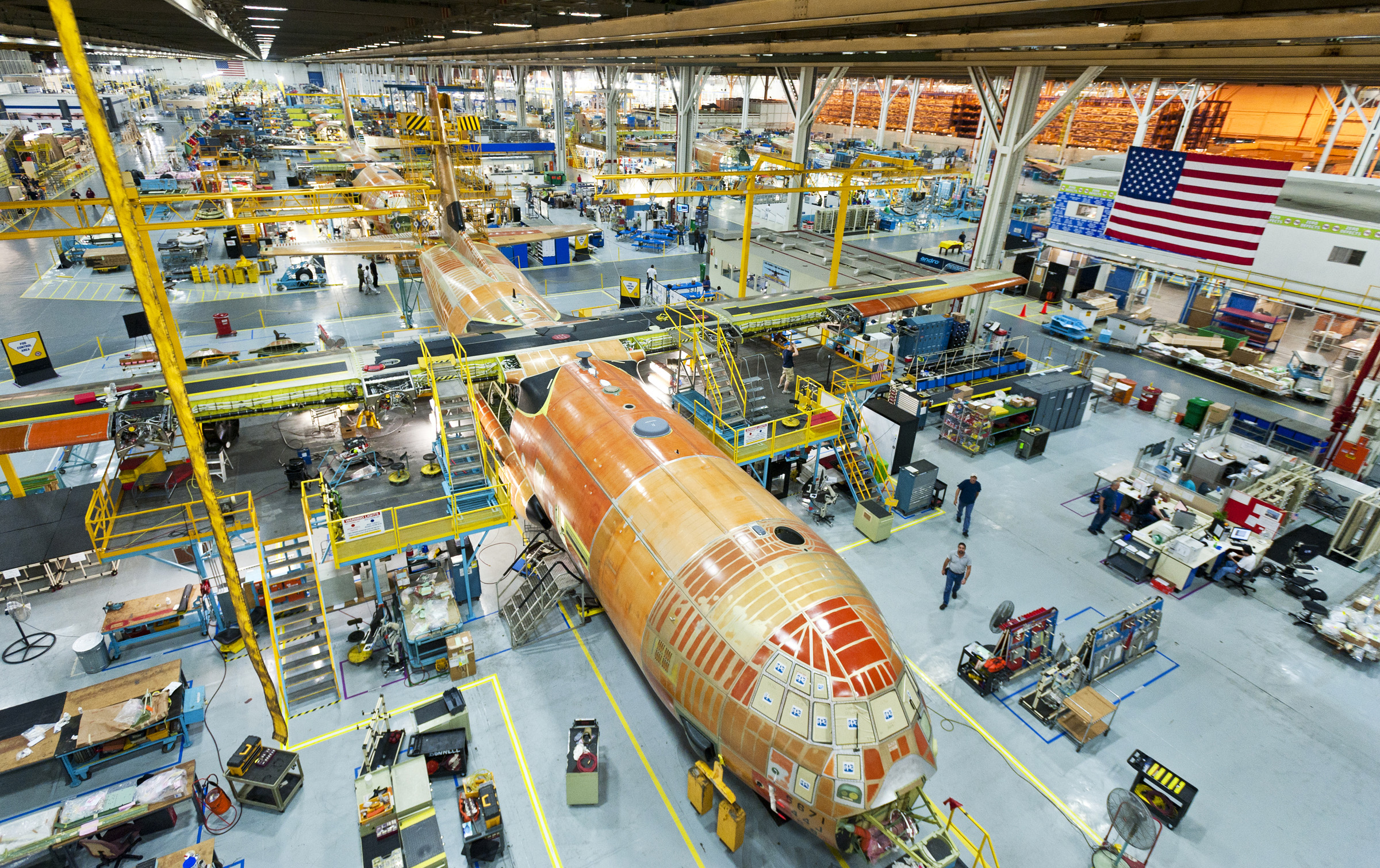
Volume 3 Issue 5 May 2016

ON THE BOEING FRONT

The Latest on the Development of the 777X

The development of the 777X is quietly moving forward. German manufacturer Liebherr has delivered the first prototype of the actuation system for the 777X folding wing-tip.

The step will enable initial testing on a rig to begin in mid-year, the company’s Liebherr-Aerospace Lindenberg division states, revealing that proof-of-concept prototype was handed over at the end of February.

Liebherr says the delivery shows “substantial progress” has been achieved in developing a “compact and reliable” wing-tip actuator.

The 777X is to use a folding wing-tip in order to reduce its 235Ft (71.8) span by 7m when parking. Boeing selected Liebherr to develop the folding assembly, which uses motors and rotating actuator at the end of 2014.

Source : Flightglobal/Boeing Photo


ON THE AIRBUS FRONT 

  First Airbus A350-1000 Takes Shape

The first Airbus A350-1000, the stretched version of the A350XWB family aircraft, has emerged from the Roger Beteille Final Assembly Line (FAL) in Toulouse, France, moving on its wheels for the first time. (note the three wheel trucks on the main landing gears)
The Aircraft, MSN59, has spent one and a half months in Station 40 in FAL.  On April 14th, the A350-1000 left its station 40 position and entered in the station number 30, where the initial ground testing of the aircraft systems takes place.

After that, the aircraft will be moved out of the FAL to undergo complementary tests, painting, engine installation, cabin fittings and it will be finally handed over to the Flight Test Center.

This aircraft, one of three flight test aircraft to be built, will take to the skies for its maiden flight before the end of 2016, with delivery expected to occur in mid 2017.

So far, Airbus has won 181 A350-1000 orders from 10 customers.  Launch customer is set to be Qatar Airways, who also was the launch customer for the -900 variant.
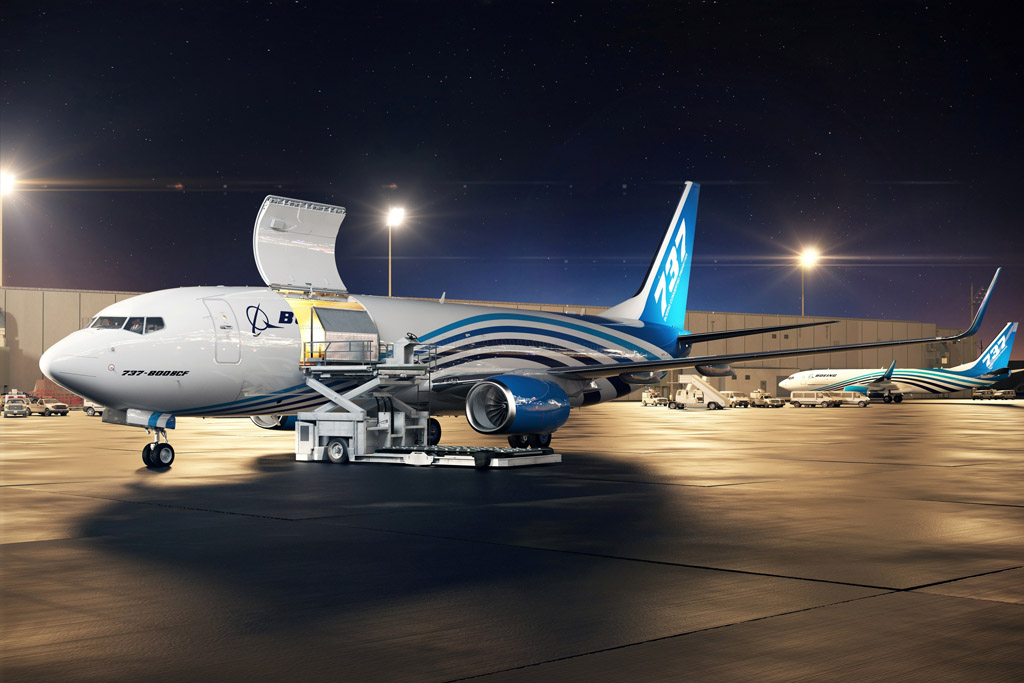
Source : China Aviation Daily/Airbus Photo


BUSINESS/REGIONAL NEWS

MRJ FTA-2 Prepares for Flight This Month

Mitsubishi Aircraft says the second prototype for its MRJ regional jet program is undergoing engine tests, as it readies for its first flight.

In a newsletter, the Japanese manufacturer says FTA-2 will move forward with taxi tests this month, followed by flight tests.

This follows the completion of the first phase of flight tests for the FTA-1. On April 13th, FTA-1 started receiving “planned modifications” that will be completed in the middle of this month. It will also be fitted with instruments necessary for upcoming tests.

Mitsubishi says it has been conducting flight tests on FTA-1 on consecutive days since mid-March, whenever weather conditions permit. These tests include flying with only one engine and auxiliary power systems, as well as a functional check on the emergency power generation system.

The MRJ is scheduled for first delivery in mid-2018.  Mitsubishi is using five test aircraft for the flight campaign.

Source: Flightglobal/Mitsubishi Aircraft/Photo


OTHER AVIATION NEWS

 Comair 737 Arrives at New St Helena Airport

South African carrier Comair has carried out the first large passenger jet landing at the new St Helena airport.  The Carrier operated a Boeing 737-800 which touched down just after 12:00 noon on April 19th.

British Airways franchise partner Comair recently took delivery of the aircraft – painted in BA livery – which has been configured specifically to serve the Johannesburg-St Helena route.

The initial operation to the island airport was an implementation flight to test the route, ground operations and handling, ahead of commencement of scheduled services.

“We did a few practice approaches just to  make sure we understand the approach,” says the carrier’s operations director, Martin Louw.

“ Safety is always paramount”.

Source : Comair Limited /Flightglobal


  CFM LEAP-1B Engine Receives Joint FAA/EASA Certification

The FAA and the European Aviation Safety Agency (EASA) have awarded type certificates to CFM International’s LEAP-1B engine, paving the way for entry into commercial service in 2017. The LEAP-1B engine is the exclusive power plant for the Boeing 737 MAX.

“The LEAP-1B engine flew for the first time on the Boeing 737 MAX on January 29,” CFM  International said in a statement. “Since then, two more aircraft have been added to the test program in March. To date, these three airplanes have logged a combined total of more than 100 test flights, including completing high altitude flight testing in La Paz, Bolivia, recently.”

CFM International EVP Francois Bastin said, ”Boeing is racking up an impressive number of flight hours with the test aircraft; initial indications are that engine performance is meeting expectations.”

“MAX looks like a very well-run program on the airframe and engine side; reinforced the possibility that maybe they will even be early,” said Teal Group analyst, Richard Aboulafia,

”They have been doing great. Their story is they learned a lot from the 787, that might well be true.”

Source: ATW/Ed’s Research/Boeing Picture


 Airbus to Cut Output of Slow-Selling A380 

European plane maker Airbus plans to cut production of its A380 from 2017 as it struggles to revive sales of the world’s largest passenger jet.

It has told its suppliers to slow production to support an assembly rate of 1.7 aircraft per month from next year, compared with production of just over two a month now.  The exact month in which the slowdown would be felt in Toulouse assembly plant was not immediately clear.  Airbus declined to comment on talks with suppliers.

The company does not publish production figures for its biggest model, but only targets deliveries.  Sales of large four-engine airliners like the 544-seat A380 have been hit by improvements in range and efficiency of smaller two-engined models, which can be easier to fill.

Last year it delivered 27 A380s and has said it expects to continue to break even based on similar deliveries in 2016. It meanwhile continues to cut costs in an effort  to lower the break-even point to as low as 20 aircraft a year.

In February Airbus Group Chief Executive Tom Enders said it had between 20 and 30 A380s on its delivery list in 2017.

At the end of March, Airbus had 135 aircraft on its books that have been sold and are waiting to be produced, mainly for leading customer Emirates which recently topped its order. But after deducting aircraft that are unlikely to be delivered, analysts say the order situation is weaker.

Air France Has canceled two and replaced them with A350s.  Another 10 listed anonymously are believed to have been canceled by Hong Kong Airlines and 20 are allocated to leasing firm Amedeo, which are seen as unlikely to enter production until the lessor places them with airlines.

Analysts also say Qantas and Virgin Atlantic are unlikely to take a combined total of 12 of the jets.  The Project received a boost earlier this year when Iran announced a preliminary order for 12 A380s as it emerges from sanctions, but doubts remain over how quickly the order can be finalized as Iran faces continued financial restrictions.

Source : Business Insider/ Photo Air France


LATEST NEWS IN BRIEF  

  • CFM International has delivered the first ship set of LEAP-1A production engines to Airbus to power the A320neo.
  • Avianca Holdings, one of Latin America’s largest airline operators, said it has negotiated a ‘significant reduction” in aircraft deliveries from 2016-2019 with Airbus.
  • Avolon delivered one Boeing 787-800 to Thai Lion Air.  This is the First Avolon aircraft on lease to Thai Lion Air.
  • GE Capital Aviation Services (GECAS) delivered a leased Boeing 737-800 aircraft to its new Thai customer, NewGen Airways, to expand the carrier’s fleet.
  • Trident Jet (jersey) Ltd., a sister company of UK-based lessor Falko Regional Aircraft, has ordered four more Bombardier CRJ 900s for lease to Irish regional CityJet.

  • Avolon Ireland-based delivered one Boeing 787-9 aircraft to UK long-haul specialist Virgin Atlantic.
  • Airbus has rolled out the first US-built American Airlines A321 of the paint shop at Mobile, Alabama facility.

  • Horizon Air has ordered 30 Embraer 175 aircraft, with half earmarked for growth under the widely anticipated order. The deal is worth $2.8 billion at list prices including 33 options.
  • Fuji Heavy Industries (FHI) has completed the construction of a facility to manufacture center wing boxes for the 777X at its Handa plant.
  • Honda Aircraft delivered the first Honda Jet in Europe with a ceremonial delivery at AERO 2016 at Friedrichshafen,Germany.  Honda Aircraft’s exclusive HondaJet dealer for Central Europe, Rheinland Air Service, will become the first operator of the aircraft in Europe.
  • China United Airline has taken delivery of its 32nd Boeing 737 aircraft, which is also the 9000th 737 aircraft to be delivered by Boeing.

  • LATAM Airlines Group has unveiled new aircraft livery featuring its new branding. The Carrier’s updated livery features its new logo against an all-white fuselage, with its new corporate colors of indigo and coral on the tail.

AIR CARGO

     Swiss WorldCargo Inks VA-Q-tec Container Agreement

Swiss WorldCargo recently signed a partnership agreement with container manufacturer Va-Q-tec to provide passive temperature-controlled ULDs for the transport of pharmaceuticals and other sensitive goods. The signing ceremony was held at the Zurich offices of Swiss WorldCargo’s parent company, Swiss International Airlines Ltd.

“Va-Q-tec has been requested by pharma customers to establish a partnership with Swiss WorldCargo to enable direct container rentals,” said Dominic Hyde, managing director of Va-Q-tec,LTD.”  Many pharma shippers and forwarders see the cargo division of SWISS as a strategic partner for reliably transporting pharmaceuticals, they want the simplicity of ordering the Va-Q-tec containers through the airline directly.”

Va-Q-tec offers an advanced passive solution portfolio of hard-shell containers that can accommodate up to two pallets at once and maintain temperatures ranging from -70C to 25C. The containers can be delivered to their customers fully temperature pre-conditioned for one-way retail shipments for more than five days on global lanes.

Under the agreement, the global product launch will take place in June, with Swiss WorldCargo and Va-Q-tec continuing to serve existing customers.

Source : Air Cargo World/ Swiss WorldCargo


MILITARY

How the Very First Air Force One Was Saved-Columbine II, President  Eisenhower’s Ride is Back in Action- Part II 

Columbine’s number four engine was not airworthy anymore, so Brian Miklos borrowed a 3350 from another Lockheed Constellation which had recently flown and installed it on the airplane.  The effort took a full year from March 2015 with a team alternating between three weeks in Arizona and two weeks at home in Virginia.

It was an intense effort,” says Brian Miklos.  Finally, the Dynamic crew took off in Columbine II on March 21, 2016, for the first leg of the cross country trip to Mount Pleasant,Texas, then resumed the trip to Bridgewater, Virginia, the following morning.

The vintage Constellation logged about nine hours flight time and performed admirably.”  At one point, we had 234 mph across the ground.  The old girl was up and getting it done!” Miklos says.

Karl Stozfus plans to restore Columbine II back to its Air Force One configuration and return it to the air show scene.  Fortunately, a significant part of its interior is still intact.  Miklos says Dynamic as obtained a similar galley from another Constellation and has detailed information on how the aircraft looked in presidential service.

“The plan is to restore it to just as it was when President Eisenhower was using it.  We have incredible drawings and documentation to support that, right down to color codes and manufacturer’s original materials.”

Source : Popular Mechanics/Photos Ed’s Research


Finally the UK Decided To Go For the P-8A Poseidon 

Boeing seems to be racking orders for military aircraft and it is not done yet.  In late March, the US Defense Security Coorperation Agency (DSCA) — the Pentagon arm for coordinating sales of military equipment to our allies — notified Congress of an impending sale of military aircraft to the United Kingdom.

P-8A_Poseidon_VX-20_Squadron

According to DSCA’s March 24 notification to congress, the British government has requested permission to buy nine of Boeing’s P-8A Poseidon maritime patrol aircraft, plus related “major defense equipment, associated training and support,” for a grand total of $3.2 billion.

The UK was looking at different platforms to replace its last retired Nimrod and in the end it appears the UK bit the bullet and decided to buy the Cadillac of maritime sub-hunting aircraft, Boeing’s P-8A Poseidon.

Source : Boeing/Boeing Picture


Researched and Compiled by : Ed Kaplanian

Commercial Aviation Advisor

Contact – ed@kaplanianreport.com


The Kaplanian Report – June 2016

ON THE BOEING FRONT

Boeing and GE work Together to Ready the                                           777X Engine for Flight Tests 

Designing, building and ground testing the world’s largest turbofan is challenging enough, but the challenge is how to safely put this large engine through the rigors of flight testing on the wing of an aircraft for which it was not designed is another again.

That is a key question General Electric and Boeing engineers face as they wrestle with the mechanics of flying the GE9X engine for the 777X on GE’s 747-400 flying testbed in 2017.

Although rated at 105,000 lb. thrust, less than the GE-90-115B, so far the world’s largest engine, the drive for efficiency and higher bypass ratios means the GE9X is physically much larger.

With a bypass ratio of 10:1 and fan diameter set at an unprecedented 134 in., the overall size of the GE9X nacelle has grown to 178 in. The GE90-115B, which has a fan diameter of 128 in., was the previous record-holder.

To fly the engine on the testbed, the internal wing structure was strengthened; with the GE9X in mind when the 747-400 was modified for the test role starting in 2014.

Further modifications are also planned to reduce the chances of aeroelastic interaction between the extended wing of the 747-400 and the GE9X mounted on the inboard left strut.  GE has already removed the standard winglets because these add unnecessary weight and maintenance burden to the aircraft’s flight test role.

More about the testing in my upcoming reports.

Source : Avweek/GE/GEPhotos


ON THE AIRBUS FRONT 

The Airbus Beluga XL: New Transport                                                 Based on the A330 Takes Shape

The first of Airbus’ five new BelugaXL air lifters will begin to take shape early next year, initiating the creation of a new jetliner fleet to transport complete sections of the company’s aircraft from production sites around Europe to final assembly in France, Germany and Spain.

Beluga XL’s lower fuselage will be the same as the freighter version of the Airbus A330-200 jetliner and is to be built on the A330 final assembly line adjacent to Toulouse-Blagnac Airport in southwestern France.

The Beluga XL’s other aerostructure-specific components are provided by external suppliers, including the significantly enlarged upper fuselage, the modified forward section with a lowered nose and cockpit, a large forward cargo door allowing “roll-on-roll-off” loading directly onto the main deck and a pair auxiliary vertical tailplane end-fins.

Once a lower fuselage for Beluga XLs is completed on the final assembly line, it will be moved to Building L34 at Airbus’ Lagardere industrial zone adjacent to Toulouse-Blagnac Airport, where the build-up process into the outsized airlifted will take approximately 12 months per aircraft.

The five Beluga XL aircraft will join the existing fleet of five A300-600ST Super Transporters-which are based on the A300 jetliner.

Source : Airbus/Airbus Picture


BUSINESS/REGIONAL NEWS

Gulfstream’s G650ER Blazes Trail from Sydney to Los Angeles

Gulfstream’s G650ER recently set another city-pair record on a trip from Sydney, Australia, to Los Angeles, the Savannah, Ga.-based aircraft manufacturer announced on May19th. The G650ER travelled 6,620nm in 12 hours and 40 minutes, departing Sydney Airport at 7:11 a.m. local time on March 11 and landing at Los Angeles International Airport at 1:51 a.m. local time on March 11.  It averaged a speed of Mach.86 during the trip

The U.S. National Aeronautic Association has approved the record, the trip is pending approval by Federation Aeronautique Internationale in Switzerland for recognition as a world record. This city pair will join the more than 55 world records established by the G650 and its longer-legged G650ER sibling. The 650ER is designed to fly as fast as 7,500 nm at Mach 0.85 and 6,400 nm at Mach 0.90. The aircraft has a maximum speed of Mach 0.925.

Source : Business Aviation/ Photo Gulfstream Aerospace


 Lufthansa Technik Bags VIP 787 Modification Deal

Lufthansa Technik has won a modification and support contract for a Boeing 787 that will be completed as a VIP aircraft.

The new agreement covers not the VIP completion itself, but rather modifications based on a service bulletin issued by the airframe, says Lufthansa Technik.

This includes the aircraft’s galleys and crew rest compartments plus adjustments to the IFE and Communication systems.

Lufthansa Technik adds that the 787-8 will arrive as a “green aircraft” at the MRO provider’s Hamburg headquarters in early autumn; the project is scheduled to be completed over the course of two months.

In addition to modifications, the MRO specialist will provide technical services for the undisclosed operator.

Source : Flightglobal/Lufthansa Technik


OTHER AVIATION NEWS

Eight Asia-Pacific Low-Cost Carriers Form Alliance

Eight Asia-Pacific low-cost carriers (LCCs) have formed a new standards-based collaborative marketing group, using IATA New Distribution Capability (NDC) digital interoperability standard.

The group, called Value Alliance, comprises Philippines – based Cebu Pacific, Korea-based Jeju Air, Thailand’s Nok Air and Japan’s Vanilla Air.  It said it is already talking to several other LCCs about expanding membership.

The Value Alliance covers more than 160 destinations in the region with combined fleet of 176 aircraft. It offers a web side allowing passengers to book tickets and extra services, such as additional baggage and meals across the group’s airlines, according to a statement.

Scoot CEO Campbell Wilson said the grouping will offer “a wider choice of destinations and flights – at the most competitive airfares – all in one go.”

Membership in the Value Alliance is by invitation only.  In 2015, its member airlines collectively served more than 47 million travelers from 17 hubs.

Source : ATW


Qantas Talking to Boeing On 777X

Qantas said it will keep its Airbus A380s in service beyond 2020 as it conducts talks with Boeing on its next generation 777X jets.

“The A380s do a great job on the markets that they operate,” said Garth Evans, head of the company’s international business.  Qantas currently operates a fleet of 12 A380s.” They are big units on big thick routes like Los Angeles and London, flying into slot-constrained airports.” said Evans. ”You want to have a fleet

that is simple, but you need to have vehicles that do the right job for you.”

While an order is not imminent, Evans said conversations with Boeing revolve around the “scope and Capability” of the 777X.  It will have two variants, a 777-8 that will have a longer range, and the 777-9 that will be able to carry more passengers but have a slightly shorter range.

“It does look interesting though because of its range capability, said Evans. ”When you are an airline that is based in our part of the world, those are things that are important to you, an aircraft that can reach major cities around the world out of Australia is attractive.”

Source : Airwise


 China’s Ruili Airlines Orders Six Boeing 787-9s

Kunming-based Ruili Airlines has ordered six Boeing 787-9 aircraft in a deal valued at $1.54 billion at list prices.  The aircraft will be used for international expansion. A delivery schedule was not released.

16051810081416

Launched in May 2014, Ruili operates a fleet of nine aircraft on 16 domestic routes with 46 daily departures.

The carrier plans to expand its fleet to 11 aircraft by the end of this year and to 80 aircraft by the end of 2025.

In 2015, Ruili committed to buy 30 737-MAXs with a financial support of AVIC International Leasing at the Paris Air Show.

Other Chinese carriers have also ordered Boeing 787-9 aircraft: Air China ordered 15 787-9 aircraft and received its first one on May 18, China Eastern has ordered 15 787-9s and Hainan Airlines has 30 787-9s on order.

Source : China Aviation Daily/Picture Ruili Airlines/Boeing


LATEST NEWS IN BRIEF  

  • The Airbus A350-900 has gained extended-range twin-engine operations (ETOPS) approval from FAA for routes that require beyond 180 minutes diversion time.
  • VietJet, Vietnam’s low-cost carrier, signed an order for 100 Boeing 737 Max 200, making it the second customer to commit to the high-density variant after Ryanair.

  • GE Capital Aviation Services (GECAS) revealed the delivery of a new leased Boeing 787-9 aircraft powered by GEnx engines to Air Canada as part of a purchase and leaseback transition with the airline.
  • Lithium Ion Batteries will be installed on A350-900 aircraft delivered to customers by the end of the year.
  • Leap 1A powering the A320neo has been granted type certification by the European Aviation Safety Agency (EASA) and the U.S. Federal Aviation  Administration (FAA)
  • Air China took delivery of its first Trent !000 powered 787-9.
  • Xiamen Airlines took delivery of its 15th 737-800; with the delivery of this aircraft Xiamen expanded its all Boeing fleet to 154 aircraft.
  • Pratt & Whitney obtained certification from the FAA for its PW1400G-JM engine to power Russian aircraft manufacturers Irkut’s MC-21 Aircraft.
  • J-Air Corp Japan Airlines Subsidiary has introduced its Embraer E190 jet in Japan.

jal-j-air-mrj70-11fltjallr

  • Mitsubishi Aircraft second prototype of the MRJ regional jet conducted its first flight on May 31st.
  • United Airlines launched its nonstop service between San Francisco International Airport and Singapore’s Changi Airport.  Measured by distance, the new route will be the longest scheduled 787 Dreamliner flight operated by any airline, covering a distance of 8,446 miles.


AIR CARGO

Two of the World’s Top Three International                                  Cargo Carriers Have Joined Forces

Lufthansa and Cathay Pacific rank second and third, respectively, among all airlines in international cargo traffic, training only Emirates.  So their formation of a joint network to connect Hong Kong to Europe is an interesting move.

Regarding the agreement itself, the carriers said it would take the form of “a highly integrated bilateral corporation.” Lufthansa and Cathay say they “will work closely together on network planning, as well as sales, IT and ground handling.” Further, customers will be able to access the entire joint network through either of the partners’ booking systems or the two carriers will offer joint handling at their hubs in Hong Kong and Frankfurt.

The agreement covers 140 direct flights per week between Hong Kong and thirteen cities in Europe.  Cathay’s Director of Cargo, said: ”Cathay Pacific’s large number of direct connections to multiple European destinations fits perfectly with Lufthansa’s strength in Frankfurt, the most important air freight hub in Europe through its dense feeder-network.” Peter Gerber, CEO of Lufthansa Cargo pointed out that the deal would give customers more flights to choose from with a combination of feeder and direct flights.”

LHcargo

Implementation of the partnership is still some way off.  The first shipments covered by the agreement will not fly until 2017, then only westbound from Hong Kong to Europe.  Eastbound shipments will become available in the course of the year.

Source : Air Cargo World/Photos Lufthansa & Cathay Pacific


                                    MILITARY NEWS

                                          The C-130 Just Never Dies

Lockheed Martin started building its latest civilian version of the iconic C-130 Hercules in Marietta, Georgia in late April.The company’s new LM-100J will bring its advancements of the C-130J Super Hercules to civilian operators such as the United Nations.

The C-130 just never dies.  Because almost no other aircraft can do what the Hercules does best: reliably haul outsized loads into and out of short, rough airstrips in the middle of nowhere.

“They obviously did its design right,” says Tom Wetherall, director of LM-100J Business Development for Lockheed Martin.  ”It’s been in production for 60 years.

It’s got a high-wing.  It’s a turboprop. The engines and propellers are out of harm’s way. The straight wing yields the efficiency to get in and out of dirt runways, to get the weight off the wheels as soon as possible.  The fuselage is low to the ground at truck-bed height, which combines with rear loading capability.  It’s a configuration that is second to none”

The first C-130 rolled out in 1954.  Since then, Lockheed has built more than 2,500 at it’s Georgia assembly plant.  More than ten variants of the airplane, including AC-130 gunships and WC-130 weather reconnaissance aircraft, serve U.S.and global militaries.

In 1965 Lockheed started making a dedicated civilian version of the Hercules, the L-100, cranked them until 1992.  About 115 L-100s have flown with commercial operators, delivering spare parts and bringing in disaster relief. But these old planes are nearing the end of their useful lives, and companies that fly them are looking for a new airplane – a new Hercules, according to Lockheed.

The LM-100J is based on the C-130J-30, an extended version of the “J” that shares the same length as the L-100.  Like the military Super Hercules, the LM-100J gets new Rolls-Royce AE 2100 D# turboprop engines and six-blade Dowty R391 Propellers.  The airframe features a new center wing-box.  The cockpit comes with Full Authority Digital Engine Control (FADEC) which eliminates the need for a flight engineer, a significant cost savings.

Lockheed Martin planes to roll out the first LM-100J this September. Flight testing begins early next year and the first delivery is slated for the first quarter of 2018.

Source : Popular Mechanics/Photo Lockheed Martin


    Boeing has Received a Seven Year, $319 Million Contract to Continue Maintenance and Support Work for the U.S. Air Force’s C-32A and C-40 BC

On May 17th Boeing announced that it was awarded a $319 million to continue maintaining and supporting the U.S. Air Force’s C-32A and C-40BC executive aircraft.

The Air Force uses the C-32A and C-40BC, which are based on the Boeing 757 and 737 passenger planes, to transport the vice president, cabinet members and military commanders among others.  Boeing has supported the aircraft since first delivery in 1998 and 2001.

The C-32 and C-40 are among the many military derivatives of commercial airplanes that Boeing has built for the U.S. and international customers, offering affordable adaptations of proven airframes and existing worldwide support for military missions.

Source : Boeing/Photo Boeing


Researched and Compiled by : Ed Kaplanian

Commercial Aviation Advisor

Contact – ed@kaplanianreport.com

Volume 3 Issue 3 March 2016

ON THE BOEING FRONT

 Boeing Launches 737-800 BCF Program

Boeing has launched the 737-800 converted freighter program, with orders and commitments for up to 55 conversions. In a statement, Boeing says the modifications will be done at selected facilities near conversion demand, including Boeing Shanghai.

Modifications required include the installation of a large main-deck cargo door, a cargo-handling system and accommodation for non-flying crew or passengers. The first 737-800 Boeing Converted Freighter is expected to be delivered in the fourth quarter of 2017.

???????????????

The aircraft will have the capacity to carry up to 52,800 pounds of cargo, and a range of about 2,000nm. Boeing says 12 pallet positions, comprising 11 standard pallets and one half-pallet, will provide 5,000 cubic feet of cargo space on the main deck. There will also be two lower-lobe compartments, which will provide a further 1,540 cubic feet of cargo space.

GECAS will provide the initial aircraft for conversion, and has also ordered five conversions. Hangzhou-based YTO Airlines and Beijing-based China Postal Airlines have meanwhile signed for 10 conversions each. YTO has also committed to 10 additional conversions. An unannounced customer meanwhile has signed for five conversions with two commitments.

Boeing adds that it has also secured a further 13 commitments from China’s SF Airlines, Bulgaria’s Cargo Air, and an unannounced customer. The 737-800 BCF will primarily be used to carry express cargo on domestic routes.

“While the recovery of the global cargo market has been slow, we see demand for freighters, such as the 737-800 BCF, that will carry express cargo on domestic routes,” says Stan Deal, senior vice president, commercial aviation services, Boeing Commercial Airplanes.

Source : Flightglobal/Boeing/Photo Boeing


ON THE AIRBUS FRONT 

Airbus Group Lifts A330 Output Goal As Profits Meet Expectations                                                         

Airbus Group performed a partial U-turn on plans to cut production of its profitable A330 aircraft on Wednesday February 24th, easing the delicate transition to newer models.

The European plane maker said it now plans to build seven A330 wide body jets per month  from 2017; partially unwinding recent staggered cuts in output to six from 10 a month as it prepares for its new A350 jetliner and an A330 upgrade (the A330neo) .

Demand for the current generation of jets such as the 250-to 300-seat A330 faces a broad decline as a new generation of fuel-saving airplanes enters the market.

The move to reconsider the decline of one of its two main sources of cash and profits came weeks after Iran provisionally agreed to buy 45 A330 jets as part of a $27 billion deal following the lifting of sanctions. Airbus said it would have gone ahead anyway because of other deals.

“That should be enough to put a floor under production until a revamped version of the A330 enters service at the end of 2017”, Chief Executive Tom Enders said.

Source : New York Times.90


BUSINESS/REGIONAL NEWS

Embraer Rolls Out E190-E2 Aircraft

Embraer has rolled out its first next-generation E-Jet, an E190-E2, at its factory in Sao Jose dos Campos, Brazil. The E-190-E2’s first flight is slated for the second half of 2016 with first deliveries expected to take place in 2018. The E2s are exclusively powered by Pratt & Whitney PW1900G geared turbofan engines.

Before a crowd of several thousand Embraer employees and invited guests – following flyovers from aircraft from Embraer’s three aviation divisions (commercial jets, executive jets and defense systems) and a welcome greeting from Embraer president and CEO, commercial aviation Paulo Cesar Silva – the doors of hanger F-300 slowly opened to reveal the first assembled prototype of the E190-E2jet, which gradually rolled out onto the tarmac before stopping, its nose several meters away from the gathered crowd.

“The rollout on February 25th marks the completion of the assembly of the first E190-E2 and paves the way for the start of the tests that will lead to first flight,”  Embraer SVP operations and COO-commercial aviation Luis Carlos Affonso said.

Four prototypes of the E-190-E2 will be created for the aircraft’s certification process. Assembly of the second prototype is underway; it recently had its wing junction completed, Affonso said.

To date, the E2 program has 640 commitments, comprising 267 firm orders and 373 options and purchase rights.

Source : ATW/Embraer Photo


    Gulfstream Starts G600 Systems Testing on Iron Bird

Gulfstream has begun simulated flight tests on the G600 Iron Bird ground rig preparation for the first large-cabin, long-range business.

During the 30 minute “flight”, the Iron Bird-housed at the airframe’s Savannah, Georgia headquarters-simulated taxi, take-off and landing, says Gulfstream. It also performed simulated maneuvers and transitions at different altitudes and airspeeds.

“This first flight sets in motion the testing and validation required for the G600’s actual first flight,” says Dan Nale, Gulfstream’s senior vice-president for programs, engineering and test. ”With the Iron Bird, we can confirm the characteristics of the system components, improve the integration maturity, make modifications and provide those benefits in a lab environment, all while on the ground and still in design stage, to the benefit of the flight-test aircraft.”

Gulfstream says the first G600 flight-test model and structural test vehicle are in production in Savannah.The 6,200nm (11,500km) Pratt & Whitney Canada PW815Ga- powered twin is scheduled to enter service in 2019 – a year behind its shorter-range stablemate, the G500.

Source : Flightglobal/Gulfstream


OTHER AVIATION NEWS

GE Aviation Finishes the Assembly of the First GE9X Test Engine

GE Aviation has completed the assembly of the first GE9X test engine at its Peebles, Ohio facility. It will shortly begin ground runs of the 100,000 kb-thrust (445kN)-class power plant for the 777X.

“The engine is assembled, it is just a matter of adding lots of instrumentation,” says GE9X program manager Bill Millhaem. Tests will begin “soon” he says, although declines to offer a precise date.

The GE9X features a basket of advanced technologies as GE strives to reduce weight and improve engine performance to deliver a 10% reduction in specific fuel burn over the  current-generation GE90.

These include use of ceramic matrix composites (CMC) on the inner and outer combusted liners, plus stage 1 and 2 nozzles and stage 1 shroud in the high pressure turbine.

“The first engine to test (FETT) wraps up the extensive technology maturation program for the GE9X engine program. It began five years ago and has included component-level, system-level and core demo testing to validate the advanced technologies and materials in the new engine,” GE said in a statement.  The CMC parts have so far performed “phenomenally”,said Millhaem.

The maiden sortie of the GE9X, using a company owned 747-400 flying testbed, is due to take place in mid-2017.  Engine certification is scheduled for October 2018.

Source : Flightglobal/GE Aviation


 Ryanair to Offer All Business 737-700 for Charter

Budget carrier Ryanair is to offer a Boeing 737-700 for corporate charter services, the aircraft configured with just 60 business class seats.

Ryanair – which acquired a 737-700 last year, indicating it would serve as a back-up and training jet – says that it is offering charter with the type.  The carrier’s regular mainline fleet comprises the larger 737-800.

The aircraft will be operated on routes up to 6 hours and the passengers will be offered a cabin fitted with leather seats, at a pitch of 48in, and fine dining on-board catering.

The airline will provide the cockpit and cabin crew.  Its a charter for hire division says the aircraft will be made available on a “cost per hour” basis, with overall quotes depending on the departure and arrival airport. “We offer the most competitive rate in Europe,” it said.

Source : Flightglobal/RyanairPhotos


Emirates Tim Clark Blasts Airbus for Confused Strategy On Wide Body Jets                                             

Emirates President Tim Clark faulted Airbus for lacking a coherent strategy on its biggest airliners; saying the plane maker should focus on an upgrade of its A380 super jumbo rather than spend resources on yet another variant of its new A350.

“Airbus’s thinking has become increasingly hard to read and talk further extending the stretched A350-1000 makes little sense”, Clark said on Thursday, March 10th at the ITB travel fair in Berlin. He added that he is not sure the manufacturer could afford to fund the project along the upgraded A380 he is keen to buy.

“There seems to be a certain amount of cloudiness,” Clark said. “They’ve got the A380 and then bingo, out pops the new A350-1000. I am not quite sure how that’s going to pan out.”

As the world’s leading wide body operator, Emirates exerts influence over the models that Airbus and The Boeing Co. develop.  The Dubai based carrier has made the A380 the centerpiece of its fleet, adding flourishes such as bars and showers. Emirates is eager to buy as many as 200 upgraded planes, even as a lack of orders from other carriers puts the model’s future in doubt.

Clark is evidently running out of patience after John Leahy, Airbus’s sales chief, said on March 1st, that there’s “nothing imminent” about the A380 re-engining plan and that even if the  Neo were available, Emirates is “not in a position to go ahead” until the mid-2020s because of lack of airport space.

Clark said that’s wrong and the Gulf carrier would be happy to take the aircraft from 2021 if Airbus builds it. Airbus said it could not immediately comment.

Airbus’s increasing focus on a double-stretch A350 is of less interest to Emirates because the plane would compete with the largest version of Boeing’s revamped 777X – an aircraft it’s already taking. Clark said a bigger A350 would add weight and create issues at airports from the extra length.

Source : Bloomberg/Emirates


LATEST NEWS IN BRIEF  

  • Air Canada on February 17th Air Canada announced that it has entered into a Letter of Intent with Bombardier Inc. to acquire up to 75 Bombardier CS300 aircraft powered by Pratt & Whitney PW1500 G engines.
  • Etihad Cargo has taken delivery of a new Boeing 777-200 LRF freighter that will enable the freight arm of Etihad Airways to continue its expansion plans into 2016.

  • Boeing gets U.S. license to talk deals with Iranian airlines about buying jetliners; but it would need additional U.S. approval to make sales.
  • British Airways jet that caught fire in Las Vegas airport last year is being repaired and will reenter service. A team from Boeing carried the repair and the aircraft has flown to Victorville, California for painting.

  • Oman Air  has agreed to a three year wet leasing deal for two Kenya Airways Boeing 787-8s.
  • Ukraine International Airlines will replace its 737 Classic fleet with newer types through the end of 2018. The carrier took delivery of a 737-800 on January 22nd and announced plans to expand the fleet with six of the type this year.
  • Iran Air placed a firm order for 20 ATR 72-600s and took options on a further 20, valued at $1.1 billion at list prices.

  • Travel Service Czech leisure carrier is aiming to operate 40 Boeing 737-MAX 8s by 2025 and has just leased a further 16 aircraft, increasing its commitment to 25 of the type.
  • Air Niugini ordered four Boeing 737 MAX 8 aircraft. The previously unidentified order adds to the Papua New Guinea national carrier’s fleet of Next Generation 737s and 767-300ERs.

  • Philippine Airlines signed a memorandum of understanding (MOU) to purchase six A350-900s. The Order is valued at $1.8 billion at list prices.
  • Airbus the first Airbus A321neo equipped with CFM International Leap-1A engines completed its maiden flight on February 9th from Hamburg, Germany.


AIR CARGO

     Kalitta Air to Diversify with 767 Freighters 

Kalitta Air relies on a fleet of 747 freighters for the long-haul flights it is known for carrying large payloads, including heavy machinery, delicate medical equipment, perishable foods, even livestock. So what’s with 767s the cargo carrier is now purchasing? 767s may be the go-to freighters for the integrators, but they’re rare in general freight world.

The answer is a combination of fleet maintenance requirements and a strategy shift at the Michigan-based carrier.  “The time is right for Kalitta to develop in the domestic market”, said Pete Sanderlin, the vice president and general manager, and the number two guy behind CEO and owner Conrad “Connie” Kalitta. Right now, Kalitta Air operates thirteen 747 freighters, three of which are 30 years old 747-200s.Sanderlin said it’s getting difficult to secure parts for the -200s,and since five of the 747-400s are tied up in DHL operations,Kalitta Air does not have many freighters available for other business.

The Airline recently purchased four 767-300 passenger aircraft, two of which are being converted to freighters by Bedek in Tel Aviv.  ”We got them because we want to diversify,” Sanderlin said, adding that most of Kallita’s work is on the international stage.  “We do little in the U.S. domestic market,” he said.  But the plan is to test the waters with the new freighters.

Of course, bringing in new freighter type does not mean abandoning the old. In addition to acquiring the 767s, Kallitta Air also plans to expand its fleet with more 747s. In fact, Sanderlin said they are in negotiations right now to purchase another 747-400 freighter.

Kalitta Air is not a huge airline, but with 1,500 employees and almost 20 freighters, it’s not small by any means.  In addition to the airplanes, Kallitta Air has its own engine shop, airframe maintenance facility and training facility with three simulators, which Sanderlin said is unmatched by carriers of its size.

Perhaps one reason Kallita Air has continued to thrive is because it does so much in house. Another reason is leadership. ”Connie is very close to the business, very hands on,” Sanderlin said. He added that he and Kalitta make most of the decisions together.

Source : Air Cargo World /Picture Kallitta


MILITARY

                        Boeing’s Second KC-46A Achieves First Flight 

Boeing’s second functional KC-46A has joined the fledgling pegasus fleet as the US Air Force’s next-generation tanker program advances towards a production decision by the Pentagon in April or May.

The fourth engineering and manufacturing development (EMD) aircraft took flight from Boeing’s Paine Field in Washington state on the second of this month and landed at Boeing Field in Seattle.

The company announced the flight in a statement and confirmed that the second 767-2c aircraft (EMD-3) used for FAA and military type certification will join the tanker program in April.

“Adding a second tanker to the flight test program is very important as we move into the next phase of testing,” US Air Force KC-46 system program manager Col. John Newberry says.  ”The team will initially use the aircraft to test mission system avionics and exterior lighting. Later, it will share the air refueling effort with the first KC-46.”

Adding the second fully configured tanker will help Boeing move through “receiver certification” for 18 aircraft types.  KC-46 has already demonstrated functionality with the Locheed Martin F-16, Boeing F/A-18 and refueling from a Boeing KC-10.

Source : Flightglobal/Boeing


Researched and Compiled by : Ed Kaplanian

Commercial Aviation Advisor

Contact – ed@kaplanianreport.com