Volume 2 Issue 11 The Kaplanian Report

COMMENTARY

             What is the Cost of a Used Boeing 777?

When Delta Airlines CEO Richard Anderson said a few weeks back that his airline may be interested in acquiring used rather than new airplanes, shares of both Boeing and Airbus lost 4% of their value. The striking part of Anderson’s comment was a 10-year old 777 could be purchased for $10 million, compared with a new 777-200ER which carries a list price of $277.3 million and likely purchase price of about $194 million, assuming a 30% discount.

The day Anderson made his comments, my source found an eight-year old 777-200ER on offer for $68 million, a far cry from $10 million.

In a presentation last year, Ascend Advisory, a division of Flightglobal and leading appraiser of used aircraft, put a value of about $65 million on a seven-year old 777-300ER (a larger version of the 200ER with longer range).The list price for a new 777-300ER is $330 million(2014 price). It trails only a 747-8 as the most expensive plane Boeing builds and sells today.

A significant number of wide-body aircraft like the 777 and the Airbus 330 are coming off leases in the next few years. According to a press release from Delta, ”A large number of leased wide body aircraft are being returned to lessors and manufacturers, causing a glut in the market,”

Where is the truth? Probably somewhere between $10 million and $60 million for a used 777-200ER. The low-end is probably too low, just as the high-end is J P Morgan’s thinks a 10-year-old 777 is more accurately priced at around $43 million.

Now let us come to the crux of this matter. It is worth to note that Boeing and Delta have an uneasy relationship. The two companies have been at loggerheads over the U.S. Export Import Bank (Boeing in favor, Delta against) and Delta buys a lot of Airbus planes, recently ordering 50 new A330s and A350s, and I am sure they got them at a very nice price and financing.

Source : 247 WallSt/ Flightglobal Ascend Advisory / Ed’s Research

ON THE BOEING FRONT

 Boeing Completes 737 Max 8 Power-up

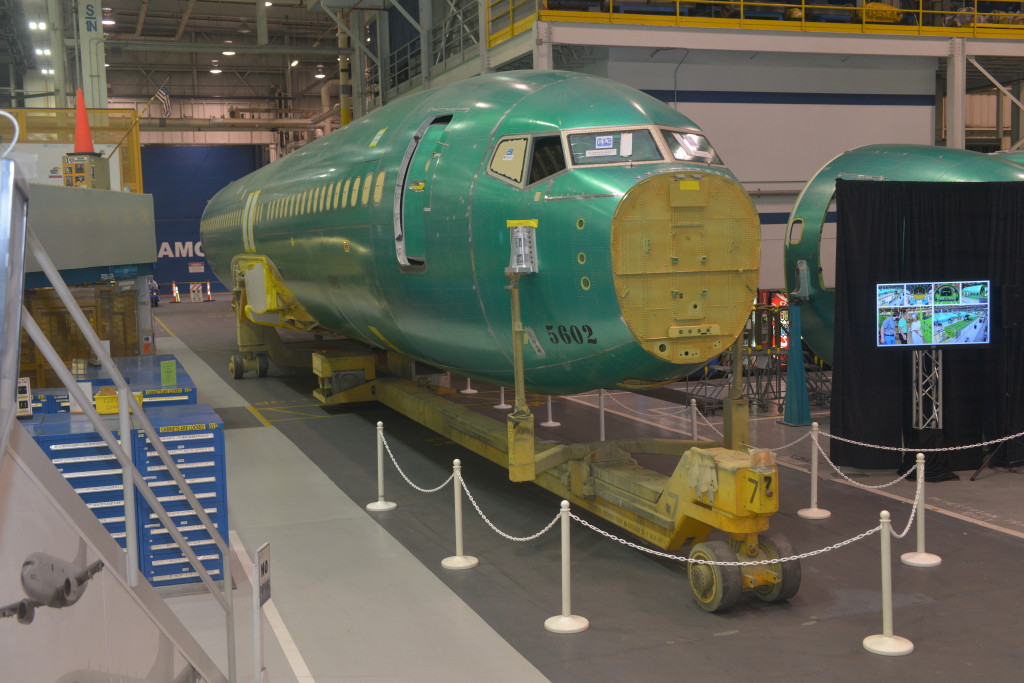
Boeing has completed the power-on milestone for the first 737 Max 8 as the re-engined and updated single-aisle aircraft is pieced together on a new assembly line in Renton, Washington.

The power-on milestone activated a modernized cockpit featuring four 787-style multi-function displays supplied by Rockwell Collins.
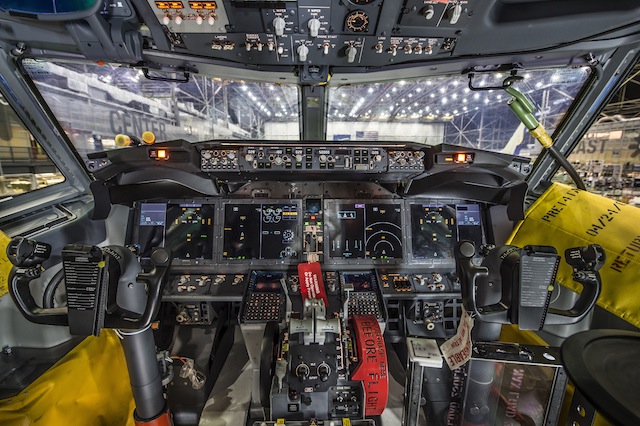
The 737 Max electrical  system was adapted to support the improved cockpit systems, as well as the addition of electronically controlled spoilers.

Boeing plans to roll the first 737 Max 8 powered by CFM International Leap-1B engines off the Renton assembly line by the end of the year, with first flight scheduled for early next year.

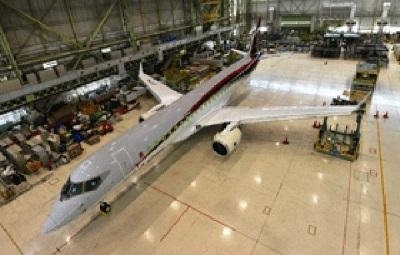
A photo of the first aircraft on the line reveals much progress since the first 737 Max fuselage arrived in Renton in August. The aircraft is installed in the first position of a newly created, first assembly line dedicated for 737 Max flight test aircraft.

The first 737 Max 8 is shown in the picture with wings mated to the fuselage. A tail cone is visible in the picture, but not installed. (The writer has physically seen the aircraft on the line.) (The horizontal stabilizer has been painted but not installed yet).

Source : Boeing


ON THE AIRBUS FRONT 

 Airbus Launches New Ultra-Long Range Version 0f the A350-900

Singapore Airlines SIA) has selected Airbus’ newly launched Ultra-Long Range version of the A350-900 for non-stop flights to the US.  Under an amendment to the carrier’s existing order for 63 A350-900s, seven of the aircraft will now be delivered with an Ultra-Long Range capability for flights of up to 19 hours. In addition, the carrier has placed an additional order for four A350-900s, taking its total firm orders for the A350 XWB Family to 67.

Optimized for non-stop flights to the US, the aircraft, designated A350-900ULR (Ultra-Long  Range),will include a modified fuel system to increase the fuel carrying capacity, an increase in Maximum Take-Off Weight, plus aerodynamic improvements, enabling service to the US West Coast, as well as to New York.

The all-new A350 XWB entered commercial service earlier this year. To date, Airbus has recorded a total of 783 firm orders for the A350-XWB from 41 customers worldwide.

Detail Specifications :

  • The A350 -900ULR incorporates a number of necessary changes over the standard A350-900.These include higher capacity fuel system within the existing fuel tanks, increasing fuel capacity from 141,000 liters  to 165,000 liters.
  • The A350-900ULR has an MTOW of 280 tons. The extended range capability is achieved without installation of additional fuel tanks and the aircraft can be reconfigured easily to the standard A350-900 long haul specification, according to Airbus.

Source : Airbus Industrie


BUSINESS/REGIONAL NEWS

E190-E2 Takes Shape in Brazil 

Embraer has released pictures of the first prototype of its E190-E2, which is in final assembly at the manufacturer’s headquarters in Sao Jose dos Campos, Brazil.
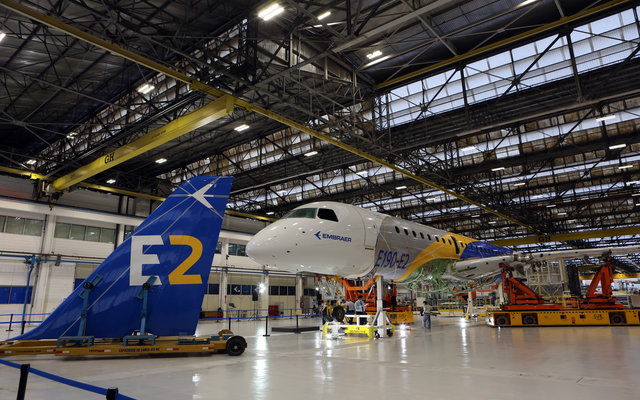
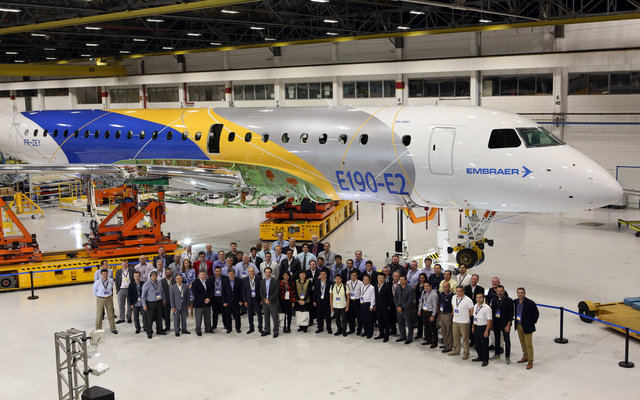
The aircraft, bearing the registration PR-ZEY, is seen resting on struts, with its fuselage join and wing-to-body completed. Painted in Embraer’s blue, yellow and grey livery, the aircraft is without its Pratt & Whitney PW1900g geared turbofan engines. The horizontal stabilizer is also yet to be attached.

Embraer was showing the aircraft to more than 50 airlines and leasing companies, as well as 40 suppliers and trading partners.

Source : Flightglobal/Embraer Pictures


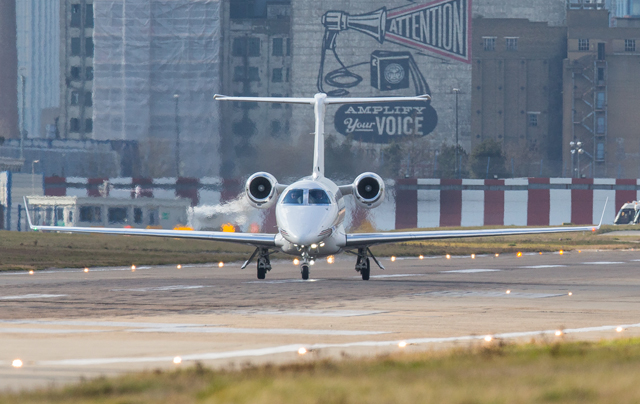
   A Detail Glimpse of the Gulfstream G650

The $65 million Gulfstream G650 is the world’s Top Private Jet. The G650 is the biggest, fastest, and overall best private jet money can buy.

It also takes a lot of patience to get your hands on one. If you want one, you will have to wait years for delivery after you place an order. The plane can fly faster and higher than any commercial jet. The G650 is in a class of its own.

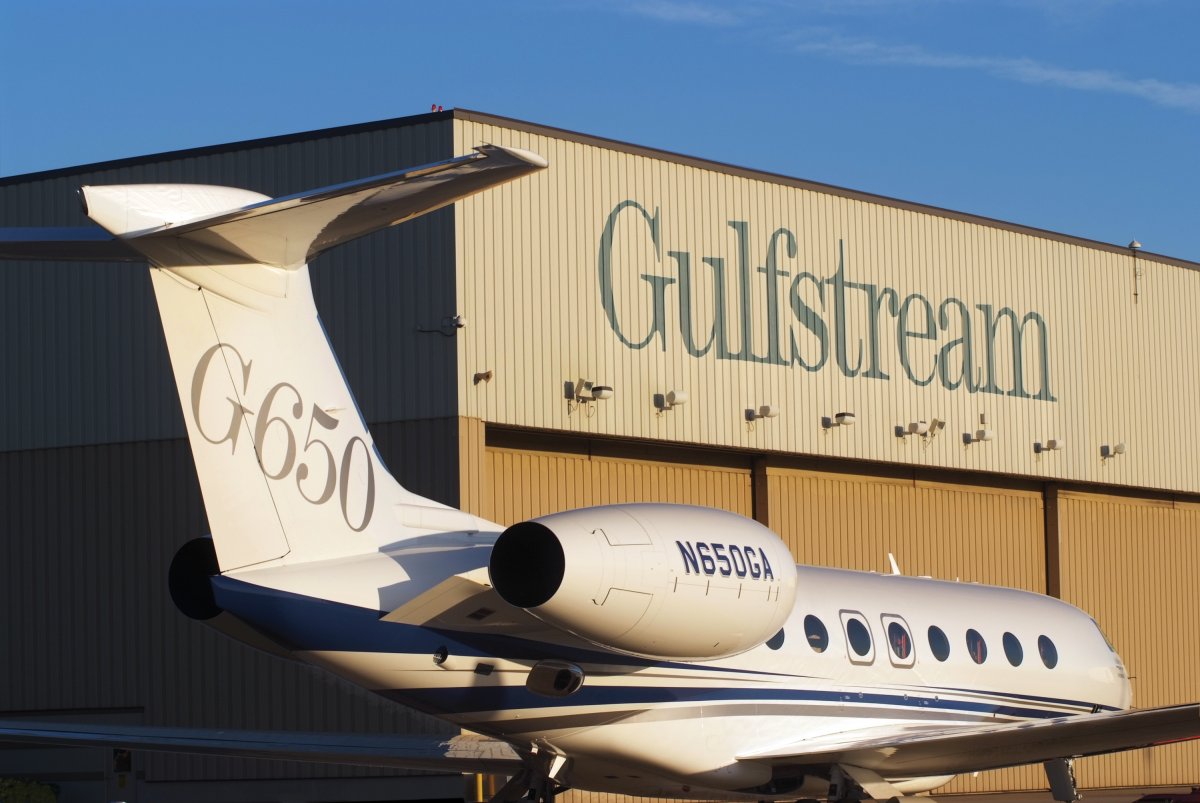
The G650 is the largest purpose-built private jet on the market, and has the tallest, longest, and widest cabin in its class.

At its maximum takeoff weight, it can climb to 41,000 feet (above bad weather and crowded commercial jet routes) in just 22 minutes.

Its range is more than 8,000 miles. Powered with two Rolls-Royce engines, the plane has a top speed of Mach .925 – nearly the speed of sound, and much faster than commercial jets.

Big windows in the cockpit allow the pilots to see the tips of the plane’s wings, helping for navigating on the ground. A camera under the plane’s nose helps them see what’s below the plane.

Source : Business Insider/Gulfstream Pictures


OTHER AVIATION NEWS

Advanced Material for GE Aviation GE90X Engine Have Passed Initial Endurance Testing

Ceramic matrix composites destined for use on General Electric GE90X engine have passed the first phase of endurance testing with no red flags, despite a surprise exposure in an unplanned engine surge.

Boeing expects the 777-9X to enter service in 2020 with two GE90X engines offering 10% lower specific fuel consumption than the GE90-115B engines that power the 777-300ER. Part of that fuel efficiency gain is achieved by raising pressure levels inside the engines, which increases internal temperatures beyond the practical reach of metal alloys.

So GE is relying on CMC’s in several key engine components, including the inner and outer combusted liners, the shrouds around the stage 1 high-pressure turbine and the nozzles for the stage 1 and stage 2 HPT.

CMCs are lighter than metal and can survive in hotter temperatures, but have been rarely used because of concerns about durability, thermal shock and the cost of production.

GE plans to start building the first GE9X core for testing next year, so the engine maker believed it was essential to verify that the CMC materials work as promised.

I will be writing about this subject in my upcoming reports.

Source: Flightglobal/GE Aviation


 The Boeing 777 Has Enabled the Growth of Emirates

Dubai has grown rapidly into the biggest international airline in terms of revenue passenger miles (or revenue passenger kilometers), Dubai-based Emirates has relied primarily on the Boeing 777, and secondarily on the Airbus A380. It is the world’s biggest operator of both.

Two months ago, Emirates took delivery of three 777s in a single day, bringing its total to 150 including 13 freighters (The cargo fleet also includes two Boeing 747s)

Of the 777s, 107 are 777-300ERs seating 354 to 427 passengers. As of September 3rd,Emirates’ 777s had flown 859,053 flights.

The carrier also has 65 Airbus A380s. Additionally, it has orders for 196 Boeing 777s that include the 777-9X and 73 A380s.The Emirates strategy has been to establish a global hub in the Middle East to connect passengers from throughout the world, particularly passengers from Asia and the Middle East to Europe and the U.S. The strategy requires a fleet of long haul aircraft.

The service Emirates offers it passengers is what draws travelers to the airline.

Source : Ed’s Research/Forbes


 Alaska Airlines Increases Overhead Storage Nearly 50 Percent

Alaska Airlines increases overhead storage nearly 50 percent by featuring Boeing new space bins. Alaska will be the launch customer for these bins.

Each Space Bin stores six bags, two more than the current pivot bins installed on Next Generation 737s with the Boeing Sky Interior.

Alaska will take delivery of 34 Next-Generation 737s and one 737 MAX in the next two years and will also begin retrofitting 34 aircraft with the Boeing Sky Interior, primarily 737-900ERs (Extended Range),in 2016.
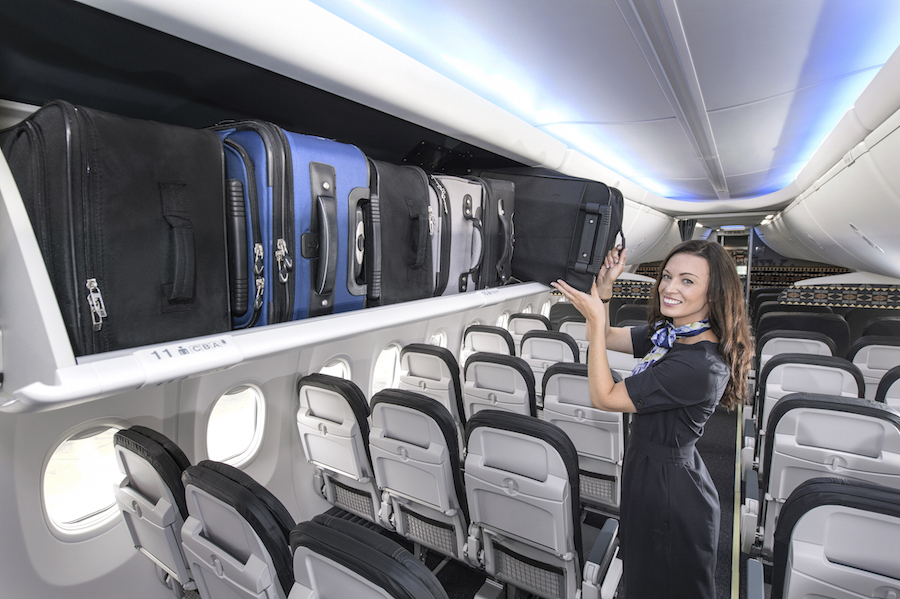
When open, the bottom edge of a Space Bin hangs about 2 inches (5 centimeters) lower, so travelers can lift carry-on bags more easily. The deeper bins allow more bags to be stowed and increase visibility into the back of the bins.

Alaska Airlines also reports that the Space Bins, designed without a flight attendant bin assist mechanism, are easier to close.

Alaska Airlines is installing Space Bins on all 737-900ERS and 737 MAX aircraft currently on order and by 2017 will have 69 aircraft, or 46 percent of its passenger fleet outfitted with Space Bins.

Source : Boeing/Boeing Pictures/Alaska Airlines


LATEST NEWS IN BRIEF  

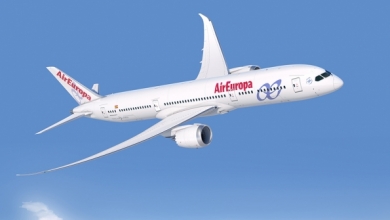
  • Air Europa has unveiled a new color scheme for its fleet ahead of delivery on its own 787s.
  • Boeing announced it has acquired Peters Software GmbH, a market leading provider of European Aviation Safety Agency (EASA)
  • Norwegian Air orders 19 787 Dreamliners for delivery between 2017 and 2020. It is the largest single order of 787s in Europe.
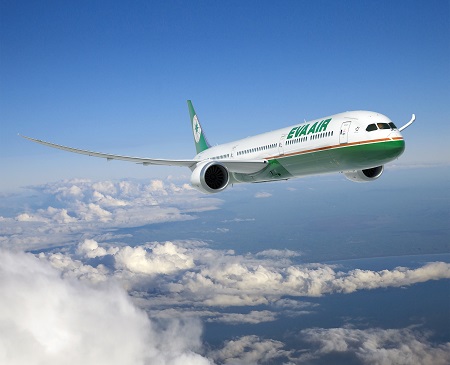
  • EVA Air Taiwanese carrier, has signed an agreement with BOC Aviation for two A330-300 aircraft on long- term lease.
  • EVA Air also announced its intent to purchase up to 24 787-10 aircraft and two additional 777-300ERs, which is valued at more than $8 billion at current list prices. 
  • United Airlines announced a new services contract program with Boeing that is expected to reduce costs and increase efficiency for the airline by providing high-value, mission-critical parts.
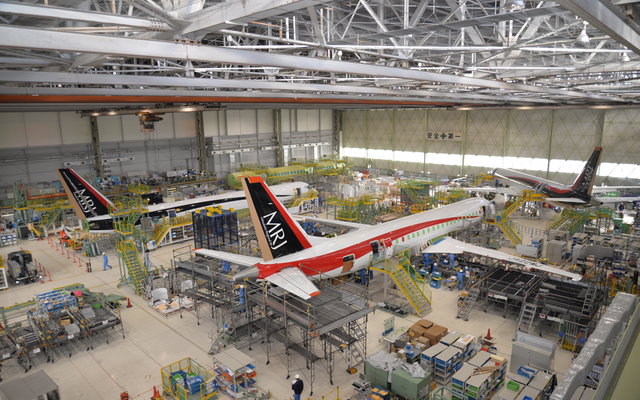
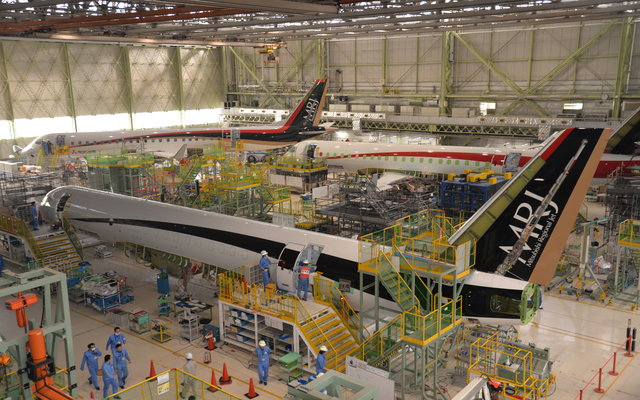
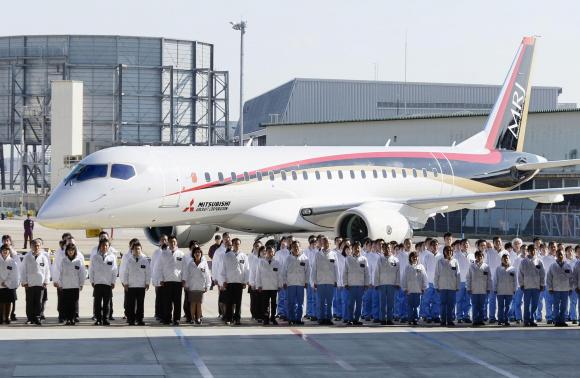
  • Mitsubishi Aircraft Japan’s  Ministry of Land, Infrastructure, Transport and Tourism has given its approval for Mitsubishi Aircraft Corp. to conduct the first flight of the Mitsubishi Regional Jet (MRJ).
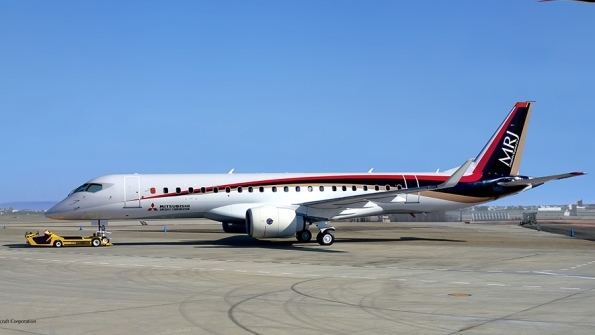
  • El Al Israel Airline signed a firm order for three Boeing 787s, it is finalizing a contract for another six of the type.
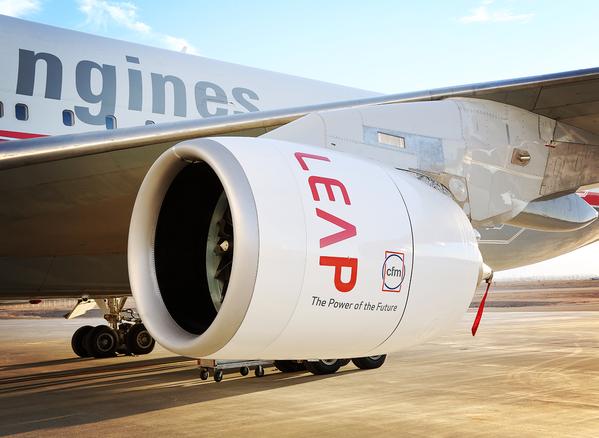
  • CFM International On October 29th CFM international has delivered the first Leap-1B engines to Boeing to power the 737 Max.

  • Jeju Air Korean low-cost carrier (LCC) will rebrand its operations prior to launching an initial public offering (IPO) by year-end.


AIR CARGO

 Volga-Dnepr Delivers an 11-ton Pump 

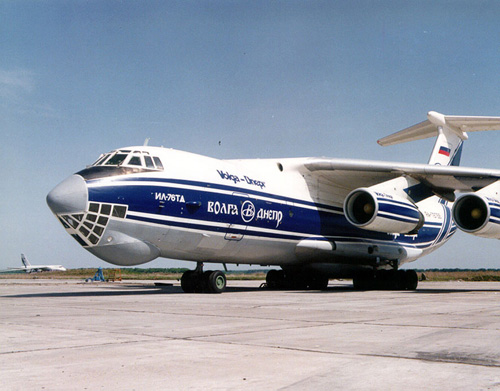
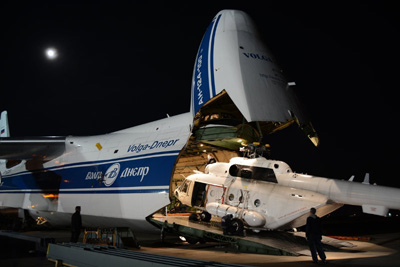
Volga-Dnepr airlines has delivered an 11-ton oil and gas pump right to the door of a customer in the town of Farab, Turkmenistan. The pump was transported from Maastricht Airport in the Netherlands for the airline’s customer, AgilityProjects Rotterdam. It was packed inside two wooden crates to protect it though out its journey on board one of the carrier’s Il-76TD-90VD freighters and by road on arrival in central Asia.

“Agility Projects Rotterdam asked us to not only organize the necessary permits for the flight to Mary International Airport, but to also arrange the transportation of the gas pump overland in Turkmenistan to Farab, where it is used,” said Alexander Kartashov, sales executive for Volga-Dnepr.

Azat Yakupov, senior engineer, dangerous cargo, at Volga- Dnepr said crews loaded the cargo using a trailer and special cradles developed by Volga-Dnepr’s engineers pull the cargo into the airplane, using the aircraft’s built-in rail system.

Source: Air Cargo World


MILITARY

Japan Chooses Boeing KC-46, Halting Airbus Tanker Winning Streak 

Just months after being rejected by South Korea and weeks after first flight, Boeing’s KC-46A has been selected by Japan to supplement the nation’s KC-767 tanker fleet.
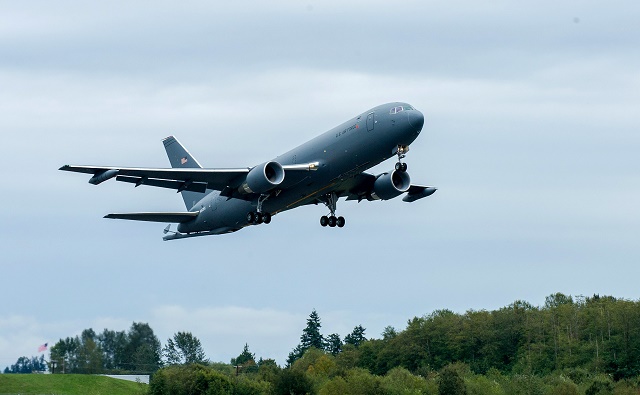
The announcement came from Japanese defend minister Gen Nakatani on Friday October 23rd, and constitutes a significant win for Boeing after a tousled start to the next-generation tanker development program with the US Air Force.

The Pegasus tanker can almost see the end of its development phase, after achieving first flight on September 25th from Paine Field In Everett, Washington,following a roughly nine-month delay.

According to Boeing, KC-46 is particularly attractive to Japan as it will be capable of refueling the Japan Air Self-Defense Force’s planned fleet of Bell-Boeing MV-22 Osprey helicopters.

Japan intends to procure three tankers for fielding in the 2020 time frame, at a cost of more 20.8 billion yen-about $173 million per tanker.

Japan has funding for the tanker acquisition in its fiscal 2016 budget, and Boeing expects to receive a contract next year, so long as things proceed smoothly.

Boeing is building four 767-2C-based tankers in support of the USAF development effort and a low rate production decision is planned for 2016.

Despite delays and cost overruns, Boeing still aims to deliver 18 operational aircraft to the air force by August 2017.

Source : Flightglobal/Boeing


Researched and Compiled by : Ed Kaplanian

Commercial Aviation Advisor

Contact – ekaplanian@msn.com
Volume 2 Issue 9 September 2015

ON THE BOEING FRONT

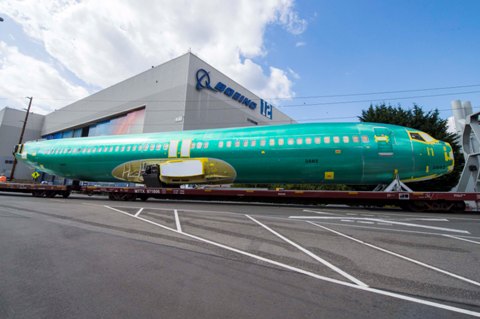
Spirit AeroSystems Celebrate the Completion & the Delivery of the First Boeing 737 Max Fuselage 

Spirit AeroSystems announced it has completed the first fuselage as well as other components for the first Boeing 737 MAX.  Spirit delivers approximately 70 percent of the 737 structure to Boeing including the fuselage, pylon, thrust reverser and engine nacelle at its Wichita, Kansas facility and the wing leading edges at its Tulsa, Okla. facility.

maxfriday

BDN_5800-1024x683

The first 737 MAX fuselage has arrived at the Renton  site on Friday, August 21st.

Assembly of the first MAX is scheduled to be complete by the end of 2015 with the first delivery to customers scheduled for the third quarter of 2017.

The new 737 MAX will deliver 20 percent increased fuel efficiency to airlines versus the original Next-Generation 737. Boeing has already booked more than 2,800 firm orders with 58 different customers.

Source: Spirit AeroSystems/Boeing

Delta Retired  the Very First Boeing 747-400 Built for A Commercial Airline 

The wide body passenger jet (tail number N661) flew its final flight from Honolulu International Airport to Hartsfield Jackson Atlanta International Airport.

delta-nwa-boeing-747-n661us-4*750xx2553-1436-300-300

While it was the first 747-400 Boeing built for Northwest, it was the third to fly for the carrier because Boeing held on it for longer testing.

The Boeing 747-400 was the biggest model of the 747 family when it was released and is the best-selling aircraft Boeing jet.  Boeing sold the first ones for about $150 million each.

Delta’s 747-400s were inherited by Delta, when the two airlines merged. It carries 376 passengers and cruise at about 560 mph, with a range of 7,400 miles.

Since it was delivered to Northwest Airlines it logged more than 61 million miles, enough to make 250 trips from the Earth to the moon.

It will move to Atlanta’s Delta Museum in early 2016.

Source: Minneapolis Biz Journal/Ed’s Research


ON THE AIRBUS FRONT 

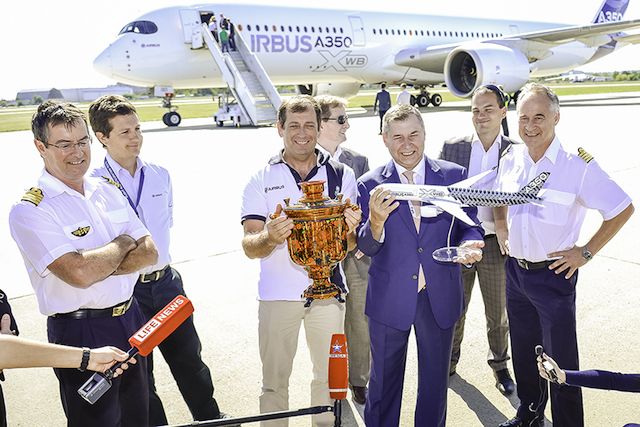
A350-900 Makes Moscow Debut as Aeroflot Continues Review

Airbus has debuted the A350-900 at the 12th Moscow air show (MAK-2015) at least three years ahead of the first delivery to the type’s only customer in Russia.

Airbus A350 test pilot Frank Chapman piloted the A350-900-MSN-001 from Toulouse,France landing on August 24th at the Ramenskoye airport that hosts the biannual air show.

The A350 arrives in Moscow as Russian customer Aeroflot continues to evaluate several details about its original order, including the timing and number of deliveries and current mix of 14 A35-900s and eight A350-800s.

yourfile

Airbus cancelled the A350-800 program last year, Aeroflot remains one of the few customers that have not decided what to do with its order. But Aeroflot has vowed not to cancel the A350-900 order in full. Last year, Aeroflot expected to take delivery of the A350-900s between 2018 and 2020, but not does not discuss a timetable for the aircraft.

Supporting the carrier’s decision likely figured large in Airbus’ decision to bring the A350-900 to MAKS for the first time.

Source : Flightglobal/Airbus


BUSINESS/REGIONAL NEWS

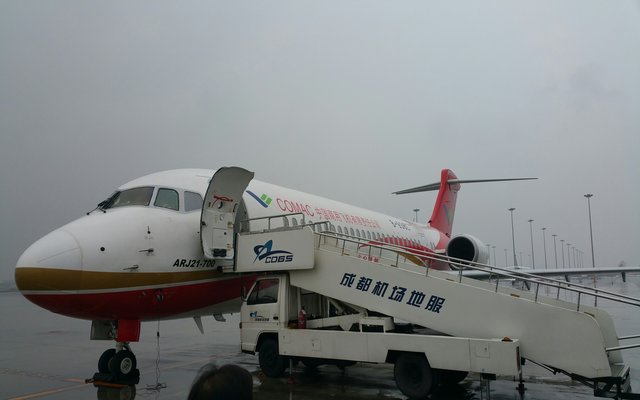
Comac Working Toward November ARJ21 First Delivery Chengdu Airlines

Comac is working toward an internal target to deliver its first ARJ21-700 to launch customer Chengdu Airlines on November 28, 2015.

The  date holds significance for the Chinese airframe since it marks the day the indigenous regional jet took its first flight back in 2008.

yourfile

The Plan is for Comac to deliver two regional jets to Chengdu Airlines this year, which will then be put into commercial passenger service next February.

Vice Chief Designer at Comac said Comac is still working on making changes to the ARJ21 despite receiving type certification from the Civil Aviation Administration of China(CAAC) last December.  He adds that while these issues do not relate to the safety of the aircraft, they could affect the operational efficiency of the jet.

Examples include changes that need to be made to improve how the aircraft’s anti-icing system functions in the event of a single-engine operation, as well as to the warning system to help enhance pilot’s operational awareness and help them better anticipate possible flying situations.

Source : Flightglobal/Photo Comac


OTHER AVIATION NEWS


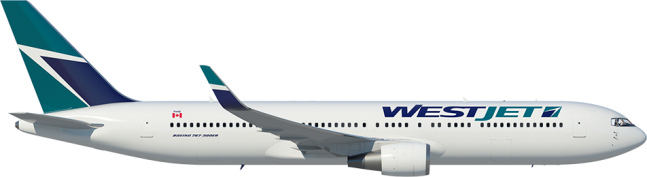
WestJet Adds First Widebody to Fleet with Delivery of  Boeing 767-300 ER   

WestJet has taken delivery of its first Boeing 767-300ER, adding a wide body aircraft to its fleet for the first time.

 WestJet-Boing-767-300ERW

The Calgary-based low-cost carrier (LCC) has operated an all 737 fleet since its founding in 1996, and in 2013 launched a Bombardier Q400 regional subsidiary called WestJet Encore.  The airline is slated to take delivery of four 767-300ERs over the next eight months, with the fourth expected to arrive just before it launches 767 flights to London Gatwick in May 2016.

The first has arrived at WestJet’s base in Calgary and will be used on flights between Toronto and Calgary for several months, the carrier said.

The next two 767s will arrive this fall,and WestJet will launch 767 flights between western Canada and Hawaii and between Toronto and Montego Bay for its winter schedule in December.

The airline’s 767s will seat 262 passengers, including 24 in premium economy, but will have no first or business class seats.  The aircraft will be able to fly up to 11 hours.

Source : ATW/WestJet

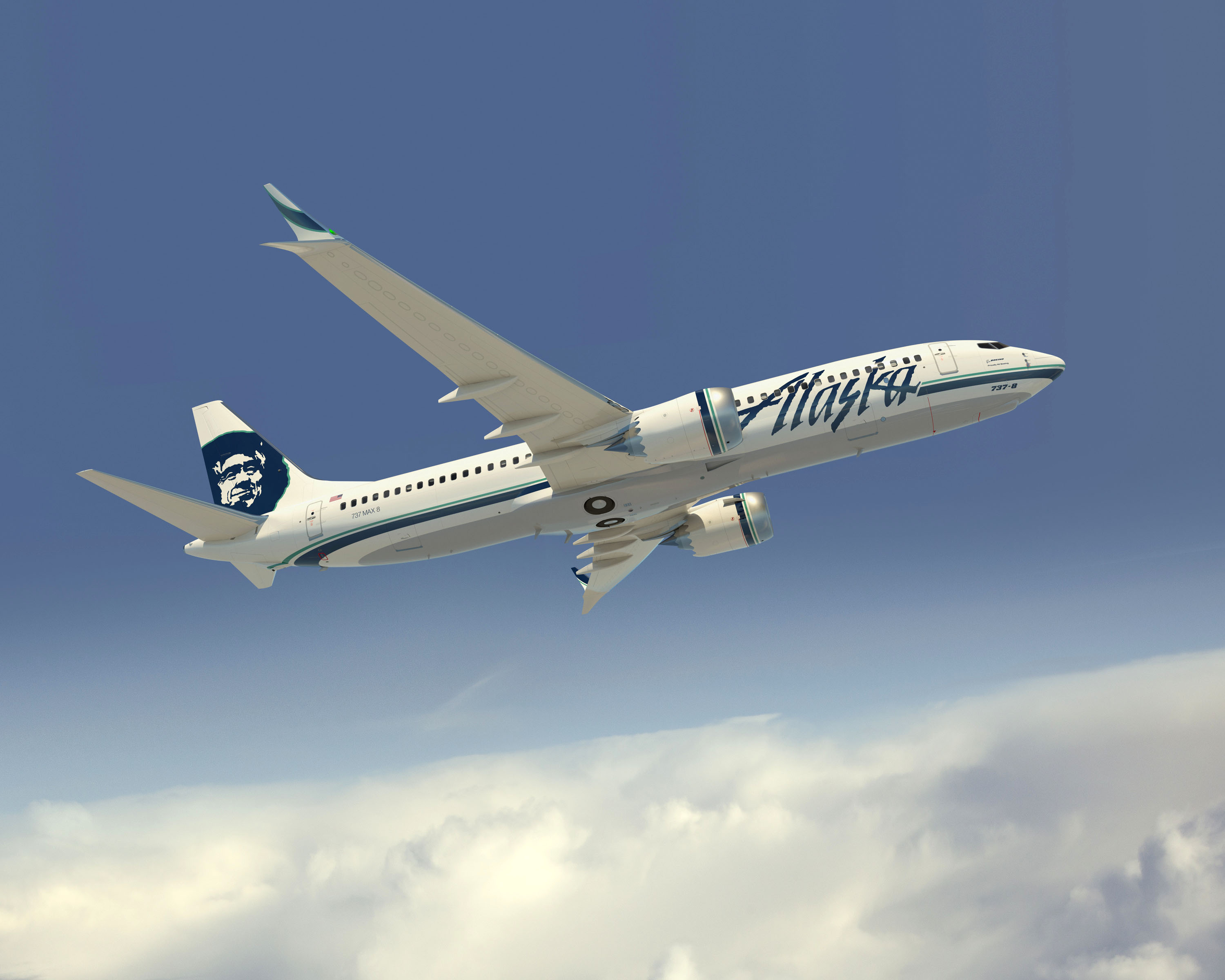
Alaska to Take First 737 MAX 8 in 2017

Alaska Airlines 737-MAX8 Artwork K65759

Alaska Airlines plans to take delivery of its first Boeing 737 Max 8 early in late 2017.

The Seattle-based carrier will take delivery of its first 737 Max about six months after launch customer Southwest Airlines takes its first aircraft, says its vice-president of capacity planning  John Kirby at the Boyd International Aviation Forecast Summit in Las Vegas.

“Boeing has indicated that it maybe ready a little early,” says Kirby.

Alaska previously anticipated its first 737 Max 8 in 2018.  The airline has firm orders for 37 737 Max aircraft, including 20 737 Max 8s and 17 737 Max 9s.

Alaska operates a fleet of 143 737s, including 27 737-400s, 14 737-700s,61 737-800s and 41 737-900ERs.

Source : Flightglobal


 Vietnam Airlines Drops its A380 Order

The Vietnamese government has dropped all plans to confirm options on four Airbus A380s it signed up for in 2009.

The Vietnamese flag carrier Vietnam Airlines cited “increased pressure of arranging capital for aircraft purchases” as a key factor, along with slow progress on the planned Long Thanh International Airport at Ho Chi Minh City-the only Vietnamese airport with enough capacity to handle A380 aircraft.

Vietnam Airlines also has reportedly scaled down its original plan to boost fleet size to 150 aircraft over the next five years, and will instead grow to just over 120 aircraft.

The airline which is scheduled to take delivery of eight Boeing 787-9s and 10 Airbus A350 XWBs up to 2019 said that “ the world economic situation is more difficult,” and “fierce competition in the aviation market place” were both reasons for opting out of the A380 deal.

This latest cancellation comes as an added blow for Airbus’s A380 program,which has seen several cancellations in Asia, including a significant six- aircraft order from bankrupt low cost carrier Skymark Airlines.

Source : ATW


LATEST NEWS IN BRIEF  

  • Jet2 Budget carrier Jet2 has signed an order with Boeing for 27 737-800 aircraft. The deal marks the carrier’s first direct order with Boeing.
  • Emirates takes delivery of the 65th A380. Emirates A380s serve 34 destinations and has a further 75 on order.
  • Philippine Airlines is considering the acquisition or lease of eight 787 Dreamliners or Airbus A350 XWB aircraft.
  • KLM Royal Dutch Airlines has switched an order for six Boeing 787-9s to the larger 787-10 to better fit with its network plans.

IMG_3584

  • Norwegian will lease two additional Boeing 787-9s, due for delivery in summer 2017, which it will use to extend its long-haul network.
  • China’s Bohai Leasing is in exclusive talks to buy Irish aircraft leasing firm Avolon for USD$2.64 billion, after raising its offer to put it ahead of a rival bidder.
  • Tyler  IATA  CEO and director general Tony Tyler will retire in June 2016 after serving five years in the position. Tyler’s retirement was announced on Aug.28 and the search for his successor has begun.
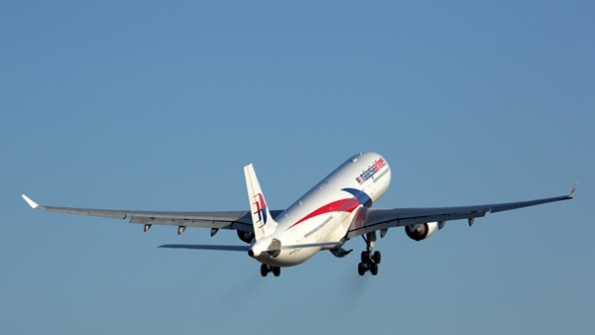
  • Malaysia  Airlines has been granted an air operator’s certificate (AOC) by the Malaysian Department of Civil Aviation under its new name Malaysia Airlines Berhad (MAB).

malaysia-airlines-a330-300-rf

  • Mitsubishi Regional Jet( MRJ) test flight is scheduled for the latter half of October, Mitsubishi Heavy industries has announced.
  • Emirates and Boeing celebrated the simultaneous delivery of three 777s- two 777-300ERs and one 777 Freighter – marking the entry of the 150th 777into Emirates fleet.
  • Austrian Airlines  Lufthansa subsidiary Austrian Airlines is preparing to receive the first of 17 modified Embraer E-195s.
  • BoraJet Airlines Turkish regional carrier has taken delivery of three Embraer 195s from the Regional aircraft Group of GECAS, the leasing and financing division of GE.


Air Cargo

Air China Cargo Began Freighter Service to Canada 

Air China Cargo began its first scheduled freighter service between China and Canada on the 3rd of September, when Air China Cargo 777F touched down at Edmonton International Airport by the traditional gun salute, commemorating the carrier’s first scheduled stop at the western Canadian airport.

Air-China-at-EIA-2-300x200

Air China Cargo will serve Edmonton six times each week, with a Shanghai-Edmonton-Dallas-Edmonton-Shanghai routing.

This is the first Freighter route between mainland China and the Canadian province of Alberta, and a key step in connecting the two economies. It’s also the only freighter service between Alberta and Texas.

Edmonton estimates that this new service will boost the GDP of the region by $31 million per year. Edmonton is situated near two business centers-the Nisku Business Park and the Leduc Business Park.  It will provide opportunities for cargo businesses to work with Air China Cargo as well. The airport is also near major highways for easy truck transport.

Source : Air Cargo World/Air China


MILITARY NEWS


Northrop Delivers the 150th KC-10 Extender Aircraft to the US Air Force 

KC-10 Extender

Northrop Grumman has delivered the 150th KC-10 Extender air-to air refueling tanker aircraft to the US Air Force after providing major improvements.

The aircraft received product reliability improvements as part of its CF6-50 engine overhaul program,offering a 15-year high in engine fleet performance.

Northrop Grumman Technical Services weapon systems operations director Matt Emerson said : ”The delivery of the 150th KC-10 depot aircraft contributes to the critical mission requirements of the United States Air Force by ensuring that the KC-10 is operational when the customer need it.”

“ The aircraft was accepted with zero defects,further contributing to the company’s proven track record for helping the Air Force achieve the KC-10’s highest fleet mission capable rates in more than 16 years.”

The KC-10 Extender can refuel aircraft midair while transporting personnel,equipment and patients on overseas deployments and aeromedical evacuations.

Source : Airforcetechnology.com


  US Navy Orders 13 P-8As, with Four for Australia

Boeing has secured a $1.49 billion contract from the US Navy for 13 P-8A Poseidon maritime patrol aircraft, including the first four examples for the Royal Australian Air Force.

The deal covers nine aircraft for the USN and four for the Royal Australian Air Force, the company says.

“By working together since the early stages of the P-8A development, the US and Australia have created one airplane configuration that serves the need of both countries,” says Capt. Scott Dillon, the former’s P8 program manager.  ”The Us and Australian P-8As will be able to operate with each other effectively and affordably for decades to come”, he adds.

In early 2014, Canberra approved an A$4 billion ($2.9 billion) allocation to acquire eight of the 737-derived aircraft, with options for four more.  This allowed Boeing to place long lead-time orders for parts for the first four aircraft.

The P-8A will replace the RAAF’s fleet of Lockheed Martin AP-3C prions currently in their fleet.

Source : Boeing

Researched and Compiled by : Ed Kaplanian

Commercial Aviation Advisor

Contact – ekaplanian@msn.com
Volume 2 Issue 8


ON THE BOEING FRONT

The Roof is Almost Complete on the 777X Composite Wing Center in Everett. 

The progress over the past few weeks on the Composite Wing Center in Everett for the 777X has been phenomenal.

The roof over the massive 1.3 million square foot building is nearly complete, and the walls are also going up at a rapid pace.

A milestone was also reached, after completing the area where the autoclave vendor can start installation. The first of three giant autoclaves – some of the largest in the world – is also nearly completed.

The Composite Wing Center is on track to be finished in May of 2016. (see attached photos courtesy of Boeing)

Source : Boeing/Boeing Photos


ON THE AIRBUS FRONT 

Airbus’ Runway Overrun Prevention System (ROPS) Certified by EASA on A330 Family

Airbus has achieved EASA certification of Airbus’ Runway Overrun Prevention System (ROPS) technology on A330 Family aircraft. This on-board cockpit technology, which Airbus pioneered over several years, is now certified and available on all Airbus Families. ROPS is an alerting system which reduces exposure to runway overrun risk, and if necessary, provides active protection. Korean will become the first A330 operator to implement ROPS on its A330s in service in the coming months.

Runway excursion-meaning either an aircraft veering off the side of the runway, or overrunning the very end-remains the primary cause of civil airliner hull losses, particularly as other formerly prevalent categories of aircraft accidents have now largely been eliminated. Furthermore, various industry bodies including the EASA, NTSB, Eurocontrol and FAA recognize this and are fully behind the introduction of effective measures by commercial aviation stakeholders to eliminate the risk of runway excursions.

Source : Airbus/Airbus picture


BUSINESS/REGIONAL NEWS

CS100 Performs Minimum-unstick Test.

Bombardier has disclosed details of the minimum-unstick testing on the initial CSeries variant which it conducted at a regional airport in Kansas. One of the CS100 prototypes, FTV4, performed the tests at Saline airport during May.

The twin jet was fitted with a projecting bumper underneath the aft fuselage for the tests, which explore the minimum speed at which the CS100 can lift off at high nose altitude.

Minimum-unstick testing typically involves rapid acceleration to a threshold speed then reducing power while applying maximum pitch.

FTV4 has been fitted with cameras underneath the fuselage to monitor the bumper and the exercise also required simulation and modeling before being carried out.

Source: Bombardier/Flightglobal/Bombardier Photo.


OTHER AVIATION NEWS

Boeing 787’s Improved Reliability Is Giving a Supplier Headaches

After early hiccups, Boeing’s 787 Dreamliner is turning into a stellar performer for airlines. That is creating an unexpected headache for the company that makes the plan’s cockpit displays.

The problem: Rockwell Collins Inc. finds itself with a bulge of unsold spare parts because the monitors used by pilots to track the jet’s radar and performance are proving more reliable than expected, Chief Executive Officer Kelly Ortberg said on July 24th.

Dreamliner operators are stocking fewer replacements, contributing to a 4 percent drop in aftermarket sales in the quarter ended June 30, Rockwell Collins said.

The Cedar Rapids, Iowa-based company is tweaking forecasts for other new jets using the gear, such as Boeing’s 737 Max and the 777X, Ortberg said.

“I am not going to feel bad about building and designing a really good piece of equipment,” Ortberg said in a telephone interview. ”We’ll go adjust the reliability that we had originally predicted to more of what we’re actually seeing in the marketplace.”

The Dreamliner entered service in 2011 after more than three years of delays. With the plane’s all-new technology, Rockwell Collins had no track record on which to project a replacement rate for its spare parts, Ortberg said.

Now, the company will use the improved reliability to persuade operators of Boeing’s 757s and 767s to upgrade to new equipment. Jet kerosene at close to a six-year low is a lure for airlines to retrofit older planes they otherwise would have retired, Ortberg said.

Source : Bloomberg


SWISS Unveils the Cabin Product and Route Network for Its New Flagship Boeing 777-300ER

SWISS will be ushering-in a new era in the history of its long-haul aircraft fleet next January with the arrival of the first of its nine new Boeing 777-300ERs.

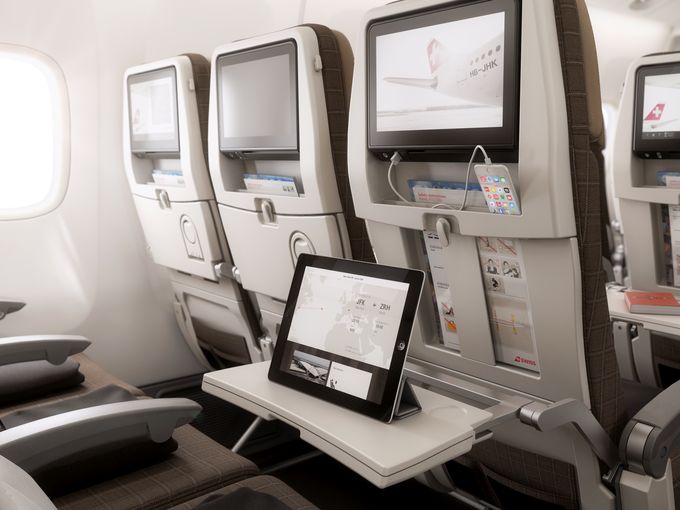
In SWISS configuration the new twin jets will seat 340 passengers. They will also offer a state-of-the-art cabin product in all three seating classes, including wireless internet connectivity. The 777 will be deployed on routes to and from Asia, South America and the US West Coast from the 2016 summer schedules onwards.

In SWISS configuration the Boeing 777-300ER will offer 340 seats: eight in First Class,62 in Business Class and 270 in Economy.  The totally redesigned cabin interior of the new SWISS flagship will provide comfort and aesthetics to meet the most discerning of demands in all three seating classes.

The SWISS First seat will be transformable into the occupant’s own private suite that includes a 32-inch screen, the largest in the industry. SWISS First guests will also enjoy electrically-adjustable window blinds and their own personal wardrobe.

SWISS Business travelers will enjoy an in-flight product that has been further enhanced and refined on the basis of customer feedback. The seating arrangement offers optimum privacy and freedom of movement, while the seat cushion’s firmness can be individually regulated. All the seats in the SWISS Business cabin can also be quickly and easily converted into a lie-flat bed .

The 777 will deliver 23% lower unit costs compared to the Airbus A340,” which especially helps on routes to Asia where we face tough competition mainly from Gulf carriers,” SWISS CEO Harry Hohmeister said.

Source : Swiss/Swiss Photos


CFM Delivers First Leap-1C to COMAC

CFM international has delivered the first Leap-1C engine to Comac for its in-development C919 narrow body program.

The engine, sent to the Chinese manufacturer’s first assembly center near Shanghai Pudong International airport, will be installed on the first C919 flight test aircraft. This pushes the first aircraft toward a roll-out by the end of the year, and a first flight in 2016.

The first Leap-1C engine completed a flight test program in late 2014 on a modified 747 flying testbed at Ge’s facilities in Victorville, California. The test program includes a comprehensive test schedule that looked at various functions including engine operability, stall margin and performance, and also validated advanced technologies incorporated in the engine, says CFM.

The engine maker adds that there are currently more than 30 Leap engines on test or in final assembly, and that the program has logged more than 4,730 certification ground and flight test hours totaling 7,900 cycles.

Comac has so far received commitments for 507 C919s, mostly from Chinese airlines and leasing companies.

Source: Flightglobal/Photo CFM International


LATEST NEWS IN BRIEF  

  • Eva Air have finalized an order for five 777 Freighters. The order, valued at more than $1.5 billion at list prices.
  • Vietnam Airlines has signed an agreement with Boeing to collaborate on renewing its wide body fleet which could see the carrier adding eight 777-8X and eight 787-10 aircraft.
  • Airbus has resumed flying the PW1100G-powered A320neo flight test aircraft in Toulouse, France after three-month grounding.
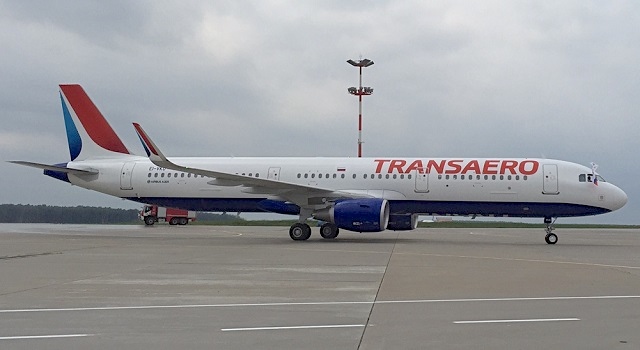
  • Transaero Russian carrier has taken delivery of its first Airbus A321, which is being supplied under a leasing deal with Chinese finance firm ICBC.

  • GKN Aerospace is to acquire the Dutch aerospace firm Fokker Technologies in a deal worth more than $775 million.
  • Vietjet the Vietnamese low-cost carrier (LCC) has taken delivery of the first 230-seat Airbus A321 cabin, the delivery marks the 9000 Airbus aircraft.

  • Lufthansa Technik the Puerto Rico MRO facility at Rafael Hernandez International Airport in Aguadilla started operations on July 21 with its first overhaul line.
  • Xiamen Airlines has committed to purchase another four Boeing 787 Dreamliners to further expand its long-range fleet. Xiamen Airlines started its first ever European service to Amsterdam on July 26th using one of its 787-8s.
  • FedEx place a firm order with Boeing for 50 firm orders for 767 freighters and took options for 50 more.
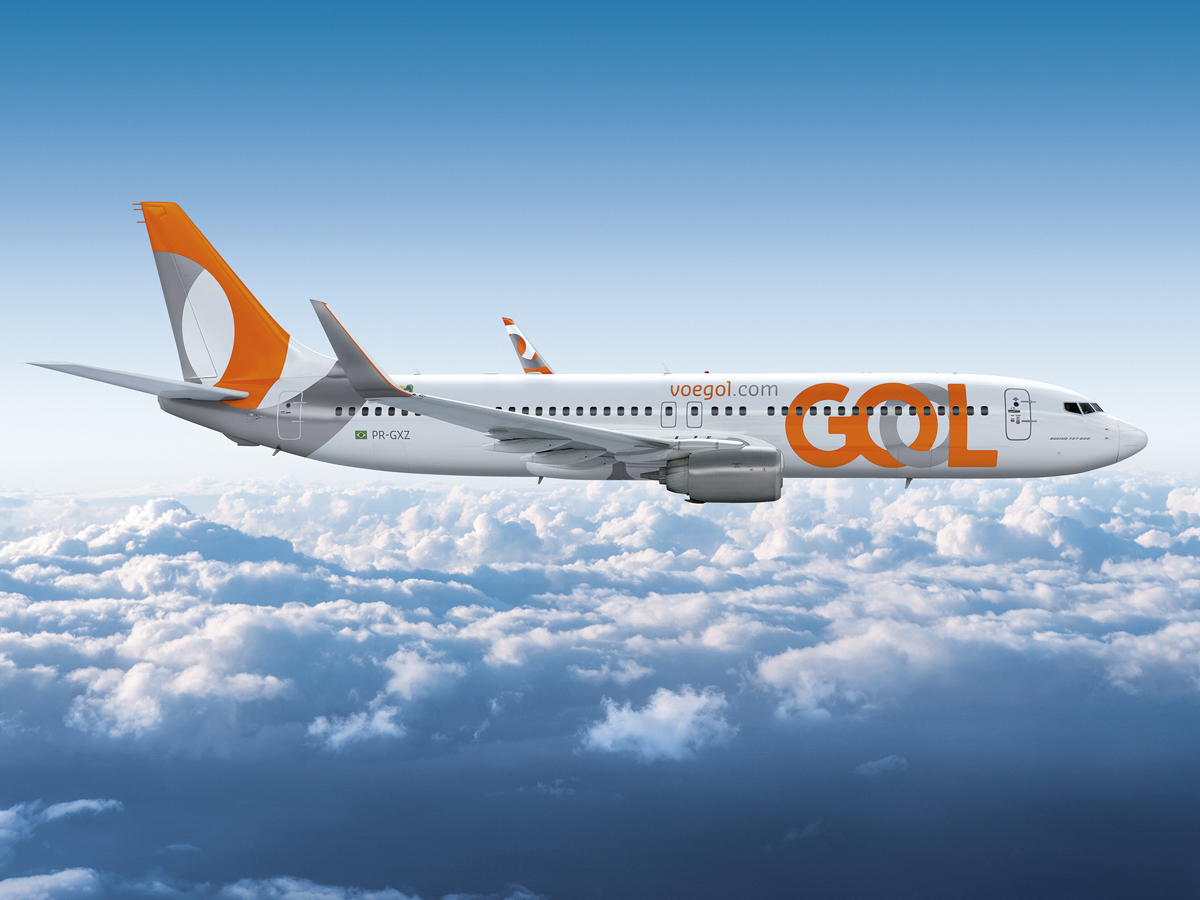
  • GOL Brazilian carrier has unveiled a new livery bearing its new logo.

  • Airbus has contracted Saab Aerostructures to manufacture and assemble composite wing trailing edge falsework extension for the A330neo.
  • Air Lease Corp. announced a long-term lease agreement with Far Eastern Air Transport based in Taipei, Taiwan for one new Boeing 737-800.
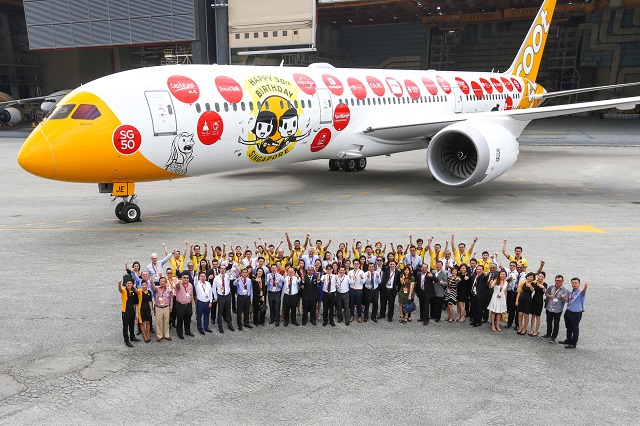
  • Scoot has unveiled a special livery to mark Singapore’s 50th year of independence.


AIR CARGO

Atlas Air Brings Plane Out of Storage, Showing Confidence in Air Cargo Market

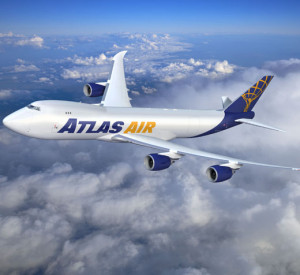
Atlas Air Worldwide has echoed Boeing’s optimism about the air Cargo market, saying it will bring a 747-400 out of desert storage and buy two 767 passenger aircraft to convert to freighters to go along with the 10th 747-8 freighter the operator will add to its fleet in November.

Cowen analysts say the decision to put the parked 747-400 back into service is the result of extra work created by the U.S. military bolstering its forces in eastern Europe.

Atlas Air’s additions also back up Boeing’s increasingly bullish view of the air cargo market, having announced several freighter deals at the recent Paris Air Show.

Source : seeking alpha/Atlas Air Worldwide Holding


MILITARY

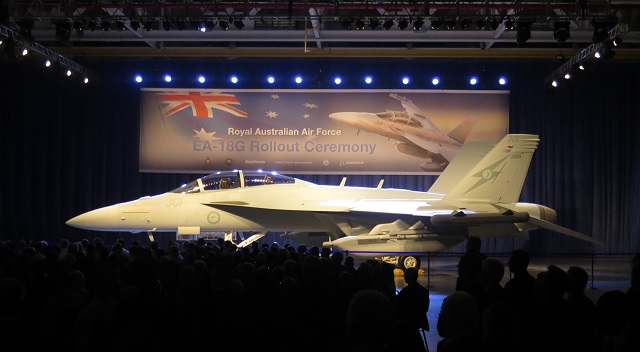
Boeing Rolls Out First Australian Growler

Boeing has unveiled the first of 12 Australian EA-18G Growler electronic attack aircraft at a ceremony in St.Louis, Missouri, and the company officials the second example is already in flight testing.

Once the second aircraft delivers this month, the two examples will be delivered to Naval Air Weapons Station China Lake where Australian pilots are currently training with their US Navy counterparts. Those aircraft will also visit the US Navy’s home of airborne electronic warfare at Naval Air Station Whidbey in 2016 before moving to Australia in 2017.

Delivery of the first aircraft, tail number A46-301, is a significant milestone for the Royal Australian Air Force(RAAF),which will soon be able to shut down enemy surface-to-air missile, radars, electronic transmissions, communications equipment across a wide area.

Daniel Gillian, Boeing Defense, Space and Security’s vice president of F/A-18 and EA-18G programs, says the Aussie Growler entered flight testing on July 13th and the second aircraft is fully assembled and flying. He says it is the 116th Growler delivered to date out of a165-aircraft program of record for the Navy and the RAAF.

Source : Flightglobal/Picture Boeing


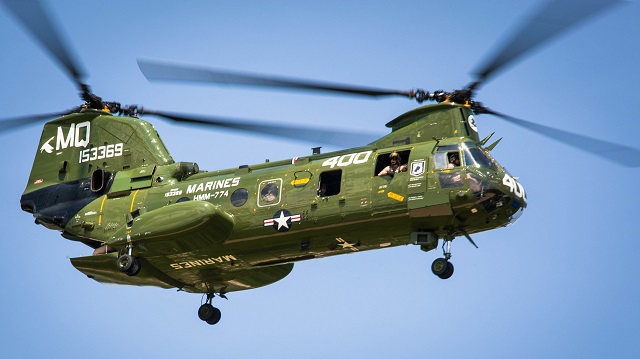
Marines Retire Sea Knight after 51 Years In Service

After 51 years of service with the US Marines Cops, the Boeing-Vertol CH-46 Sea Knight flew for the last time on August 1st at a retirement ceremony in Chantilly, Virginia.

The Sea Knight which, made its combat debut in Vietnam, is being put on display at the Smithsonian Institution’s National Air and Space Museum in Chantilly, Virginia, but will eventually move to a new annex at the National Museum of the Marine Corps in Quantico, Virginia.

The twin-engined, tandem-rotor aircraft flew in August 1962, and the first production examples was delivered in 1964 as a medium assault transport helicopter.

The CH-46 was replaced by the V-22 Osprey.

Source : Flightglobal


Researched and Compiled by : Ed Kaplanian

Commercial Aviation Advisor

Contact – ekaplanian@msn.com

Volume 2 Issue 7 July 2015

ON THE BOEING FRONT

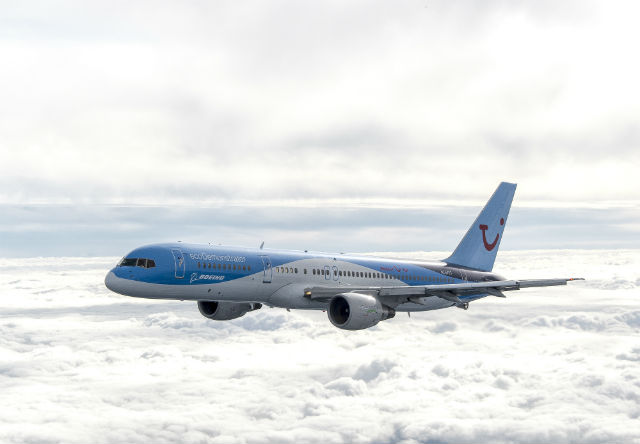
Boeing 757 ecoDemonstrator Embarks on Final Test Run 

Energy-harvesting windows, green diesel biofuel and a 3D-printed flight deck monument are three technologies that will be tested on the last series of flights of T U I  G r o u p – b r a n d e d 7 5 7 ecoDemonstrator; destined to be dismantled by the end of this month. Boeing has partnered with the  Aircraft  Fleet  Recycling  Association  to  disassemble the 757 at the conclusion of the tests.  In the pioneering spirit of the ecoDemonstrator program; however, the disassembly will serve as an opportunity to validate a variety of new options for recycling the various materials and systems.

yourfile

“We are going to recycle the heck out of the airplane”, says Jeanne Yu, Boeing’s environmental performance director, in a recent interview. “Boeing will look to recycle some components in the existing fleet or recycle pieces to be used in other ways on flying aircraft”, she says. Until then, the 757 ecoDemonstrator will continue a new series of flight tests after a first series concluded two months ago.

The 757 ecoDemonstrator follows a series of tests in 2012 on an American Airlines 737-800 and in 2014 a former 787 test aircraft. The first series of flights on the 757 focused on several drag-reducing technologies; such as an active flow control system mounted on a tail fin, bug “phobic” coatings on the leading edge of the right wing and a laminar flow-protecting Krueger flap on the left wing. Finally, the 757 ecoDemonstrator flight deck also features an aft aisle stand made using scrap carbon fiber material from the 787 production system.  A3D printer was used to transform the crap material into the aisle stand.

Source: Boeing/Flightglobal /Photo Boeing


ON THE AIRBUS FRONT 

Airbus A380 Shows Off Illuminated Decal Technology 

One of Airbus’s A380 test aircraft has demonstrated a new electro-luminescent display technology designed for external use on the aircraft.

yourfile

The technology developed by Safran division Aircelle, comprises thin markings which can be applied to the fuselage skin and engine nacelle to provide illuminated branding and logos using on-board electrical power.

Initial airborne tests using A380 MSN1 were carried out at night on June 8th, with the aircraft featuring an Airbus logo on its outboard left-hand Rolls-Royce tent 900 power plant.

Aircelle says the flight was able to demonstrate the “brightness, clarity and readability” of the marking in various lighting conditions.

Aircelle showed the development at the Paris Air Show last month, Aircelle says that the display can be placed “almost anywhere” on the aircraft, including the underside of the fuselage and the tail.

Source : Flightglobal/Picture Airbus


BUSINESS/REGIONAL NEWS

Gulfstream Boosts Connectivity for G450 and G550 

Gulfstream has received Us Federal Aviation Administration approval for a modification that allows operators of G450 and G550 aircraft to benefit from enhanced connectivity.

Gulfstream_G450_G550

Covering the installation of the Satcom Direct Router, (SDR) the enhancement simplifies cabin communications on the two twin jets.

“This equipment elevates the airborne office to a new level,” says Mike West, vice-president product support sales and new business development, Gulfstream.

“The addition of a smart router allows for more communications options in the cabin, including Satcom Direct’s GlobalVT, which allows passengers to use their personal smartphones to call and text in flight.”

The SDR also supports mobile applications for onboard cabin services, including moving map and flight tracker, command and control of satellite links and real-time connection status reporting.

Installation of the SDR and accompanying software is standard on new G550 and G450 aircraft and available as a retrofit for in-service examples.

Gulfstream is pursuing similar supplemental type certificates from the FAA to add the enhancement to G650/G650ER, GV and GIV aircraft.

Source: Flightglobal/Gulfstream


OTHER AVIATION NEWS


Lufthansa Technik Partners with GE for GE9X and GEnx-2B Overhaul

Lufthansa Technik is building a joint-venture overhaul shop with General Electric to service the engines powering Boeing 747-8s and the in development 777X.

The two partners signed a tentative agreement at the Paris Air Show last month, though the closing of the deal will depend on regulatory approval, says the German MRO group. Lufthansa operates 747-8s and has 777Xs  on order, but third-party clients’ engines will also be supported from the European facility.

While the precise location of the operation has still to be decided, a 2018 opening is targeted.

Lufthansa Technik’s own engine overhaul facilities – except for regional aircraft power plants – have traditionally been at its base in Hamburg. It has a shop for CFM International CFM56s and international Aero V2500s; plus a separate facility for large legacy types such as the CF 6.

Capability to overhaul the 777X-powering GE9X promises to give the new joint venture access to a large party customer market, but there appears to be limited potential for services on the GEnx-2B, which equips the 747-8.

The site will form part of GE’s network of international repair facilities, and the two partners will cooperate on development of repairs and on-wing support services.

Source:Flightglobal/GE Aviation


Royal Jordanian Eyes North America After European Traffic Decline

Royal Jordanian Airlines is planning to expand its transatlantic network as traffic from Europe has declined as a result of political crises in the Middle East and North Africa.

The airline lost “most” of its tourist traffic originating from European countries because travel packages often combined Jordan with Syria and Egypt, fleet and network planning director Eyad Birouti told Flightglobal at the Connect conference in Killarney in Ireland.

Washington DC and Toronto could be served nonstop from Amman with the airline’s five Boeing 787 fleet. But 787-8 flights to Los Angeles, with full payload, would require a fuel stop in Europe, said Birouti. Amsterdam, Dublin and Vienna are among the cities being investigated as potential stopover points.

The carrier is also planning network expansions in Africa and Asia to compensate for declining traffic from Europe, said Birouti. Connecting flights to the Asia-Pacific region could be a way of filling aircraft on existing routes from Europe.

Source : Royal Jordanian


Rolls-Royce Makes Progress on Testing 787 Engine Upgrade

Rolls-Royce is close to completing a round of testing on the latest version of the Trent 1000 engine for the Boeing 787, according to the Arnold Engineering Development Center (AEDC) in the USA.

Since earlier this year, AEDC has hosted an R-R team performing altitude operability performance and icing tests on engine serial number 11003, one of several prototypes developed to certificate the Trent 1000-TEN upgrade.

The tests on engine 11003 have been “fantastically successful”, according to Tom Schmidt, a project manager for Aerospace Testing Alliance, which was overseeing the testing by AEDC.

That echoes comments by R-R executives last month, who said the then-ongoing testing at AEDC had shown better fuel efficiency for the Trent 1000-TEN at higher altitudes.

The TEN upgrade migrates several features developed for the Trent XWB engine back into the lower-thrust engine for the 787. The new features include a rising-line compressor and a three-stage blisk at the front of the high-pressure compressor section.

Rolls-Royce has predicted that the Trent 1000-TEN upgrade will provide a 3% advantage on fuel consumption on short flights to 3,000nm; compared to the competing GE Aviation GEnx-1B engine.

Source : Flight Global /Rolls- Royce


GE Aviation, Woodward Form Fuel Systems Joint Venture

GE Aviation and Woodward Inc. have formed a 50/50 venture to design, develop, source, supply and service fuel systems for GE90,GEnx, GE9X and future GE large commercial engines.

GE Aviation president and CEO David Joyce said the joint venture will “further strengthen both companies’ capabilities and secure a high quality fuel systems supplier for GE’s record production volume on large commercial engines.”

According to GE Aviation, production rates for its jet engines and components have increased significantly over the last five years; with large commercial engine production more than doubling to close to 500 engines in 2015.

GE Aviation said that under the terms of the joint venture agreement, Woodward will receive $250 million in cash, and the parties will participate jointly in the operating results of respective programs.

Source : ATW/GE Aviation


LATEST NEWS IN BRIEF  

  • United Airlines will spend $100 million to acquire a 5% stake in Azul Brazilian Airlines. The two carriers have entered into a strategic partnership that will include code-sharing and reciprocal loyalty program benefits.
  • GE Capital Aviation Services Limited (GECAS) has completed a purchase-and-leaseback transaction with Lion Group subsidiary PT Batik Air Indonesia for four new Airbus A320s.
  • Avolon delivered a Boeing 737-800 to Hainan Airlines. This delivery is Avolon’s first aircraft on lease to Hainan Airlines.
  • Bombardier has delivered its 500th Q400 turboprop aircraft to Calgary-based WestJet Encore.
  • Enter Air announced an order for two 737MAX 8s and two Next-Generation 737-800s.  It is the first direct order for Boeing from the Polish charter carrier.

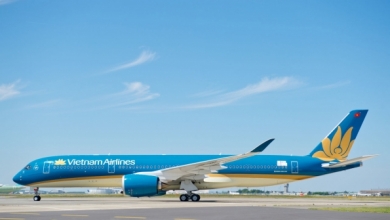
  • Vietnam Airlines took delivery of its first Airbus A350-900, becoming the second operator of the type.

vietnamairlinesa350xwb-usethisone

  • Transaero Airline has expanded its European Aviation Safety Agency’s (EASA) certificate to include performing C checks on Boeing 737 Classic and 737NG aircraft.
  • Swiss International Air Line has confirmed that it will be the first operator of the Cseries, with service entry slated for the first half of 2016.
  • Embraer has secured firm orders from three airlines and one aircraft lessor for a total of 50 E-Jets, evenly split between the current generation and the E2 variants.
  • Saudia became the launch customer for the A330-300 Regional with a firm order for 20 of the aircraft plus a firm order for 20 A320ceos.


Air Cargo

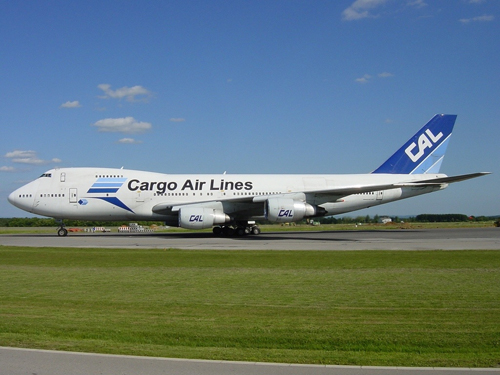
CAL Cargo Air Lines to Transport Aircraft Engines

CAL Cargo Air lines has launched “CAL Express”, service specifically designed for the transportation of aircraft engines.

Under the new service, the carrier will transport every size and type of aircraft engines around the world, using 747-400s.  CAL is also qualified to deal with dangerous goods, so the carrier will be able to transport non-purged engines as well.

This new service also includes ground-handling, storage and road-feeder services.  In the case of aircraft on the ground, CAL is including expedited customs clearance and transit time, as well as charter options.

According to Eyal Zagagi, CEO of Cal Cargo Airlines, one of the reasons CAL Engines was created in response to a 25% per year increase in engine transport business over the last few years.

Source: Air Cargo World / CAL Photo


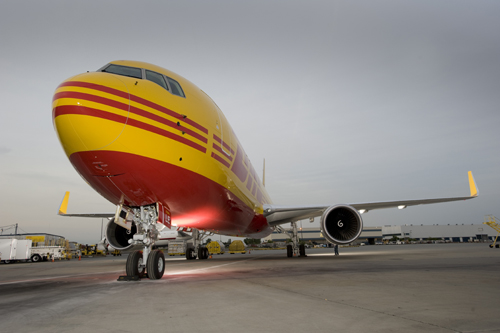
DHL Expands Global Reach with Cincinnati Upgrade

It is no surprise that DHL’s largest U.S. hub is in Cincinnati.  Its central location allows the express carrier to best reach the U.S. East and West coasts from a flight timing perspective.

Since its exit from the US domestic express market in 2009, DHL has set its sights on growing in international service to/from that country.  DHL invested US$108 million to upgrade and expand its American hub at the Cincinnati/Northern Kentucky Airport (CVG).  Travis Cobb, DHL’s senior vice president, network operations Americas, said part of the investment would be for a new apron to accommodate an additional 18 aircraft. The remainder would be used for infrastructure, including warehousing and automation.

The Cincinnati hub is one of three global DHL hubs – the others are Leipzig,Germany and Hong Kong. Globally, Cincinnati is second in size and volume only the Leipzig hub, processing approximately 46 million international shipments annually.

Source:   Air Cargo World/DHL


                                         MILITARY

Boeing Shifts toward Full-Rate Production of Navy Submarine Hunter

Workers assembling Boeing’s biggest Puget Sound area military contract are preparing to lift its production rate; now that the first group of P-8A  submarine hunter aircraft have proved to be a good investment for the government.

The planned increase to 1.5 aircraft monthly will be dwarfed by the 42-monthly rate for the civilian version from the same Renton site.  It is a significant step for the P-8A.

The P-8A Poseidon is an important contract for Boeing’s military side, and it is also important for the Puget Sound area.

In February 2014, Boeing won a $2.4 billion contract for the first 16 of the full-rate jets. Eventually, the Navy wants 117.

The P-8A contract is important for Boeing and the region; partly because of the revenue it’s pulling in, partly because the program is running so smoothly.

Source : Puget Sound Business Journal


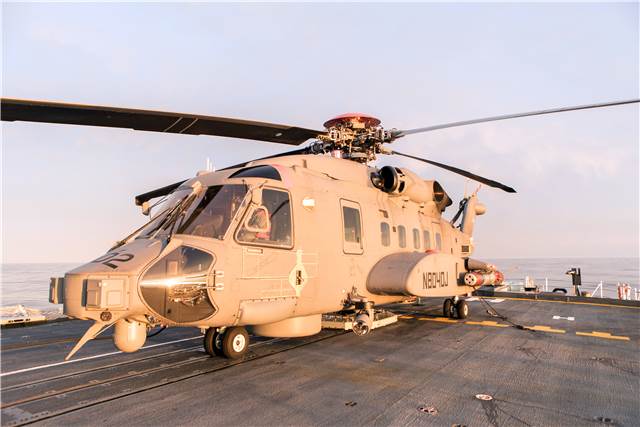
Canada Accepts First Six Sikorsky CH-148 Cyclones

The Royal Canadian Air Force has accepted delivery of its first six Sikorsky CH-148 Cyclone maritime patrol helicopters, making a major step forward for the Sea King replacement program.

The Total value of the Cyclone acquisition is $7.6 billion,including $1.9 billion for development and production of 28 helicopters and$5.7 over 20 years for service contractor support.

The twin-engine, medium-lift Cyclone is derived from Sikorsky’s civil S-92 and is designed for shipboard maritime surveillance and rescue operations on Canada’s east and west coasts.

The cyclones will replace 27 long serving Sikorsky CH-124 Sea Kings that have been in constant operation since 1963 and are the oldest aircraft in the RCAF inventory.

Source : Flightglobal/Picture Canadian Armed Force


Researched and Compiled by : Ed Kaplanian

Commercial Aviation Advisor

Contact – ed@kaplanianreport.com

Volume 2 Issue 5 May 2015

ON THE BOEING FRONT

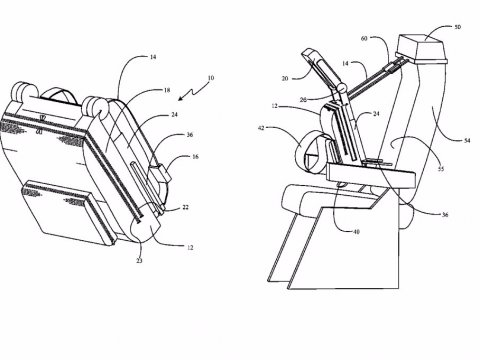
Boeing Just Patented a “Cuddle Chair” that Could Revolutionize How People Sleep on Airplanes

You know that moment when you are deep into a long distance journey and you just cannot get comfortable enough to sleep? And you’d do just about, or pay just anything for some sort of bed, or sleep support for even a few hours.

Getting quality sleep on a plane can be a great challenge especially when you are stuck in the cramped quarters of economy class. But now upright sleeping seat patented by Boeing may just change things.

boeing-cuddle-chair-patent.png

Though officially known as the “transport vehicle seat back with integrated upright sleep seat the “cuddle Chair”. The chair features a cushion, headrest, and strap system that could be a crucial development for forward-leaning sleepers, who would no longer have to suffer the indignity of snoozing on their tray table.

As  airlines seek to fit as many people as possible into planes, manufacturers like Boeing and Airbus have had to explore some truly unorthodox seating mechanisms.

Source : Business Insider

ON THE AIRBUS FRONT 

Airbus Upbeat on Jet Market, Still Studying A380 Upgrade

Airbus sees continued strength in the aircraft market and may increase production of its most  popular jets above planned rates if the trend continues, the head of the European plane maker said On Friday April 17th.

Fabrice Bregier, chief executive of Airbus Group’s passenger jet division, predicated that Airbus would recapture the global crown from Boeing as deliveries of its new A350 model pick up while adding that market share was secondary to profitable growth.

Airbus expects to deliver 15 of the A350 planes this year told a group of journalists in Paris.

He reiterated that Airbus would not abandon the A380 after a period of weak orders, but would take careful look at the business case for the A380neo upgrade requested by the model’s biggest airline customer Emirates.

Airbus continues to expect more orders than deliveries in 2015, he also told members of the French AJPAE aerospace press association.

Source : Airbus/Yahoo Finance

BUSINESS/REGIONAL NEWS

MRJ First Flight Delayed Again

Mitsubishi Aircraft says the latest slip in the first flight schedule of its MRJ regional jet does not represent “major trouble” in the program.

In response to queries from Flightglobal, the Japanese manufacturer explains that in ground tests conducted thus far, ”a bug” has occurred in a portion of its software. Design changes also had to be made to some system parts.

As a result Mitsubishi has pushed back the first flight of its regional jet to September or October of 2015, from the second quarter.

In January, Mitsubishi started full-scale tests and also performed a first engine run on MSN 10001. It has since performed various ground tests including functional and performance tests for devices of its avionics, hydraulics, air conditioning, lighting and landing gear systems. It has also conducted vibration tests, electromagnetic tests, safety tests and taxi tests.

Source: Flightglobal/ Mistubishi Aircraft

OTHER AVIATION NEWS

Saudi Arabian Airlines (Saudia) to Buy More than 100 Aircraft

 Saudi1

The board of the Saudi Arabian Airlines (Saudia) has decided to increase the operations of the company under its five year plan from 2015-2020 by purchasing more than 100 new aircraft.

The airline is Saudi’s national flag carrier and director general Saleh bin Nasser Al-Jasser said the plan is meant to strengthen operational efficiency as part of the continuous modernization of the fleet.

The airline previously ordered 90 aircraft from Boeing and Airbus and all but 12 have not been delivered according to a senior official under the condition of anonymity.

Jasser said the arrival of the aircraft within its growing domestic passenger requirements and expand the airline’s international operations.

The five-year plan includes the empowerment of the airline staffs and modernization of the airline infrastructures and strategic units.

The board noted that one of the challenges facing the company is the disruptions of its operations by sandstorms. Airlines have been obliged to delay or postpone their scheduled flights when airports are hit by it due to passenger and aircraft safety.

Many airports are affected by it in Saudi Arabia. Measures to reduce the effects of weather changes were discussed by the board.

Source: Middle East Confidential


Spains Air Europa Details Boeing 787 Plans

air-europa-787-9-rendering-courtesy-boeing

Spanish carrier Air Europa has launched scheduled flights between Madrid and Miami with its first Boeing 787 as it prepares to take 22 of the new twin jets.

Privately owned Air Europa is bringing in 22 787-8s and 787-9s to completely replace its Airbus A330 long-haul fleet. The airline has acquired the aircraft through two commitments, one for eight aircraft and a follow-on order for further 14, which was announced in January of this year.

Juan Jose Hidalgo, president of Air Europa parent company Globalia corp., previously said

the aircraft will grow the business by around 50%.

Air Europa’s first four 787s will arrive by the end of 2016, doubling to eight aircraft by 2018. ”The airline will have a total of 22 Dreamliners all operational by 2022, completely replacing its long-haul fleet of A330s,” Air Europa said in a statement.

It has been configured with 252 seats, including 18 in business and 21 in Air Europa’s newly introduced premium economy cabin. Air Europia, which has a hub at Madrid Barajas, serves 36 destinations in Europe and the Americas.

Source : ATW/picture Boeing

GTF Leads Pratt to Shift Business Model to Aftermarket Focus

With 80% of the more than 6300 geared turbofan (GTF) engines sold by Pratt and Whitney covered by a long-term maintenance service contract with the engine manufacturer, Pratt is shifting its commercial business model.

The PW1100G powering the Airbus A320neo will launch the GTF family of engines into the market when the re-engined narrow body enters service later this year.

But the transition to the GTF is about much more for East Hartford, Connecticut-based Pratt than the engine’s geared architecture that promises to provide a significant fuel burn improvement. ”We’re transitioning from a purely transitional market to a service market”. Pratt

president-aftermarket Mathew Bromberg told reporters during a briefing in East Hartford.

The sale of the engine is merely the starting point. Pratt now has long-term service agreements on about half of its in-service commercial aircraft engines, but in the future the vast majority of its engines-particularly in the GTF family- will be under such contracts. Pratt will collect “a staggering amount of data” from in-service GTF engines and use this information to manage engine performance for its airline customers, Bromberg said.

Source : ATW/Pratt&Whitney

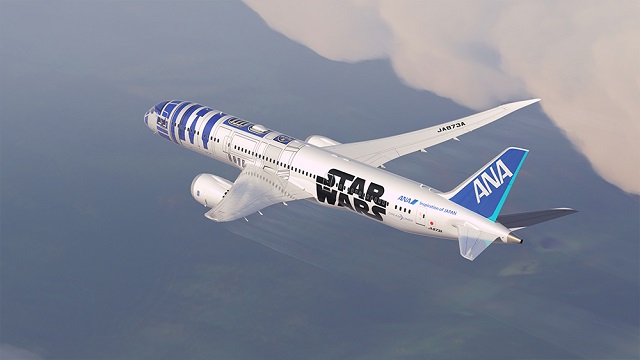
ANA Reveals Star Wars Livery on Boeing 787-9

All Nippon Airlines (ANA) has unveiled a new “ Star Wars” livery on its latest Boeing 787-9 that marks the start of a five-year tie up with The Walt Disney Company (Japan).

Painted with the iconic R2-D2 character, the plane’s design was unveiled to fans of the popular science fiction franchise in the United States on April 16th.

yourfile

yourfile

ANA says the “Star Wars” painted aircraft will take to the skies in the third quarter of 2015, but the routes it will operate on have not yet been determined.

“We’re proud of the innovative R2-D2 design, and we look forward to witnessing the first-ever flight of a passenger aircraft featuring “Star Wars” character. We’re confident that “Star Wars” fans around the world will absolutely love the design,” says Kayleen Walters, vice president of marketing at Lucasfilm Ltd.

The launch of “Star Wars” livery also follows ANA’s earlier announcement that it will launch a Tokyo Narita-Houston service from june 12th, making the carrier’s tenth North American destination.

Source : Flightglobal/ANA Photo.


LATEST NEWS IN BRIEF  

  • United Airlines has converted 10 firm orders for the Boeing 787 to the 777-300ER. The 777-300ER order is valued at $3.3 billion at list prices.
  •      yourfile
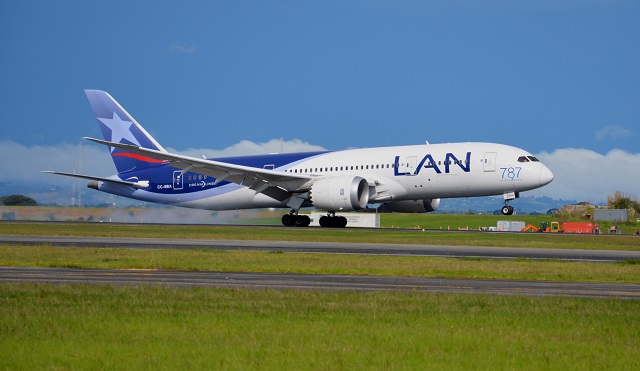
  • LAN CHILE has inaugurated its Boeing 787 service from Chilean capital Santiago to Auckland  in New Zealand.

????????????????????????????????????


  • Boeing Business Jets announced that the company is studying offer ability of a BBJ Combi, allowing  customers to have a split configuration of both passengers and cargo at the same time.
  • Azul Brazilian Airlines has renewed a maintenance agreement under which ATR will provide full aftermarket support to Axul’s fleet of nearly 60 ATR aircraft.
  • QantusLink will create a Boeing 717 heavy maintenance base in Canberra, creating up to 40 engineering jobs in the Australian capital.
  • Airbus has selected Korean Air Aerospace Division to supply the new Sharklet wingtip for the A330neo.
  • EasyJet took delivery of its 250th Airbus A320 family aircraft.
  • Airbus announced that it has surpassed 1,500 A330 orders with recent orders from Turkish Airlines for four A330-200Fs and ALC for 25 A330-900neos.
  • KLM has taken delivery of its 24th Boeing 777-300ER at Amsterdam Airport from Everett, Washington.
  • UTC Aerospace Systems was selected by Qatar Airways to supply wheels and Duracarb carbon brakes for 43 Airbus A350-900s.
  • Emirates Airlines announced a $9.2 billion order for Rolls- Royce engines as power plant to equip 50 Airbus A380s.
  • Air Tahiti Nui (ATN), the major carrier of French Polynesia, has confined its order for two 787-9s.
  • Air Lease Corp. announced a long-term agreement with Aeromexico for one new Boeing 787-9.This aircraft is from ALC’s order book with Boeing is scheduled for delivery in the fall of 2016.
  • GE Aviation announced the GE90 engine, which was the first jet engine to utilize composite fiber polymeric material on the front fan blades 20 years ago.


AIR CARGO

Cathay Pacific Issues Latest Ban on Lithium Batteries 

Cathay Pacific joined Qantas, Delta, United and Virgin Australia in banning the shipment of lithium-ion batteries on either freighters or in the bellies of passenger aircraft. The rule only applies to batteries being shipped in bulk, not those that are being used in laptop computers, mobile phones or similar devices.

747-400 BCF First Flight Takeoff

747-400 BCF First Flight Takeoff

Cathay’s cargo director, James Woodrow, made the announcement to his staff in the carrier’s monthly newsletter. Woodrow is also the chair of IATA’s cargo committee, where lithium batteries, and their safe transport, were discussed in March at the World Cargo Symposium in Shanghai, and viewed as an industry challenge. The international Coordination Council of Aerospace industry Associations, which represents Boeing and Airbus, called for stronger packaging and handling regulations for batteries being shipped on freighters.

Tests performed by the Federal Aviation Administration(FAA) concluded that lithium batteries consistently discharge explosive gases when they overheat or short-circuit. The build-up of gases, mostly hydrogen, can lead to explosions or fire. It’s common for tens of thousands of batteries to be packaged into one shipping container.

Source: Air Cargo World/Cathay Pacific

                         Atlas Airs First Quarter Figures Soar From Extra Charters

That which did not sail by sea was sent by air in the first quarter of 2015, and Atlas Air Worldwide Holdings was there to reap the benefits. The Purchase, New York based charter airline and aircraft lessor reported net income of US$29 million in the first quarter of 2015, compared to $7.9 million during the same period in 2014. This is almost quadruple year-over-year results.

Atlas Air 747-8F Artwork

Atlas Air 747-8F Artwork

While commercial cargo demand was clearly boosted by the long-running port congestion problems on the West Coast of the United States in January and February, which led to spike on charter activity. Atlas also said it benefited from a major automobile recall and “better-than expected military cargo and passenger demand.”

The company reported free cash flow of $80.2 million in the first quarter, compared with $36.9 million in 2014.Operating income for the quarter also more than doubled to $57 million, year-on-year. ”We are off to a very good start in 2015 and look forward to a strong year,” said William J.Flynn, president and CEO.”As a result, we now expect our full-year results to increase significantly compared with 2014.”

Atlas said it expected airfreight demand to continue at between 4 and 5 percent, per year, through 2016,and commented that its customers are also performing at above market levels.

Source:   Air Cargo World/Atlas Air/Atlas Air Picture


Researched and Compiled by : Ed Kaplanian

Commercial Aviation Advisor

Contact – ed@kaplanianreport.com
Volume 2 Issue 3 March 2015

ON THE BOEING FRONT

Boeing, GE Define Performance Upgrade

Boeing’s new 777X flagship is due to enter service in 2020. This seems like tomorrow to the company’s manufacturing side as it prepares for assembly, but for the 777 sales team looking to fill the production line during the transition it could be an eternity.

To smooth the move at the end of the decade from the current 777 family to the 777X, Boeing needs to drum up more sales to keep the Everett assembly line ticking at, or close to the current 8.3 aircraft per month. There are currently 278 777-300ER and 777-200LRFs in firm backlog, representing just under three-years worth of production at current rate.
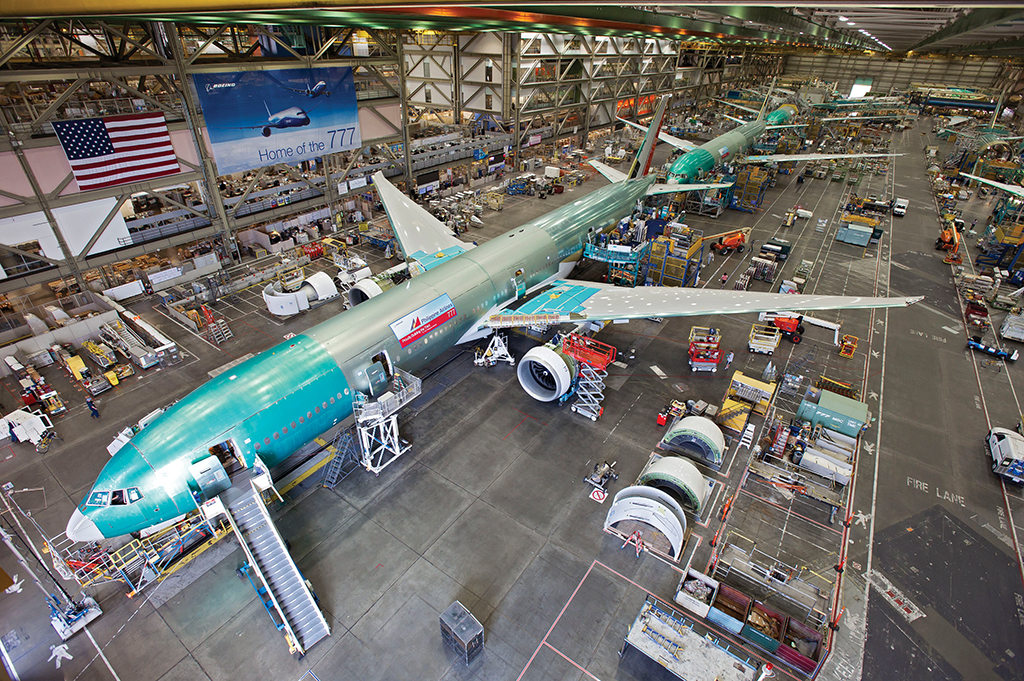
777 Factory Photos

To help bridge the gap to the 777X, Boeing plans to inject additional life into the -200LR/-300ER by developing an upgrade package that will reduce fuel burn by 2% from 2016 onward. Boeing plans to reveal full details of the upgrade in mid-March.

General Electric, which is the exclusive supplier to the 777-300ER and the 777-LRF with the GE90-115B, expects to start initial tests of the engine-improvement element by the end of the year. ”We are targeting about a 0.5% specific fuel consumption improvement in the engine,” says Bill Millhaem, general manager of the GE90 program. The most significant single change in the engine upgrade is an improvement to the active clearance control system which cools the casing of the high-pressure turbine section, helping to minimize clearances between the tips of blades and shroud during cruise.

Source : GE Aviation/Boeing/BoeingPhoto


ON THE AIRBUS FRONT 

Airbus Mobile on Track to Deliver First US-Built A321 to JetBlue in 2016

Construction on the Airbus Final Assembly line in Mobile,Alabama is moving forward and is on track to deliver its first A321 aircraft to jetBlue Airways in”late spring-early summer 2016” an Airbus spokesperson at Hamburg Finkenwerder Airport said.

hqdefault

Airbus started construction in 2013 on the&600 million US facility,where it plans to begin assembling narrowbodies this year for deliveries in 2016.The Mobile assembly will be one of four Airbus A320 assembly lines,in addition to Hamburg,Tianjin and Toulouse. Airbus expects to assemble four aircraft per month by 2018.

“We will start producing the first Airbus A321 variant in Mobile because there is demand for the Boeing 757 replacement ,especially in North America,the Spokesman said,adding the Mobile FAL will build the A32ceo.”Later on,from 2017 and when full production starts in 2018 we will deliver the A321neo,” he said. Airbus will also build the smaller variant of the A320 in the US facility in the future,the Spokesman added.

“This summer we will ship the first aircraft parts from Europe to the US by sea cargo,which takes about 22to 23 days for delivery,” he said

Source : ATW/Airbus Photo


BUSINESS/REGIONAL NEWS

Pilatus Begins Engine Ground Runs on PC-24

Swiss airframer Pilatus is progressing towards the maiden flight of its new PC-24, the first business jet it has ever produced, with a prototype aircraft photographed performing ground runs at the company’s Stans facility on February 18th.

yourfile

yourfile

First flight of the Williams International FJ44-4A powered type is scheduled for May of this year, ushering in a two-year long certification campaign using three flight test aircraft.

Dubbed a “super versatile jet” by the manufacturer thanks to its proposed short runway performance, the PC-24 has already racked up over 80 sales, having sold out the first three years of production of the $9 million aircraft. The next available production slot is in late 2019.

Source: Flightglobal/Photo Pilatus


OTHER AVIATION NEWS

ALC Sees 757 Being Replaced Rather than Re-Engined

Air Lease’s chief believes Boeing is leaning towards a brand new Boeing 757 replacement with additional capabilities rather than a re-engined version of the type.

“We’re very, very intimately involved with Boeing…and based on everything we’ve seen, I think the re-engineing idea is not on the table at this time,” said Steven Udvar-Hazy during a fourth-quarter earnings call. “I think Boeing is looking at an airplane that is not only a 757 replacement but one that also could do things beyond that capability in terms of range and size, because this aircraft will be around for 35 or 40 years.”

He adds: “I think the focus is on an airplane that can replace the 757 as well as do other things even above that size.”

In January, ALC became the launch customer for the long range version of the Airbus A321neo with a 97 ton maximum take-off weight. First deliveries are planned for 2019.

However, Udvar-Hazy does not see the new long-range Airbus as a surrogate for the 757. ”I would not characterize the A321LR as a true 100% 757 replacement, but it does accommodate a significant portion of the 757 flying done by US and foreign carriers,” he says.

Source: Flightglobal


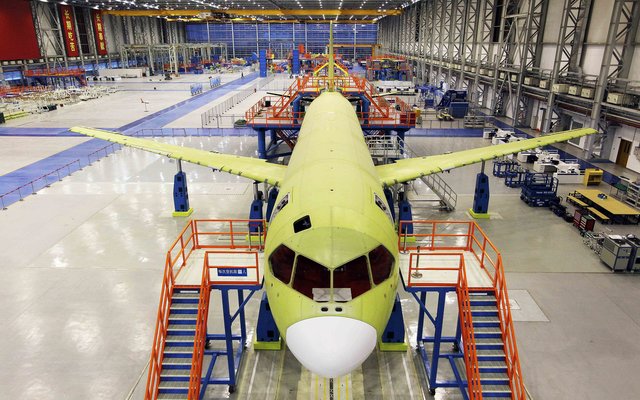
C919 Takes Shape in Shanghai

yourfile

Final assembly work on the Comac C919 has kicked into high gear, with assembly of the first prototype airframe almost complete.

Pictures released to Flightglobal show an almost complete airframe joined from nose through to the tail. Wing-to-body join also has been done, with vertical and horizontal stabilizers already attached to the aircraft tail.

yourfile

yourfile

The aircraft is still resting on struts, although the main landing gear and forward gear appear to have been installed. The aircraft’s wingtip devices have also yet to be installed. No other aircraft are pictured in the final assembly center area.

Comac spokesman tells Flightglobal that no systems have been installed on the aircraft.

He adds however that major works such as the installation of the avionics, flight control and hydraulics systems still remain to be done. The various systems also have to be integrated and tested.

Source : Flightglobal/Comac pictures


Tyrolean Technik Set Up as Separate Company

Tyrolean Airways’ maintenance arm Tyrolean Technik was re-established as a separate company, effective March 1, as a result of the reorganization of Austrian Airlines Group. It is currently a fully owned subsidiary of Tyrolean Airways and specializes in the maintenance of Bombardier Dash 8 aircraft. Approximately 120 technicians are working at the Innsbruck facility.

th

The integration of Tyrolean Airways and Austrian Airlines will take place April 1 when Tyrolean Technik becomes a fully owned subsidiary of Austrian Airlines.

Tyrolean Technik is responsible for the maintenance and repair work performed on 18 Austrian Airlines” Dash 8 Q400 turboprops; It hopes to further expand its third-party operations, which currently stands at 40% of the business.

10944_Tyrolean_Airways_De_Havilland_Canada_DHC-8-402Q_Dash_8

“Tyrolean Technik is a regional company with an international reputation and recognition. We want to further expand upon this,” MD Bernd Meyer said in a statement.

Tyrolean Technik carries out Dash 8 base maintenance at the Innsbruck site, including A and C checks, as well as other maintenance, including replacing landing gear and related components, and engine, propellers and engine components.

Austrian Airlines, a 100% Lufthansa subsidiary, is the only Dash 8 Q400 operator within the Lufthansa Group.

Source : ATW/ Troylean Picture


LATEST NEWS IN BRIEF  

  • Jetstar is due to go to an all 787 long haul fleet by September when the airline receives the delivery of three additional 787s.
  • Air Austral  has bought two of the early built 787-8s .The Indian      Ocean carrier is planning to operate the 787s from Reunion to Bangkok and Mayotte to Paris.
  •   Elix Aviation Capital Limited based in Dublin has taken on three Bombardier Q400 NextGen aircraft previously ordered by an existing customer.
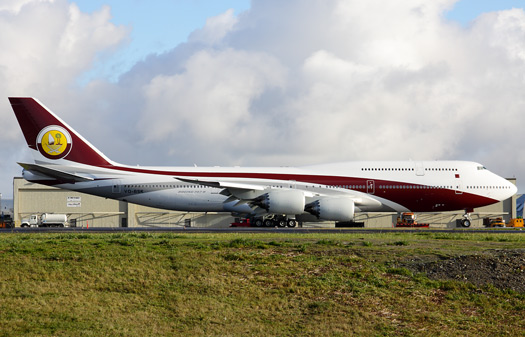
  •   The Qatari Amiri Flight took delivery of its new 747-8i Business Jet.

        747-8_Qatar-Amiri-Flight_2

  • Air Lease Corporation (ALC) has revealed plans to deliver eight new Boeing 777-300ERs on long term leases to six airlines during 2015 : Air France (1), Korean Air (2) , EVA Air (1), KLM (1) and Ethiopian (2). All eight aircraft are from ALC’s outstanding order book with Boeing that currently stands at 16 aircraft.
  •   Silk Way West  confirmed an order for three 747-8 Freighters valued at $1.1 billion based on list prices.
  •   Thai Airways International Public Co.Ltd. has signed a 12 year ONPoint agreement for the maintenance, repair and overhaul of the airline’s GE90-115Bs on 14 Boeing 777-300ERs.
  • Air Explore Monarch Aircraft Engineering has secured a line maintenance technical handling agreement with Bratislava based Air Explore. Monarch will carry out line maintenance service up  to and including A-checks on the carrier’s two Boeing 737-800s
  •   AirBridge Cargo Russian freight operator is aiming to acquire another 747-8 F this year and introduce a 737-400 freighter.
  • Bombardier has flown the larger variant of the CSeries for the first time. The second CS300 is in production at Bombardier’s final assembly facility in Mirabel and is set to come off the production       line later this year.

            yourfile

        Air Cargo

Tricky Job Tackled by Volga-Dnepr

Volga-Dnepr engineers in Ulyanovsk, Russia, had to move quickly in late February in response to an urgent customer request. Their mission? to move 35 tons of pipeline, in 62-foot long sections from Scotland to Turkey.

Huseyn Mammadi, logistics executive with Volga-Dnepr, said the engineers developed a load plan and built a multi-purpose shipping cradle to load the unwieldy pipes for the oil production industry.

IL-76, Volga-Dnepr

Manufacturing of the cradle was organized by a team at the U.K’s London Stansted Airport, while Volga-Dnepr’s engineering and logistics center arranged to rent cranes for the loading and a trailer to get the pipes to Prestwick Airport.

Extra loading equipment was brought in from Leipzig, Germany. Despite strong winds in Prestwick on the day of the loading, the technical crew on the IL-76TD-90VD aircraft was able to build the loading assembly for the huge pipe on the trailer and in the aircraft, fixing the pipes in the cradle and lifting it into the cargo hold.

The cargo arrived in Istanbul three days from the customer called. The equipment was delivered on behalf of DHL Global Forwarding to Istanbul’s Sabiha Gokeen International Airport for use in oil exploration on the Black Sea shelf in Turkey.

Source: CargoFact/ANA


              Delivery of Cargolux 30th 747, 747-8 Freighter 

Cargolux1

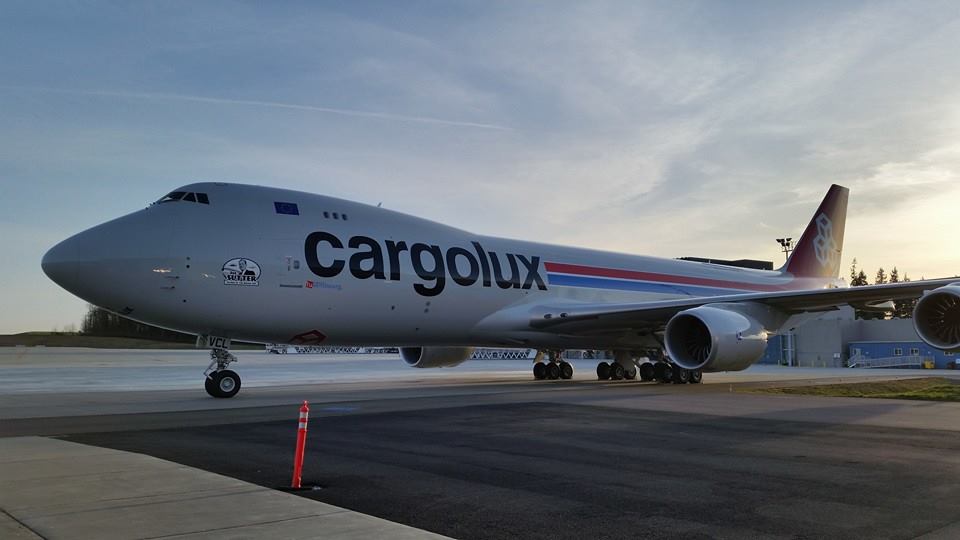
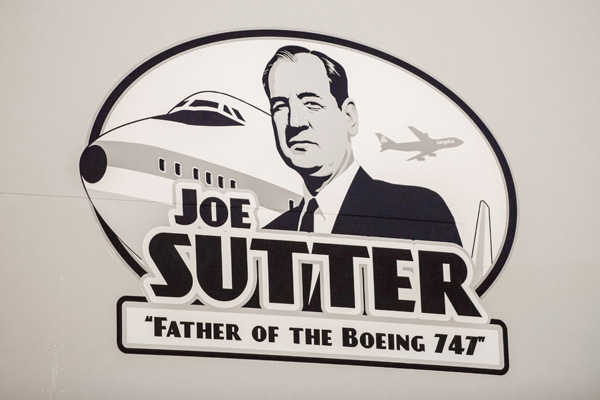
Cargolux took delivery of their 30th 747, a 747-8 Freighter. Marking the milestone with a tribute to the man who started it all Joe Sutter. Cargolux decked out their newest airplane with a special decal honoring Joe as the Father of the 747.  The delivery took place from the Future of Flight Aviation Center with a dinner commemorating the occasion.

Cargolux 747-8F Delivery Honors Joe Sutter

Cargolux took delivery of the first 747-200 Freighter in the late 1970s and have been a loyal customer to this aircraft. Cargolux was the launch customer for the -8 Freighter.


cargolux5

Cargolux serves 100 airports worldwide with the 747-8 Freighter from the hub of the airline in Luxembourg.

Source:   Air Cargo World


Researched and Compiled by : Ed Kaplanian

                          Commercial Aviation Advisor

                                    Contact – ed@kaplanianreport.com

Volume 2 Issue 2 February 2015

ON THE BOEING FRONT

GE Gears Up for Engine Tests of GE9X Parts

GE Aviation will shortly begin running a test engine equipped with a number of advanced-technology components that will feature on the GE9X powerplant destined for the Boeing 777X.

ge9x-1-1024x575

The parts include combustor liners, high-pressure turbine shrouds and nozzles made from ceramic matrix composite (CMC), next generation high-pressure turbine blades, and titanium-aluminide low-pressure turbine blades produced via additive layer manufacturing.

Set to get under way in the coming weeks at GE’s facility in Peebles, Ohio, the trials will be conducted using a GEnx test engine fitted with the new Parts.

GE is already utilizing CMCs for the high-pressure turbine shroud on the CFM International LEAP engines in partnership with Snecma, but the GE9X dramatically expands their deployment.

Meanwhile, tests will shortly commence on a second iteration of the compressor. These will be carried in Massa in Ital where GE has an oil and gas business and that is ready to fire up in the next week or so.

The CMC components are around 25% lighter than their metallic equivalents, says Matt Szolwinski head of the GE9X program, and additionally able to withstand much higher temperatures without the need for cooling.

First flight of the 105,000lb-thrust powerplant is scheduled for 2017 aboard GE’s 747-400 test aircraft.

Certification should follow around a year later.

Source : Flightglobal/GE Aviation


ON THE AIRBUS FRONT 

A New Attraction in Toulouse For Aviation Enthusiasts: The Aeroscopia Museum Opens

Aeroscopia is located adjacent to Toulouse-Blagnac Airport, putting it in proximity to Airbus’ home location-including the company’s headquarters and its A380, A350XWB, A330 and A320 Family final assembly lines. This enables visitors to look at Airbus’ current production activity while exploring aviation history at Aerscopia.

3cd093ee87

The museum features a collection of iconic aircraft displayed in its exhibition hall and paved grounds, including an A300B the landmark widebody twin-engine jetliner that launched Airbus-a “Super Guppy” outsized transporter used by Airbus to carry aircraft components during the company’s early days, and an Aerospatiale-BAC Concorde supersonic passenger airliner.

“Airbus’ contribution to Aeroscopia reflects the company’s great fondness for celebrating its roots and different phases of aircraft development and production over the years,” said Jacques Rocca, Airbus’ Deputy Head of Media Relations and Heritage, who also is a member of the museum’s technical committee.

Manatour, the company that offers tours of Airbus’ final assembly lines in Toulouse, manages Aeroscopia as well, Rocca explained, proving an exciting “two-faceted” experience for aviation buffs- with all tours of Airbus’ Toulouse production facilities now starting at the museum.

Source : Airbus/Airbus Photo


BUSINESS/REGIONAL NEWS

NetJets Europe Cleared to Fly Phenom 300s from London City Airport

NetJets Europe has clinched approval from the UK Civil Aviation Authority to Operate its Embraer Phenom 300 light cabin business jet at London City airport, in the heart of the UK’s financial community.

The Berkshire Hathaway-owned company is the largest operator at the site, responsible for over 50% of all business aircraft traffic. In 2014 alone, NetJET says it flew from City to over 370 destinations worldwide, with Paris Le Bourget one of the most popular routes.

yourfile

NetJets placed an order in 2010 for 125 Phenom 300s-including 60 firm orders as part of a $17.6 billion order. The Operator has taken delivery of 35 of the seven-seat twinjets, five of which are based in Europe.

Source: Flightglobal/Photo Net Jets Europe


OTHER AVIATION NEWS

Delta is Bringing the Boeing 717 Back Home to California

Delta is upgrading its fleet on the Los Angeles to San Francisco shuttle, one of the most competitive routes in the country, by replacing most of its regional jets with the Boeing  717, an aircraft that never quite caught on but seems well-suited to this particular market. In a sense, the 717s will be coming home to where they where originally built.

Delta said it will introduce the 717s on eight of its 15 daily flights between California’s two biggest airports.

The 717s were the last commercial airplanes produced at the Long Beach, California plant that Boeing acquired when it merged with McDonnell Douglas in 1997. Boeing made 156 of them, closing  out  with a 2006 delivery to AirTran, which became the biggest customer for the 100 seat aircraft.

Delta announced in 2013 that it would take over the leases for AirTran’s 88 Boeing 717s from Southwest, which acquired AirTran but then decided it wanted to stick with a single fleet type, the 737. So far Delta has acquired 54 of the 717s.

Source: Ed’s Research


CFM Starts Leap-1A Flight Tests

CFM International has begun flight tests of its new Leap-1A engine destined for the Airbus A320neo narrowbody, the GE Aviation-Snecma venture confirms.

A modified Boeing 747-400 owned by GE is being used for trials of the 24,500-32,900-lb-thrust turbofan, which are taking place at Victorville, California.

It is the second of the Leap-series engines to take to the skies, following the maiden flight of the-1C for the Comac C919 in October 2014.

The -1B for the 737 Max will fly later this year, with assembly work on the initial flight -test engine under way at GE’s facility in Evendale, Ohio. Of the three Leap engines, the -1A and the -1C are broadly similar while the -1B is slightly smaller. The latter features a 69.5 in (176.5cm) fan with a 9.1 bypass ratio, against figures of 78 in and 11:1 for the -1 and-1C.

So far, CFM has conducted engine runs totaling 1,940h across 3,360 cycles using all three engine variants. It aims to have achieved 40,000h by service entry of the Leap-1A next year and 60,000h by the time the-1C enters service in 2018.

Source : GE Aviation-Snecma/Flightglobal


Scoot Takes Delivery of its First 787-9

Singapore-based low-cost carrier Scoot has taken delivery of its first Boeing 787-9 during a ceremony held at Boeing’s delivery center in Everett.

yourfile

yourfile

Scoot is a subsidiary of Singapore Airlines. The aircraft, registered as 9V-OJA and named “ Dream Start” (MSN 37112), departed Everett on January 31st, arriving in Singapore on the Morning of February 2nd. It entered commercial service on February 5th flying from Singapore to Perth and Hong Kong.

Scoot’s 787-9s are configured with 375 seats, comprised of 340 economy-class seats and 35 premium seats. They are powered by Rolls-Royce Trent 1000 engines. The airline plans to take delivery of six 787-9s by August, which will replace its fleet of six 777-200s. In addition, it will take three 787-8s by the end of the year, and plans to have an all 787 fleet of 11 aircraft by March 2016.Thereafter, the carrier will take delivery of two or three aircraft per year until early 2019, when it will have received all 20 on order.

Scoot chief executive Campbell Wilson says that the new aircraft is a major benefit to the airline’s long term strategy.

Source : Flightglobal / Boeing Photos


LATEST NEWS IN BRIEF  

  • COMAC (Commercial Aircraft of China) has received an order for 20 C919s from Huaxia Financial Leasing company.
  • Chorus Aviation Canadian regional carrier has placed a firm order for 13 Bombardier Q400 turboprops worth $424 million after signing an amended capacity purchase agreement with Air Canada.
  •   Transavia  Air France-KLM Group’s low-cost operator ordered up to 20 Boeing 737-800s and revealed a new livery.

yourfile

yourfile

  •   Asiana Airlines has signed a letter of intent(LOI) with Airbus for the purchase of 25 A321neo  single aisle aircraft as part of its ongoing fleet modernization program.
  • Bombardier has completed flutter, cold weather and passenger-evacuation testing as CSeries flight tests pass the 900-hour mark enroute to the 2,400 hours required for certification.
  • Korean Air has ordered five Boeing 777-200 LR Freighters in a deal worth $1.5 billion at List prices.
  •   Luxair to acquire more Q400s under a fleet renewal plan to increase capacity.
  • Airbus has officially written off the order for the first, and so far only,VVIP 380. Saudi prince Alwaleed bin Talal bin Abdulaziz Alsaud placed the order in 2007.
  •   Greenpoint Technologies has delivered the first BBJ 747-8, thus becoming the first outfitter to hand over an executive version of Boeing’s newest four-engine widebody.
  • Mitsubishi Aircraft has released pictures of its flight test fleet in various stages of final assembly.

yourfile

yourfile

yourfile

yourfile


AIR CARGO

ANA & United Form Trans-Pacific Cargo Joint Venture

On December 1st, 2014 All Nippon Airways (ANA) and Lufthansa Cargo launched their Europe/Asia joint venture with first flights from Japan to Europe. And with that deal under its belt, ANA has turned its focus to the trans-Pacific lane, signing a similar agreement with US-based United Airlines.

anacargo_oka_aw1

The two carriers have filed antitrust exemption applications with US and Japanese regulatory authorities for a set up similar to ANA’s Joint Venture with Lufthansa Cargo.

United 787-8 N28912 (12)(Tko) LHR (SA)(46)-M

anacargo_oka_aw1

Commenting on the filing, ANA described the proposal Joint Venture with United as one that would “create a more efficient and comprehensive trans-Pacific air cargo business network”. The carrier went on to say that trans-Pacific cargo Joint venture-the first of its kind between The US and Asia-would generate substantial service benefits for freight customers, and that “it would also enable United and ANA to compete more efficiently with other airlines that maintain a significant presence in both markets.”

As with Lufthansa Cargo agreement, under the proposed United agreement the two carriers “will be able to jointly manage trans-Pacific air cargo business activities including scheduling, pricing and sales.”

Like Lufthansa and ANA, United is a member of the Star Alliance, and if the trans-Pacific venture gains regulatory approval it could start of a broader Star Cargo Alliance. It will be interesting to see what happens.


In addition to a long-haul passenger fleet that includes fifty-four 777s and thirty-three 787s (with more on order), ANA operates ten 767-300Fs intra-Asia regional service. United does not operate freighters, but has a large fleet of wide body passenger aircraft, including seventy-four 777s and thirteen 787s (with more on order).

Source: CargoFact/ANA

                      The Great French-fry Airlift

Never let it be said that the airfreight industry will back down from a daunting humanitarian challenge. From any region of the globe, heroic cargo carriers can step up when needed to transport emergency medicines, shelters, fuel, personnel and … French fries?

McD_French-Fries-small

Well, it’s not exactly on par with the Berlin Airlift, but air cargo companies have helped the nation of Japan end a crippling McDonald’s French fry shortage that had ravaged the country’s super-sized appetite for three weeks. The shortage, which forced the 3,100 McDonald’s restaurants in Japan to ration its dwindling fry supply and offer only small-sized portions since mid-December, finally ended to thanks to an emergency shipment of about 2,600 tons of frozen French fries in late December 2014.

According to a statement from McDonald’s Japan, the shortage arose from the ongoing slowdown due to labor dispute at seaports along the U.S. West Coast, which caused lengthy delays in the shipment of the restaurant chain’s signature side-dish in late 2014.

McDonald’s Japan also said about 1,000 tons of fries were sent via airfreight from East Coast ports and another 1,600 tons were shipped by seafreight. Beginning on Jan. 5, 2015, the small-size limit was removed at all locations and customers are again free to order large portions.

No information was provided about which air cargo carriers were used in the “airlift” or how much the shortage has affected sales for the restaurant giant’s Japanese operations.

While the island nation also grows some potatoes on its own, most of those are prepared and eaten fresh, the Associated Press reported. Most of the 300,000 short tons of French fries consumed each year in Japan are imported in pre-cut frozen form.

While the restrictions have been lifted, McDonald’s Japan cautioned its customers that the emergency shipment may not be enough to meet demand. “We will continue to monitor the situation carefully to do our best to ensure stable supply of potato products,” the company added.

Source:   Air Cargo World

Researched and Compiled by : Ed Kaplanian

Commercial Aviation Advisor

Contact – ed@kaplanianreport.com

Volume 1 Issue 4 November 2015

ON THE BOEING FRONT

Boeing Breaks Ground for 777X Composite Wing Center

777Xcwcstill

On October 21st Boeing celebrated the groundbreaking of its new 777X Composite Wing Center in Everett, Wash. campus. Permitting for the new 1 million-square-foot facility was completed approximately seven weeks earlier than anticipated, allowing for an accelerated start to construction.

Boeing is investing more than one billion dollars in the Everett site for construction and outfitting of the new building.

“We’re excited with the progress being made on this new facility that will play a crucial role in bringing the 777X to market,” said Boeing Commercial Airplanes President and CEO Ray Conner. ”We wouldn’t be in position without the support of our team-mates and partners throughout the Puget Sound region and in Olympia. We owe them a debt of gratitude.”

To date the 777X has accumulated 300 orders and commitments.

Source : Boeing/Boeing Pictures


ON THE AIRBUS FRONT 

Airbus A350 XWB, A330 Gains Common Rating for Pilot Training

a350xwb-a330-courtesy-airbus

The Airbus XWB and A330 have been approved for common type rating for pilots training to fly the aircraft.

The new regulatory approval means that pilots who are qualified and current on the A330 can start training to fly the A350XWB by undergoing “differences training” only.

Differences training does not require the use of ground-based full-flight-simulators and reduces pilot training time to just eight days-as much as 65% less than a standard transition course.

It also means that airlines operating both types of aircraft can create a pool of pilots able to fly both the A330 and A350XWB in a single-fleet flying(SFF) concept, allowing for increased scheduling flexibility and mobility.

Source : ATW/Airbus Photos


BUSINESS/REGIONAL NEWS

Mitsubishi Aircraft Rolls Out First MRJ

A Mitsubishi Regional Jet (MRJ) is unveiled at the hanger at Mitsubishi Heavy Industries' Nagoya Aerospace Systems Works Komaki Minami Plant in Toyoyama town, Nagoya prefecture

Mitsubishi Aircraft has rolled out its first test aircraft for the MRJ program, in good time ahead of its planned 2Q 2015 first flight.

The Japanese airframer showcased aircraft 10001 before 500 guests consisting of government officials, customers and journalists at Mitsubishi Heavy Industries’ Komaki South plant in Nagoya on October 18th. Mitsubishi also hosted a live webcast of the ceremony on its website.

The sleek regional jet bears Mitsubishi’s distinctive red, black and gold livery. Mounted on its wings are the Pratt & Whitney PW 1200G engines. This is Japan’s first commercial passenger aircraft to be built in over 50 years, since the NAMC YS-11 turboprop program terminated in 1973.

At a press briefing before the roll-out ceremony, Mitsubishi’s chief engineer Nobuo Kishi says the program’s second and third test aircraft are also in final assembly. The second flight test jet is undergoing wing to body join, while fuselage sections of the third aircraft are being fused.

A Mitsubishi Regional Jet (MRJ) is unveiled at the hanger at Mitsubishi Heavy Industries' Nagoya Aerospace Systems Works Komaki Minami Plant in Toyoyama town, Nagoya prefecture

Mitsubishi is using a fleet of seven test aircraft-five for flight tests and two for ground tests, for the MRJ program.

The MRJ order book stands at 375 aircraft: 191 firm,160 options and 24 purchase rights. Japan Airlines has also signed a letter of intent for 32 of the regional jets

Source: Flightglobal/ Mitsubishi Photos


OTHER AVIATION NEWS

Silvercrest Flight Test Enters Second Phase

Flight tests of Snecma’s 11,000-pounds-thrust-class Silvercrest turbofan on a modified

Gulfstream II have entered a second phase in San Antonio, Texas.

The engine which is developed for Dassault’s large-cabin Falcon 5X and the super-midsize Cessna Citation Longitude, remain on track for FAA Part 33 certification at the end of 2015, says Francois Planaud, director general of Snecma’s commercial engine division. ”We are in the middle of the test program and have built up 1,300 test hours, mostly on the ground of course,” says Planaud. In all, eight Silvercrests are running, with the bulk undergoing ground runs in Villaroche and Istres in France.

Endurance tests are also under way at Safran’s subsidiary Techspace Aero in Belgium.

Source: Aviationweek


Greybull Capital Buys UK’s Monarch

British travel booker And airline company Monarch has been acquired by investment firm Greybull Capital which will invest  $201 million as it turns itself into a low-cost budget airline.

Greybull took 90 percent stake in Monarch, with the rest passing to its pension scheme.

The agreement will help Monarch take on budget airlines such as Ryanair and easyJet.

The deal brings to an end the ownership of Monarch by the Mantegazza family. Greybull considers its ownership of Monarch to be a long-term investment, the statement said.

As part of its plan to shift a low-cost budget carrier from its current charter flights operation, Monarch is shrinking its fleet to 34 from 42 aircraft, ending long-haul and charter flights by April and focusing on core European routes.

On October 31st Monarch confirmed an order for 30 737-MAX 8s the order includes options for 15 additional  737 MAX 8s.

Source : Airwise/Ed’s Research


Virgin Atlantic Foresees Firming 787-9 Options and Possible -10s

yourfile

Virgin Atlantic intends to exercise its Boeing 787-9 options and is looking at the -10 variant as a potential replacement for leased London Gatwick-based 747s.

Firming of the airline’s four -9 options would bring its 787 fleet to 21 aircraft by the end of 2018, notes chief executive Craig Kreeger. ”We have not exercised those last four options but we are communicating very clearly that we plan to,” he says.

Kreeger also discloses that a follow-on order for the largest 787 variant the -10, is being considered as the airline proceeds toward a decision on how to adapt its fleet after leases on seven Gatwick-based 747s expire in 2019.

While the-10, with 323 seats, is smaller than the other candidate aircraft, the 777 and Airbus A350, it offers the advantage of fleet commonality and the attendant efficiency in pilot training among other areas, he notes.

Source : Flightglobal


LATEST NEWS IN BRIEF  

  • GE Aviation has opened a new indoor engine test facility at its Peebles, Ohio site. The $40 million facility will begin testing production engines by the end of this year.
  • ge-aviation  United Airlines said it converted orders for 787-8 Dreamliners to 787-10 models, a move that defers the delivery date to 2022 and beyond from 2017 to 2018 currently.
  • Ryanair confirmed on October 24th that CEO, Michael O’Leary has signed a new 5 year contract which commits him to the company until September 2019.
  • Embraer has cut the first metal component for its E-Jet E2 family of regional jets at its factory in Evora, Portugal.
  • Monarch Airlines confirmed its order for 30 737 MAX 8s which was originally announced at the Farnborough International Airshow in July.
  • Air Canada announced on November 6th an order for two additional 777-300 ERs.
  • Sabena Technics is extending the scope of its activities to overhauls of Boeing 777 aircraft.  Sabena will do checks, structural modifications, painting and cabin refurbishment of 777s.
  •   China Aircraft Leasing Co.(CALC) has signed a memorandum of understanding (MOU) covering 74 Airbus A320neos, 16 A320ceos and 10 A321ceos.
  • China Express Airlines has placed a firm order for 16 Bombardier CRJ900 NextGen regional jets.
  • SMBC Aviation Capital announced an order for 80 737 MAX 8s, valued at more than $8.5  billion at list prices.

SMBC Aviation Capital 737 MAX 8 Artwork

  • Globalla has placed an order for 14 long-haul 787-9 to be placed with Air Europa of Spain.   Globalla is the hospitality conglomerate that owns Air Europa. In Addition Globalia has entered talks with Boeing to acquire the 737 MAX.
  •   American Airlines the first 787-8 for American Airlines has rolled out of the paint shop at Boeing’s Everett, Washington facility on October 31st.The first American Airlines 787 is line number 241 will become N800 AN (msn 40618) when delivered this month.

yourfile


Air Cargo

Volga-Dnepr Deliver UN Helicopters to Sierra Leone

Volga Dnepr helicopter ebola

To assist with the ongoing Ebola virus outbreak emergency in West Africa, Volga-Dnepr Airlines used one of its heavy-lift An-124 Russian freighters to transport three United Nations helicopters from Moscow to Freetown, Sierra Leone.

The multi-purpose helicopters-Russian-built Mi-8’s,each weighing 7.3 tons empty-will be used to support the UN Mission for Ebola Emergency Response (UNMEER),which was established in late September to fight the outbreak of the virus.

For the October.14 trip, Volga-Dnepr ground handlers made some tricky maneuvers to squeeze all three Russian-built Mi-8 helicopters into the 33 m x 6.4 m x4.4 m cargo hold of the An124. First, they demounted the main lifting and tail rotors, vibration absorbers and fuel tanks. They also removed fluids from the shock struts and wheels, thus reducing the height of the helicopters so they would clear the 4.4 meter-high compartment ceiling. Finally, they aligned the demounted equipment alongside the three aircraft inside the vast main deck.

Source: Air Cargo World/Picture Volga-Dnepr

Researched and Compiled by : Ed Kaplanian

Commercial Aviation Advisor

Contact – ed@kaplanianreport.com

Volume 1  No. 1 August 2014

Volume 1 No. 1 August 2014

ON THE BOEING FRONT

Boeing Beavers Away on 787-10 Dreamliner

53be6ce90028438faf7f5c8e767f2254-boeing-787-10-dreamliner-920

Boeing has only just delivered its first 787-9 to launch customer Air New Zealand but the aircraft manufacturer has already begun detailed design work on the final member of the Dreamliner family, 787-10 ahead of its first flight in 2017.

The 787-10, which will be longer against the stretched 787-9 in order to carry around 320 passengers depending on how airlines configure the jet. “The -10 is a much simpler program” than its predecessors says Mark Jenks, Boeing’s vice president for 787 development.

“When you look at all the learning we had on the -8, all the improvements and new technology we’ve put on the-9, that was a big job” Jenks told Australian Business Traveller during the delivery flight of the world’s first Boeing 787-9 from Everett to Auckland for launch customer Air New Zealand.

“The -10 is very different” Jenks said.”We’ve had a team doing the up-front work on the 787-10 for the better part of a year now, it’s very simple stretch and very low risk.”

It’s so low-risk that while first 787-10 test flights are slated for 2017 ahead of delivery to its launch customer in 2018, this Dreamliner could achieve something few all-new airplane types have ever done, and delivered ahead od schedule, Jenks admitted.

Boeing is currently pushing 10 of the 787-8 and 787-9 variants a month, across three assembly lines, with the goal of taking this to 14 airplanes per monthly the end of the decade.

The 787-10 accumulated 132 orders, however Boeing has yet to reveal which airline will be the launch customer.

Singapore Airlines was the first airline to commit to the largest Dreamliner, signing up for 30 of the jets at list price of US$289 million each, Etihad Airways has placed an equal order alongside its order of 41 of the 787-9s.

Source : Australian Business Traveller/Boeing Photo

free vector 09

ON THE AIRBUS FRONT

Dissecting the A330neo

09d938b833

With much fanfare, the re-engined A330neo(new engine option) family was launched on the first day of the Farnborough Airshow with a memorandum of understanding (moU) from Air Lease Corporation (ALC) for 25-900neo aircraft, which alongside its smaller sibling-800neo succeed the 295-seat -300 and 253-seat-200, respectively.

Airbus chief executive Fabrice Bregier confidently proclaimed that the European plane-maker would garner 100 orders for the aircraft by the end of the week, which will have an entry into service in the fourth quarter of 2017, with potential orders coming from the likes of long-haul low-cost carrier Air AsiaX, lessor CIT and more.

The centerpiece of the upgrade is the 112-inch Rolls-Royce Trent 7000 engine which is based on the Trent 1000-TEN (Thrust Efficiency and New Technology) powering the 787 Dreamliner and provides an 11% specific fuel consumption.  While the Trent 7000 is considerably larger than the 97-inchtrent 772 engine on the existing A330, which along with strengthened engine pylons lead to increased weight and drag,thus creating a 2% and 1% respective fuel penalty.  These are going to be offset by the 4% reduction in block fuel burn achieved by the installation of an A350-styled shark let and other aerodynamic clean-ups.

Monday’s launch immediately sparked a war of words between arch-rivals Airbus and Boeing, with the former saying the A330neo will be offered at a 25% lower capital cost than today’s A330 while featuring improved avionics, interior and share a 95% commonality; the latter claims the A330neo weighs heavier and cannot have the same fuel burn per seat as the 787 Dreamliner which is lighter, technically superior aircraft. The A330neo, Boeing asserts,is a deja vu of the original commonly know as the A350 Mk 1.

The A330neo serves as a useful indication that with significantly cheaper cost, the aircraft could have a feasible business case for few operators which clamor for fuel efficiency more readily available than the 787 Dreamliner whose production slots are sold out until 2019 and 2020 at the earliest.  Though Boeing is undoubtedly going to contest this, with rising production rate to 12 a month by 2016 and 14 a month by 2020 improving its availability and delivering superior capability at every stage length.

Source : Aspireaviation/Ed’s Research/Airbus Photo


free vector 09

BUSINESS/REGIONAL NEWS

EASA Certifies the ATR’s New Pratt& Whitney Canada 127N Engines 

0

The European Aviation Safety Agency (EASA) has certified the ATR72-600 aircraft for the use of new PW127N engines. Following in the PW127M’s flight path with over 10 million hours of operation, the PW127N provides a 4.5 power increase of Maximum Take-off ratings, thus enhancing performance in hot and high operating conditions. The PW127N will be rolled out progressively to Avianca’s ATR fleet throughout 2014 and 2015.

The First ATR72-600 of Avianca equipped with the new PW127N engines has already been delivered in late June. This will enable the airline to get better performance at take-off on airports in altitude like their hub in Bogota, Colombia.

The new PW127 N engines recently obtained certification from Transport Canada(TC), the Canadian Airworthiness Authority and now the EASA certification as well.

Source: ATW

free vector 09

 COMMENTARY

Farnborough Boeing/Airbus Orders – The Clear Picture

Following all the sales activity at the Farnborough Air Show last month, Boeing ended July with a commanding lead over European rival Airbus in both orders and deliveries. Boeing booked 324 orders in July, the largest sales figure it has ever booked in a single calendar month.  This gives the jet maker a total of 823 net orders so far this year. But the disparity is greater than those top-line numbers suggest, because Boeing has an extensive lead in sales of bigger and much more expensive wide body aircraft. Boeing has booked firm orders for 273 wide body aircraft. That included two large orders from Gulf carriers Emirates and Qatar for a total of 200 of the new 777-9X (not counting options for another 100 options for both airlines)- orders that had been announced last fall at the Dubai Airshow, but were made firm only in July.

In contrast, because in the past two months Emirates canceled 70 Airbus A350 wide bodies and Skymark of Japan canceled six A380, Airbus’s net tally of wide body aircraft orders so far this year is negative-a deficit of 27 orders.

At Farnborough, Airbus launched  the A330neo, and announced commitments(Memorandums of Understanding)from airlines and leasing companies to buy 121 of them.(These are not confirmed orders yet).When these orders are confirmed, they will help Airbus win back some ground in the widebody-sales race.

In another boost for Boeing, data released on Thursday, August 7th, by the company, show that United traded up a previous order for seven 787-8s for seven of the larger, more expensive 787-10s.

Based unreal market pricing data from aircraft-valuation firm Avitas, that switch is worth nearly $200 million to Boeing.

In the narrow body aircraft sector, both plane makers plan upgrades to derivative models with more fuel-efficient engines.   Airbus customers have canceled orders for 113 of the current narrow body A320 aircraft so far this year.  Boeing has had 54 cancellations of its corresponding 737 aircraft family .

In 2014. Boeing commitments from China totaled 205 so far.  These include 25 737s from Donghai Airlines, 50 737s; from Shandong Airlines; 50 from Nine Air and 80 from China Eastern Airlines.  In addition to these commitments Monarch Airlines committed to order 30 737s at the Farnborough Airshow which have not been confirmed yet.

In summation,  there is a big difference between gross and net orders; the key to orders taken by Airbus and Boeing are the net orders.  They are not the gross orders, which many financial analysts on Wall Street use to distort facts.

Source : Ed’s Research

free vector 09


Other Aviation News

Mitsubishi Mounts Engines on First MRJ Test Aircraft

MRJ-Engines-Mounted-0614a

yourfile

Mitsubishi Aircraft has mounted the Pratt & Whitney PW1200G engines on its first MRJ regional flight test aircraft. This comes shortly after the Japanese airframer completed the wing-body join of the regional jet.

Installation of other equipment, wiring and piping works are being carried out, says Mitsubishi. The MRJ is scheduled to take its first flight in the 2Q 2015.Mitsubishi has also rolled out its first ground test aircraft in preparation for static strength tests.

Source: ATW/Ed’s Research

free vector 09

Emirates Tops World for First Class Business Capacity

Emirates Airlines is the number one airline for premium capacity measured in international seat kilometers, clocking 876 seat kilometers per week, according to flight data firm OAG.

OAG said popularity of the Dubai-based airline’s Business and First Class cabins is primarily due to long haul nature of Emirates fleet deployment.

Earlier this month, the airline received delivery of its 50th A380, configured with 90 First and Business seats.  Thus further adding to Emirate’s average weekly capacity of over 191,000 premium seats.

Tim Clark, President of Emirates Airlines said: “When we signed up for the A380, we had a clear vision of how we would deploy these aircraft.  At the same time we also saw a tremendous opportunity to take the flying experience to whole new levels”.

Over 27.5 passengers have flown on Emirate’s A380s since 2008, with premium overall seat factors on the A380 fleet consistently outperforming the network.

Globally, Emirates’ First Class capacity grew by six percent over the last year, while First Class passenger traffic increased by eight percent.

Across the network, First Class demand is strong, particularly on routes to Europe, Africa and the Middle East, recording consistently high load factors of over 70 percent.

Emirates is in advanced stages of developing a new First Class “bedroom concept” for its A380 and now new Boeing 777 fleets. Customers can expect fully enclosed rooms and all the touches and amenities common to luxury hotels and yachts, including room service.

Emirates operates the world’s largest fleet of A380s,with 50 in service, and another 90 pending delivery.  It also operates the world’s largest fleet of Boeing 777s with 139 in service and another 205 on its order books.  It recently received the 500th 777 produced by Boeing.

Source: Aviation Business /Ed’s Research


free vector 09

Budget Carrier Jin Air Makes Inroads into Long-Haul Market

South Korea’s budget carrier Jin Air, a subsidiary of Korean Air, announced in June that it will become the country’s first low-cost carrier.  It is due to start budget long-haul service as early as the end of this year, armed with wide-body aircraft and newly allocated international air routes.

The carrier will also double the size of its passenger jet fleet from 11 to 20 by the end of 2015.

Top management of Jin Air unveiled the growth strategy at a press conference in Seoul to mark its sixth anniversary.

To offer long-haul flight services at affordable prices, Jin Air will acquire a 777-200 wide body that can fly from Seoul to parts in Europe and North America in December.  Then two more of the model next year for its new long-haul venture.

The firm plans to have a fleet of 20 aircraft by the second half of next year by adding nine aircraft, including a 777-200 ER and 737-800.  By the second half of this year, Jin Air will increase its flight routes to 17 from 13 with at present with new routes to China, Japan and Malaysia.

The 777-200Er aircraft will be used initially for flights to Guam and Hong Kong, with services to destinations like Hawaii to be offered after the second batch of wide body aircraft arrive.

Source : The Korea Herald

free vector 09


MTU Aero Engines Takes Stake in GE9X Engine Program

 ge9x_jet_engine_cutaway_0_1

MTU Aero Engines will take a 4% workshare in General Electric GE9X program. MTU will manufacture and assume design responsibility for the engine’s turbine center frame. Take over the life of the program, the workshare will be worth around $5.5 billion in revenue for MTU.

The new engine will be designed to exclusively power the Boeing 777X, which is slated to enter service around 2020. Thee hundred aircraft are already on order plus options. The contractual details still need to be finalized between the parties to the deal.  MTU will participate in the engine’s sales and profits in proportion to its program share.

“Our stake in the GE9X program gives us significant market share in one of the most important next generation engines in the upper thrust category.  At the same time, it helps us further balance the mix of our product portfolio,” MTU CEO Reiner Winkler said.  “ Some 30% of today’s active aircraft have MTU modules on board.  We are going to increase this share in the worldwide engine fleets appreciably over the next five to ten years”

Source : ATW

free vector 09

LATEST NEWS IN BRIEF  

  •     The Japanese Government plans to obtain two Boeing 777-300 Er aircraft to replace a pair  of 747-400s used for the VIP transport mission.
  •     Leap-1A the first Leap-1A engines for the A320neo enter production.
  •     Vistara Airlines Tata SIA Airlines has announced that its New Delhi based carrier will be named Vistara,with the carrier scheduled to start operations in October.

             Vistara-620x310

  •   Ethiopian Airlines has added its ninth Boeing 787 Dreamliner to its expanding fleet
  •   KLM has signed a long-term contract with Air Lease Corp.(ALC),covering a pair of new build 777-300ERs.
  • ANA finalized an order for 40 wide body Boeing aircraft comprised of 20 777-9Xs, 14 787-9s and 6  777-300ERs.
  •   Scoot the wholly-owned low-cost,long-haul subsidiary of Singapore Airlines,has selected UTC Aerospace Systems to provide asset management & repair services on its 787 aircraft.

free vector 09

Air Cargo

Summer Brings Cherries Jubilee for Some Cargo Carriers

Sea-TacCherries


Virtually all phrases that incorporates the word “cherries” donate something happy and positive.  That is certainly the case this summer for cargo carriers serving the Pacific Northwest, as the banner cherry crop has been the cherry on top of the sundae.

This has been especially true for cargo carriers serving Seattle’s Sea-Tac International Airport and Vancouver International Airport in British Columbia.

Tom Green, senior manager for air cargo operations and development at Sea-Tac International Airport, says when the last cherry is picked in a few weeks.  It will likely be the second strongest crop on record for the region.  The crop is running ahead of forecasts and is huge compared to last year, when poor weather resulted in reduced tonnage.  Cherries are the top perishable cargo shipped out of Sea-Tac.

Cherries-med

It has been a bonanza for air cargo carriers, both those with freighters in their fleets and those who only carry the sweet fruit in their bellies. It has become the summer of the Cherry charter at Sea-Tac.  China Eastern and Nippon Cargo have both added weekly charters, while Polar Air Cargo has flown three weekly charters.  In addition EVA has added three weekly flights, Asiana has added two flights, China Airlines has added six and Korean Air five weekly flights.

Seven of the carriers with freighters serve Asian destinations, while Cargolux brings Washington cherries to Europe. Air Canada is another belly-cargo carrier benefiting from the cherry bounty with flights from both Seattle and Vancouver, British Columbia.

Source: Air Cargo World


Researched and Compiled by : Ed Kaplanian  Commercial Aviation Advisor

Contact Ed at ed@kaplanianreport.com