Volume 4 Issue 11 November 2017 The Kaplanian Report

ON THE BOEING FRONT

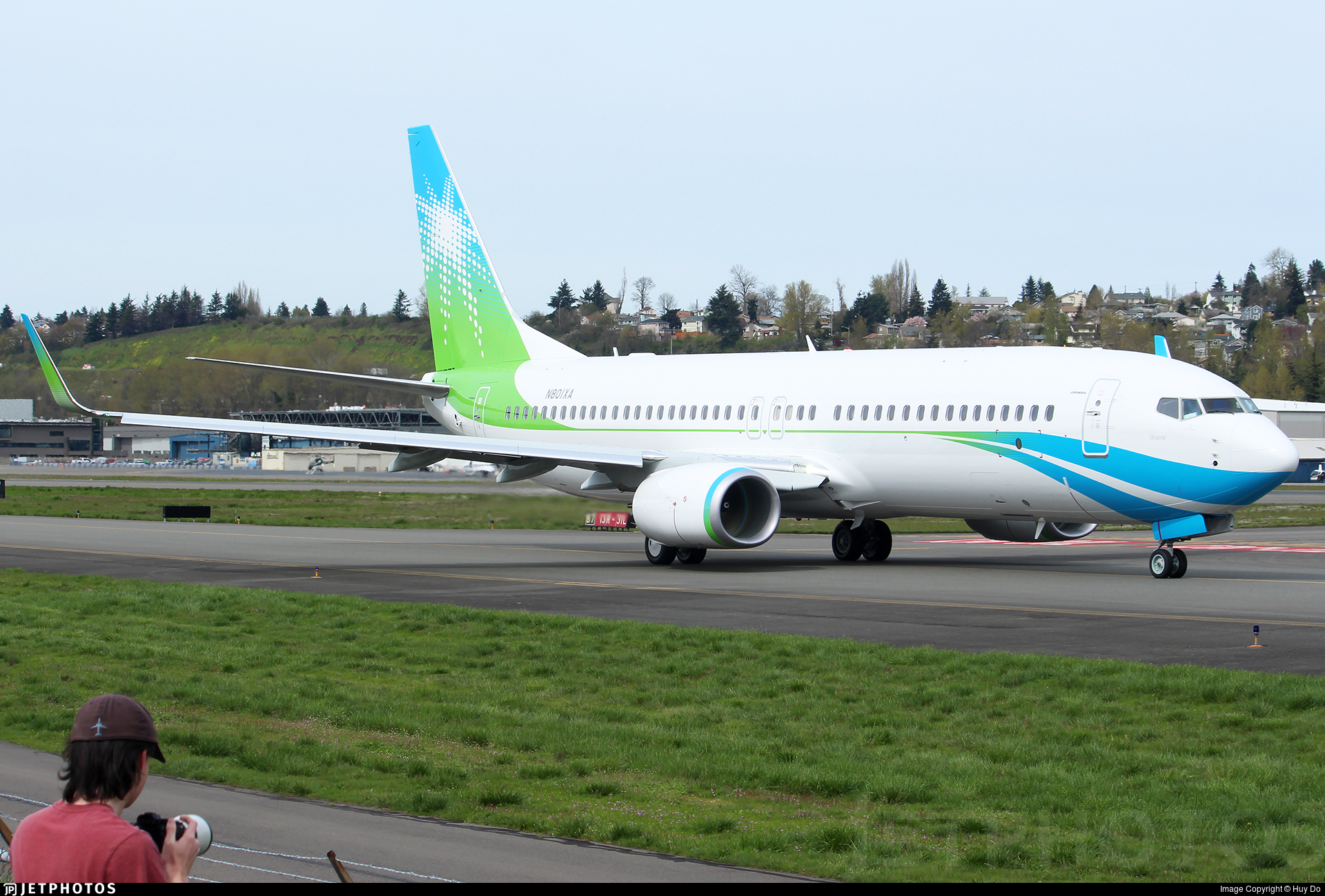
Boeing Shanghai Completes Base Maintenance and Wi-Fi                      Modification for First Chinese Customer- Xiamen Air’s 787

Boeing Shanghai Aviation Services Co., Ltd (Boeing ShangHai) and Xiamen Air celebrated the completion of the first 787-8 base maintenance check, also known as a C-check and Wi-Fi modification at Boeing Shanghai’s hanger at Shanghai Pudong Airport.

A C-check is an extensive check of the airplane’s systems and components that can require several days to perform.

“The successful completion is a testament to Boeing Shanghai’s capability in the 787 maintenance and modification market. We are very grateful for the confidence Xiamen Air has placed in our team.” said Dermot Swan, CEO of Boeing Shanghai. ”Xiamen Air is an important and prestigious 787 carrier and we look forward to a long, mutually rewarding relationship with them.”

Established in 1984 and based in Xiamen, China, Xiamen Air operates scheduled passenger flights to major cities in Chin as well as international routes to Southeast Asia, Northeast Asia and North America. Currently Xiamen airlines operates an all-Boeing fleet consisting of 9 787s, four 757s and about 140 Next generation 737s.

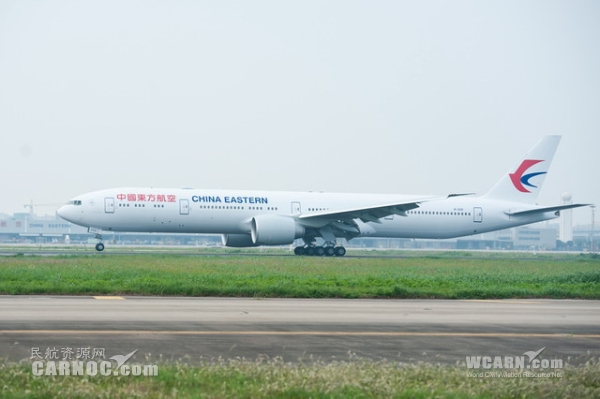
Boeing Shanghai is a joint venture between Boeing, Shanghai Airport Authorities and China Eastern Airlines.

Source : Boeing Shanghai Aviation Services


ON THE AIRBUS FRONT

Airbus Inaugurates Its A330 Completion & Delivery Center In China        

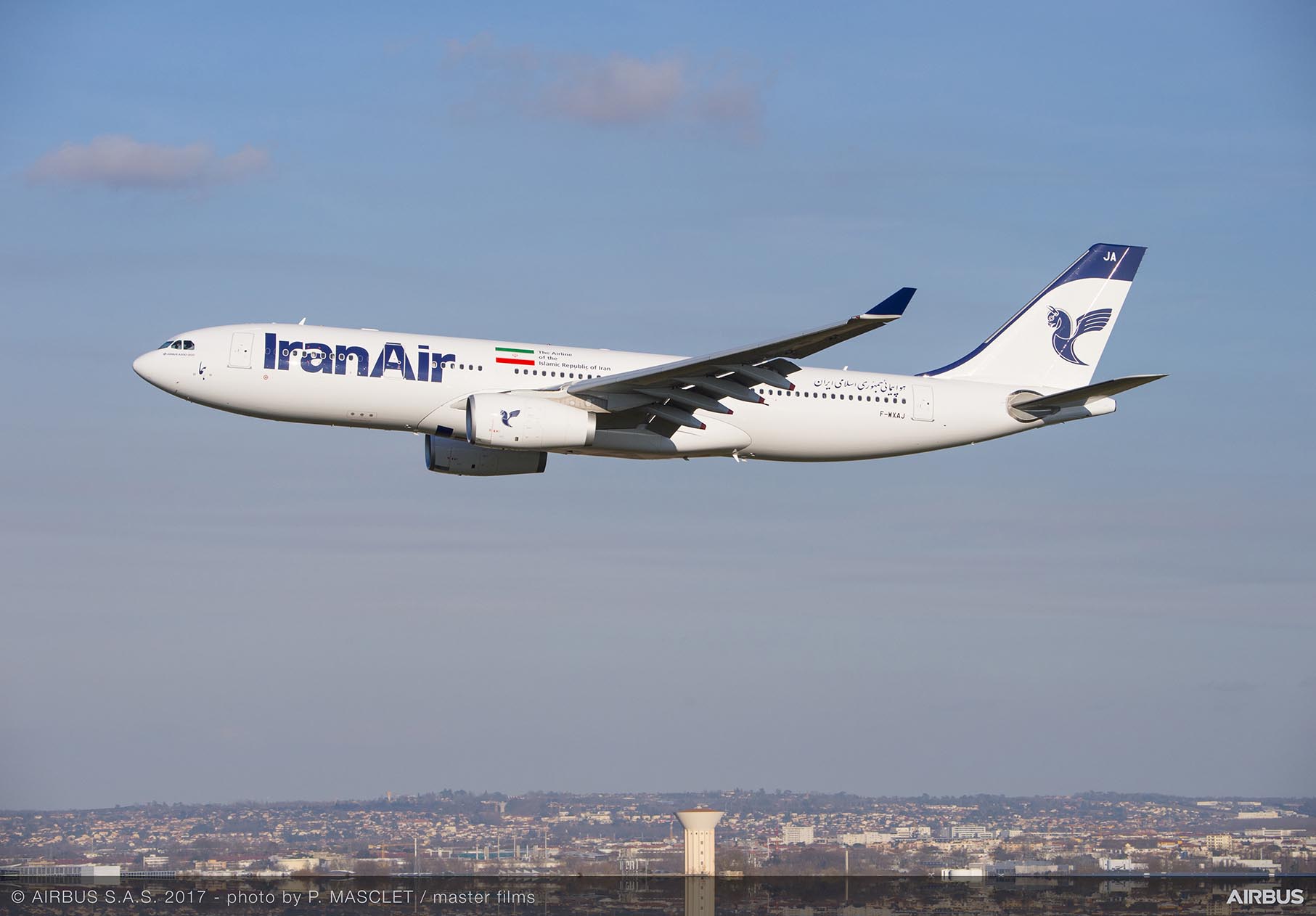
Airbus has inaugurated its A330 Completion & Delivery Center (C&DC) in Tianjin, China, taking additional steps in the expansion of its global footprint and strategic partnership with China. At the same time, the first A330 to be delivered from The C&DC was handed over to Tianjin Airlines.

Located at the same site as the Airbus Tianjin A320 Family Final Assembly Line and the Airbus Tianjin Delivery Center, The A330 C&DC covers the aircraft completion activities including cabin installation, aircraft painting and production flight tests well as customer flight acceptance and aircraft delivery. Some 150 Chinese staff members of the C&DC were trained by Airbus experts in Toulouse. The A330 C&DC in Tianjin will employ more than 250 people and is ready to deliver two aircraft per month by early 2019.

“The inauguration of our A330 C&DC in Tianjin, together with first of many deliveries, marks a new milestone for Airbus’ international footprint and underlines the strong spirit of cooperation with our Chinese partners,” said Fabrice Bregier, Airbus COO and President of Commercial Aircraft.

To date the A330 Family has attracted nearly 1,700 orders and over 1,300 Family aircraft are currently flying with more than 110 operators worldwide.

Source : Airbus


REGIONAL/BUSINESS JETS

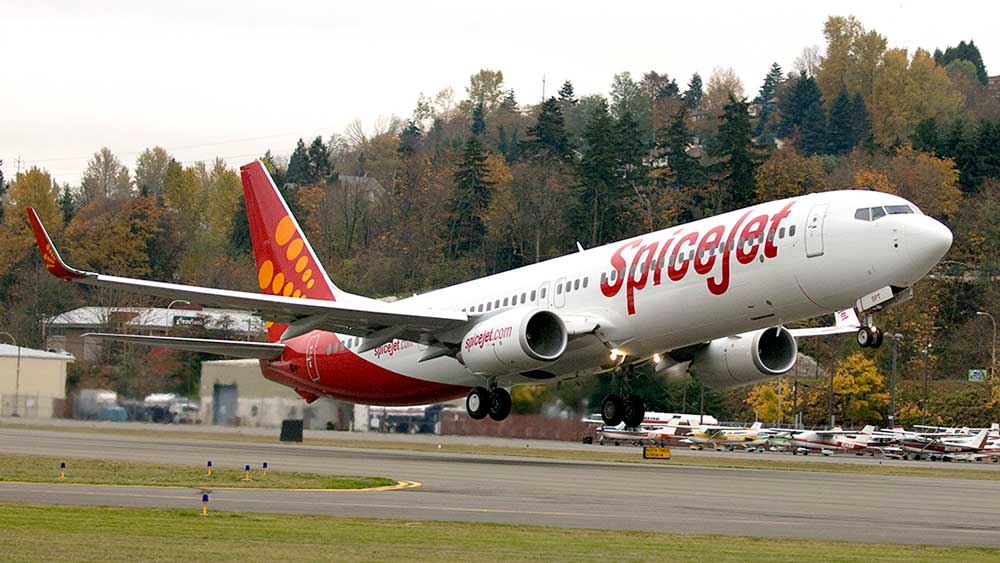
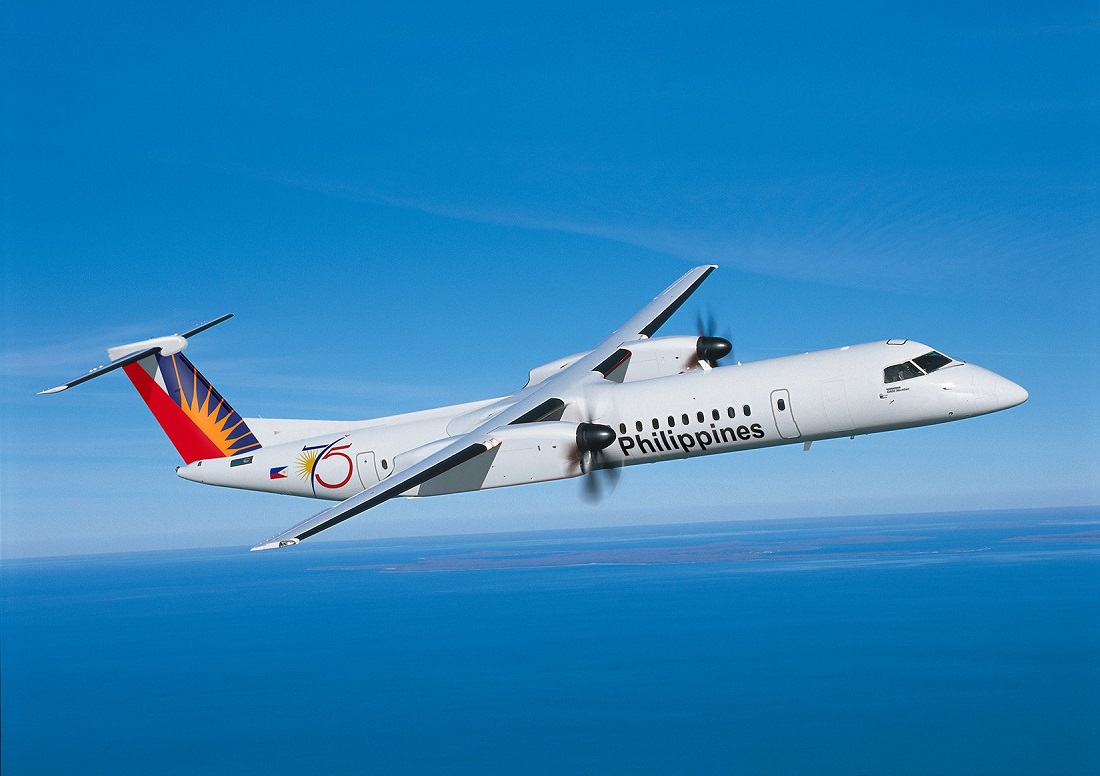
 India’s SpiceJet Firms Order for Up to 50 Bombardier 90-Seat Q400s

Indian LCC SpiceJet firmed its order for up to 50 Bombardier Q400 turboprops September 29,                 the largest single Q400 order to date, valued at $1.7 billion if all purchase rights are optioned.

Notably, the aircraft is in the Q400’s new 90-seat configuration, and on delivery will make SpiceJet the world’s first operator of a 90-seat turboprop.

SpiceJet signed its initial Letter of Intent (LOI) for 25 Q400s plus purchase rights for an additional 25 aircraft at the Paris Air Show June 20. At the time, the order was for the 86-seat extra-capacity NextGen variation of the Q400, which are being flown by Philippine Airlines (in a dual-class configuration) and Thailand’s Nok Air.

The Airline is looking to expand coverage of India’s domestic and international regional market and hopes the 90-seat Q400 will meet increasing passenger demand.

With SpiceJet’s order, Bombardier said the Q400 firm order total has reached 610 aircraft.

Source : ATW/Picture Bombardier


Bombardier Flies Fourth Global 7000

Bombardier’s Global 7000 program has taken another step forward, with the debut flight on September 28 of the fourth flight test vehicle (FTV$) —the first to be equipped with full production interior.

The ultra-long-range business jet serial number 70004, with registration C-GLBR made its maiden sortie from the airframes’s Downview, Toronto manufacturing plant.

Two days later, FTV$ made a 3 hour journey to Bombardier’s flight-test center in Wichita, Kansas, to begin certification testing.

The aircraft, dubbed “the Architect”, will be used to validate the Global 7000’s interior, and to confirm what Bombardier calls “its unparalleled comfort, connectivity and productivity”.

Bombardier launched the Global 7000 first flight-test campaign on November 4,2016 with the maiden flight of its first prototype. The aircraft is powered by GE Aviation Passport engine the fleet so far has flown more than 500h. The lead trio FTV1, FTV2 and FTV3 have been used to evaluate the Global 7000s propulsion, avionics, electrical and mechanical systems.

They will be joined in Kansas shortly by a fifth and final aircraft, FTA5, which will serve as the entry-into-service validation aircraft.

The Global 7000 remains on track for certification in the second half of 2018, says Bombardier. The aircraft is priced at $73 million.

Source : Flightglobal/Bombardier/Bombardier Photo


OTHER AVIATION NEWS

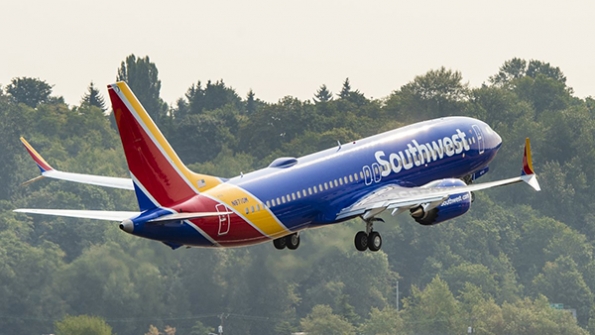
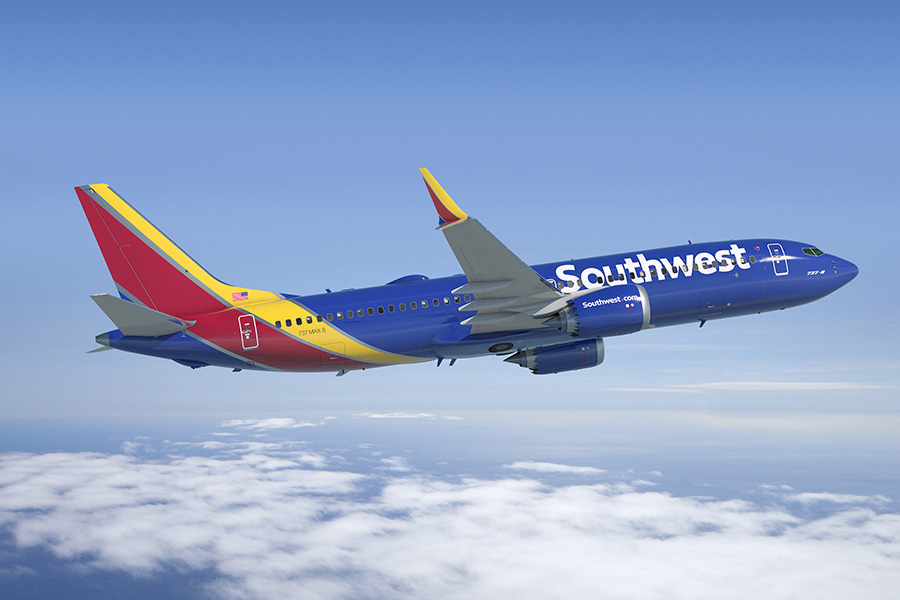
 Southwest Places Nine 737 MAX 8s into Service

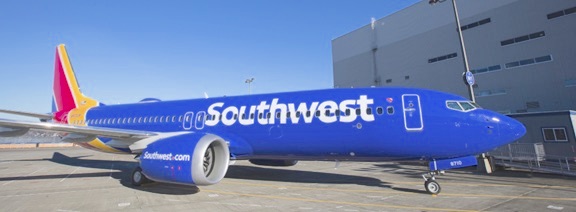
Southwest Airlines launched the Boeing 737 MAX 8 into revenue service on its network Oct.1, flying from Dallas Love Field to Houston Hobby Airport for its first official flight with CFM international LEAP-1B-powered aircraft.

Southwest chairman and CEO Gary Kelly called the MAX 8 “the future of the Southwest fleet.” The Dallas-based carrier launched nine 737-MAX8s into service Oct.1 and will add five more to its fleet by the end of 2017.The airline plans to have a fleet totaling 707 aircraft by the end of 2017 comprised entirely of 737-700s,737-800s and 737 MAX 8s; all of its 737 Classics have been retired.

The airline’s 737 MAX 8s are configured with 175,32-inch pitch seats in a single-class layout.

Southwest, which Boeing has said played a pivotal role in helping design the aircraft, becomes the first North American airline to operate the aircraft, which entered service with Malaysia’s Malindo Air in May 2017.

Southwest has orders for 200 737 MAX aircraft, a combination of the 7 and 8 models.

Source : ATW


Hainan Airlines First Airline in China to Order                                                 Aviation Partners Boeing Split Scimitar Winglets

On September 14 Aviation Partners Boeing (APB) announced that Hainan Airlines has committed to install Split Scimitar Winglets on 36 of its fleet of Boeing Next Generation 737-800 aircraft.

Hainan was the first airline in China to operate with APB’s Blended Winglet technology, and now will be first airline in China to Operate with APB’s latest product, Split Scimitar Winglets.

Split Scimitar Winglets confirm Hainan’s commitment to providing exceptional value to its customers, through the implementation of efficient technology.

Hainan’s aircraft will be modified during routine maintenance visits at Hainan Airlines’ maintenance facility, HNA Technology, in Haikou.

Installation tasks can be performed concurrently with most maintenance activities, allowing for a very efficient shop visit. Once installed, the Split Scimitar Winglets can reduce lock fuel consumption by up to an additional 2.2% in addition to fuel savings and reduction carbon dioxide emissions.

Source : Aviation Partners Boeing/Hainan Airlines Photo


      GE Aviation Retired Their Veteran 747-100 Testbed

GE Aviation bids farewell  to their Boeing 747-100 testbed. The oldest jumbo in active service after making her final sortie at the engine company’s flight-test center in Victorville, California.
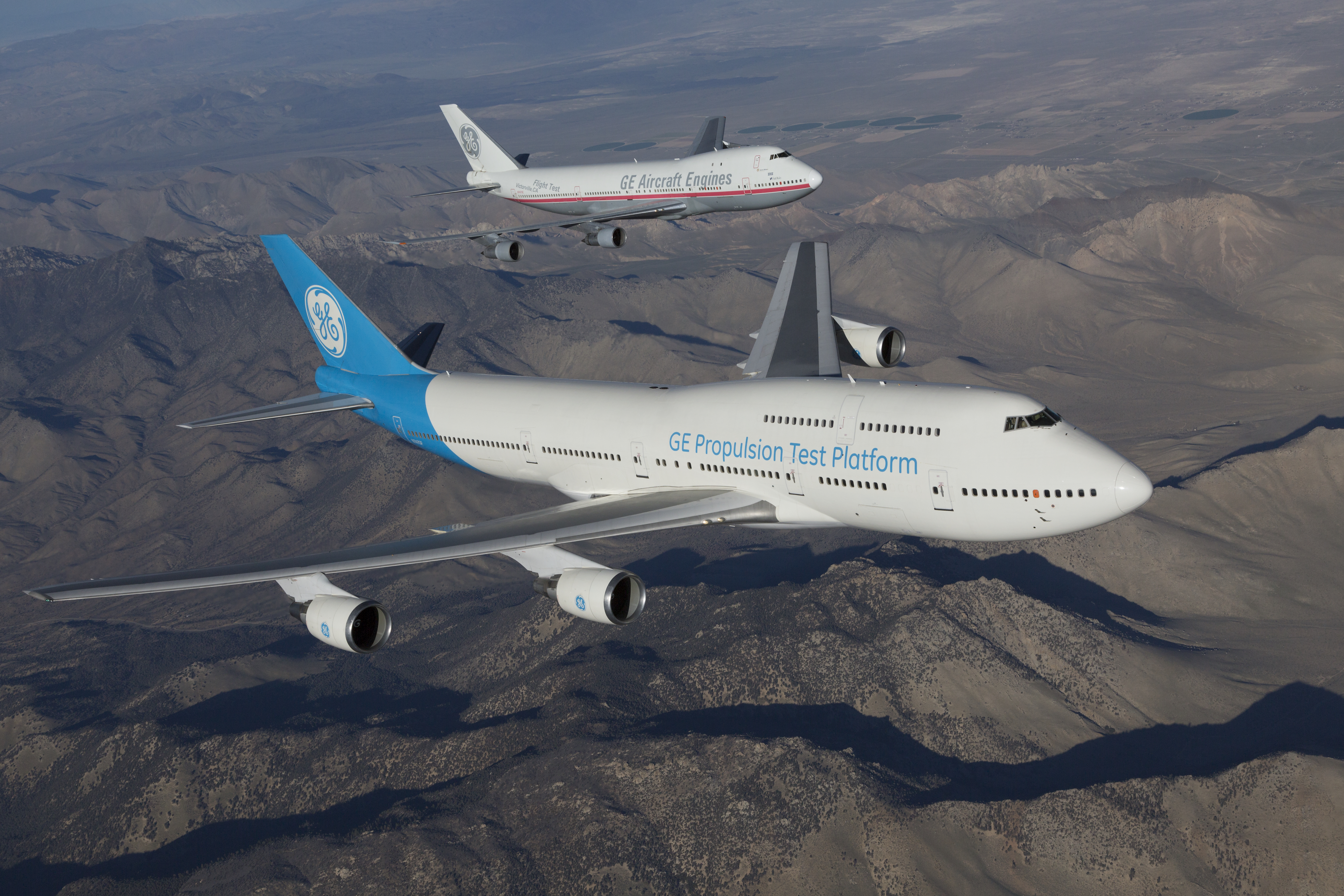
The aircraft rolled off the assembly line in October 1969 and made the first flight with Pan Am in March the following year. Named Clipper Ocean Spray, the aircraft flew in Pan Am colors for 21 years accumulating 86,000 flight hours before the engine maker acquired it in 1992.

After a series of modifications, removing seats, strengthening the left wing and tailwind installing data systems, the testbed began operations with GE in 1993.

The aircraft notes GE notes, provided flight data on 11 distinct engine models including the GE90,Leap and Passport engines. The aircraft was kept in impeccable shape for a testbed, I

had the privilege to go on board the aircraft, when GE was testing the GE90 engine the exclusive engine for the 777-300ER and 777-200LR .

In 2015, it got a new livery, with the old GE Aircraft Engines paint scheme being replaced with GE Aviation.

The 747-100’s place has been taken by a 747-400, acquired from Japan Airlines in 2010 and converted to GE’s Propulsion Test Platform.

Source : Ed’s Research/Picture GE Aviation


LATEST NEWS

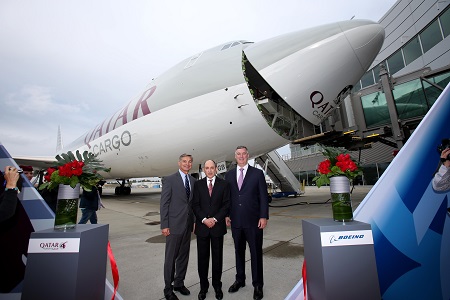
  • Qatar Airways announced an order for two 747-8 Freighters and four 777-300ERs valued at $2.16 billion at list prices. The orders were previously unidentified on Boeing’s Orders & Deliveries website.(Picture Boeing)
  • SilkAIr Singapore Airlines’ regional arm has taken delivery of its first Boeing 737 MAX 8. The aircraft arrived in Singapore on October 1, with two more expected by year end.
  • Cathay Pacific is converting six of its Airbus A350-1000s to the smaller -900 and deferring delivery of five other-100s by year end.
  • Japan Airlines announced an order for four 787-8 Dreamliners. The order, which was previously listed on the Boeing Orders & Deliveries website.


  • United Air Lines conducted its last Boeing 747 flight on the 7th of this month from San Francisco to Honolulu.


  • CFM International continues to lead rival Pratt &Whitney in the race to power Airbus A320neo-family aircraft by 524 to 439 aircraft.


  • American Airlines took delivery of its first 737 MAX 8 late last month the first of four that American plans to take delivery of this year.


  • Gulfstream Aerospace Gulfstream Aerospace’s fleet of G280 super-midsize business jets has accumulated more than 100.000 flight hr in less than five years. The first model entered service in November 2012.


  • UPS took delivery of its first of 14 Boeing 747-8 freighters jets the shipper ordered a year ago, two more -8’s will arrive this fall in time for the peak holiday season starting at Thanksgiving.

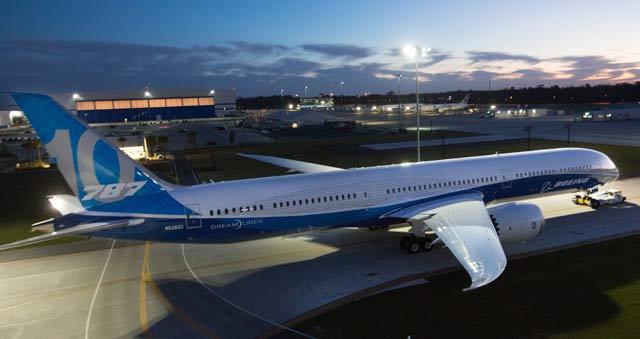
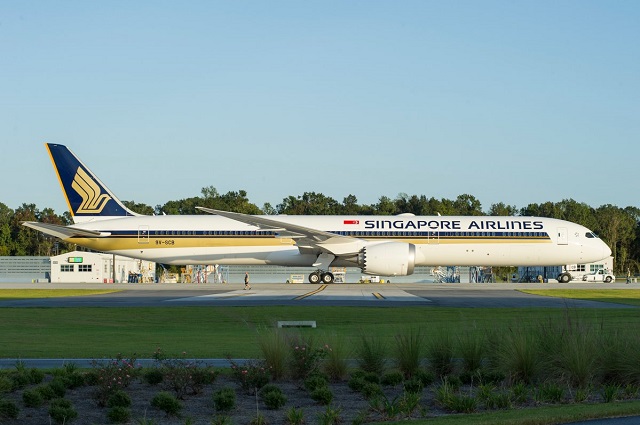
  • Boeing has rolled out the first production version of the 787-10 a few months ahead of a planned certification milestone for the new aircraft and delivery to launch customer Singapore Airlines next year.(Picture Boeing)
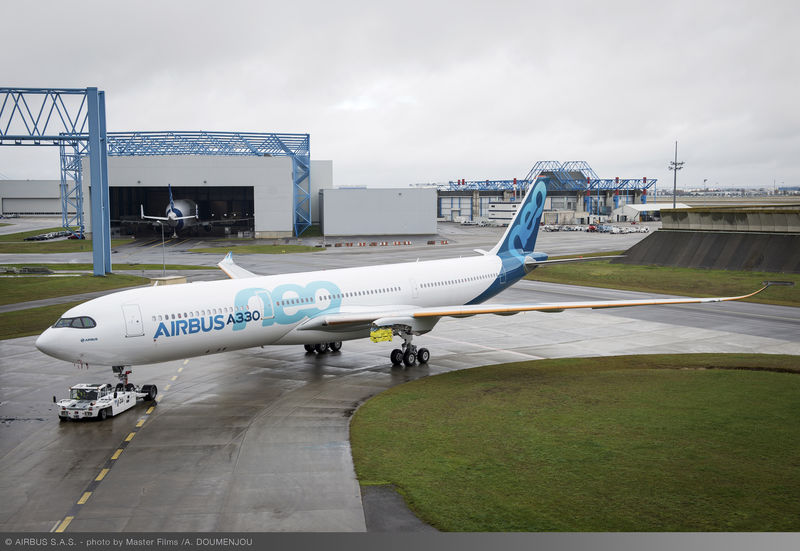
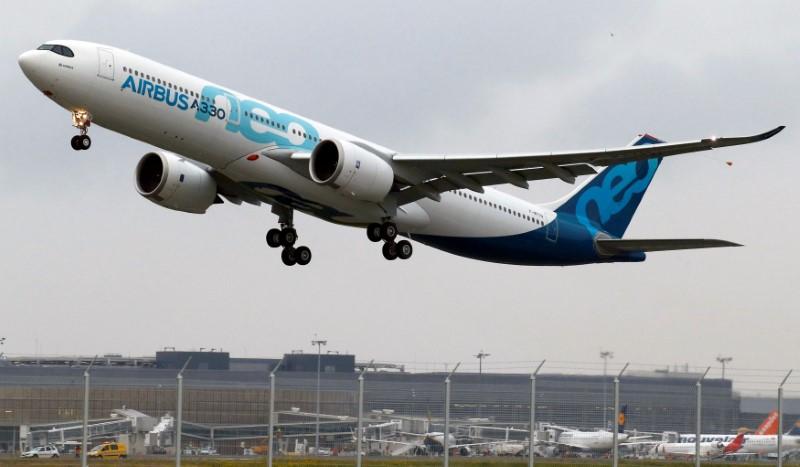
  • Airbus the first A330neo took off from Toulouse for its first flight on October 19 for a 4 hour maiden flight.(Picture Airbus)
 

AIR CARGO

       SF Airlines’ Opens First Cargo Flight to Hanoi

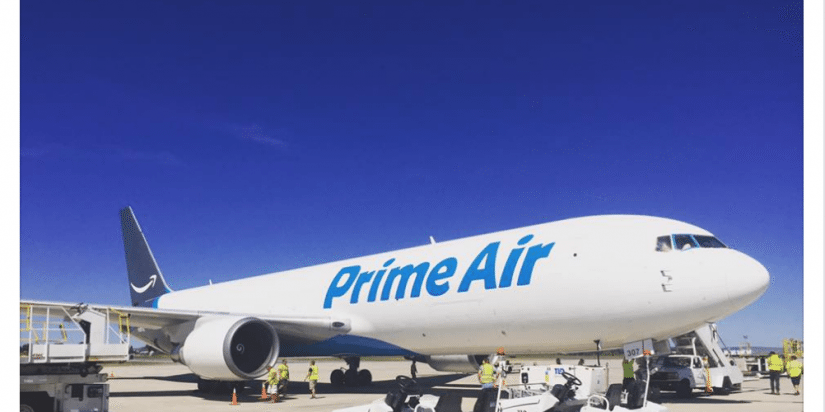
SF Airlines’ made its first flight from Chengdu to Hanoi in late August, marking the first direct cargo flight from China to Hanoi, Vietnam. Operated by 767-300BCF freighter twice a week, the regular flight facilitates the transportation and communication between Chengdu and Vietnam.

SF Airlines affiliates SF Express. In recent years, the cargo carrier has been operating charter flights to Osaka, Inchon, Katmandu, Dhaka and Phnom Penh, completing its air logistics channels from China to other Asian countries.

The 767-300BCF, exclusive to SF airlines, suits the electronic product transport of its charter customer perfectly, which makes this cooperation quite profitable, meaning the opening of the new route enhances the air logistics between Chengdu and Hanoi and benefits the cargo distribution and trade communication between the two areas.

SF Airlines started in 2009 and right now its all-cargo aircraft fleets have outnumbered other domestic cargo airlines with 40 full-cargo airplanes and 37 national destinations.

Source : China Aviation Daily/Picture SF Airlines B767


 Maintenance, Repair and Overhaul News

Boeing To Broaden Vertical Integration, Canaccord Predicts

Boeing in-sourcing strategy likely will see the OEM continue to broaden its vertical-integration efforts into areas with substantial aftermarket upside, further pressuring large suppliers, analysts and Canaccord  Genuity believe.

“Considering the expectations for future cost reductions on the 787, and the growing focus on the commercial aftermarket, we believe Boeing will look to expand its vertical integration into other areas, and this is a major risk for the supply chain,” Canaccord analyst Ken Herbert wrote in a recent research note based in part on a Boeing investor event.

Herbert believes UTC products, such as wheels and brakes could be particularly vulnerable as Boeing sees as a lack of benefits from the proposed UTC Rockwell Collins union. He added Boeing’s ramping up of its avionics development is likely a preemptive strike along these lines, as avionics specialist Collins has been a sought-after target for some time.

Herbert noted that following UTC’s last major supplier acquisition-Goodrich, in 2012 Boeing pulled in nacelle production and changed 777 landing gear suppliers, costing Goodrich work.

The New gear supplier,  Horous-Devtek, will not see aftermarket revenues from 777 and 777X gear it supplies. Herbert also expects Boeing to make a “major” push into used serviceable materials, expanding an already formidable new-parts business.

“We believe Boeing proprietary parts are the highest margin piece of the BCS segment,” Herbert wrote. (as a long career parts Vice President with various car and heavy duty truck companies I concur with Mr. Herbert prognosis in this area) Ed .

Source : Canaccord Genuity


 MRO Short News

  • Lufthansa Technik was selected by NEOS to provide Boeing 787 component support.
  • Turkish Tecknic  was selected by Shaheen Air to perform S-checks on four A330s.
  • Airbus took delivery of the 50th shipset of major A320 family component assemblies, including fuselage sections, vertical/horizontal tailplane, and wings, at its US Manufacturing Facility in Mobile, Alabama.
  • HAECO was selected by Finnair for Airbus A350 heavy maintenance.
  • American Airlines was approved by Brazil for new $100 million aircraft maintenance center in Sao Paulo.
  • Liebherr-Aerospace Lindenberg has a flyby contract to provide E-Jet landing gear overhaul.
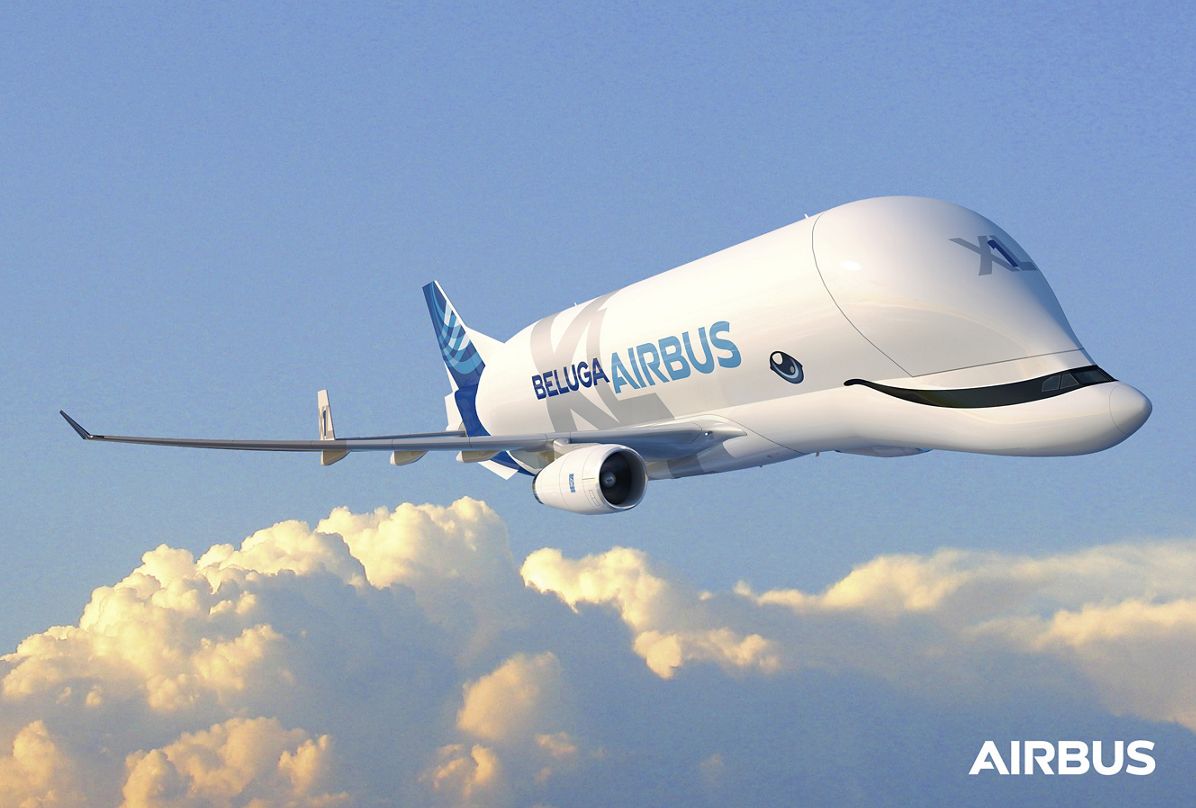
  • Stelia Aerospace delivered 3.1 ton cargo door for the first Airbus Beluga XL.
  • FEAM Aero has an Emirates Airlines contract to provide Boeing 777 line maintenance at Chicago.


Puzzler of the Month

Which airline uses or had used the slogan on its nose?      

                                The Magic Red Carpet


Answer to Last Month’s Puzzler:  UPS First 747-8 Freighter

Researched and Compiled by : Ed Kaplanian

Commercial Aviation Advisor

Contact – ekaplanian@msn.com
Volume 4 Issue 10 October 2017 The Kaplanian Report

ON THE BOEING FRONT

Boeing Expands Helena Site for 777X Parts Production

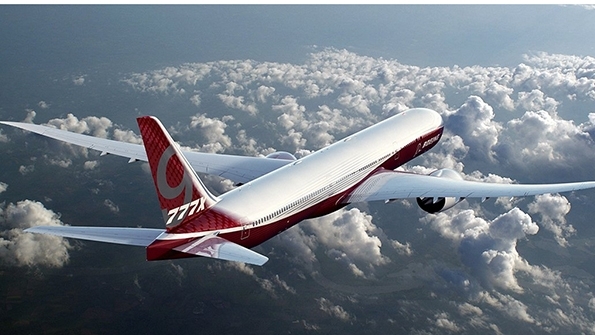
Boeing’s Helena, Montana, manufacturing site is set to install new machinery for manufacturing critical titanium parts for the 777X production.  The new 90,000 sq.ft. expansion of Boeing Helena brings the site’s total footprint to over 257,000 sq.ft.

Machine parts for the 777X to be manufactured at Boeing Helena will include side-of-body chords and terminal end fittings which connect the wings to the fuselage, Boeing  said. The site has become a vital part of Boeing’s commercial airplane supply chain, the company said, specializing in complex machining of hard metals for Boeing’s 737, 747, 767, and 787 aircraft models.

“Our investment in Boeing Helena…further positions our…Montana team of nearly 150 employees as key partner of Boeing Commercial Airplanes,” Boeing Commercial Airplanes VP and GM-Fabrication Kim Smith said.

Boeing purchased the former Summit Aeronautics Group facility in December 2010 and renamed it Boeing Helena. The facility is part of Auburn, Washington-headquartered Boeing Fabrication, a division of Boeing Commercial Airplanes, and is one of 12 Boeing Fabrication sites located around the world.

Source : ATW/Boeing


ON THE AIRBUS FRONT

Airbus Delivers First U.S.-Produced A320 To Spirit Airlines

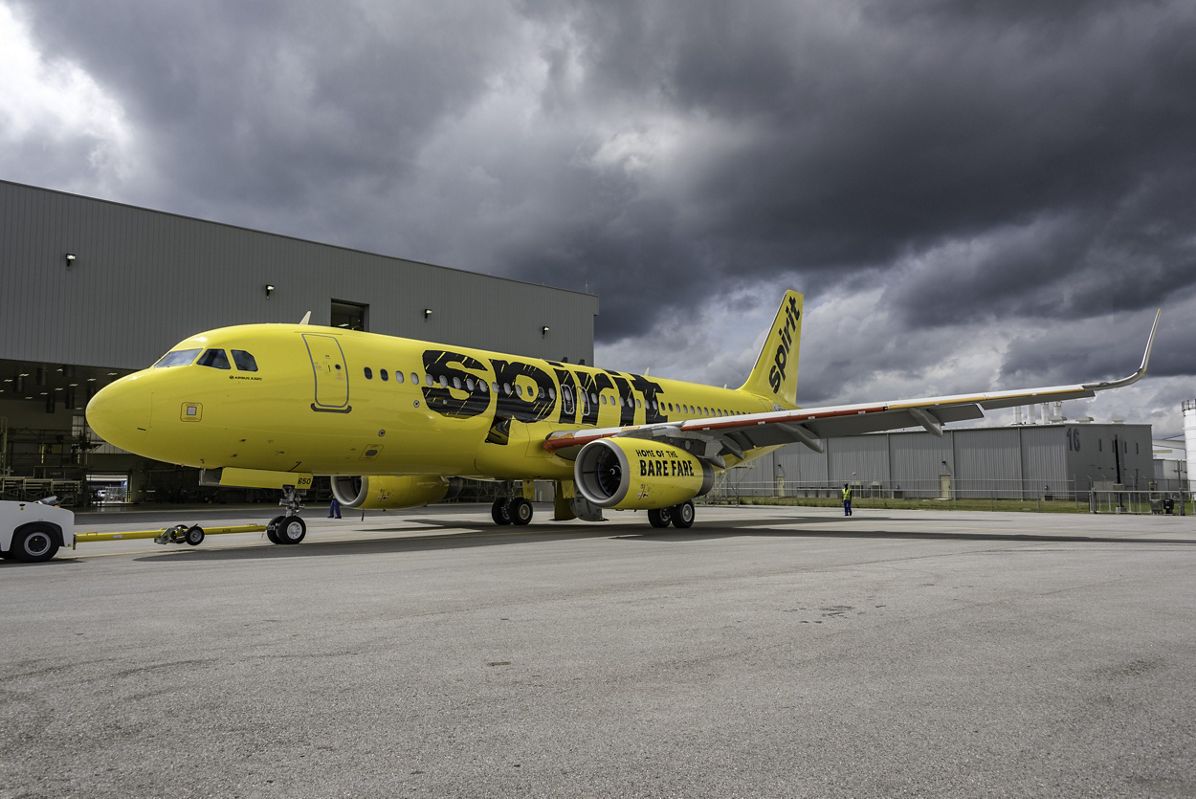
The first delivery of an A320 aircraft from the Airbus U.S. Manufacturing Facility has taken place in Mobile, Alabama. The aircraft, delivered to Spirit Airlines, is the 37th overall delivery from the U.S. facility since production began in July 2015. The previous 36 aircraft were A321 aircraft, making this delivery another important milestone for Airbus.

Airbus commenced final assembly work on the A320 around May this year. The aircraft is fitted with International Aero Engines V2500 power plants. With this delivery Spirit’s all-Airbus fleet increases to 106 aircraft, says the carrier.   Around half of its jets are A320s.

Today, the Family has won over 13,200 orders and more than 7,700 aircraft have been delivered to some 400 customers and operators worldwide.

Airbus announced its commitment to build a single-aisle assembly line in Mobile, Alabama,  in July 2012, and broke ground for the $600 million facility in April 2013.  Airbus anticipates delivering four aircraft per month from the Mobile plant by the end of this year.

Source : Airbus/Pictures Airbus


REGIONAL/BUSINESS JETS

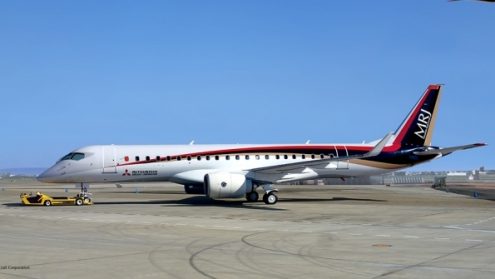
   MRJ Test Fleet Grounded After PW1200G Flameout         

Mitsubishi Aircraft has grounded its MRJ regional jet flight test fleet, following an engine “flameout” on one of its test prototypes on August 21.

The “uncommanded shut down” on prototype FTA-2 happened on the left Pratt & Whitney PW1200G engine during a flight test.

Mitsubishi would not say what tests the aircraft was conducting when the flameout occurred, but said the incident happened in training airspace over the ocean, about 170km (106 miles) west of Portland.  Pilots were alerted to the issue only when the left engine shut down.

The Aircraft had taken off from Moses Lake at 14:00 local time and had to make an unscheduled landing at Portland International airport at 17:12 local time.

The FTA-2 Prototype has since returned to the Manufacturer’s test base at Moses Lake, after replacement of the troubled engine

Mitsubishi has since grounded its test fleet. It will decide when to resume flight tests after the cause of the incident is determined.(as of this writing testing has resumed.)

Source : Flightglobal/Mitsubishi


OTHER AVIATION NEWS

            EASA has Granted Certification for The Trent 1000 TEN 

Rolls-Royce has been granted full-flight certification by the European Aviation Safety Agency (EASA) for its Boeing 787 Trent 1000 TEN engine.

The Trent 1000 TEN, which will power all Boeing 787 variants, has improved Thrust and efficiency because of cross-over technologies from the Airbus A350’s Trent XWB power plant and Rolls-Royce’s Advance turbofan, a new engine program that was announced in 2014.

“This marks another critical step in our journey toward delivering additional capability and new technology for the Boeing 787,” Rolls-Royce chief engineer for Trent 1000, Dave Taylor said.

The certification came as Rolls-Royce delivered its first set of production engines to Boeing in Seattle, ready for entry into service later this year.

Source :  Rolls-Royce


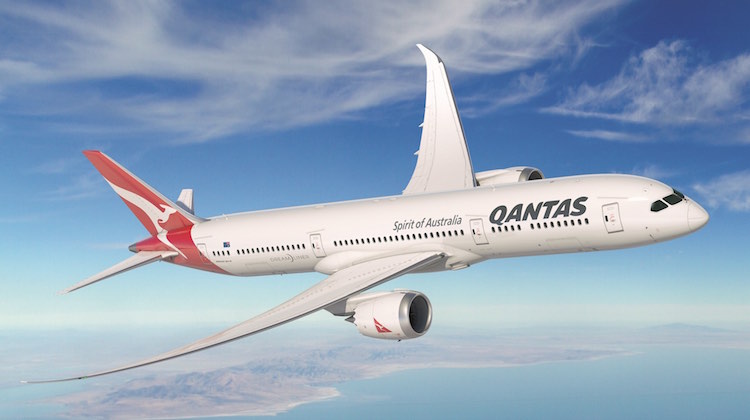
      Qantas to Base Half of 787 Fleet In Brisbane 

Qantas will base four of its upcoming 787-9s in Brisbane, complementing the four aircraft that will be based in Melbourne. Qantas says in  a statement that the four aircraft earmarked for the Brisbane base will be delivered during the second half of 2018.

“We have said that initially our Dreamliners will replace the routes that our older 747s fly, but there are also new destinations we are looking at, given capability of the aircraft,” says Qantas chief executive Alan Joyce.

At present, Qantas’s only 747 services from Brisbane are to Los Angeles, Flightglobal schedules data shows, making that the likely

launch route for 787s from the Queensland Capital. The airline says, however, that the aircraft could potentially open up new services to destinations including, Seattle, Chicago and Vancouver.

Joyce adds that decisions on these new routes will be made in the coming months.

The Australian airline will take delivery of its first 787-9 in October, and will use the aircraft  on domestic services for six weeks for crew training purposes. From December 15, the type will be used on Melbourne-Los Angeles services, and from March 2018 on the Melbourne-Perth-London route.

According to Flight Fleets Analyzer shows that Qantas has options on a further 45 787s, but it has given no indication if or when it may exercise those options.

Source : Qantas

Air Tahiti to Replace A340s in 2018

French Polynesian carrier Air Tahiti NUI is preparing for a major upgrade of its long-haul international fleet in 2018, when it will begin the replacement of its Airbus A340s with Boeing 787-9s.

The Carrier has four 787s on order, two leased and two purchased. These will replace four A340-300s it operates on flights to Auckland and Tokyo and a route to Paris via Los Angeles.

The 787-9s are scheduled to arrive between October 2018 and September 2019. The leased aircraft will enter service the fleet first, followed by the two purchased aircraft in 2019. Cabin configuration is still being finalized, and training is expected to begin next year.

CEO Michel Monvoisin noted the carrier is now making a positive contribution to the national budget, as its majority owner is the government of French Polynesia.

Source: ATW   


LATEST NEWS

  • Rolls-Royce has secured European flight certification for the Airbus A350-1000’s power plant, the Trent XWB-97.
  • Southwest has become the first U.S. airline to receive Boeing’s 737MAX 8 aircraft. It is expected to take delivery of eight more this month.

  • Singapore has quietly parked the first Airbus A380 aircraft to enter commercial service.
  • Kish Air of Iran has signed an MOU with Boeing to purchase ten 737 MAX aircraft.
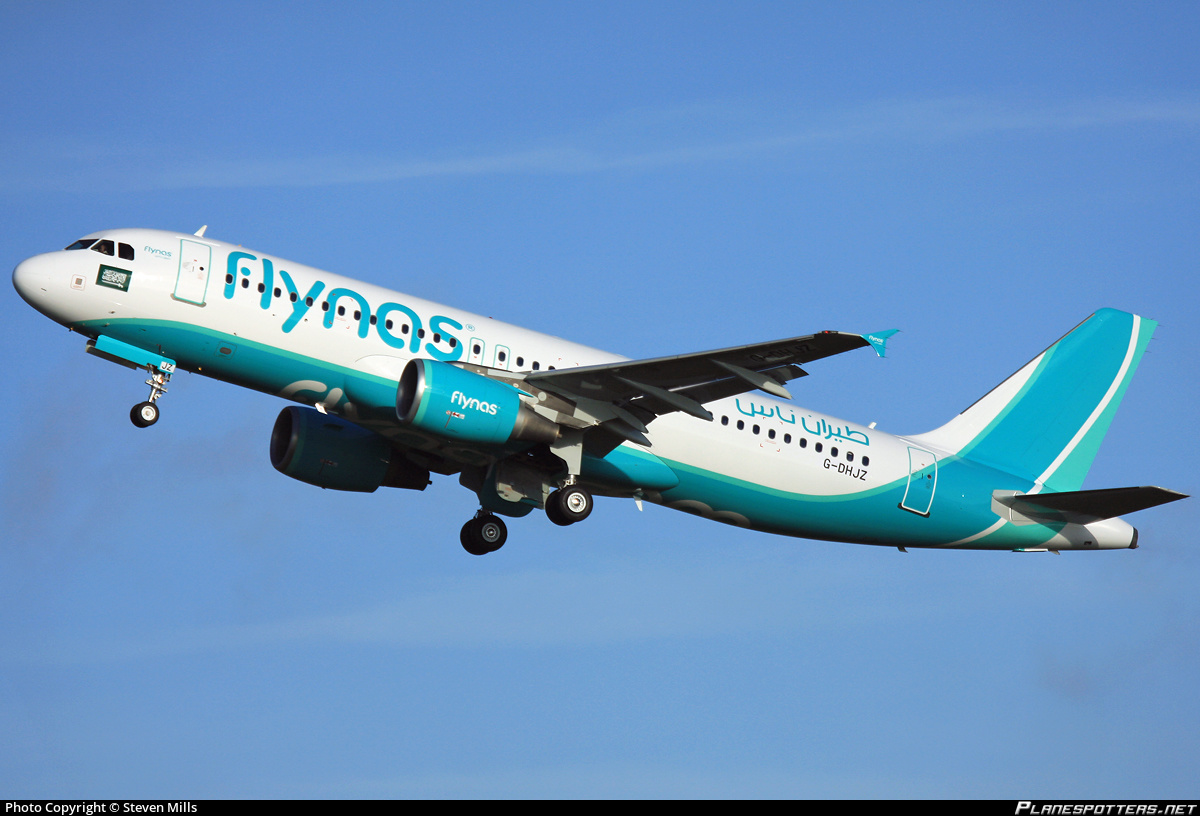
  • Dubai Aerospace Enterprise (DAE) has announced the delivery of an Airbus A320-200 aircraft to new customer, Flyadeal a subsidiary of Saudi Arabian Airlines group.
  • Swiss International Air Lines (SWISS) is considering ordering the Airbus A321neoLR to operate on routes from Zurich to long-haul destinations in Africa.
  • Orion Airways is one of new Cypriot airlines to emerge following the demise of flag carrier Cyprus Airways in 2015. Its first aircraft, is a former Jordan Aviation Boeing 737-300.
  • Gol Airlines of Brazil announces sale and leaseback transactions with Ge Capital Aviation Services (GECAS) for seven aircraft, including five 737 MAX 8 aircraft and two 737-800 Next Generation (NG) aircraft. Additionally, the company signed the direct operating lease for five additional 737 MAX 8 aircraft.
  • Egyptair takes delivery of the 7th of nine new Boeing 737-800s ordered as part of plans to upgrade its aging fleet on Thursday, August 31st.
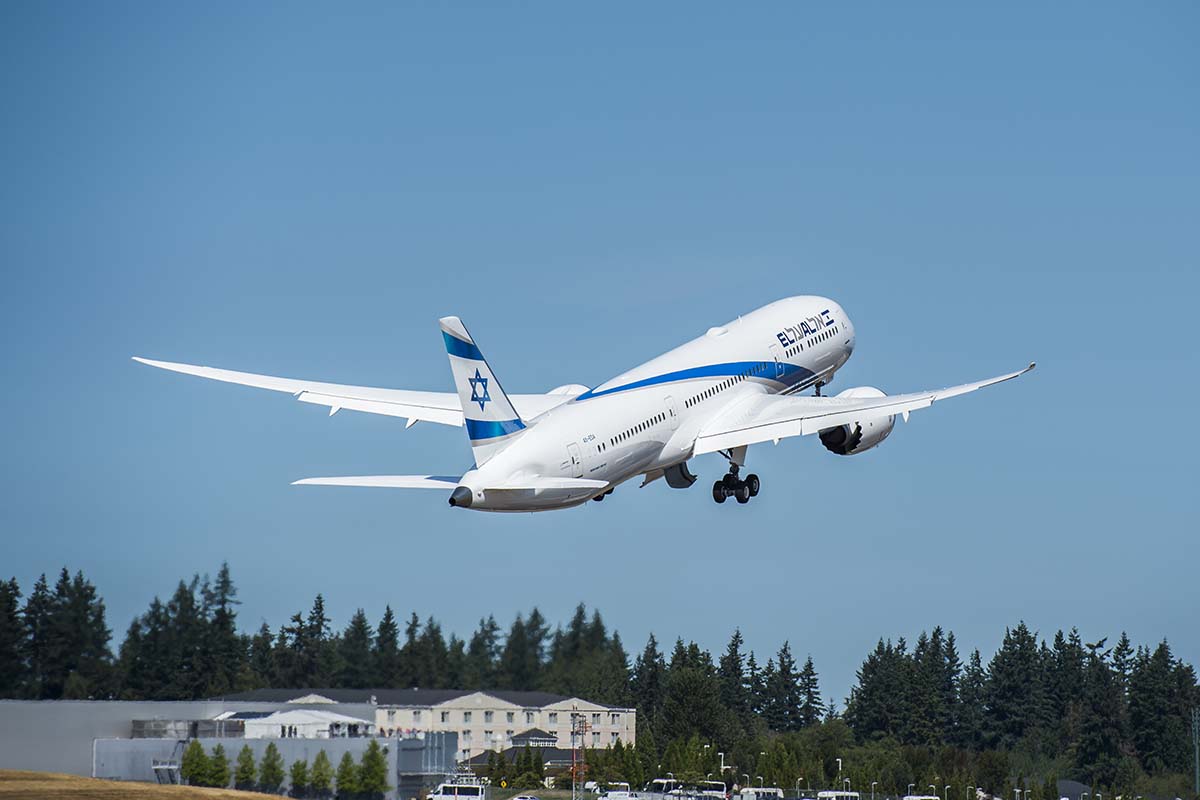
  • EL AL Israel Airline took delivery of its first 787-9 leased through an agreement with Air Lease Corporation.

AIR CARGO

Atlas Air Worldwide Holdings Flying for Nippon Cargo 

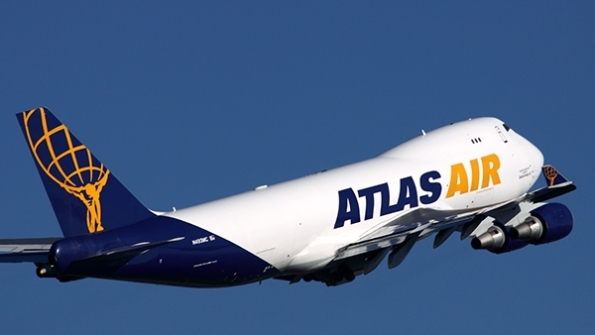
Purchase, New York-based air cargo operator Atlas Air Worldwide Holdings started operating a second Boeing 747-400 freighter for Japan’s Nippon Cargo Airline (NCA) on September 1 .

Atlas Air initiated its relationship with the Narita International Airport (NRT)-based cargo carrier in December 2016, launching flights for NCA in January. The two companies indicated additional aircraft may be added to their agreement in the future.  As with the first 747-400F, additional freighters will fly transpacific routes connecting Asia and the US, Atlas Air said.

Atlas Air Worldwide president and CEO William Flynn said the move follows the “successful start of the first aircraft for NCA earlier this year and underscores our focus on fast-growing Asia Pacific market.”

Atlas Air’s transpacific routes flown for NCA fly an eastward trajectory between Narita (NRT), Ted Stevens Anchorage International (ANC) and Chicago O’Hare International (ORD).Atlas Air’s westward NCA flights operate in three trajectories: ORD-Dallas/Fort Worth International (DFW)-ANC;ORD-DFW-ANC-NRT; and a direct nonstop ORD-NRT flight.

Nippon Cargo operates a fleet of eight Boeing 747-8Fs (all leased) and five 747-400Fs (one owned by NCA, the remainder leased).

Source : ATW/Picture Atlas Air


 Maintenance, Repair and Overhaul News

         Opinion: Uncertainties Abound In Engine Leasing Market

The commercial engine leasing market is growing, though entry of new models and OEM involvement in MRO are creating uncertainty.

Opinion is divided concerning the size and value of the engine leasing market. Some of the uncertainty comes from the involvement of OEMs and their large engine-lease pools that support their respective aftermarket maintenance packages. As a result, identifying the true market is difficult because so much trading and maintenance activity is ring-fenced.

However, both OEMs and operators potentially benefit from such arrangement via guaranteed cash flows through flight-hour agreements for the OEM and reduced risk for the operator.

The engine market is well-stocked, notably with much-talked-about CFM56-5B,CFM56-7B and V2500-A5, expected to have significant shop analyzing the outstanding order book for these types, forecasts that Pratt & Whitney PW1000 and CFM Leap engines will far surpass the quantities of the CFM56 and V2500 engines today. While OEMs seek to secure more maintenance agreements for engines, the overall number of engines is expected to grow and thus, by engine count, the OEM and independent leasing/MRO markets are expected to increase their stocks.

Further on, OEMs will still be very present in this market, for example, CFM spent $4 billion in research and development units latest Leap engine programs.

Capturing more of the maintenance market allows OEMs to invest more heavily in the next generation of engines and helps offset the discounts offered to airlines for the latest A320neo and 737MAX-family engines. Independents, tear-down entities and MROs all stand to lose out from this shift in strategy.

Source : MRO-Network.com


 MRO Short News

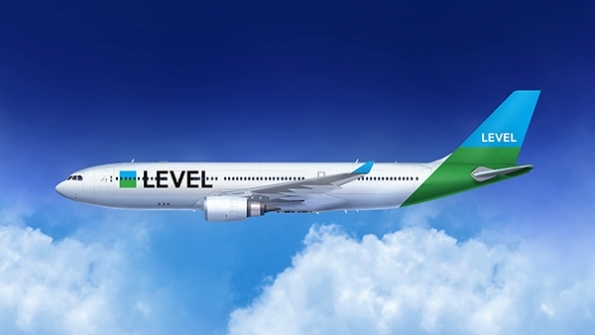
  • Monarch Aircraft Engineering has a contract from Evelop Airlines, Spain, to provide base maintenance services, initially on an Airbus A330, out of Birmingham.
  • HEICO agreed to acquire Southern California-based Aeroantenna Technology.
  • Pacific Aerospace Resources and Technologies based in Victorville, California has retained Cloud Investment Partners and Tiger Group to sell company; bids were due on or before September 7 as a going concern, and auction of all assets was scheduled for September 21.
  • Certified Aviation Services (CAS) signed a service agreement with Boeing Global Fleet Care to provide MRO services in the US for Boeing’s aftermarket support system. Under the agreement, CAS will provide scheduled maintenance operations in support of the 737 MAX and 787 Dreamliner.


Puzzler of the Month   


ANSWER TO LAST MONTH’S PUZZLER

A Wet Lease means an organization (airline) or person who owns the aircraft will provide the lessor with the aircraft as well as one or more crew members to the lessee. Even more important, the lessor promises to conduct adequate maintenance & procure the insurance necessary to operate.

A Dry Lease means an organization (airline) or person provides the lessee the aircraft; however, without a crew and promises to conduct adequate maintenance & procure the insurance necessary to operate.

Researched and Compiled by : Ed Kaplanian

Commercial Aviation Advisor

Contact – ekaplanian@msn.com
Volume 4 Issue 9 The Kaplanian Report September 2017

ON THE BOEING FRONT

Urals Boeing Plant to Triple Partners’ Titanium Capacity 

Shipments of Russian-made aerospace parts will exceed $1billion after the new Urals Boeing Manufacturing (UBM) plant begins operations next summer.  Sergei Kravchenko, Boeing president for Russia and CIS, told reporters during a briefing in Moscow a day ahead of the July 18th to 23rd MAKS 2017 airshow.

UBM, a joint venture between the U.S. airframes and Russia’s Roster Corporation officially launched operations in 2009, but the demand for more titanium parts prompted the partners to invest in a second plant to triple the capacity.

The new plant opens “just in time”, said Kravchenko, considering the 18 to 24 month lead time for major 777X parts.

Russian output grew quickly as Boeing 787 production rose from an initial two to 12 per month.  Each Dreamliner coming off the production line uses 56 parts made of Russian titanium, weighing a total weight of 22 tons, including heavily machined components from UBM and raw material supplied directly by Rostec’s VSMPO-Avisma company.

Financial restrictions have proved most damaging, because they make it harder for Russian airlines to buy Boeing aircraft. ”We continue materializing all we had agreed before, but the political instability restricts our ability to launch larger economic projects that would benefit both sides,” he said. ”I want to see sanctions removed.”

Nevertheless, Kravchenko expressed optimism about the potential of Boeing Global Services(GBS).” Kravchenko said “Stan Deal, GBS president and CEO, asked for my assistance…and I shall be working for him while keeping the current position,” he added.

Kravchenko said he sees the recent achievements of Russian airlines – most notably Aeroflot – in the area of digitization as a major contribution to the new division to provide round-the-clock support for airlines. Boeing plans to take advantage of the time zone difference between Moscow and Seattle, employing engineers in those respective cities “as though in two shifts”.

“This way, we can get airline’s requests for services fulfilled quicker and in a more efficient manner,” concluded Kravchenko.

Source : Air Transport


ON THE AIRBUS FRONT

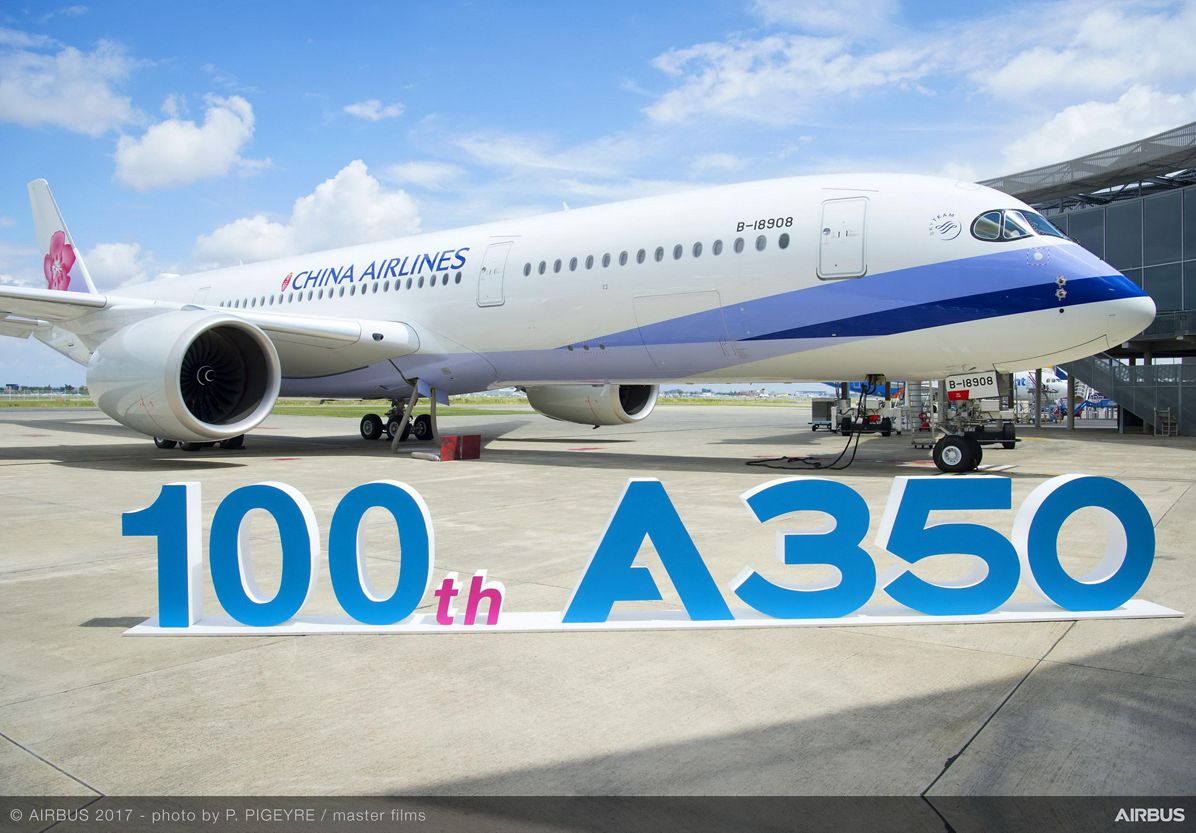
Airbus Delivers Its 100th A350 XWB

Airbus has delivered its 100th A350 XWB, just some 30 months after the first delivery in December 2014.  The 100th aircraft delivered is an A350-900 for China Airlines.

“The 100th A350 XWB milestone comes as we reach our fastest wide body production ramp-up on track to meet the target of 10 A350 deliveries per month by the end of 2018,” said Fabrice Bregier, Airbus COO and President Commercial Aircraft.

“China Airlines is happy to be receiving the 100th A350XWb,” said Nuan-Shuan Ho, Chairman of China Airlines. To date, the A350 has been delivered to 14 airlines worldwide and is flying with an outstanding operational reliability rate of 99%. ”This is a remarkable statistic at this early stage of the program,” Fabrice Bregier adds.

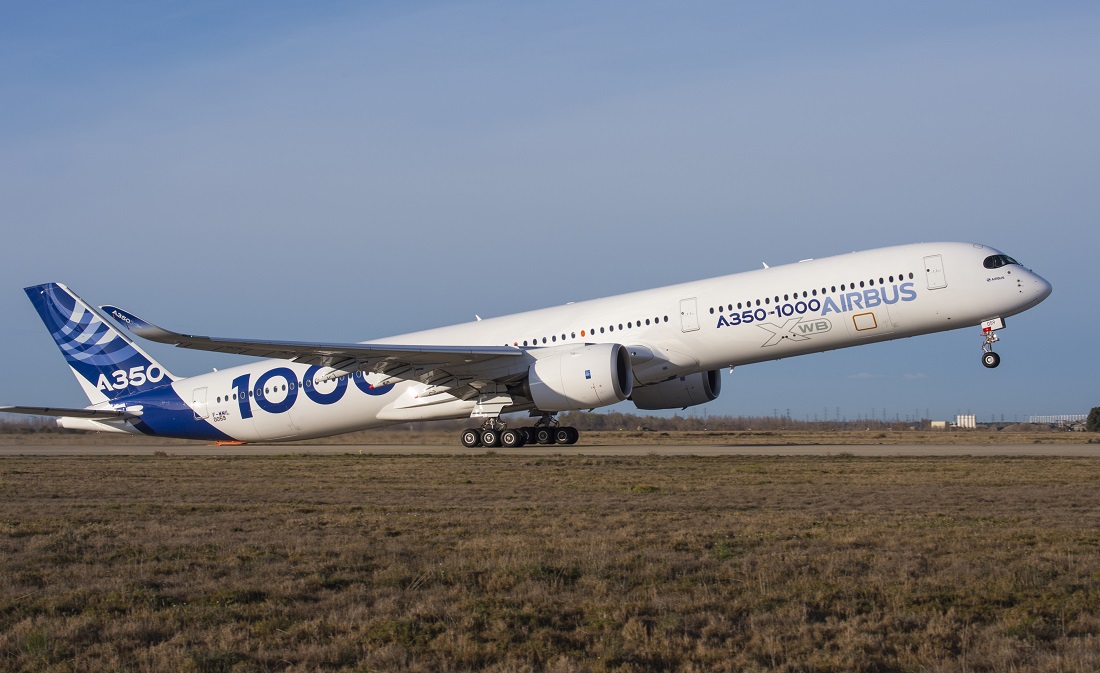
The A350-1000 is the new member of the A350 XWB family and benefits from its high level of commonality with the A350-900. Scheduled for Type Certification and first Customer delivery in the fourth quarter of 2017, the A350-1000 is currently performing an intensive flight test campaign.

As of July 26, Airbus has recorded a total of 847 firm orders for the A350 XWB from 45 customers worldwide.

Source : Airbus/Airbus Picture


REGIONAL/BUSINESS JETS

   Embraer Lauds Services In Q2 Results

Embraer saw a 30% increase in second-quarter sales, due in part to improved revenue from services – an increasingly important business line for the world’s major aircraft manufacturers.

The Brazilian company’s second-quarter revenue rose to $1.77 billion, on factors including higher services sales and increased commercial deliveries.

Embraer delivered 35 commercial aircraft during the quarter, versus 26 in last year’s equivalent period.  It also delivered 24 business aircraft, and noted that its executive jets division had recorded a double-digit growth in services revenue.

Boeing is also pushing its aftermarket product: First-half earnings for its services division unit were up 11% to $674 million and Boeing expects the unit’s operating margin for the full year to breach 13.5%, up from a previous forecast of 12.5%-plus.

And while Embraer’s 2Q trading statement is unclear about services’ contribution to higher revenues within its commercial aircraft division, the manufacturer does offer a full suite of services, including maintenance, modifications, field support, training and materials.

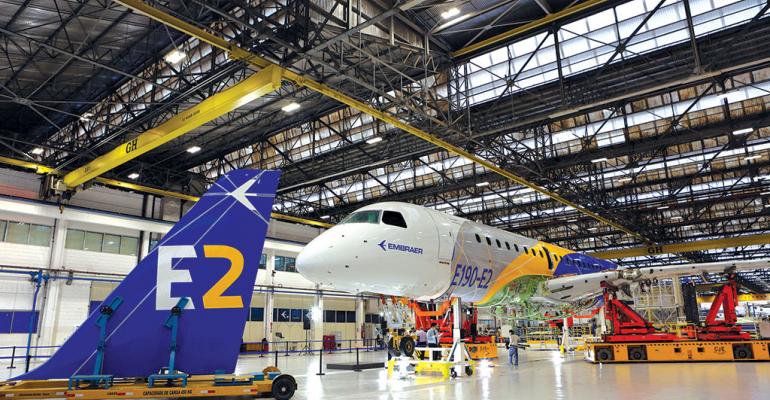
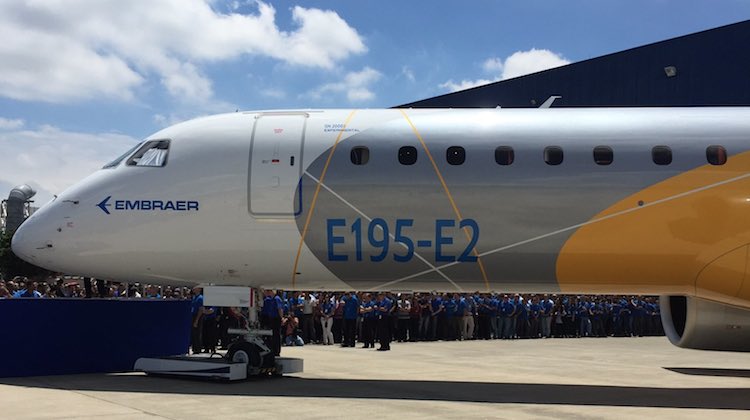
In the first half of 2017, Embraer had invested almost $24 million in parts for its pooling program.  The company also invested in its E2 aircraft program, which is currently running four E190-Es and one E195-E2 prototypes.  The E190-E2, which has 83 firm orders, completed its wing bending test in May and is now more than halfway through its test campaign.

(It is interesting how airframers are now putting more emphasis on the services side of their businesses. As a former spares executive in the car industry and heavy duty Truck industry, I am elated to see the expansion of this business, which handled correctly can generate more profit for airframes)

Source : Embraer/ Embraer Picture

OTHER AVIATION NEWS


 ALC Looks to Accelerate Boeing Deliveries As Airbus Delays Mount

Air Lease is looking to accelerate some of its Boeing deliveries to offset delays to certain Airbus aircraft in 2018, as it questions the stability of both airframers’ supply chains.

Delivery delays of Pratt &Whitney powered A320neo family aircraft and Rolls Royce- powered A330-900neos continue and are

“sliding right” month-by-month in 2018, says  John Plueger, chief executive of the Los Angeles-based lessor, during a second quarter earnings call on August 3rd.

Steven Udar-Hazy, chairman of All, calls the delays to the A330neos the “Rolls Royce Situation”, during the call. He adds that the aircraft has not even begun flight tests.

As a result of the delays, the lessor is looking to accelerate some of its Boeing deliveries into 2018 and may temper its aircraft sales program, says Plueger.

The lessor has yet to determine the full impact of the delays on deliveries from its order book and to its sales program, says Plueger when asked by Wall Street analysts.  He adds that it is receiving updates from Airbus on a weekly basis and hopes to have some clarity by the end of summer.  ALC attributes the delays to supply chain issues, particularly with engines, that are impacting Airbus and, to a lesser extent, Boeing.

“We don’t have the production delay problems with Boeing that we have with Airbus,” says Udvar-Hazy, when asked about possible acceleration of Boeing deliveries.” It just seems Boeing has its programs under control,” he adds.

Source : Flightglobal/ALC


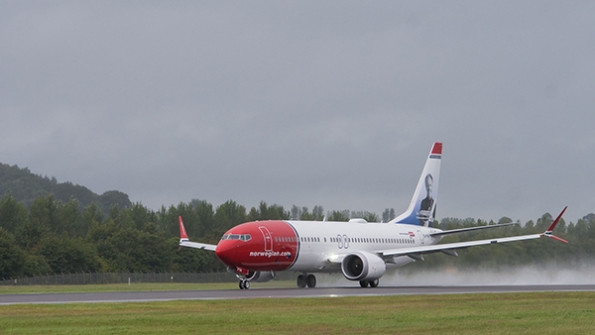
Norwegian Has Performed Its First Commercial Transatlantic 737 MAX 

Low-cost carrier (LCC) Norwegian Shuttle has performed its first commercial transatlantic flights using the Boeing 737 MAX, with two aircraft now in revenue service.

The first Norwegian 737 MAX transatlantic sector was operated July 15 by aircraft named “Sir Freddie Laker,” who is widely recognized as long a long-haul, low-cost pioneer.  The Skytrain executive started long-haul, low-cost flights between London Gatwick and New York in 1977,  with fares starting at $77.

Norwegian’s 189-seat 737 MAX operated between Edinburgh and Hartford, Connecticut; followed by a second rotation from Edinburgh to Stewart International in New York.

The 737 MAX offers longer range compared with older narrow bodies, opening up smaller transatlantic city pairs at an affordable cost and fare price.

Norwegian will take delivery of six 737 MAXs this summer, joining the two it already has in service.

Source : Flightglobal/Norwegian/NorwegianPicture


  LOT Polish Airlines Completes Initial Phase of Long-Haul Renewal

LOT Polish Airlines has taken delivery of the final aircraft of its batch of eight Boeing 787-8s, as the Polish national carrier eyes the arrival of the larger-9 model next year.  CEO Rafal Milczarski credits the twin-aisle aircraft as being a factor in the airlines financial turnaround.

The eighth 787-8 will largely be used to increase frequencies on LOT’s Asian routes, notably to Tokyo (from 3X-to 4X-weekly) and Seoul (from 3X-to %X-weekly) beginning this month.  The enlarged fleet will also begin %X-weekly services from Warsaw to Newark Newark, replacing a Boeing 767-300 leased from Portuguese leasing and charter specialist EuroAtlantic Airways.

The final 787-8 will also allow for potential new long-haul services to be launched, even before the arrival of a batch of four 787-9s next year.  That will be used to inaugurate the recently announced Budapest-New York JFK and Chicago O’Hare routes from May.

On the short-haul front, July also saw the deliveries go four 737-800NG completed, while in November, LOT will be one of the early operators of the 737 MAX 8.

  Source : ATW/Picture Norwegian


LATEST NEWS

  • Air Lease Corp has finalized an order with Boeing for 12 737 MAX aircraft previously announced at the Paris Air Show.  The agreement also includes two new orders for the 787-9 Dreamliner.

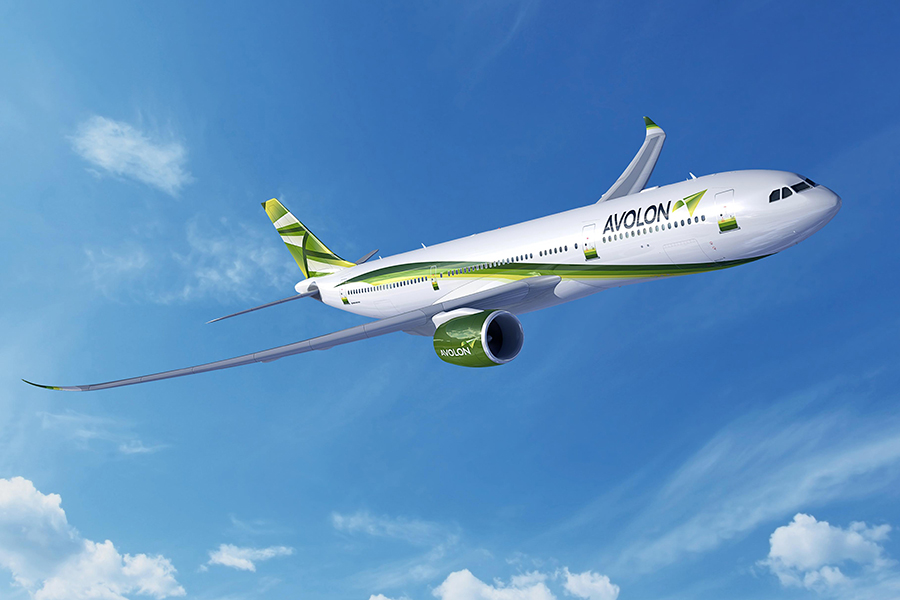
  • Avolon Irish lessor delivered one Boeing 737 Max 8 to Indonesia’s Lion Air.  This is the fourth Avolon aircraft on lease to Lion Air.
  • ICBC, Chinese lessor, has been identified as the customer behind an order for 20 Airbus A320neo placed at the end of 2014.
  • ALAFCO secured a loan from Stellwagen Finance for the first Airbus A320neo for lease to Air India.
  • GE Aviation earned $1.49 billion on $6.53 billion sales in 2Q17 vs $1.35 billion on $6.51 billion in 2Q16.
  • Meggitt aviation component and systems maker has landed a deal with Boeing to provide the airframe with integrated standby flight displays (ISFD) for the 777X.
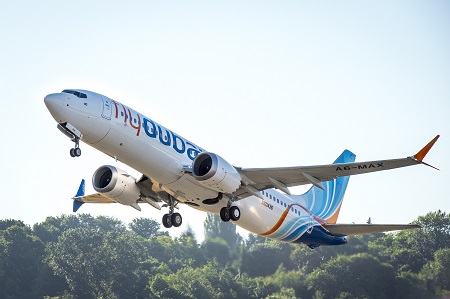
  • Flydubai Dubai based low-cost carrier (LCC) has taken delivery of its first Boeing 737 MAX 8, becoming the first Middle Eastern carrier to operate the type.

  • Singapore Airlines has dropped its short-haul low-cost carrier (LCC) brand Tingerair, merging the airline into mid-to long-haul LCC Scoot.
  • Saudi Aramco has taken delivery of three new Boeing 737-800s in as many months.

  • New England Patriots has acquired two former American Airlines Boeing 767-300ERs for travel to out-of-town games.  The 767s are owned by a company called Team 125 Inc, operated by New England Patriots LLC and financed by Kraft Group, a company let by Patriots owner Robert Kraft.  The aircraft will be configured in an all-first class configuration and will operate out of TF Green airport near Providence, Rhode Island.
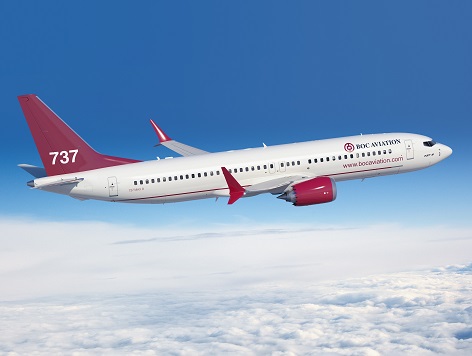
  • BOC Aviation firmed its commitment to order 10 737 Max 10s made at the Paris  Air Show in June.


AIR CARGO

Volga-Dnepr Weighs in With Vision for a Larger An-124 

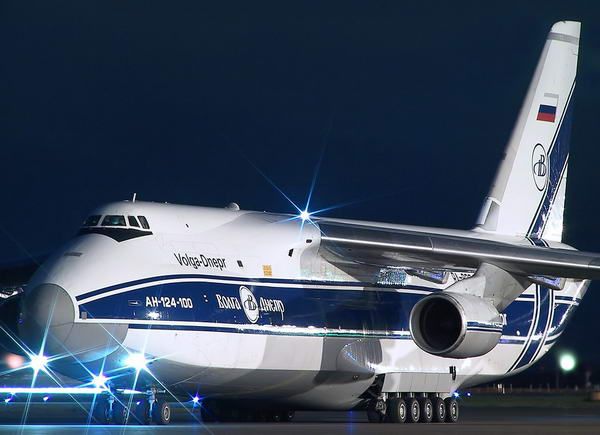
Volga-Dnepr Group has outlined its principal requirements for a future freighter to replace the Antonov An-124-100.

During the MAKS air show in Moscow in July, it outlined its vision of a successor to the Ukrainian outsize-cargo aircraft, developed in the 1970s as a military transport.

“In our view, a new freighter should be 35% to 40% more efficient economically and capable to carry a payload of up to 170t for at least 8,000km to 10,000km (4,300-5,400nm)”, say technical director Viktor Tolmachev.  “This would enable the operator to transport even bulkier cargos on longer-haul routes across the oceans and continents.”

The cargo variant of the An-124 entered commercial service with Volga-Dnepr Airlines in October 1991.  Since then the freighter has undergone several enhancements and modifications, the latest is the-100M-150, fitted with Western avionics and capable of flying 2,430nm with a payload of 150t.

Volga-Dnepr currently uses a dozen An-124s, of which 10 were built 22-27 years ago.

Source : Flightglobal/ Volga-Dnepr Picture


 Maintenance, Repair and Overhaul News                         

One-Stop OEM Shopping?

The aviation aftermarket is being jolted by some bold moves from OEMs that could challenge conventional business models.  Or is this simply part of the next wave of consolidation?

Take Boeing Avionics.  The OEM announced on July 31, that it is setting up the avionics unit to develop avionics for both commercial and military platforms.  That means it will compete against some of its Tier 1 suppliers – such as Honeywell, United Technologies Corp. and Rockwell Collins. The latter “saw its share price whacked on the Boeing Avionics news,” says Robert Stallard, an analyst at Vertical Research Partners, who points out Rockwell Collins stock “has since rallied.”

A few days later, on Aug. 4, reports started swirling that United Technologies might purchase Rockwell Collins. Keep in mind Rockwell Collins just finished acquiring B/E Aerospace, the cabin interior product and services company, on April 13th. It had expanded its interiors portfolio and established natural synergies and complementary services in areas such as cabin management, connectivity and communication.

Now that some OEMs aim for more aftermarket revenue, it’s not surprising that they seek greater in-house capabilities for an expanding market, which Aviation Week forecasts to reach $74.3 billion this year.

Expect the market to continue expanding through the year. In Vertical Research Partners’ assessment of the global aerospace and defense market’s second quarter, released Aug. 7, it says the aerospace market grew about 7% slightly higher than the 5% in the first quarter.

While all this is emerging, Stallard also sees “a potential shift in the balance of power between the aircraft OEMs and their suppliers,” some of which “are struggling to keep up with the relentless price and efficiency demands of Boeing and Airbus.”

Source : MRO-Network


 MRO Short News

  • Jet Yard was selected by Delta Material Services to perform part outs in Marana, Arizona.
  • ATR extended its global maintenance agreement with Stobart Air for 17 Air aircraft.
  • Czech Airlines Technics was selected by KLM low-cost carrier Transavia for Boeing 737NG maintenance.
  • Zodiac Seats US was selected by Irish low-cost carrier Ryanair to supply Z110 economy seats for Boeing 737 MAXs.
  • Ducommun has a Boeing contract to supply aluminum fuselage skins for the Boeing 737-800BCF.


September Puzzler        


August Puzzler Answer :  Allegiant Air the fleet is so old that its most numerous airplanes are McDonnell Douglas MD-80s and -90s, which ceased production 17 years ago. Allegiant also operates a pair of Boeing 757s (out of production since 2004) and about somewhat younger dozen Airbus A319 and A320 aircraft.


Researched and Compiled by : Ed Kaplanian

Commercial Aviation Advisor

Contact – ed@kaplanianreport.com

Volume 4 Issue 8


ON THE BOEING FRONT

The 777 Best Plane Boeing Has Ever Built

On June 12, 1994, the Boeing 777 takes its first flight, kicking off a career that would revolutionize the airline industry.

Once every few decades, an airplane comes along and simply redefines what a modern airliner is capable of delivering for airlines and its passengers. Boeing did it with its first jet-powered airliner, the 707. Boeing changed the game again, when it launched the 747 and turned the industry upside down and in 1994 Boeing did it again with the 777.

In two decades since its first flight, the 777 became the trusty long-haul workhorse for the world’s international airlines. Through June 23, 2017, Boeing has sold a whopping 1,944 777s, making it the best selling wide body in company history.

The following is a short history of the Boeing 777.

The Boeing 777’s journey began in October of 1990 with an order from United Airlines for a twin-engine wide body airliner larger than Boeing’s 767. Leading the program was its general manager, Alan Mulally. From the start, Boeing knew the 777 would be special. It was

the first airliner to be designed completely using a computer. Using 3D computer graphics, Boeing was able to digitally pre-assemble the 777, foregoing the need for costly and time consuming clay models. To produce the 777, Boeing selected its Everett, Washington production facility.

Even though the 777-200 is smaller than the 747, it is still massive airplane at 209 feet long with a 191-foot wingspan. The jet’s high bypass turbofan engines built by Rolls-Royce, Pratt & Whitney, and GE are the largest engines ever installed on an airliner.

The 777-200 featured a state-of-the-art two-person digital cockpit. In the back, passengers are treated to a more comfortable and quiet ride with greater in-flight entertainment options.

The resulting aircraft could carry 305 to 440 passengers up to 8,270 miles. The cask 200 could cruise at 615 mph and fly at 37,900 feet. In 1995, the 777-200 entered service with United Airlines marking the start of the plane’s game changing career.

With the 777, Boeing was able to convince the government to give the plane an ETOPS 180 rating. The four-engine jumbo jet was not immune to the market dominance of planes like the 777. Along with the twin-engines Airbus A330, the 777 has decimated four-engine passenger sales.

In 1996, Boeing rolled out a more potent version of the 777 with an even greater range called the 777-200ER for extended range. In 1998, Boeing stretched the 777 to create the 550 seat 777-300. Boeing did not stop here. In 2002, extended the range version of the Dash 300 called 777-300ER. With more than 800 sold, the 300ER is by far the most popular version of the 777. In 2006, Boeing introduced the longer range 777-200LR. The 200LR can carry 301 passengers nearly 11,000 miles. With more than two decades of service under its belt, the 777 is getting ready for a major makeover. In 2019, Boeing will introduce the next generation 777-9 and 777-8.

Source : Business Insider/Ed’s research.


ON THE AIRBUS FRONT

Rolls-Royce Sends First Trent 7000 Pair to Airbus

Rolls-Royce has shipped the Trent 7000 engines for the first Airbus A330neo toToulouse. The UK manufacturer says the power plants have left its facility in Derby and will be installed on the re-engined twin jet during this summer, following integration with Safran nacelles at that company’s Toulouse site.

Airbus has previously indicated its intent to start test-flying the A330neo toward “end of the summer”, potentially as late as September. The airframe originally planned for the A330neo to enter service in late 2017. Now, spring 2018 is the target for starting deliveries.

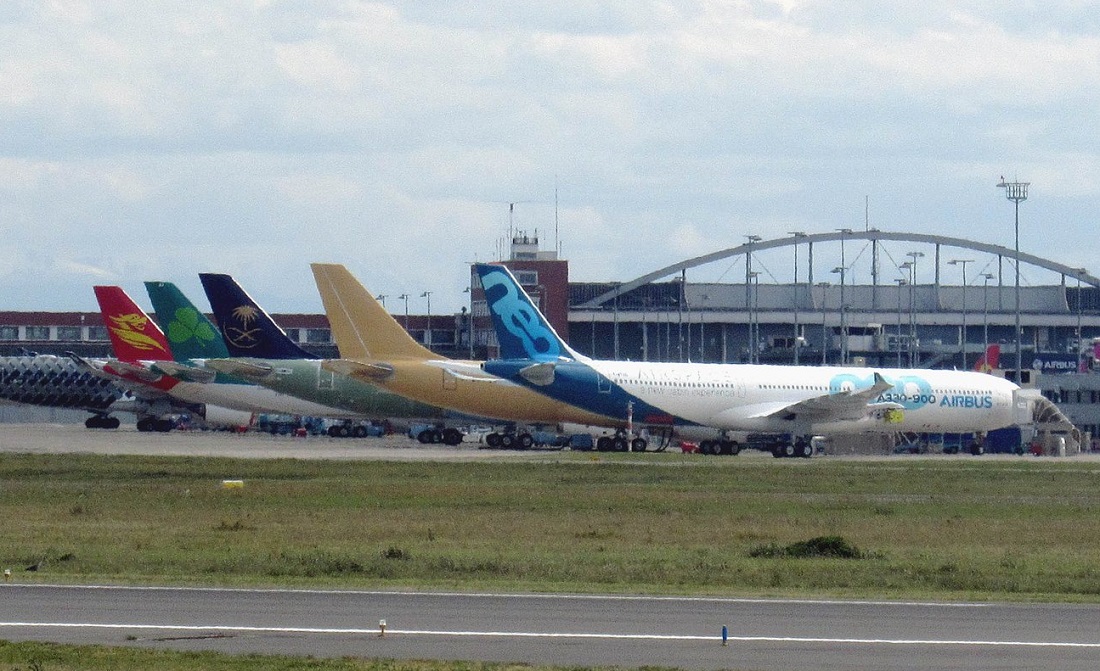
Rolls-Royce’s Trent 7000 is the sole engine available for the A330neo.  Airbus rolled out the first two A330neos earlier this year, which have been parked in Toulouse engineless awaiting the delivery of their Trent 7000s (picture shown)

The Trent 7000 with twice the bypass ratio of the Trent 700 powering the current-generation A330, Rolls-Royce says the Trent 7000 cuts specific fuel consumption by 10%.

Source : Rolls-Royce/Airbus


REGIONAL/BUSINESS JETS

                 Embraer Marks One Year of E190 Operations in Japan                                                 

On June 20, Embraer announced at the 52nd International Paris Air Show, that it has signed an agreement with Japan Airlines for a firm order of an additional E190, after Embraer marks one year of E190 operations in Japan. Japan Airlines’ subsidiary J-Air made its first revenue flight in May 2016. J-Air currently operates seven E190s and 17 E175s – 24 E-jets in total, with an additional eight E-jets on backlog. The firm order has a value of USD $50.6 million, based on 2017 list prices, and will be included in Embraer’s 2017 second quarter backlog.

J-Air’s E190 fleet is based at the airline’s Osaka (Itami) base and features a dual-class arrangement with 95 seats, including the well-received Class J (business class) seats, with Free Video Program services for Wi-Fi devices. J-Air’s E-190s currently fly to seven routes in Japan, including services to Narita from Osaka (Itami) and Sapporo that started from June 8. Network growth will continue to include cities like Tokyo (Haneda).

Source : Embraer/Japan Airlines


OTHER AVIATION NEWS

GE Tells Boeing It Won’t Share 797 Engines With Arch-Rivals

General Electric, the world’s biggest jet-engine maker, said it’s not prepared to share turbine production on Boeing Co. planned middle-of-market plane with its two global rivals.

Should Boeing opt for multiple suppliers, ”we’re out,” David Joyce, head of GE’s aero-engine arm, said at the Paris Air Show; adding that his company still carries “scares” from being one of three engine providers on the Airbus A330 two decades ago.

“What happens is, all three of us spend a lot of money to design a brand new engine and then all of a sudden you’re splitting the market,” Joyce said.  “You look at the returns on that, unless you find a bunch more applications for that engine immediately, you end up in a world where it just doesn’t work.”

“Think of the difference between whether you’re sole or not,” Joyce said. ”In terms of how you make the business case and return on investment, it’s no cheaper to build the engine if there’s two of you than if there’s one—but the return on it is a hell a lot different.” GE has already gone through three rounds of submissions on the new Boeing plane, he said.

Divisional chief McAllister declined to elaborate on the likely engine architecture of the plane, saying that “it’s still very early in the game”.

Source : Bloomberg/GE Aviation

AerCap Holdings Signed Lease Agreements for 65 Aircraft in the 2Q

Dublin-based lessor AerCap Holdings signed lease agreements for 65 aircraft in the 2017 second quarter, more than dubbing the 27 leases the company secured in 2Q 2016. AerCap’s signed leases during the quarter covered 18 wide body and 47 narrow body aircraft, the company said on July 12.

AerCap purchased 11 aircraft in the 2Q (eight Airbus A320neos, one A321neo and two Boeing 787-9s and sold 24 aircraft from its owned portfolio and eight from its managed portfolio.

In April, AerCap announced it has signed $7.2 billion in financing transactions during the 2017 first quarter, a figure that, in three months, eclipsed the company’s entire 2016 financing transaction total by $2.6 billion.

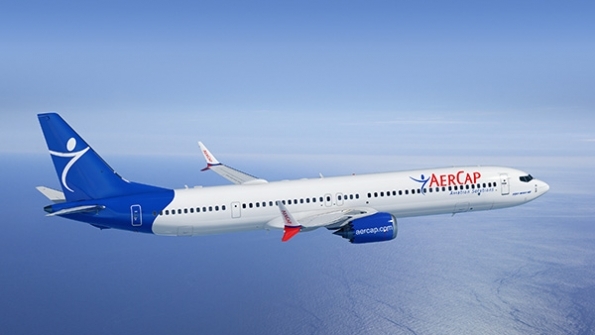
Source : AerCap/Rendering of 737 MAX in AerCap livery Boeing

Air Transat To Introduce A321LRs In North America  

Canada’s Air Transat expects to become the first North American operator of the Airbus neoLR after it takes delivery of the first 10 it has agreed to lease for 12 years from AerCap starting in 2019.  Scheduled for delivery between the spring of that year and the fall of 2020, the A321LRs will replace Air Transat’s aged Airbus A310s, which the airline plans to gradually retire.

Air Transat said it will deploy the single-aisle jets on both holiday destinations and transatlantic routes, alongside its Airbus A330s and Boeing 737s. The A321LRS will come configured with 200 seats in dual-class layout.

“The A321neoLRs will perfectly complete our fleet of A330s and Boeing 737s”, Transat  President and CEO Jean-Marc Eustache said. This agreement with AerCap will allow us to continue offering our customers the service and comfort they are used to, at the best possible price.”

Air Transat’s fleet currently consists of 31 permanent aircraft in what it calls a unique flexible-fleet model. This allows it to deploy more wide body aircraft in summer for high transatlantic season, with narrow body aircraft in winter to cover the high season for leisure destinations.

Source : Air Transport


LATEST NEWS

  • Delta Airlines took delivery of its first of five A350-900s this year, it is the first US airline to operate the type.

  • SMBC Aviation Capital and Chinese low-cost carrier Lucky Air have entered into an agreement for 4 Boeing 737-8 MAXs.
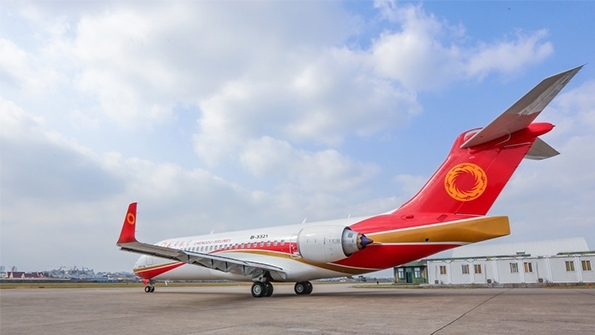
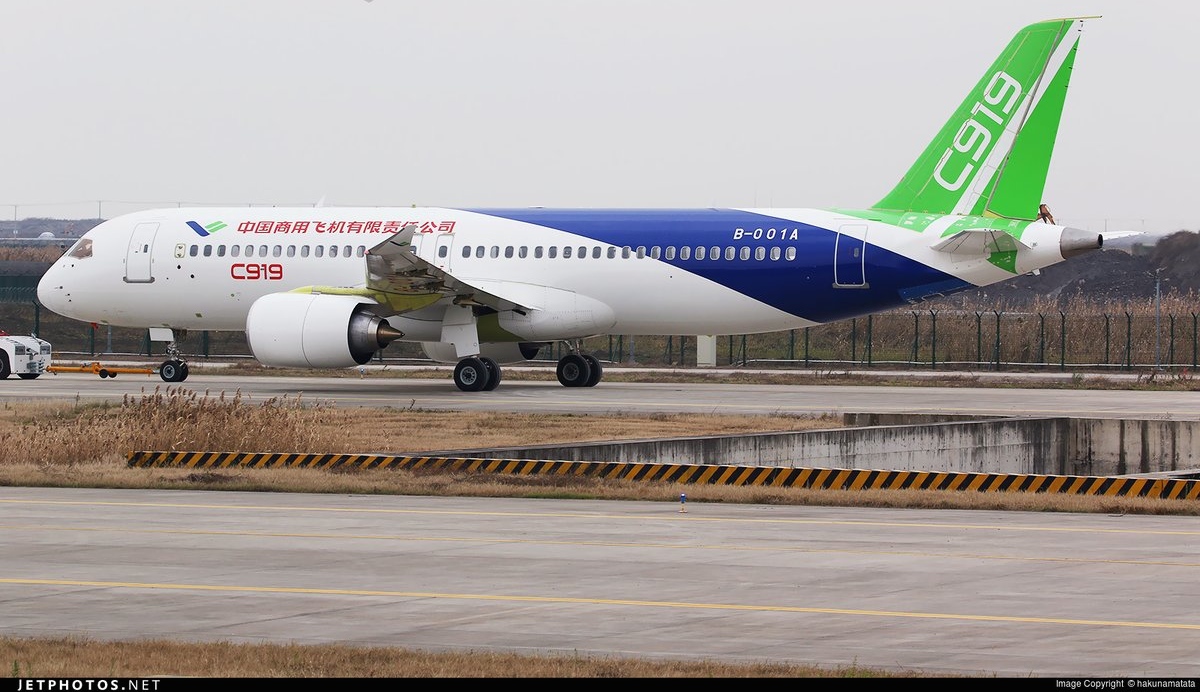
  • The Civil Aviation Administration of China(CAAC) has approved a production certificate for the ARJ21-700, produced by the Commercial Aircraft Corp. of China (COMAC).

  • AviaAM Leasing delivered an Airbus A321 to Russia’s Aeroflot.
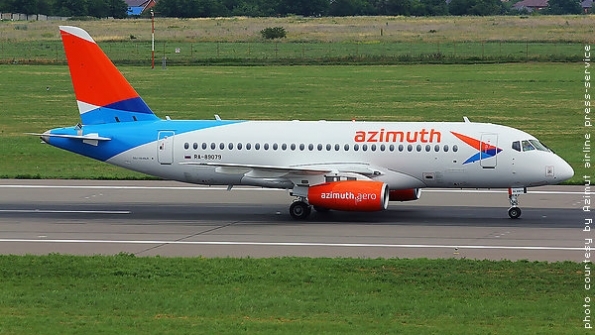
  • Azimuth Airlines Russia’s new regional carrier, took delivery of its first SS100 aircraft on July 7th. The aircraft is leased by State Transport Leasing Co.

  • Sunrise Airways, Haiti based airline, received a new Airbus A320, configured in two classes. The 150-seat aircraft features 12 seats in first class and 138 in economy.
  • BOC Aviation has placed an order for four 787-9s which will be leased to Air Europa of Spain.
  • FLY Leasing purchased 4 new aircraft, including a new Boeing 787 and a new 737 MAX 8, its first of the type. The 787 is on a 12-year lease to a European airline and the 737 MAX 8 is on a 12-year lease to an Asian carrier.
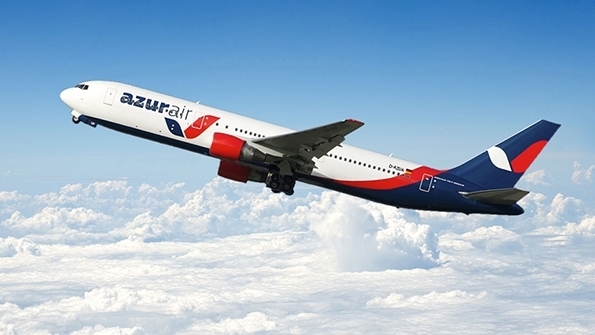
  • Azur Air, the new German airline, has begun operations and launched its first flight from Dusseldorf to Lama de Mallorca, Spain on July 3.

  • Alaska Airlines is launching flights from Paine Field, (PAE) Washington State, to give passengers living north of Seattle a more convenient alternative to Seattle-Tacoma International Airport (Sea-Tac).


AIR CARGO

West Atlantic To Become Launch 737-800BCF Operator

West Atlantic Airlines committed to lease 4 Boeing 737-800 converted freighters from GE Capital Aviation Services (GECAS). This will make it the first operator of the type after taking delivery of the freighter later this year or the first quarter of 2018.

GECAS launched the 737-800 converted freighter program and gave the prototype aircraft to Boeing in 2016. GECAS expects the conversion to take about 3.5 months, or 100 days, per aircraft.

Boeing’s modification facility in Shanghai will do the conversion. The value of the lease to West Atlantic Airlines, a European operator of mail and express freight, was not disclosed, but the carrier did say the aircraft will enable it to expand into new markets, possibly Asia.

Kurt Kraft, Boeing Commercial Airplanes VP modification and conversion services, says Boeing has 60 orders and commitments for the program.  “We predict that demand for the standard-body will continue to be strong and grow more than 40% of demand coming from Asia.”

The 737-800BCF is powered by CFM56-7B engines and will carry 23.9 tons of cargo over 2,000 nm.

Source : GECAS/Boeing


 Maintenance, Repair and Overhaul News

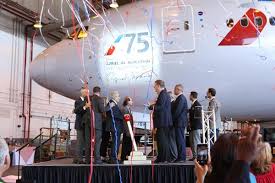
American Airlines Honors MRO Employee with 75 Years of Service 

Azreil Blackman celebrated his 75th year of service at American Airlines on July 18th. To put this in perspective, Blackman, who is still actively working for the airline, received the FAA’s Charles E. Taylor Master Mechanic Award for his 50 year of MRO experience 25 years ago.

“When I first started as a junior mechanic, Al was my crew chief and was celebrating his 45th anniversary. I thought to myself, 45 years with one company. That’s amazing,” said Robert Needham, senior manager aircraft line maintenance at New York John F. Kennedy International Airport (JFK). “Here we are celebrating his 75th, 30 years later, and it’s just mind-blowing.”

The Aviation Maintenance technician crew chief started with the airline (named American Export Airlines at the time) at New York’s La Guardia Airport at age 16 as a sheet metal shop apprentice for $0.50 per hour. The 91-year-old, who moved to New York LaGuardia Airport in the 1960s, has worked on almost all the airline’s aircraft including from the 1940s to today’s aircraft.

American Airline surpassed him during his 75th anniversary celebration by naming a Boeing 777 in his honor (pictured). In addition, The Guinness World Records was present to honor Blackman with the “longest career as an airline mechanic.”

Next month Blackman will turn 92. American noted that his shift starts at 5 a.m, but he usually arrives just before 3 a .m. ”When you like what you do, it’s no work,” says Blackman.

Source : mro-network/American Airlines


 MRO Short News

  • MTU Maintenance and Air Burkina have signed an exclusive three-year maintenance agreement. The contract for the airline’s four CF34-8E engines from their Embraer E170 aircraft covers MRO, on-site services and guaranteed spare engine leasing availability.
  • Lufthansa Tecknik has a 15-year El Al, Israel Airlines, contract for Boeing 787 component support.
  • Turkish Technic has signed a Royal Air Maroc contract to perform two Boeing 767 C checks.
  • Boeing Shanghai has an SF Airlines contract to provide Boeing 737F and 767F heavy maintenance.
  • DHL Supply Chain Division began overseeing logistics for 80,000 parts numbers, components and equipment used for airline maintenance for Cathay Pacific and Cathay Dragon’s aircraft .
  • AAR and FlyDubai signed a long-term contract to provide comprehensive flight-hour components support for its new Boeing 737 MAX aircraft. The Dubai-based airline is set to take delivery of 100 Boeing 737 Max 8 aircraft ordered at the 2013 Dubai International Air Show by the end of 2023.

Puzzler of the Month

 Which US airline has the oldest fleet by age?


Answer will be given in my September Report.

Researched and Compiled by : Ed Kaplanian

Commercial Aviation Advisor

Contact – ed@kaplanianreport.com

July 2017 The Kaplanian Report

ON THE BOEING FRONT

GE Starts 18-month GE9X Certification Program

GE Aviation has started the 18-month certification program for the GE9X engine that will power the Boeing 777X.

The first round of certification tests will take place in Peebles, Ohio. The certification testing is beginning on the second GE9X engine GE has built; ultimately, there will be eight certification test engines. The next two GE9X engines are currently being built. One of those two engines will be tested in flight on GE’s 747 flying testbed based in Victorville, California, in the second half of 2017.

GE aims to complete the certification program by the end of 2018. The 777X is slated to enter service in 2020.

The start of certification program follows more than a year of testing with the GE9X first engine to test (FETT).

“Historically, the first to test is not separated by the second engine by a year-plus,”

GE9X program general Manager Ted Ingling told ATW.  ”That was the intention, that we moved that first engine forward to allow us as a design team to validate the architecture of this new engine, learn, and adapt those learnings into the certification baseline.”

The second engine to test (SETT), which started for the first time on May 16, is the first GE9X certification engine and the first of a series to build to the full-up finalized production standard.

SETT, also known as GE9X test engine 002/1, is the first to incorporate all the design changes from lessons learned during the validation runs of the first engine. In addition, GE will build an engine for ETOPS extended-range certification testing that will be configured with a Boeing-provided nacelle and other external hardware.

From early 2018, GE will also deliver eight compliance engines, plus a pair of spares to Boeing for the four 777-9 flight-test aircraft. The Engine is now officially named the GE9X-105B1.

Source : ATW/GE Aviation/PicturesGE Aviation


ON THE AIRBUS FRONT

Airbus Beluga XL Begins to Take Shape

The first of Airbus’ five new Beluga XL air lifters began to take shape, initiating the creation of a new jetliner fleet to transport complete sections of the company’s aircraft from production sites around Europe to final assembly lines in France, Germany and Spain.

Beluga XL’s lower fuselage will be the same as the freighter version of the Airbus’ A330-200  jetliner and is to be built on the A330 final assembly line adjacent to Toulouse-Blagnac Airport in southwestern France.

Airbus has taken delivery of the nose section for its first Beluga XL transport aircraft. The nose and cockpit have been constructed by Stelia Aerospace at a French facility in Meaulte. Stelia says several of its production sites, including its Tunisian facility, contributed to the manufacture.

Airbus five Beluga XL twin jets will be powered by Rolls-Royce Trent 700 engines.

The airframer is to introduce a series of individual paint schemes for its forthcoming fleet of the five Beluga XL transports, with the lead example featuring an aquatic design based on the white whale the aircraft is named after.

The first flight of the A330-200-based jet is due in 2018, Airbus confirms that each will bear a unique livery. The initial scheme was voted by employees, the airframe says. The Beluga XL will replace its fleet of A300-600ST outsized freighters from 2019.

Source : Air soc/Airbus/Flightglobal


REGIONAL/BUSINESS JETS

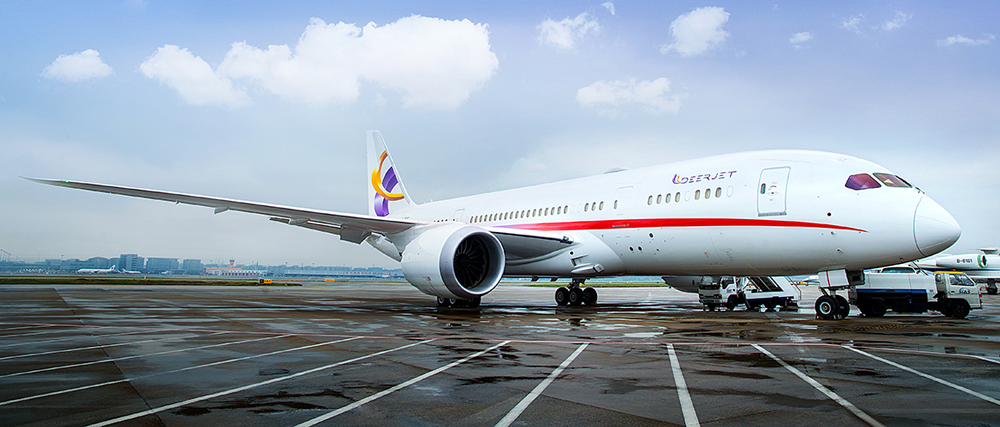
Deer Jet to Add Second Boeing 787 Dream Jet to its Fleet

Deer Jet announced the building of world’s largest Dream Jet fleet by adding a second one to its managed fleet and brings to Seattle, the birthplace of Boeing, the world’s first 787 Dream Jet for its first display in the US.

The showcase was held at the Museum of Flight. This was the sixth stop for the world’s first Dream Jet after Hong Kong, Shanghai, London, Dublin and Doha; part of the series of exhibitions “Dreams Encounter the World.”

Exclusively for the Seattle exhibition, A collection of Sculptures from artist Dale Chihuly, including its famous Cylinders, created from glass-thread drawings on vessels inspired by Native American textiles, added local style to the 787 Dream Jet cabin.

During the press conference which was held at the end of the display, Mr. Adam Tan, CEO of HNA Group, Deer Jet’s parent company, said:

“Along its 24 years of history, HNA Group has built many milestones for the aviation industry, once a regional airliner, now the 353th of the Global Fortune 500 list and the goal to become one of the top 10 largest enterprises in the world. The first 787 Dream Jet is a masterpiece, after its global success we are very pleased to add a second one as we decided to build the largest Dream Jet fleet in the world. It will also be managed by Deer Jet, the top private jet company in Asia. I believe this will provide the highest quality of premium business travel services to our worldwide high-end customers.”

During his speech at the press conference, Mr Kevin McAllister, President and CEO of Boeing Commercial Airplanes added :

“Deer Jet is setting the standard for private charter travel, and Boeing is excited to be part of it with the 787, the most technologically advanced and ecologically efficient business jet on the market.”

Source : China Aviation Daily/Deer Jet/Deer Jet Picture


OTHER AVIATION NEWS

Boeing Deal with Italian Export Finance Agency

SACE (CDP Group) and Boeing have entered into an important agreement that will support Italian exports in the aeronautical sector in the form of new aircraft delivery financing.

The agreement creates a shared platform for facilitating the financing of aircraft purchases of mutual interest each year, SACE will consider guaranteeing credit lines from third parties for the sale go Boeing aircraft (this year, up to 1.25 billion US dollars), in order to support Boeing’s contracts and subcontracts with Italian firms  specialized in precision aeronautical components. SACE’s commitment will be evaluated every year and adjusted accordingly to the supplies that Boeing will allocate to Italian companies.

“The agreement we are announcing strengthens our relationship with an international aerospace giant that has chosen Italy as one of its principal partners. Aeronautics has always been a strategic sector for our economy, where we can be even more incisive and more competitive in the international market”,  said Alessandro Decio, CEO of Sace CDP Group.

SACE said it will consider guaranteeing credit lines for airlines or leasing companies that buy Boeing aircraft. From 2015 to 2016, Boeing purchased 2.5 billion dollars of goods and services from Italian companies and, with a solid tie to the national economy, it has helped generate 12,000 jobs along the supply chain.

Source : SACE CDP Group


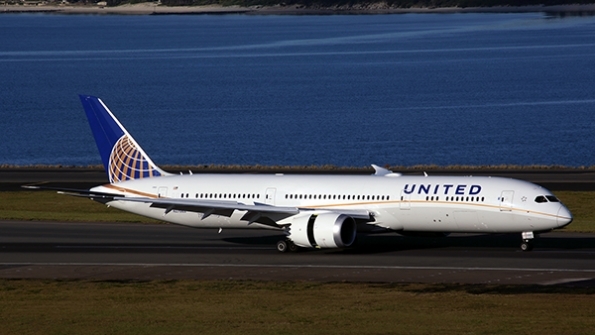
United Airlines to Offer LAX-Singapore 787-9 Service

United Airlines plans to introduce daily nonstop flights between Los Angeles and Singapore’s Changi Airport, effective October 27, subject to government approval.

According to  the Chicago-based carrier, the service will set the distance record for any airline operating a flight to or from the US, at 8,700 miles. (yet another milestone for the 787) Ed Kaplanian commented.

United’s existing service between San Francisco and Singapore started one year ago, June 1, 2016, and “holds the current record of the longest scheduled flight operated by any US carrier, at 8,446 miles,” the airline said in a statement.

Both routes will use 252-seat Boeing 787-9s with 48 Polaris business class seats and 204 economy seats, including 88 economy plus seats.

Flight UA 37 will depart Los Angeles at 8:55 p.m. daily, arriving in Singapore at 6:50 a.m. two days later (all times local). The return flight, UA 38, will depart Singapore Changi Airport at 11:00 a.m. daily, arriving at Los Angeles at 10:15 a.m. the same day. Flying times will be approximately 17 hours, 55 minutes westbound and 15 hours,15 minutes eastbound.

Source : United Airlines/ATW


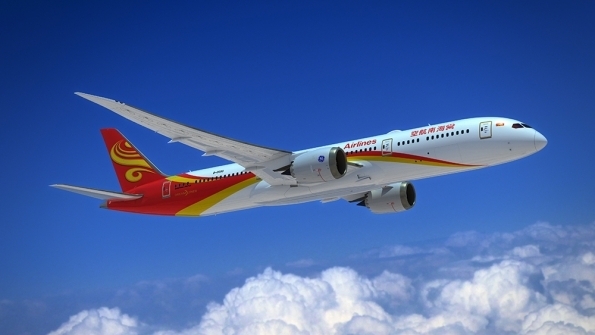
Hainan Airlines to Add 13 787-9s and Six 737 MAX 8s

HNA Group subsidiary, Hainan Airlines, is raising funds to acquire 13 Boeing 787-9s and six 738 MAX 8s.

China’s Civil Aviation Authority has confirmed Hainan Airlines’ five year plan, paving the way for additional 19 aircraft. 

Under the strategy, the Haikou-based carrier will add seven Boeing 787-9s in 2018, followed by another six 787-9s and six 737 MAX 8s between January and August 2019. It currently has 10 787-8s and nine 787-9s in its fleet.

Hainan Airlines valued the order at about $4.19 billion and detailed plans to raise the money through a bonds issue.

The aircraft will be used to strategically grow its fleet and network, in a bid to boost profitability and competitiveness.

According to the carrier’s website, its current fleet of 179 aircraft includes Airbus A330s, Boeing 737s, 767s, 787-8s and -9s.

Source : Hainan Airlines/Boeing picture/ATW


LATEST NEWS

  • Iran Air has taken delivery of its first four ATR 72-600 turboprops. Earlier this year the carrier finalized a deal spanning 20 firm ATR 72-600s, plus options on another 20.
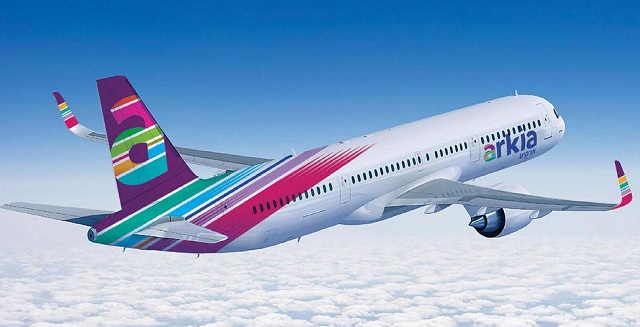
  • Arkia Israeli leisure carrier has unveiled a vibrant new livery as it prepares to modernize its fleet. 
  • EgyptAir has taken delivery of the fourth of nine Boeing 737-800 NGs, as part of a fleet modernization plan and expansion strategy.
  • Delta Air Lines placed an incremental order for 30 firm Airbus A321ceo aircraft.
  • EasyJet UK budget carrier EasyJet has opted to take the Airbus A321neo,by converting orders for 30 of the smaller A320neo which the airline has on order.
  • Kalitta Air took delivery of the first of two leased Boeing 747-400Fs from GECAS, adding capacity to Kalitta Air’s fleet of more than 15 wide body freighters.
  • Scoot Singapore-based low-cost carrier received its 14th Boeing 787 Dreamliner at the Boeing Everett Delivery Center on May 12. 
  • Airbus’ is nearing a major change in its sales organization as its current head of sales, John Leahy, has indicated he will retire soon.
  •  Ruili Airlines China’s low-cost (LCC) Ruili Airlines has agreed to lease three Boeing 737 MAX aircraft from AVIC International Leasing Co. in an effort to facilitate its international expansion.


AIR CARGO

Lockheed Martin’s LM-100J Commercial Freighter Makes First Flight

The first Lockheed Martin LM-100J commercial freighter aircraft achieved a critical milestone with the completion of its first flight in Marietta, Georgia. 

“I was proud to fly the first flight of our LM-100J.  It performed flawlessly, as is typical of our military C-130J new production aircraft,” said Wayne Roberts, chief test pilot for the LM-100J program. ”This new model will perform many commercial roles in the decades to come, like humanitarian service following natural disasters and others like nuclear accident response, oil spill containment, and firefighting. This aircraft will also enable remote area development such as mining, oil and gas exploration. This day marks the beginning of a tremendous commercial capability that only the LM-100J can deliver.”

This flight followed the same test flight route over North Georgia and Alabama that is used for all C-130J Super Hercules aircraft. The LM-100J will complete initial production flight tests and then begin Federal Aviation Administration (FAA) type certificate update test requirements.

Bravo Industries LLC, a Brazil-based firm, has agreed to buy 10 LM-100Js. Bravos Logistica division, which consists of Bravo Cargas and MRO, plans to operate the turboprop LM-100J for air cargo operations in Brazil.(Ed)

Source: Lockheed Martin/Picture Lockheed Martin


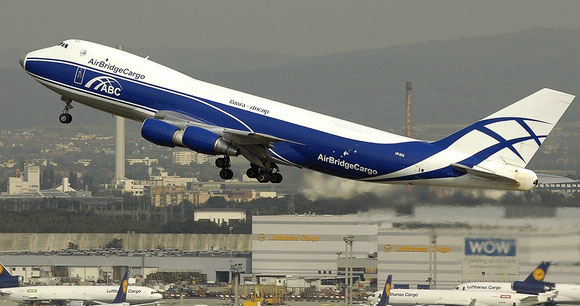
Russia’s AirBridgeCargo (ABC) Volume Up 17% In First Quarter 

Russia’s Airbridge Cargo carried 158.000 tons in 1Q 2017, up 17% year-over-Year, as a result of market growth and special products.  Load factor increased to 70% during the first months of the year, the carrier said in a statement on June 1.

The largest Russian cargo airline, which is part of Volga-Dnepr Group, continued to develop its network in Asia, launching a new route to Taipei in April. ABC provides Boeing 747F services to and from Tokyo, Seoul, Singapore, Hanoi, Phnom Penh, Hong Kong, Shanghai, Beijing, Chengdu, Chongqing and Zhengzhou.

According to ABC, high demand for exports from Europe enabled the airline to grow its tonnage from the region by 22% in Q1 2017; with growth on all its routes, notably to Asia, which recorded a 24% rise in tonnage over the same three months of 2016.

ABC’s services from North America also continued to grow, the airline said, and now operates up to 30 flights a week on its routes serving Atlanta, Chicago, Houston, Los Angeles and Seattle.

The arrival of the airline’s 10th new Boeing 747-8 F in March increased its total 747 fleet to 17 aircraft, contributed a 7% increase in frequencies network-wide.

Source : ATW/Boeing ABC Cargo picture


MAINTENANCE, OVERHAUL, REPAIR NEWS 

  Qantas, Jetstar Sign Up for Boeing 787 Parts Support

Australia’s Qantas Airways and its Jetstar Airways low-cost subsidiary have entered into a long-term component services agreement with AFI KLM E&M to cover its Boeing 787 fleet.

The contract covers pool access, repairs and applies to eight future Qantas-operated 787-9s. They are expected to start entering its fleet late this year and eleven 787-8 currently in service with Jetstar.

AFI KLM E&M said the program aims to achieve maximum availability for supported fleet. It will see both airlines gain direct access to the aftermarket provider’s spare pool in Kuala Lumpur, with support from its global inventories and component repair shops.

AFI KLM E&M said the total number of 787s under its parts coverage program now stands at 193 across 15 different airlines.

Fabrice Defrance, senior vice president commercial AFI KLM E&M, said the new contract further strengthens its position in the Asia-Pacific region. It also grows ties with Qantas, as AFI KLM E&M already provides component support on its fleet of Airbus A330s and, through its Spairliners Subsidiary, coverage of its A380 fleet.

Source: mro-network.com/Qantas Picture


 MRO Latest News

  • Lufthansa Technik was selected by Madrid-based leisure carrier Wamos Air to provide Airbus A330 and Boeing component support.
  • StandardAero was selected to maintain PW 125Bs for six Fokker 50s for Belgium carrier VLM Airlines.
  • F&E Aircraft Maintenance expanded its GoldCare agreement with Boeing to provide 787 and 737 MAX line maintenance at Denver and Seattle.
  • Aeronautical Engineers finalized contract with Mexico-based Aeronaves for sixth/Seventh MD-80 freighter conversions for late this year; Commercial Jet will modify one each at Miami and Dothan.
  • SR Technics expanded its CFM56 component repair agreement with AerFin ,to include-5Bs and -7Bs in addition to -5Cs out of facilities in Zurich, Switzerland and Cork Ireland.
  • HAECO was selected by Panasonic as an authorized IFEC repair center in China.
  • Ameco delivered a converted Boeing 757 aircraft to China Postal Airlines. This is the sixth Boeing 757 aircraft delivered by Ameco Chengdu Branch since 2014, while another three 757s are in progress in its facility.


Researched and Compiled by : Ed Kaplanian

Commercial Aviation Advisor

Contact – ed@kaplanianreport.com

Volume 4 Issue 5 The Kaplanian Report

ON THE BOEING FRONT

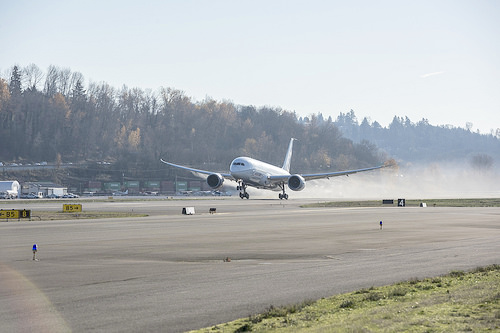
      Rolls-Royce Trent 1000 TEN Powers Boeing 787 for the First Time 

The Rolls-Royce Trent 1000 TEN has powered a Boeing Dreamliner flight for the first time.  The flight, which took off and landed at Boeing Field in Seattle, marks the latest phase in the engine’s development program.

The Trent 1000 TEN has also been selected to power the first test flight of the Boeing 787-10 version of the Dreamliner, slated for the end of March, 2017.  This means the Trent 1000 will have powered the first flight of every version of the 787.

Tent 1000 Program Director Gary Moore said: “ Our first Trent 1000 TEN flight on the Dreamliner is another great milestone for our program.  I want to thank everyone at Boeing and Rolls-Royce who have worked hard to make this flight happen.  In addition, our selection to power the first flight of the 787-10 is a great honor, and reflects our commitment to supporting this aircraft as it continues to evolve.”

The Trent 1000 TEN has already powered tests earlier this year on the Rolls-Royce Flying Test Bed aircraft, a Boeing 747, at Tucson, Arizona.

The Trent 1000 TEN (Thrust,Efficiency and New Technology) will power all variants of the Boeing 787 Dreamliner family.  The engine draws on technologies from Rolls-Royce Trent XWB engine and advance engine program, delivering thrust and efficiency improvements.

Source : Rolls-Royce/Rolls-Royce Picture


ON THE AIRBUS FRONT

A350 1000 Wraps Up High- Elevation Tests 

Airbus has wrapped up high-elevation airport testing of the A350-1000 following a 10-day campaign in South America.   Aircraft MSN71 undertook initial tests in Bolivia, operating to Cochabamba and La Paz.

MSN71 carried out several departures and landings at each airport for data-collection, says the airframe, operating at elevations of 7,546 ft – 13,123 ft.

The twin jet also carried out tests at the sea-level Colombian airport of Barranquilla.

“Early test results confirm the good performance and behavior of both the aircraft and its Rolls-Royce Trent XWB-97 engines,” adds Airbus.

“This is a major successful milestone in the aircraft certification flight-test campaign.”

The airframe typically carries out hot-weather tests in the Middle East, using Al Ain in the United Arab Emirates.

Airbus is aiming to deliver the A350-1000 for airline service later this year.  Three of the variant are involved in the certification effort.

Source : Flightglobal/Airbus


REGIONAL/BUSINESS JETS

               CSeries Completes London City Airport Validation Flights 

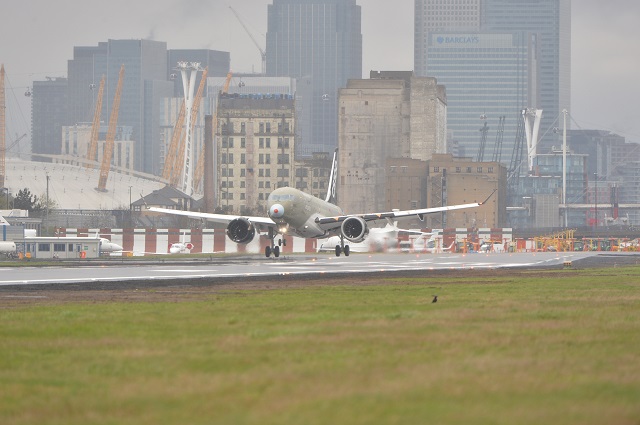
On March 23rd Bombardier completed CSeries validation tests at London City airport and expects to receive certification to operate commercial flights to the facility in as little as six to eight weeks.

“The aircraft flew flawlessly.  There were no issues,” Bombardier’s vice president of the CSeries program, Robert Dewar, told FlightGlobal.

Aircraft operating to London City require special certification largely due to the airport’s steep approach requirement.

Bombardier began London City certification tests for the CSeries months ago at other airports, performing approaches as steep as 7.5 degrees, says Dewar.  That’s steeper than London City’s %.5 degrees approach, he adds.

Following those trials, the Canadian airframe flew its second flight-test vehicle (C-GWYD), a CS100 variant to London Stansted airport on March 21st.

The aircraft landed for the first time at London City on March 22nd, completing four validation and demonstration tests that day and four on March 23rd, the company says.

Next, Authorities will review Bombardier’s test data, Dewar says.  The Company needs approvals from Transport Canada, The European Aviation Safety Agency and Switzerland’s Federal Office of Civil Aviation, according to Dewar.  Pilots must also complete London City specific training.

Bombardier designed the CSeries specifically for operation at London City, Dewar says.  For instance, engineers tailored the aircraft’s wing and flight control laws with London City’s operating requirements in mind, he adds

Source : Flightglobal/Bombardier


OTHER AVIATION NEWS

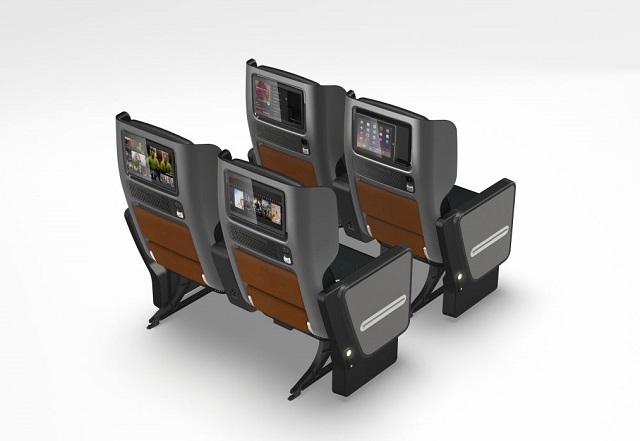
            “More comfortable” Economy Middle Seats To be Unveiled

Molon Labe has teamed up with BMW’s Designworks and Panasonic Avionics to create an economy-cabin design that would make the middle seat wider and more attractive.

A concept model of the novel design was unveiled at the Aircraft Interiors Expo in Hamburg, April 4-6.

The Stagger Seat, or S2, is a variation of Molon Labe Seating’s Side-Slip Seat, which is aimed at faster boarding and quicker turnarounds for time-sensitive short-haul flights.

The Colorado company is launching this new variation on the concept with quite a different goal – to improve economy class passenger comfort on long-haul flights.

The Stagger Seat takes the ergonomic features of the Side-Slip Seat and translates them into a reclining economy seat”like no other,” the company claims.  In the Side-Slip seat, the middle seat is offset, or staggered, downward and backward relative to the seats either side.  This allows the aisle seat to be slid over the middle seat during boarding, to increase aisle width and allow passengers to get past.

Faster turnarounds are not the main aim for long-haul airline, Molon Labe CEO Hank Scott said, so the stagger Seat does not slide, but it will recline.The offset is used primarily to increase space for the middle-seat passenger-and potentially generate more revenue for the airline.

By staggering the middle seat vertically and fore/aft, the arms, thighs and elbows of passengers are no longer adjacent.”The Stagger Seat offers more living space for all occupants,” Scott said. ”The middle seat is also 3inches wider, while the other seats maintain their standard width.”

Source : ATW/ Molon Labe


               Avolon Becomes World’s Third Largest Aircraft Lessor 

Avolon, the international aircraft leasing company, announced the completion of the acquisition of the aircraft leasing business of CIT Group.

Avolon is now the world’s third largest aircraft leasing company, with a combined fleet as of December 31,2016, of 808 aircraft valued at over US$43 billion.

Transaction doubles Avolon’s size and creates the world’s third largest aircraft leasing platform; serves 149 customers in 62 countries with approximately one third of in-service aircraft leased into each of the Americas, EMEA and Asia-Pacific regions, providing balanced geographic exposure.

The combined business had an owned fleet of 551 aircraft with an average age of 4.7 years: the youngest owned, in service fleet among the world’s top three aircraft leasing companies.

Total orders and commitments for 301 aircraft include new technology aircraft comprising of 196 Airbus Aircraft (A320neo family,A330neo and A350); 61Boeing 737 MAX aircraft and 25 Boeing 787 aircraft.

Source : China Aviation Daily/Picture Airbus


LATEST NEWS

  • Iran Air has taken delivery of a second Airbus 330-200, two weeks after its first of the type arrived in Tehran.
  • China Aircraft Leasing Group has completed the deliveries of one Airbus A320 each to Air Asia Berhad and Thai Air Asia.
  • Porter Airlines Toronto City-based airport took delivery of its 29th Bombardier  Q400.
  • Airbus the first Airbus A319neo performed its maiden flight on March 31, powered by CFM International LEAP-1A engines.
  • MIAT Mongolian Airlines plans to lease two Boeing 737 MAXs from Irish lessor Avolon as it looks to bolster its single-aisle fleet.
  • Boeing Commercial Airplanes after a one-year pricing freeze, Boeing Commercial has raised list prices by a range between 2.16-2.23% across the product portfolio.
  • The Government of Poland announced an order for three Next-Generation 737s.  The order includes two new BBJ2 airplanes and one 737-800, which will be operated by the Government of Poland as head-of-state aircraft for the  president and top government officials.
  • Air Bridge Cargo(ABC) Airlines has taken delivery of the first two Boeing 747-8Fs under a long-term lease agreement with US-based lessor Intrepid Aviation.
  • All Nippon Airways (ANA) will lease four Boeing 737-800 aircraft while it awaited delayed deliveries of the country’s first commercial aircraft in 50 years, the 90-seat Mitsubishi Regional Jet (MRJ)
  • Aseman Airlines of Iran signed a memorandum of agreement (MOA) for 30 737 MAX aircraft, with a list price value of $3 billion.  The deal includes rights  purchase rights for 30 additional MAXs.


AIR CARGO

       Qatar Airways Cargo Takes Delivery of Its Twelfth B777 Freighter

Qatar Airways Cargo received its latest Boeing 777 Freighter in Doha recently, taking its total freighter fleet count to 21.   The addition marks the cargo carrier’s commitment to building its young and modern air cargo fleet to strengthen its growth trajectory.

Ulrich Ogiermann Qatar Airways’ Chief Officer Cargo said, ”The arrival of our newest Boeing 777 freighter comes at a time when we are consciously strategizing our freighter network expansion this year; above and beyond the unprecedented demand and growth in our charter services.”

The Boeing 777 freighter has the longest range of any twin-engined freighter and is based around the 777-200 LR aircraft operating on the ultra long haul routes.  It has a payload capacity of 102 metric tons.

The airplane’s range capability translates into significant savings for cargo operators: fewer stops and associated landing fees, less congestion at transfer hubs, lower cargo handling costs and shorter delivery times. The capacity of the Boeing freighters is unrivaled and the plane’s economics make it an attractive addition to the fleet.

Qatar Airways Cargo operates the Boeing 777 freighters on long-haul routes to the Americas, Europe, the Far East, Asia and some destinations in Africa.

The airline will receive another Boeing 777 freighter later this year, increasing its freighter fleet to a total of 22 aircraft by the end of 2017.

Source : Qatar Airways Cargo Press Release

Polar Express Delivery 


An Antonov Airlines An-124 and Air Charter Service delivered a GE90 jet engine for Swiss International Air Lines 777-300 that was forced to make an emergency landing on February 1 in the Canadian Arctic town of Iqaluit  after one of its engines shut down in mid-flight.

The GE90 arrived less than 48 hours later after the Swiss jet landed in Canada; the An-124 remained in Iqaluit for a toTal of five days, while the new engine was installed on the 777 and the unserviceable engine could be retrieved.

Fortunately,the 216 passengers on the Zurich-to-Los Angeles flight only had to wait half a day as the plane sat on the tundra until a replacement jet resumed the journey to Los Angeles.

Source : Air Cargo World


 MAINTENANCE, REPAIR, OVERHAUL

           Asia’s MRO Surge Could Outstrip Demand

The rapid growth of aircraft maintenance sector in the Asia-Pacific region is creating a significant risk of aver supply, according to some industry executives,  said speakers at Aviation Week’s MRO East Asia conference.

The MRO market is “reshaping itself” and has been “shifting to Asia”, saId Vehbi Ozer, Turkish Technic’s strategy planning and projects manager.  He predicts that in the near future, the Asia-Pacific region will represent the biggest MRO market.

This region now accounts for 28% of the global MRO market value of $64 billion, said Francois Dubrulle, president of asset management company The

Green Airliner Singapore, Asia has essentially caught up to Europe and North America in terms of market share.  The global total is projected to rise to $96 billion by 2025, with Asia-Pacific growth likely to exceed that of the more developed regions.

Rapid expansion is both a challenge and a danger for the MRO industry, said Daniel Stromski, Haeco’s GM for inventory technical management.  He likens the current situation to a “gold rush,” with a wide range of companies looking to set up new operations or joint ventures in Southest Asia and China.

Stromski said this is causing worries about the supply and demand balance.  While Asia represents a great opportunity for MRO providers, the “industry should be careful where it invests,” so it does not “create oversupply of MRO capabilities.”

Source : MRO Network

Latest MRO News

  • ASCO has a Boeing contract to supply had metal/aluminum structural components through 2024.
  • Fokker Services(GKN Aerospace) was named authorized service provider by Bombardier to provide Q400 component repair management under its Smart Parts program.
  • Astronics acquired operating assets of Pacific Northwest-based Custom Controls Concepts,which supplies cabin management and IFE systems for Airbus/Boeing VIP aircraft.
  • Pemco has an Air Incheon contract to convert one Boeing 747-400 to freighter.
  •  Aeromet  has a Boeing contract to supply 777X parts using its A20X aluminum alloy.


Researched and Compiled by : Ed Kaplanian

Commercial Aviation Advisor

Contact – ed@kaplanianreport.com


Volume 4 Issue 4 April 2017 The Kaplanian Report

ON THE BOEING FRONT 

The Boeing 777 Flies Seven of the World’s Ten Longest Routes

A new list of the world’s ten longest commercial airline routes shows the Boeing 777 maintains its strong position as the world’s favorite long distance aircraft.

The 777 flies seven of the routes and the Airbus A380 flies two. Two newer aircraft, the Boeing 787 and the Airbus A350, both fly the 10th route between San Francisco and Singapore. United began service in June 2016 and Singapore followed in October. (this is according to OAG)

Looking ahead, Singapore Airlines has said it will begin a 9,534-mile, eighteen-and-a-half hour Singapore-Newark flight in 2018, using an Airbus A350-900ULR. Singapore previously operated the route with a four engine-A340, but discontinued it in 2013.  Also, in 2018, Qantas plans to operate a 9,009 mile, 17-hour Perth-London flight with a Boeing 787-900.

John Grant, OAG senior analyst, said the two new aircraft types will allow airlines to open more ultra-long-distance routes because the lightweight planes are smaller than their wide body predecessors, but still carry sufficient fuel for trips.

“As more extended range-second generation A350s and 787s come to production and are delivered in the next few years, it will allow airlines to operate more flights in these sectors,” Grant said.

Grant foresees that as airlines begin to operate more ultra-long flights, they may add more first class and business class seating, not simply to boost per-seat revenue, but also reduce the number of passengers and weight of aircraft.

Source : Forbes

        ON THE AIRBUS FRONT

 Airbus A350-1000 Undergoes Low-Speed Take-off  Tests 

Airbus has been carrying out low-speed take-off tests with one of the A350-1000 development aircraft as it heads towards certification later this year.

The first of three A350-1000 test aircraft (MSN59) has a tail bumper installed, enabling its rear fuselage to be dragged along the runway in trials to establish VMU minimum unstick speeds. The tests, which took place in early March at Istres in Southern France, help to verify slat and flap settings and performance criteria.

Airbus is working towards certification of the A350-1000 this year, to clear the way for deliveries of the stretched A350 derivative to begin in the second half of this year with Qatar as the first recipient.

The flight-test trials involve a trio of Rolls-Royce Trent XWB-97 powered A350-1000s. The third test aircraft (MSN71) recently returned from cold-weather trains in Iqaluit, Canada, where it was exposed to temperatures as low as -37 degrees Centigrade during an overnight soak. The aircraft subsequently undertook high-altitude take-off and landing tests at LaPaz airport in Bolivia.

Source : Flightglobal/Airbus/Airbus Picture


REGIONAL/BUSINESS JETS

Third and Final Pilatus PC-24 Enters Flight Testing

Pilatus Aircraft’s PC-24 business jet has entered the final stages of its certification program, following the maiden sortie of its third and final test aircraft.

Pilatus describes the debut flight as another important milestone in the PC-24’s development. It comes 22 months after the arrival of the first prototype kick started the validation program. Aircraft PO2 joined the campaign in November 2015, and the pair have since logged more than 1,350 flying hours, the airframer says.

Pilatus chairman Oscar Schwenk calls the results of the flight-test campaign ”very encouraging” and says the data collected so far indicates that the jet, the company’s first, exceeds published performance figures. These include a maximum cruise speed of 425kt (790m/h), a maximum range with six passengers of 1,800 nm (3,330km), and maximum take-off weight of 8,850kg (17,650lb).

Pilatus has secured 84 orders for the PC-24, equivalent to three years of production and is planning to reopen the order book following certification. PO3 will make its public debut in May at the European Business Aviation Convention and Exhibition in Geneva. The PC24 was unveiled at the industry gathering in 2013.

Source : Pilatus Aircraft/Pilatus Picture


Embraer Rolls Out E195-E2 its Largest Jet Aircraft

Embraer’s second E-Jet E2 variant, the E195-E2, was rolled out on March 7, 2017, marking the unveiling of the largest jet aircraft ever produced in Brazil.

According to CEO John Slattery, he believes the aircraft will be strongly considered as a replacement by mainline airlines flying the Boeing 737s and Airbus A319s and low-cost carriers(LCC) seeking a cost-efficient option.

“The first prototype E195-E2 will be used for aerodynamic and performance tests”, Slattery said. The aircraft’s first flight is officially scheduled for the second half of 2017, but rollout is occurring ahead of schedule. “I would not be surprised if the E-195-E2 does enter into flight testing in the first half of 2017,” Slattery said.

Source : Embraer/Embraer Picture


OTHER AVIATION NEWS

Argentine ULCC Startup Flybondi to Launch with Boeing 737-800s


Argentine ultra-low-cost carrier, (ULCC) startup Flybondi, has selected the Boeing 737-800 as its launch aircraft and ready to begin negotiations for up to 50 737 MAX 200s.

Giving a March 15 update, Flybondi said it had chosen the 737-800 over the Airbus A320 and honed its launch schedule to September.

The Startup had previously announced a start date in the second half of 2017.

“We are convinced the Boeing 737-800 is the right aircraft to develop the ULCC model in Argentina. We are very pleased with the level of support that Boeing has provided us with.” Flybondi CEO Julian Cook said.

The 737-800s, configured with 189 seats, were selected for their low operating cost. Flybondi also finalized the details of entry into service support agreement with Boeing.

No numbers were specified for the 737-800 acquisition, but Flybondi previously announced plans to operate four aircraft this year, adding six every year after that, to hit 30 aircraft by year five. Cook also said Flybondi will start negotiations for an order of up to 50 Boeing 737MAX 200s very soon.

Flybondi attracted seed funding from a series of well know veterans, including Ryanair board member and ex-COO Michael Cawley, ex-Air Canada CEO Montie Brewer and British Airways City Flyer Express founder Robert Wright alongside a group of Argentinian investors.

Source : ATW

 Southwest Unveils First 737 Max Routes

Southwest Airlines has unveiled its first Boeing 737 Max routes, as it prepares to take delivery of the re-engined jet that it was the launch customer.

The Dallas-based carrier will operate the 737 Max from October, with the inaugural flight departing Dallas Love Field at 7:00 for Houston Hobby. It will then continue to San Antonio before returning to Dallas.

The flight routing is similar to Southwest’s first flight back on June 18, 1971, – except the airline operated the 737-200 then and flown to Houston Intercontinental instead of Hobby. Southwest, along with United Airlines, were the first to operate the 737-200. However, in the case of Southwest, it continued to operate the 737 in all its variants.

Southwest says it will launch nine 737 Max 8 aircraft into operations on October, followed by the tenth about a week later. It will end 2017 with 14 737 Max 8 aircraft in its fleet.

The carrier will retire its remaining 737-300s from service before the 737 Max enters operations.

Source : Flightglobal/Southwest/Southwest Picture


 ANA Unveils Special Livery for its First A380

All Nippon Airways (ANA) has unveiled the livery that will adorn its first Airbus A380.

The ‘ Flying Honu ‘ livery , by Tokyo resident Chihiro Masuoka, was picked from an open design competition. It features the Hawaiian green sea turtle, which the airline says is a sign of prosperity and good luck.

The Star Alliance carrier says that it is moving ahead with the interior design of its A380s, which will offer new passenger services when it starts operation on the Tokyo-Honolulu route from the spring of 2019.

ANA has three A380s on order, which are due for delivery in May, June and September 2019 according to Flight Fleets Analyzer.

Source : ANA/ANA Picture      

LATEST NEWS

  • International Airlines Group(IAG) launched its long anticipated low-cost, long-haul carrier on March 17, naming it LEVEL. 
  • CDB Aviation Lease Finance Aviation announced an order for 30 737 MAX 8 airplanes, valued at $3.3 billion at current list prices.
  • Iran Air receives its first new A330-200, the first of 45 A330 family order, which was placed on December 2016.

  • KAIR Airlines New South Korean low-cost carrier has placed a firm order for 8 Airbus A320s and is aiming to launch operations in 2018.
  • Azul Airlines Brazil’s largest operator of the Embraer operator of the current generation Embraer 195, will be the launch operator of the re-engined E195-E2.
  • Aeromexico agreed to lease a second 787-9 from Air Lease Corp. for delivery in June 2018.
  • BOC Aviation took delivery of its 200th Boeing aircraft, a 737-800 for Malaysia’s Malindo Air.
  • Air Lingus will lease seven Airbus A321neos with 97-ton maximum take-off weight from Air Lease Corp.(ALC), with deliveries starting in 2019.
  • GreenPoint Technologies has secured a contract from an unnamed customer for the completion of a Boeing Business JET 787-9. The contract marks the first 787-9 completion project for the Kirkland, Washington-based company.
  • Gulfstream sells a G550 to Beijing 999 the Chinese medical evacuation provider Beijing Red Cross Emergency Medical Center (Beijing 999)
  • BOC Aviation Singapore-headquartered lessor has placed an order for 13 Boeing 737 MAX 8s.


AIR CARGO

   Amazon Sends Cargo Started Operations to Lehigh Valley Airport 

Air Cargo traffic at an American airport once classed as an airfreight no-hoper, has since soared since Amazon’s new cargo airline Prime Air began operating flights out of Allentown, PA . (LVIA)

The significant increase in air cargo business resulted in handling of some 57,000 tons of cargo last year, dramatically raising the cargo status of the east coast airport.

The rise in volumes at LVIA is quite remarkable, given it was formerly dubbed as a non-hub by the Federal Aviation Administration.  It managed less than 0.5 percent of the annual passenger boardings of all commercial service in the USA.

Currently, Prime Air operates 40 freighters, including 767-300s, after entering into two separate leasing deals in 2016.  One with cargo lease firm Air Transport Services Group – the parent company of freight airlines ABX Air; the other with Air Transport International – and Atlas Air Holdings.

Atlas Air Worldwide will acquire an additional Boeing 767 passenger aircraft for freighter conversion as part of a contract with Amazon, bringing to 21 the number of aircraft earmarked for service with the online retailer.

Speaking on a full-year earnings call on February 23rd, Atlas chief executive William Flynn said the carrier has signed contracts with Boeing and Israel Aerospace Industries (IAI) to modify the 767s.

Source : Air Cargo Eye/Ed’s Research


MAINTENANCE, REPAIR AND OVERHAUL NEWS

GE CF6-80’s Engine MRO Outlook Strong for a Few Years

The CF6-80’s longevity offers an interesting MRO lessons. Two of the big questions in commercial aviation today are “How long will low fuel prices continue?” and “What effect will they have on the longevity of mature equipment?”.  Only OPEC can answer the first question, but an analysis of the General Electric CF6-80 engine’s situation can provide a great deal of insight into the second.

This is because the GE engine first entered service in 1982, and is still flying on a wide array of senior and mid-life aircraft types. The 52,500-63,500-lb.- thrust CF6-80C2, for instance, is certified for the Boeing 747, 767 and MD-11; as well as the Airbus A300 and A310. Meanwhile, the 67,500-72,000-lb thrust CF6-80E1 has powered current engine options of the Airbus A330 family since 1994.

After a steady decline, the CF6-80C2 fleet stabilized in 2016,and 2,410 CF6-80C2 engines are in service, according to Aviation Week’s 2017 Commercial Aviation Fleet and MRO Forecast.

Most of the CF6-80C2s are flying on Boeing 767 and 747-400 wide bodies, which might offer a dim prognosis because some airlines are phasing out those types. Yet Aviation Week’s forecast data tells a different story, with usage of the CF6-80C2 projected to hold firm at least a couple of years. Subsequently, a slow decline is predicted, with the global CF6-80C2 fleet forecast to shrink by 8% by 2021.

MTU Maintenance is the biggest player in the CF^-80C2 aftermarket behind the engine’s manufacturers,GE Aviation.The German company completed 80 shop visits in 2016,up from 60 in each of the two previous years,and it expects demand to remain at least as strong in 2017.

Source : MRO-Network.com


MRO Latest News

  • UTC Aerospace Systems was selected by Lufthansa Technik to provide its Aircraft Interface Device (AID).  Lufthansa German Airlines has initially ordered AID for its Airbus A320 family of aircraft.
  • Ameco  plans to expand its component/landing gear maintenance business at Beijing/Chengdu.
  • GE Aviation selected Nantgarw, Wales, as its MRO facility for the GE9X jet engine.
  • Icelandair signed a TrueChoice Transitions agreement with GE Aviation for its custom-ordered CF6-80C2 spare engine.  This agreement follows a TrueChoice Transition agreement between Icelandair and GE, signed last year for the maintenance of CF6-80C2 engines that power the airline’s four Boeing 767s.
  • AFI KLM E&M has signed an Airbus A320 component support contract with Cambodia Angkor Air.


Researched and Compiled by : Ed Kaplanian

Commercial Aviation Advisor

Contact – ed@kaplanianreport.com


Volume 4 Issue 3 March 2017

ON THE BOEING FRONT

Boeing Launches New Nacelle & Flight-Control  Surface Exchange Program                             

On February 8th, Boeing announced the launch of a new Nacelle and Flight-control Surface Exchange Program. It provides airlines an integrated and economical solution, while building on Boeing’s successful history of exchange programs.

Under the program, customers can exchange nacelle and flight-control surface parts that need repair or overhaul from a certified pool that Boeing maintains throughout its global network. This eliminates the need for customers to contract, schedule, manage and own or lease these parts.

Parts distributed through the program represent all Boeing models and are updated to the latest configurations, incorporating all applicable service bulletins and airworthiness directives.

Another benefit of an exchange is that customers only need to take an airplane out of service once, reducing maintenance needs. When a similar part is leased, the plane must be taken out of service for both removal and installation.

Boeing is a leader in providing 24/7 support and service to the global aviation industry. Boeing’s parts portfolio is the most complete in the industry, with total stock of over 400,000 part numbers and over 10,000 parts shipped daily.

Source : Boeing Commercial Services


ON THE AIRBUS FRONT

A330neo First Flight Date is Still Not Set

Rolls-Royce is progressing with the assembly of the initial flight-test Trent 7000 engines for the Airbus A330neo, although a maiden flight date has yet to become clear.

The engine manufacturer, in its full-year financial presentation, gave the entry-into-service date for the aircraft as the first half of 2018.  TAP Portugal, the initial operator, has previously indicated that it expects to receive the first A330neo in the first quarter of that year.

Rolls-Royce has not clarified whether the difference in phrasing is indicative of a further slip to the schedule, but its use of “first half” for the entry-into-service timeframe is similar to that voiced by Airbus commercial aircraft chief Fabrice Bregier in January.

Bregier had mentioned that TAP planned services in “Spring 2018” and that the A330neo development effort was “compatible” with this.

Rolls Royce has already conducted ground tests of the power plant and says assembly of the first flight-test engines is continuing.

Chief Warren East stated, during a briefing on the company’s full-year results, that the Trent 1000-TEN for the Boeing 787 was on schedule for service entry in the second half of this year, as was the Trent XWB-97 engine on the Airbus A350-1000. As to the new A330neo with the Trent 7000 engine, that it is about six months behind.

The engine will not be installed on a testbed aircraft but fitted straight to an A330neo certification airframe.

Source : Airbus/Rolls-Royce/Picture Airbus           


REGIONAL/BUSINESS JETS

G500 & G600 Flight Test Campaigns Progress As G650/ER             Gets Chinese Approval                                                 

The flight-test campaigns for Gulfstream’s clean-sheet G500 and G600 are progressing well, with both models on course to meet their certification and entry-into-service targets.

The five aircraft in the G500 program have flown more than 2,000h across 500 flights, Gulfstream says. Customer deliveries of the large-cabin, long-range aircraft are scheduled to begin shortly after airworthiness certification, which is slated for the fourth quarter.

The larger and longer-range G600 is pegged for service entry about 12 months later. Since making its maiden sortie in December 2016, the first, and so far only, flight-test aircraft has accumulated more than 100h.  It will be joined in the next weeks by two additional prototypes.

Announced in 2014, the G500 and G600 designed with Gulfstream’s widest-ever cabin, Pratt & Whitney Canada PW800 engines, fly-by-wire controls and an industry-first application of active control sidesticks in commercial aircraft.

Meanwhile, Gulfstream has secured certification for its flagship G650 and G650ER from the Civil Administration of China (CAAC), allowing the US framer to start delivering B-registered versions of the ultra-long range business jets.

Source : Flightglobal/Gulfstream/Gulfstream Photo


OTHER AVIATION NEWS

JetBlue Introduces Special Embraer E190 Livery

JetBlue Airways has rolled out a special Embraer E190 livery and new tail fin design that will appear on multiple aircraft this year. The New York-based airline said is introducing the new paint schemes as it celebrates its 17th anniversary last month.

According to a JetBlue statement, the carrier “has a long tradition of adding unique, special liveries to its Airbus A320 fleet and that tradition is expanding to the E190 fleet.” The paint scheme showcases the so-called “bones” of the 100-seat aircraft.

“Drawing upon the styles of various aviation, nautical and space exploration vehicle cutaway diagrams, the Jet Blue design team created a mechanical x-ray of sorts infused with some JetBlue fun,” the carrier said in a statement.

Source : JetBlue/JetBlue Embraer E190


CFM International Bookings up 25% in 2016

CFM International booked orders for 2,677 engines in 2016, a 25.4% increase over 2,135 engines ordered in 2015.

Total value for CFM’s 2016 orders neared $36 billion at list prices, a 33.3% rise over 2015.

In 2016, CFM reported orders for 1,801 LEAP engines, including commitments and spares, up 28.7% from 1,399 orders of the engine type in 2015.Orders for CFM56 engines from Commercial, military and spare parts customers totaled 876, up 19% from 2015.

The Ohio-based manufacturer said it produced 1,665 CFM56 engines and 77 LEAP engines in 2016, with the Leap-1A making its entry into commercial service on an A320neo with Turkey’s Pegasus Airlines in August 2016.

CFM’s LEAP-1A is an engine option for Airbus A320neo family aircraft: the LEAP-1B is the sole engine behind Boeing’s 737 MAX aircraft: and the LEAP-1C is the sole Western engine for the COMAC C919.

To date, CFM is reporting more than 12,200 LEAP engine orders and commitments (excluding options), valued at over $170 billion at list prices.

Source : CFM International/Flightglobal


Air Lease Corp. 2016 Net Profit Up 48% to $375 million

Los Angeles-based commercial aircraft lessor Air Lease Corp.(ALC) posted a 2016 net profit of $374.9 million, up 48% from $253.4 million net income in 2015.  ALC’s total revenues for the year were $1.4 billion, up over $1.2 billion in 2015.

The company’s expenses totaled $838.8 million, up 1.1%; operating income was $580.2 million, up 47.7% over $393 million in 2015.

In 2016, ALC signed lease agreements for 122 aircraft with 39 customers, ending the year with a net book value of $12 billion in aircraft with a weighted average age of 3.8 years and weighted average lease term remaining of 6.9 years.

As of December 31, 2016, ALC’s fleet totaled 237 owned aircraft(three less than 2015), and 30 managed aircraft (up one from 2015).  During the year, ALC took delivery of 43 aircraft from its order book and sold 46 aircraft from its operating lease portfolio.

By the end of the year, ALC had sold all 19 of its remaining ATR 42/72-600 aircraft, plus 15 Embraer E190s and five E175s, to Danish regional lessor Nordic Aviation Capital(NAC) for $1.2 billion. The remaining five E175s will be sold to NAC during the first quarter of this year.

Source : ATW     

LATEST NEWS

  • Korean Air has taken delivery of its first Boeing 787-9, making it the first airline in the country to operate the type.

  • Qantas has unveiled the new premium economy seat that will fitted on its Boeing 787-9s, which it says offers more recline and width over its current product.

  • China Eastern Airlines will add four Boeing 777-300ERs and seven Airbus A330-300s to its fleet this year.

  • China Southern has agreed to lease five Boeing 787-9s from Air Lease Corp.(ALC), the Los Angeles -based Lessor said.
  • Boeing Rolls Out First 787-10 February 23rd was a momentus day for Boeing. It has rolled out its first 787-10 from the paint hanger at Boeing South Carolina. The Dreamliner has booked 1,207 from 67 customers around the world taking only 13 years to do it. Over 140.2 million have flown the aircraft and opened 120 routes.

  • Juneyao Airlines has finalized its order for five 787-9 Dreamliners valued at about $1.32 billion at current list prices.The order also includes options for five more 787-9s.

  • CFM International named Gael Meheust president and CEO, from Feb.1. The Ohio-based commercial engine manufacturer is co-owned by GE and Safran Aircraft Engines.
  • Singapore Airlines has announced its commitment to purchase 20 777-9s and 19 787-10 Dreamliners.
  • Airbus A380 two of Airbus’s A380 test aircraft are to be transferred to museums  along with two other testbeds including the first A320.


AIR CARGO

   Asia-Pacific Air Cargo Markets Start 2017 on Strong Footing

Preliminary January traffic figures from the Association of Asia Pacific Airlines (AAPA) showed strong traffic volumes in both international air passengers and air cargo markets. International air cargo demand, measured in freight ton kilometers (FTK), grew by 4.7 percent.  Offered freight capacity expanded by 3.8 percent, resulting in a 0.5 percentage-point rise in the international load factor to 59.4 percent for the month.

That said, January cargo traffic is an unreliable indicator of larger trends, the combined January/February results will be better indicative of underlying demand.

Andrew Herdman, AAPA’s director general said, ”The year started on an encouraging note for Asian carriers, with both international air passenger and cargo markets growing strongly, boosted by the timing of the lunar New Year holidays.”

Herdman also noted that the outlook for the rest of the year looks “broadly positive, against a backdrop of renewed optimism”.

Source : Air Cargo World


Lockheed Rolls out First LM-100J Super Hercules Commercial Freighter

On February 9, 2017, Lockheed Martin officially the world to the latest member of the C-130J Super Hercules family: the LM-100J commercial freighter.

Employees who designed and built the aircraft celebrated this new Super Hercules with a traditional “rollout” ceremony held at the Lockheed Martin Aeronautics facility located in Marietta, Ga. Team members walked the LM-100J out of the building that is the home to the Super Hercules production line. The  next stop for this milestone Super Hercules is the flightline, where it will prepare for its first flight this spring.

Lockheed Martin announced its intent to manufacture and market the LM-100J in February 2014. Lockheed Martin has filed for an FAA civil type certificate update and this first LM-100J will participate in flight test activity to support this process.

The LM-100J is the updated version of the L-100 Hercules, which was built by Lockheed Martin from 1964-1992.  More than 100 L-100s were delivered to both commercial and government operators, supporting cargo delivery requirements in almost every operating environment in the world. At the Farnborough Airshow in 2014, ASL Aviation Group signed a letter of Intent with Lockheed Martin to order up to 10 LM100J Super Hercules commercial freighters.

Source : Lockheed Martin/Lockheed Martin Photo


       MAINTENANCE, REPAIR, OVERHAUL

A European First For Icelandair

Icelandair has become the first airline in Europe to install and operate Aviation Partners Boeing’s Scimitar Blended Winglets (SBWs) on Boeing 757-200s.

Icelandair is retrofitting the SBWs to its 757-200s as an enhancement to the 757-200 blended winglets which are already installed on its aircraft.

The Carrier expects the new winglets to increase savings in block fuel, to reduce engine maintenance, to improve take-off performance and reduce engine emissions, as well as to provide other benefits, according to Aviation Partners Boeing (APB), which is the Seattle based joint venture of Aviation Partners Inc. and The Boeing Company.

Icelandair is now working on its fourth Scimitar Blended Winglet modification and plans to have a total of 17 aircraft in service with the new mods retrofitted before the 2017 summer season.

Source : MRO Network/Icelandair Photo

Safran Nacelles Establishes MRO Center of Excellence

Safran subsidiary, Safran Nacelles, has established an MRO Center of Excellence at its Pont-Audemer facility in the Normandy region of France. It will strengthen its expertise in and capabilities for maintenance, repair and overhaul (MRO) of complete nacelle systems and nacelle components.

The New Center of Excellence will be responsible for managing Safran Nacelles’ global network of MRO facilities. It will serve as the company’s operational reference for repair procedures and MRO industrialization for all of Safran Nacelles’ facilities.

The MRO Center of Excellence’s expertise will cover complete engine nacelle systems, including complex structural repairs, line replaceable units, engine sub-assemblies, outlet guide vanes and on-site support, according to Safran Nacelles.

Behind UTC Aerospace Systems, Safran Nacelles is the world’s second largest supplier of aircraft engine nacelles, boasting more than 17,000 nacelle systems in service, which accumulate more than 100,000 flight-hours each day.

Source : Avweek.com


MRO Short News

  • STS Repair and Modification was formed by STS Aviation Group and Cannon aviation to provide aircraft structural repair and modification services.
  • Lufthansa Technik and MTU Aero Engines finalized a previously announced deal to set up a joint venture for PW1000G(GTF) maintenance, repair and overhaul starting in 2020, at a yet-to-be announced location.
  • Magnetic MRO acquired an AirBaltic contract to provide Bombardier Q400/CS300 wheel and brake maintenance.


Researched and Compiled by : Ed Kaplanian

Commercial Aviation Advisor

Contact – ekaplanian@msn.com

Volume 4 Issue 2 February 2017 The Kaplanian Report

ON THE BOEING FRONT

Boeing Selects CTT for 777X Humidification Systems

CTT Systems has been selected by Boeing to provide the humidification systems for flight deck,  crew rests and cabin zone A/B for the Boeing 777X aircraft.  CTT will be tier-1 supplier to Boeing and the CTT products will be offered as supplier furnished equipment in the 777X catalog.

CTT Systems AB, headquartered in Nykoping, Sweden and listed on the Small Cap of OMX Nordic Exchange Stockholm AB, is the leading provider of aerospace products for active humidity control: inside the aircraft cabin-for increasing humidity-and in aircraft structures- for preventing condensation.

Selecting CTT enables Boeing to bring humidification capabilities and performance from the 787 to the 777X and migrate to premium passenger cabins (zone A and B). In total, the Boeing 777X aircraft can be equipped with five humidifiers.

The 777X will be the largest and most efficient twin-engine in the world, with 12 percent lower fuel consumption and 10 percent lower operating costs than the competition.

CTT’s humidifier maintains relative humidity in the human comfort zone, 20 percent Relative Humidity. A higher humidity on long-haul flights reduces dry air related problems (e.g. fatigue, jet-lag, red eyes, dry skin, spread of virus diseases) and improves wellbeing and sleep. The humidifier is baed on evaporative cooling technology and uses a method that effectively precludes the transfer of bacteria.

Source : Arabian Aerospace/Boeing


ON THE AIRBUS FRONT

Airbus Prepares Beluga XL Core for Integration

Airbus has assembled the basic core airframe of the initial BelugaXL high-capacity transport designed to replace the A300-600ST logistics fleet.

The airframes, based on an A330-200 freighter with reinforcements, was assembled in December of 2016; but has yet to be mated with its nose or tail sections.

These sections will be added this year, the manufacturer states, as an 18 month integration process commences.  Beluga XL program head Bertrand George says the final integration will be “a series of small steps”.

“The Number of holes to be drilled and fasteners to be installed is far bigger than on any other Airbus aircraft”.  He says. “Sticking to schedule at each step is the key to being ready for first flight in 2018.”

Over the initial 12 months of the assembly, the airframe will be completed and fitted with mechanical and electrical components.  The final six months will involve transferring the aircraft to a new station for Rolls-Royce Trent 700 engine installation  and Ground testing.

Airbus is renewing the logistics fleet with five Beluga XLs to meet demand for A350 assembly. The Beluga XL will enter service in 2019.

Source : Flightglobal/Airbus


REGIONAL/BUSINESS JETS

 MRJ Delay Confirmed; System Revision Cited 

Mitsubishi Heavy Industries, the parent of Mitsubishi Aircraft Corp., has made official a further two year delay in the Mitsubishi Regional Jet (MRJ) program.

Mitsubishi said on January 23, that the first delivery of the MRJ90 to Japan’s All Nippon Airways (ANA) would be pushed back to mid-2020 from mid-2018; meaning first delivery will be nearly seven years later than what was planned in the program’s original timetable.

Four MRJ90 flight test aircraft are currently flying, with a fifth slated to join flight testing this year.

The Latest delay is necessary because of “revisions to certain systems and electrical configurations on the aircraft to meet the latest  requirements for certification,” “the design changes will not effect aircraft performance, fuel consumption of functionality of systems” Mitsubishi said.

MRJ certification is now targeted for the second half of 2019.The company aims to achieve world class commercial aircraft development through integrated work between global and Japanese experts.

Source : Mitsubishi Aircraft Corp./Photo Mitsubishi Aircraft Corp.


OTHER AVIATION NEWS

 GE9X Spools Up for Second Test Phase

Testing of the largest turbofan aircraft engine in history will enter a new phase later this year. Until now, GE Aviation has used the first engine to test (FETT) to validate design and performance assumptions.

With the second engine to test now in final assembly, GE is poised to begin a one -year cycle of trials required to earn airworthiness certification by the US Federal Aviation Administration.

Although based on the architecture of the GE90, the GE9X sets new boundaries for the industry in terms of size-notably its 134in (340cm) fan diameter-pressure ratio (a claimed 61.1 margin at top of climb) and application of new materials, including the spread of ceramic matrix composites (CMC) to turbine nozzle guide vanes and combust or liners.

It also improves on the strength of the carbon fiber construction of the fan blades, allowing GE to assign only 16 blades for each engine, despite a 6in wider diameter compared with the 22 fan blades found on the GE90.

Each new feature in the GE9X must be validated as being as safe or better than the proven engine technology already in service, while still meeting performance promises such as a 10% reduction in fuel burn against the GE90.

And it must be proved ready on a tight schedule: Boeing plans to begin deliveries of the first GE9X powered 777-9 by early 2020, which implies a system-level, Part 25 airworthiness certification in late 2019 and an engine-level, Part 33 certification in 2018.

Source : Flightglobal/GE Aviation


Southwest Jockeys with Norwegian for 737 Max Launch Title

Southwest Airlines chief executive Gary Kelly says the carrier will be the launch  customer of the Boeing 737 Max “regardless of when we take the first delivery”, even as Norwegian prepares to be the first operator.

Kelly cites the Dallas-based carrier’s extensive involvement with Boeing on the development and testing of the latest generation of the venerable narrow body, as the rationale behind his comment during a quarterly earnings call today.

Southwest is the launch customer of the Max, placing the first order in December 2011. Norwegian placed its 737 Max order a month later in January 2012.

Southwest reaffirms that it will not debut the 737 Max 8 on scheduled flights until the end of the third quarter, when all its 737-300 and -500 aircraft, or classics, are retired.  ”We don’t really need the 737 Max for flying until October 1,” says Kelly.

“Norwegian will now be the first airline to take delivery of the 737 Max, and will be the first airline in the world to operate this brand-new aircraft type,” spokesman for Norwegian says.

The jockeying between Norwegian and Southwest sets up a race between the two carriers to see who will take the first 737 Max, with the odds likely on the latter due to its placing the first order and heavy involvement in the program.

Lion Air, Norwegian and Southwest are all scheduled to take their first Max 8s in May, the Flight Fleet Analyzer shows.  In addition,China Eastern Airlines, FlyDubai and WestJet are scheduled to take their first of the type before the end of September.

Source : Flightglobal     

LATEST NEWS

  • Flynas, Saudi Arabia’s leading low-cost carrier, has signed an agreement with Airbus for 60 A320neo Family aircraft

  • Juneyao Airlines has announced an order for 10 Boeing 787-9s, comprising five firm orders and five options.  The aircraft will facilitate the Shanghai-based carrier’s rapid international expansion.
  • SpiceJet sealed a deal worth $10 billion with Boeing for 100 737 Max aircraft.

  • Air Baltic, the Latvian carrier has received its second Bombardier CS300 aircraft after becoming the launch customer for the larger CSeries variant.
  • Trade Air, the Croatian Charter, carrier received its first Airbus A320, a former SATA international example.
  • Delta Airlines has taken delivery of its first US-built Airbus A321.  The jet N314DN (c/n 7281),was delivered from Mobile, Alabama, plant to Minneapolis, St Paul last December.
  • Arik Air of Nigeria has scrapped a longstanding order for two Boeing 747-8Is, replacing it with a pair of Boeing 787-9s.
  • China Aircraft Leasing Group (CALC) signed a long term lease with Thai AirAsia for one Airbus A320, which is expected to be delivered this year.
  • Avolon, the Irish lessor, delivered one Boeing 737-800 to Malaysia-based Malindo Air. This is the forth Avolon aircraft on lease to Malindo.
  • Ukraine International Airlines has taken delivery of the first of six Boeing 737-800s, which are scheduled to join the fleet this year.


AIR CARGO

Crustaceans Crush 2016, Leading to 4.1 % Cargo Rise at Halifax 

Thanks to a booming year for lobster, Halifax Stanfield International Airport (YHZ) saw substantial cargo growth in 2016, processing more than 33,000 tons of cargo, up 4.1 percent over 2015.  An estimated US$187 million in seafood exports were shipped last year, an increase of approximately $40 million from 2015.  As demand for lobster and other high-value seafood grows in markets such as Asia, Halifax Stanfield International Airport expects continued growth in seafood exports.

Yangtze River Express Airlines was the latest cargo carrier to add services to Halifax Airport and take advantage of the lobster export season earlier this month.

The Chinese carrier operated five 747-400 F cargo flights between Canada and China since the first of the 2016 calendar year.

Passenger numbers were up as well, and bellyhold cargo is an important part of the story. Compared to the previous year, the 2016 passenger numbers were up 5.6 percent, said Joyce Carter, Halifax International president and CEO.  ”We are set to hit 4 million passengers in 2017.”

The airport is Atlantic Canada’s busiest full-service airport, with cargo connectivity to markets across Canada, the United States, the Caribbean Basin, Europe and Asia.  The airport processes cargo worth more than $447 million each year.

Source : Air Cargo World


  MRO NEWS

 GECAS Asset Management Services Aquires 737NG Inventory

GECAS Asset Management Services has entered an agreement with Air Berlin to acquire the airline’s entire inventory of 737NG spares including both rotables and expendables.

“Most components will be available for immediate shipment to our customers,” says Stefan Hayes, global commercial leader for GECAS Asset Management Services.

“We will soon have everything,nose to tail,that an operator of this popular aircraft type needs.This purchase represents an exciting opportunity for GECAS AMS to continue our relationship with Air Berlin while bolstering our 737NG stock and increasing our service capability.”

The material will be located at Asset Management Service’s warehouse locations in the U.S.,UK and Singapore.

Source : MRO network.com


Qantas Unveils $30 Million Maintenance Hanger for Its A380s   

636213810462889315-qantas-a380-in-new-lax-hangar                               

Qantas Airways unveiled a new $30 million hanger at Los Angeles International Airport, big enough to hold and perform maintenance on its A380s.

The hanger, the only facility in the U.S. designed specifically to hold the behemoth plane, was touted as signaling the airline’s commitment to Los Angeles as well to travelers making long-haul flights between the US and Australia.

“This is a win-win opportunity,” said Los Angeles Mayor Eric Garcetti, who attended a ribbon-cutting ceremony for the facility on Friday, January 27th.

The Hanger is 480 feet by 370 feet and 12 stories tall, big enough to hold four passenger jets.The facility replaces a smaller 1950s-era hanger.

Qantas flies 40 flights per week between Los Angeles and Sydney, Melbourne and Brisbane, Australia, primarily using A380s and Boeing 747 jets.

Qantas Group Chief Executive Alan Joyce, said the new hanger will make maintenance 20% more efficient because it allows more planes to fit the facility at the same time.  When Qantas wanted to work on an A380 in the old, smaller hanger, most of the plane would not fit inside, he said.

Joyce said that Qantas also plans to rent out the facility to other carriers at LAX.

Source : Los Angeles Times/ Photo Qantas


Researched and Compiled by : Ed Kaplanian

Commercial Aviation Advisor

Contact – ekaplanian@msn.com
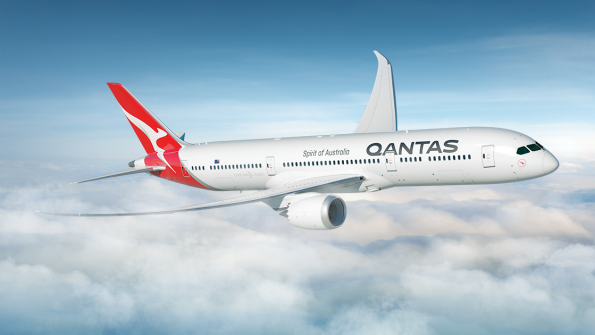
Volume 4 Issue 1 January 2017 Kaplanian Report

ON THE BOEING FRONT

The Boeing 787-10 ZC001 in Final Body Join 

Boeing in early December began to assemble the first 787-10, the second stretch variant of the family, at its facility in Charleston, South Carolina.  The 787-10 has the potential to take a significant slice of the replacement market for the Airbus A330-300s and the 777-200s.  With 323 seats, and at the same time, give the twin jet program a strong push toward profitability.

So far, the 787-10 is coming together smoothly and ahead of schedule. Spurred on predominantly by Singapore Airlines in early 2013, Boeing has won orders and commitments for 154 aircraft from nine airlines and leasing companies.
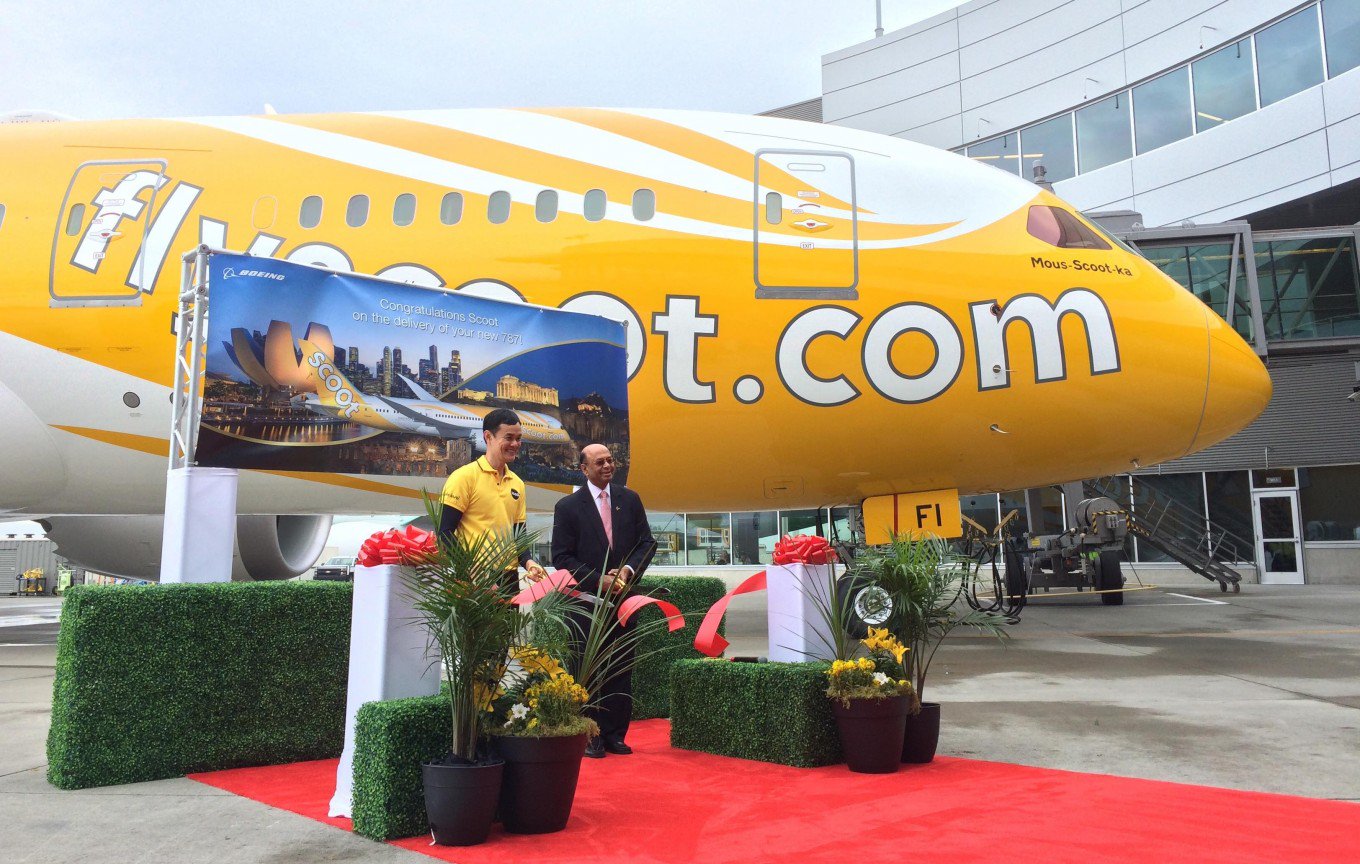
The 787-10 is 18 feet longer than the 787-9; 10ft of that is made up of the midbody, which is extended to 114ft overall. As they are for all 787s, the midbody and aft-fuselage sections for the 787-10 are assembled in South Carolina.

Design work for the 787-10 stayed in Seattle, where the challenge was maximizing commonality with the 787-9. Designers targeted a goal of 90% commonality between the 787-9 and the -10, a big leap over the 50% achieved between the 787-8 and the 787-9.

The first aircraft is expected to make its maiden flight early this year. Following initial checkout, it will be ferried to Seattle along with the other test 787-10s for completion of the certification campaign. The first and third 787-10s will be powered by Rolls-Royce’s new Trent 1000 TEN engine, while the second will be powered by the competing GEnx1B. Flight tests of the TEN began on a 787 early in December, the initial 787-10 is scheduled to enter service with Singapore Airlines in mid-2018.

Source : Aviation week/Boeing/Boeing Picture


ON THE AIRBUS FRONT

Airbus to Slow A380 Production in 2017 in Accord with Emirates

Airbus will put off a dozen deliveries of the A380 plane in the next two years following agreement with Emirates, its largest customer for the model, as demands continues to fade for the A380.

Handovers of six A380s a piece that were originally planned for 2017 and 2018 will be shifted to a year later following an agreement with Emirates and engine supplier Rolls-Royce Holdings Plc. The Toulouse, France-based plane maker said on Tuesday, December 27th, in an e-mailed statement.

Airbus still plans to deliver 12 A380s per year as of 2018, and will seek to accelerate cost savings to minimize the effects on the break- even target for 2017.

Airbus has already been reducing production of the A380, which costs $433 million at list prices, as demand for large airliners has dried up.  In the meantime, Emirates and Rolls-Royce reached a settlement earlier in December over the airline’s A380 engine performance and maintenance concerns.

Dubai-based Emirates is by far the biggest buyer and operator of the A380, with orders for more than 140 of the plane. The carrier recently switched to Rolls-Royce engines for its latest batch of A380s, after relying on General Electric Co,’s Engine Alliance venture for the four power-plants that propel the airliner.

Source : Bloomberg/Airbus


REGIONAL/BUSINESS JETS

  Bombardier Global 7000 Takes to the Skies 

Bombardier Business Aircraft has successfully flown its new flagship business jet, the Global 7000.  Flight test vehicle 1(FTV1), C-GLBO (c/n70001), took off from the manufacturer’s Toronto Downsview facility on November 4, 2016.
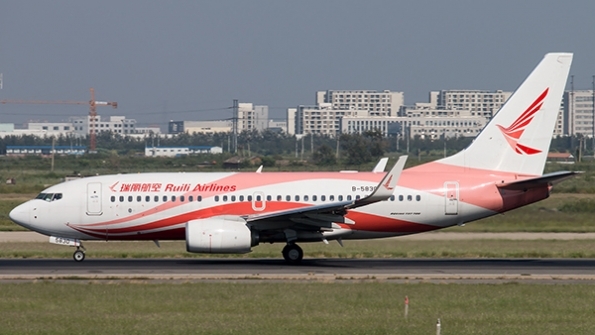
It flew for 2 hrs 27 mins. During the maiden flight, the crew tested the basic system functionality of the jet and assessed its handling and flying qualities.

The pilots conducted a gradual climb to 20,000 ft and the aircraft reached a planned test speed of 240 kts.

All flight controls were exercised during the sortie and Bombardier reports that all systems and aircraft performed as expected. The flight signifies the start of the jet’s flight test program, ahead of scheduled entry into service in the second half of 2018.

Bombardier says the jet will offer a 7,400 nm(13,705km) range at Mach .85 carrying eight passengers.

Source : Bombardier/Photo Bombardier

Boeing Business Jets, GKN Aerospace Introduce Skyview Panoramic Window

Boeing Business Jets announced in early December that it will work with GKN Aerospace’s Fokker business to develop, produce, and offer support for the Skyview Panoramic Window. It is the largest window available on any passenger jet offered today.

The window will be available as a feature on BBJ, BBJ2, and all three members of the BBJ MAX family, including the new BBJ MAX 7 with scheduled entry-into service in 2018.

The Skyview Panoramic Window, measuring approximately 4.5 feet by 1.5 foot(1.4×0.5 m), is created by effectively joining three existing 737 windows together.  Situated aft of the wing with multiple potential locations based on the airplane type, it offers customers an unparalleled perspective of the world.

Source : Boeing Business Jets

OTHER AVIATION NEWS

Argentina’s Aerolineas to Buy 11 New Boeing 737 MAX Aircraft

State-run airline Aerolineas Argentinas said on December 19, 2016, that it will buy 11 new Boeing 737 MAX aircraft and nine 737-800 NG planes in a deal based on revising a sales contract signed by the previous government.

President Mauricio Macri took office a year ago to reduce government spending. The previous administration had signed a contract with Boeing for 20 737-800 NGs, but no payments or deliveries were made under the deal.

“Aerolineas will be the first operator in Latin America to have a 737 MAX, which is a new plane globally,” the airline’s finance chief Pablo Miedziak told Reuters after signing the new contract with Boeing’s vice president for sales in Latin America Van Rex Gallard.

Miedziak said the airline is increasing its capacity by replacing planes with a capacity of  128 seats for new ones that can seat 170 passengers.

Source : Reuters


COMAC C919 Starts Ground Taxi Tests

The COMAC C919 narrow body passenger jet moved under its own power for the first time on December 28, 2016, initiating the last series of tests before the C919’s maiden flight.

The low-speed taxi trials are being carried out from the company’s facility in Shanghai  Pudong International Airport. The China-made C919 is scheduled to make its first flight in the first half of 2017.

CFM International, the largest jet engine manufacturer worldwide is the exclusive engine supplier for the C919, the first C919 engines (CFM Leap 1C) last July but run for the initial time until November 9, 2016.

Shanghai-based China Eastern Airlines will become the first customer to take delivery of the C919.  So far COMAC has received 570 orders for the C919 from 23 customers, including Air China and China Southern Airlines.

Source : China Aviation Daily


LATEST NEWS

  • Yangtze River Airlines HNA subsidiary looks toward international expansion in this year. The Shanghai-based carrier plans to take delivery of two Boeing 787 aircraft for that specific use.
  • Air Tanzania has been revealed as the previously unidentified customer for a single 787-8 valued at $224.6 million at list prices.
  • Philippine Airlines has confirmed an order for five Bombardier Q400 turboprops, with purchase rights for an additional seven aircraft.
  • Qatar Airways is in talks with Airbus to convert its order for up to 80 A320neos to the larger A321neos.
  • Delta Airlines has cancelled its order for 18 787-8 aircraft, a commitment that it assumed from Northwest Airlines when the two merged in 2008.
  • Azur Air Russian charter carrier has taken delivery of its first 189-seat 737-800, which will be operated on routes to Spain and the United Arab Emirates this month.
  • Trujet South Indian regional carrier has taken delivery of its first ATR 72-600 turboprop, which is leased from Dubai Aerospace Enterprise. 
  • ANA has taken delivery of its first Airbus A320neo, ANA has six more A320neos on order, and 26 A321neos.
  • Gulfstream has kicked-off the certification campaign for its new G600 business jet, following first flight of the large-cabin, long-range twin on December 17, 2016.
  • Island Air the Honolulu-based airline will acquire three new Bombardier Q400 turboprops. The aircraft will have 78 seats and enter service early this year. 


AIR CARGO

Boeing Selects Evergreen Aviation Technologies for 767-300                                             Passenger-to Freighter Conversion

Boeing announced on December 13, 2016, that Evergreen Aviation Technologies Corp (EGAT) will perform passenger-to-freighter conversions for the 767-300 Boeing Converted Freighter(BCF) program.  Boeing received 27 firm orders from customers worldwide for the 767-300 BCF. 

The 767-300 BCF conversion entails the modification of a passenger airplane to the cargo configuration. Converted 767-300BCFs have about the same cargo capability as the 767-300 production freighter with approximately 52 metric tons, with structural payload at a range approximately 3,000 nautical miles (5,930 km) and 412,000 lbs (187,270 kg) maximum takeoff weight.  There are 24 pallet positions on the main deck.

Evergreen Aviation Technologies has successfully carried our complex airframe conversions that built up the fleet of Boeing Dreamlifters- converted 747 airplanes used to support the 787 program-since 2005, as well as a 747-400 Propulsion Test Platform for GE Aviation in 2014.

Source : Boeing/Boeing Photo


  Maintenance & Repair Organization News

ATSG Subsidiary Swoops on MRO and Conversion Firm Pemco

Aircraft conversion firm Pemco has been bought by Airborne Maintenance and Engineering Services, a subsidiary of Air Transport Services Group (ATSG).

ATSG, which runs an air cargo operation for Amazon through its ABX subsidiary, said the acquisition will allow for a number of strategic benefits by combining operational strengths, expanded capabilities and cost savings related to shared services between the companies.

Services will be offered from multiple locations, including Wilmington and Tampa for heavy maintenance and modifications, and Tampa, Central America and Asia for passenger-to-freighter conversions.

Additional service offerings of aircraft-on-ground field teams, line and turnaround maintenance, component repair and overhaul, engineering repair and design, plus extensive manufacturing and kitting capabilities will be extended from various locations.

ATSG President and chief executive Joe Here said : “Based on PEMCO’s existing domestic and international scale, this acquisition will expand access to maintenance service for customers of ATSG’s expanding fleet of Boeing 767 cargo aircraft.

Source : MRO News


Lufthansa Technik Extends Warehouse Capacities in the USA

Lufthansa Technik AG has now opened a new warehouse in the USA, close to the Fort Lauderdale airport in Florida. This represents a significant expansion of the site, ensuring stable supply for customers in this growing region into the future.

The Fort Lauderdale site serves a connecting point for North, Central and South America.  It was therefore chosen as the primary storage facility for the American market and central gateway for the extensive customer supply network in the region.

The state-of-the-art facility, in operation around the clock all year, and the seamlessly integrated transport network allow the company to even better fulfill the high quality expectations of its customers. Customers benefit from the personal contact and from the fact that their contact person is in the same time zone.

The New warehouse has the capacity for around 9,000 components. It also houses more than 10,000 items of consumables and expendables. Various models of aircraft can be supported from the facility.

The warehouse is operated by Lufthansa Technik Component Services(LTCS), making use of the logistic processes and  IT systems of Lufthansa Technik Logistik Services.

Source : Lufthansa Technik


Researched and Compiled by : Ed Kaplanian

Commercial Aviation Advisor  

Contact – ekaplanian@msn.com